Picture this: the world has gone completely dark. Not the familiar darkness of night that promises dawn's return, but an absolute, suffocating blackness that stretches endlessly across the heavens and earth. Plants wither, animals panic, and even the gods themselves huddle together in the cosmic void, desperately trying to figure out how to restore light to creation. This isn't science fiction—it's one of Japan's most captivating creation myths, and at its heart lies a tale of divine sibling rivalry, wounded pride, and one goddess's brilliantly scandalous plan to save the universe through the power of dance.
The Rage That Broke the World
To understand how the world fell into eternal darkness, we must first meet the tempestuous siblings at the center of this cosmic drama. Amaterasu-Omikami, the radiant sun goddess, ruled the heavens with grace and brought light to all creation. Her brother Susanoo-no-Mikoto, the storm god, controlled the seas and weather with considerably less finesse. Think of them as the ultimate dysfunctional divine family—one bringing order and light, the other chaos and destruction.
According to the Kojiki, Japan's oldest surviving chronicle written in 712 CE, the trouble began when Susanoo decided to visit his sister before departing for the underworld. But this wasn't a peaceful farewell visit. The storm god arrived like a cosmic hurricane, causing mountains to crumble and rivers to run backward. Amaterasu, ever the diplomat, initially gave her brother the benefit of the doubt. Perhaps he came in peace?
She was catastrophically wrong. Susanoo's visit turned into a rampage of mythic proportions. He destroyed Amaterasu's sacred rice fields, defiled her temples, and committed the ultimate act of desecration—he hurled a flayed horse through the roof of the sacred weaving hall where Amaterasu and her attendants were creating garments for the gods. One of her precious maidens died from the shock, and Amaterasu herself was wounded by her flying shuttle.
When the Sun Goes Out
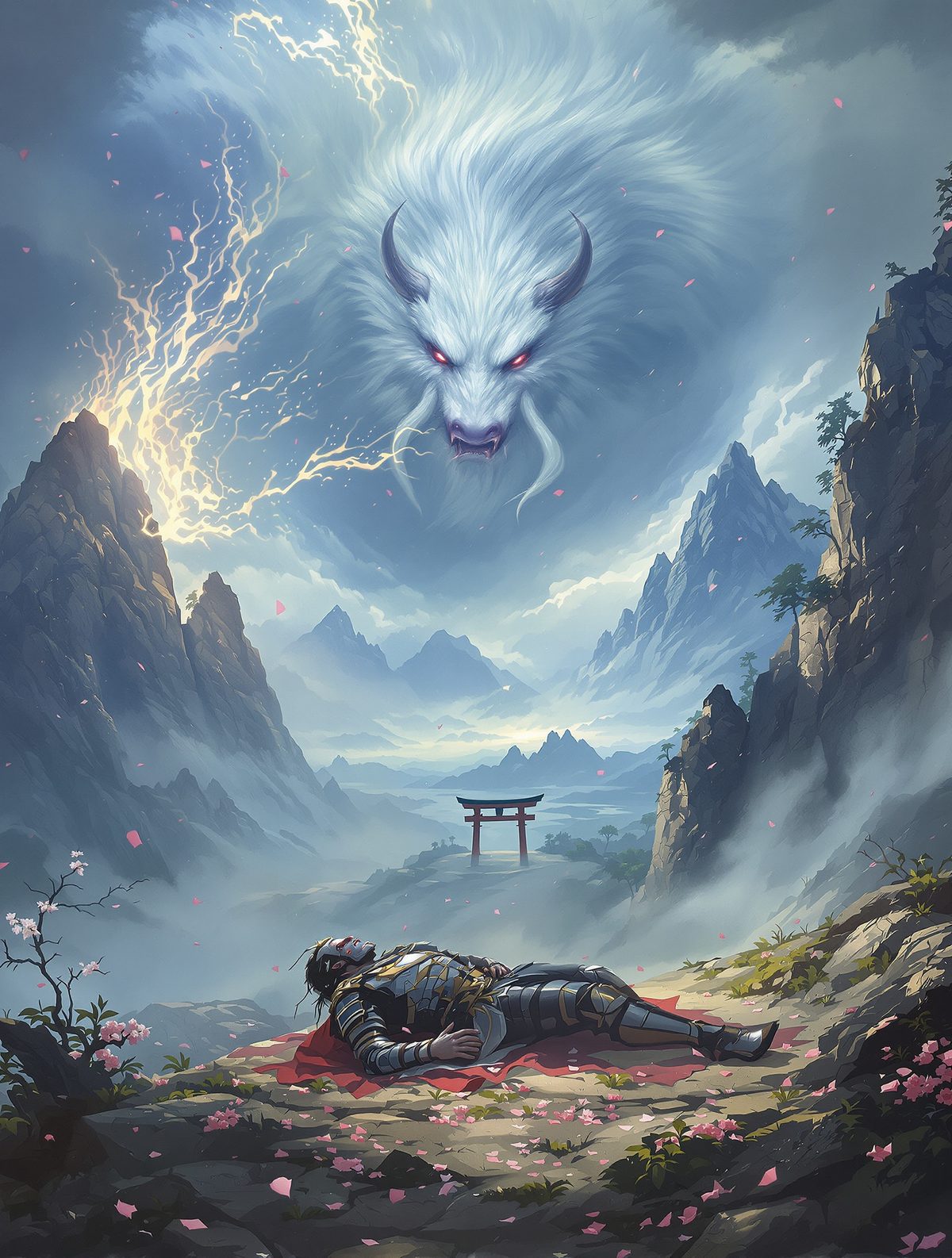
What happened next changed everything. Overcome with grief, rage, and humiliation, Amaterasu made a decision that would plunge the entire universe into crisis. She retreated into Ama-no-Iwato—the "Heavenly Rock Cave"—and sealed herself inside with a massive boulder. The moment the sun goddess disappeared, all light vanished from both the heavenly realm and the earthly world below.
The consequences were immediate and catastrophic. Without the sun's life-giving rays, crops began to fail across the land. Evil spirits, emboldened by the darkness, emerged to wreak havoc. The delicate balance between order and chaos that Amaterasu maintained simply... stopped. Even the other gods found themselves powerless in this unprecedented crisis.
Here's what most people don't realize about this myth: it wasn't just about darkness. In Shinto belief, Amaterasu's withdrawal represented the complete breakdown of wa—harmony—the fundamental principle that keeps the universe functioning. Her retreat wasn't a tantrum; it was the equivalent of turning off the cosmic operating system.
The Gods' Failed Schemes
Faced with universal catastrophe, the eight hundred myriad gods (a poetic way of saying "countless deities") gathered in the dry riverbed of heaven to brainstorm solutions. Led by the wise god Omoikane, they tried everything they could think of to coax Amaterasu from her cave.
First, they brought roosters—sacred birds associated with dawn—hoping their crowing might remind her of her duty to bring the morning. The roosters crowed until they were hoarse, but the cave remained sealed. Next, they crafted an enormous mirror, the Yata-no-Kagami, polished to perfection and hung on the branches of a sacred sakaki tree alongside brilliant jewels and white cloth offerings. Still nothing.
They performed elaborate rituals, chanted prayers, and made increasingly desperate offerings. Some accounts suggest they even tried music and poetry, appealing to every aspect of beauty and culture that Amaterasu treasured. But the sun goddess remained unmoved, nursing her wounds in the darkness of her self-imposed prison. The universe continued its slide toward total chaos.
Enter the Cosmic Trickster
Just when all seemed lost, an unlikely hero stepped forward: Ame-no-Uzume-no-Mikoto, a goddess whose name translates roughly to "Heavenly Alarming Female." If that name sounds ominous, it should. Uzume was no ordinary deity—she was what scholars call a trickster figure, a divine being who operated outside normal rules and expectations.
Unlike the other gods who had tried to appeal to Amaterasu's sense of duty or vanity, Uzume understood something fundamental about divine psychology: sometimes the only way to break someone out of their darkest moment is to shock them back to life. Her plan was so audacious, so completely unexpected, that it would either save creation or scandalize the heavens forever.
What Uzume did next became the stuff of legend. She overturned an empty sake tub in front of the cave, climbed on top, and began to dance. But this wasn't the refined, ceremonial dancing you might expect in a divine ritual. As the rhythm overtook her, Uzume's movements became increasingly wild and ecstatic. According to the ancient texts, she danced with such abandon that her clothing began to come undone, eventually performing what can only be described as the world's first recorded striptease.
The Dance That Saved the World
What happened next demonstrates the power of laughter to transform even the darkest situations. As Uzume danced with increasingly outrageous movements, the assembled gods began to chuckle, then laugh, then roar with uncontrollable mirth. The sound of eight hundred myriad deities laughing together created a cosmic cacophony that echoed through the heavens and shook the very foundations of the rock cave.
Inside her self-imposed prison, Amaterasu heard something she hadn't expected: joy. Pure, unrestrained, infectious joy. Her curiosity finally overcome her hurt and anger. How could the gods be celebrating when the world was plunged in darkness? What could possibly be so amusing during the universe's darkest hour?
Unable to resist any longer, Amaterasu rolled away just a small portion of the boulder and peeked out. "Why are you all celebrating?" she called out. "The world is in darkness!"
The clever gods were ready with their answer. "We're celebrating because we've found a goddess even more radiant than you!" they called back, quickly angling the sacred mirror so that it would catch Amaterasu's reflection the moment she emerged further.
The Moment Light Returned
Intrigued despite herself, Amaterasu pushed the boulder aside just a little more to see this supposedly superior goddess. The moment she did, brilliant light began to spill from the cave, and she caught sight of her own reflection in the sacred mirror. Dazzled by her own radiance after so long in darkness, she stepped further out to get a better look.
That's when the strong god Tajikarao made his move. He grabbed the boulder and hurled it away with such force that it landed in what is now the Togakushi region of Japan, where it remains to this day as Mount Togakushi. Meanwhile, the gods quickly stretched a sacred rope called shimenawa across the cave entrance, preventing Amaterasu from retreating again.
The moment the sun goddess fully emerged, light flooded back into creation. Plants lifted their heads, animals stirred from their terrified stupor, and the evil spirits that had emerged during the darkness fled back to their hiding places. The cosmic order was restored, but more than that—it was renewed and strengthened by having been tested.
The Sacred Scandal That Changed Everything
Uzume's dance represents something profound in Japanese spiritual thought that often gets lost in sanitized retellings. Her performance wasn't just comic relief—it was a sacred act of kagura, ritual entertainment designed to commune with and please the gods. What made it revolutionary was how she used sexuality, humor, and transgression as tools of divine intervention.
This myth established Uzume as the patron goddess of performers, shamans, and anyone who uses art to heal and transform. Even today, kagura dances performed at Shinto shrines across Japan trace their lineage back to Uzume's cosmic performance. The Iwato Kagura specifically reenacts her dance, though modern versions are considerably more modest than the original.
What's fascinating is how this story validates the power of the feminine divine in ways that many mythologies don't. While the male gods' logical approaches failed completely, Uzume's intuitive, embodied, and frankly sexual approach saved the universe. She understood that sometimes healing requires not solemnity, but celebration—not shame, but shamelessness.
Why This Ancient Dance Still Matters
In our modern world, where depression rates soar and people increasingly isolate themselves in digital caves of their own making, Uzume's story offers a surprisingly relevant prescription: sometimes the cure for darkness isn't more serious analysis or gentle coaxing, but radical joy. Her dance reminds us that laughter can be a form of rebellion against despair, and that there's sacred power in refusing to let trauma have the final word.
The myth also speaks to something every culture understands: the healing power of community. Amaterasu wasn't drawn out by any individual effort, but by the collective laughter and joy of the assembled gods. In a time when loneliness and isolation threaten our social fabric, the image of divine community coming together to literally laugh someone back to life feels profoundly hopeful.
Perhaps most importantly, Uzume's story celebrates the transformative power of art and performance. She didn't argue with the sun goddess or try to shame her out of hiding. Instead, she created something so compelling, so alive with energy and humor, that it made the world worth emerging for again. In every comedian who helps us laugh through hard times, every dancer who moves with abandon, every artist who refuses to let darkness win, we see echoes of Uzume's cosmic performance—still dancing, still calling the light back into the world.