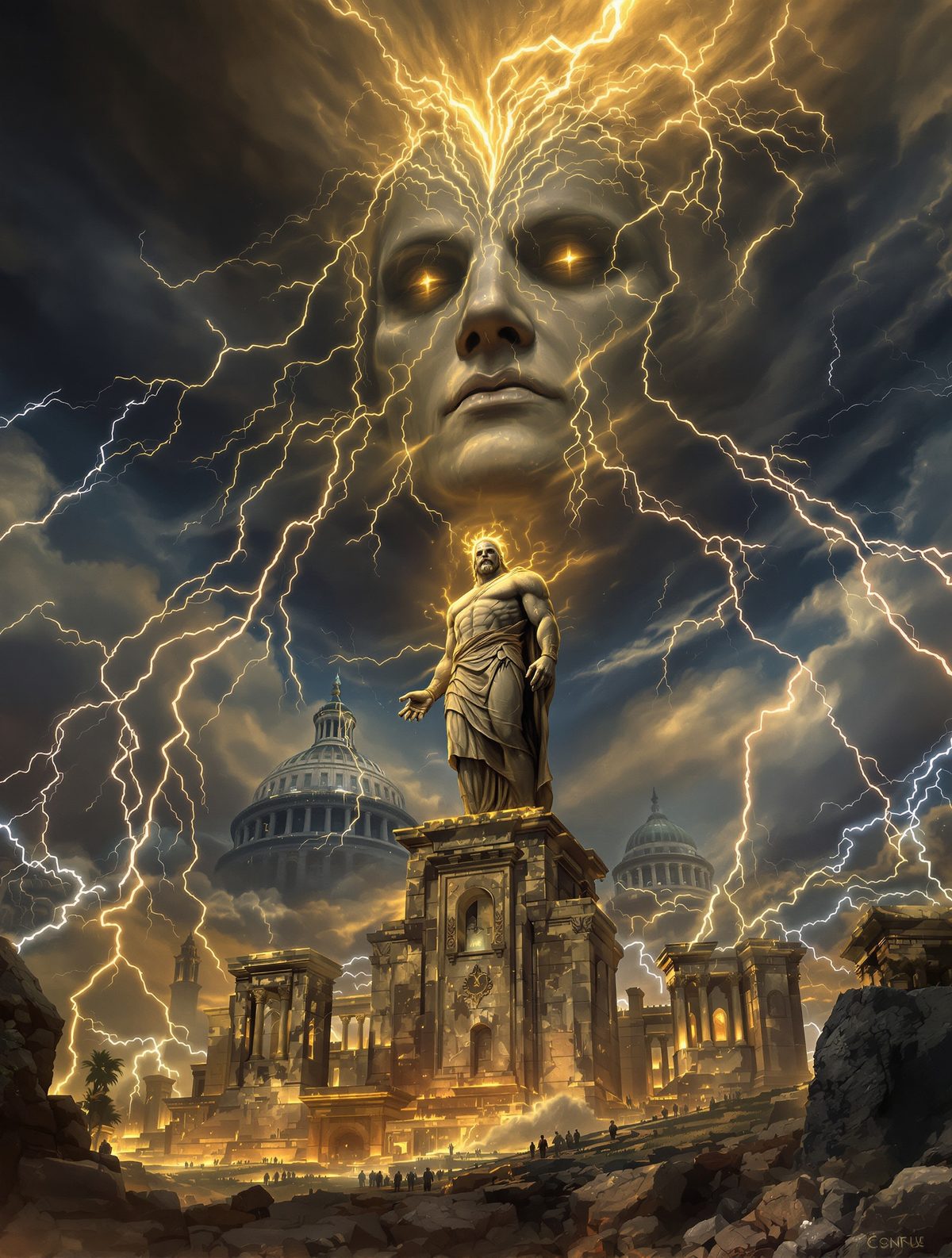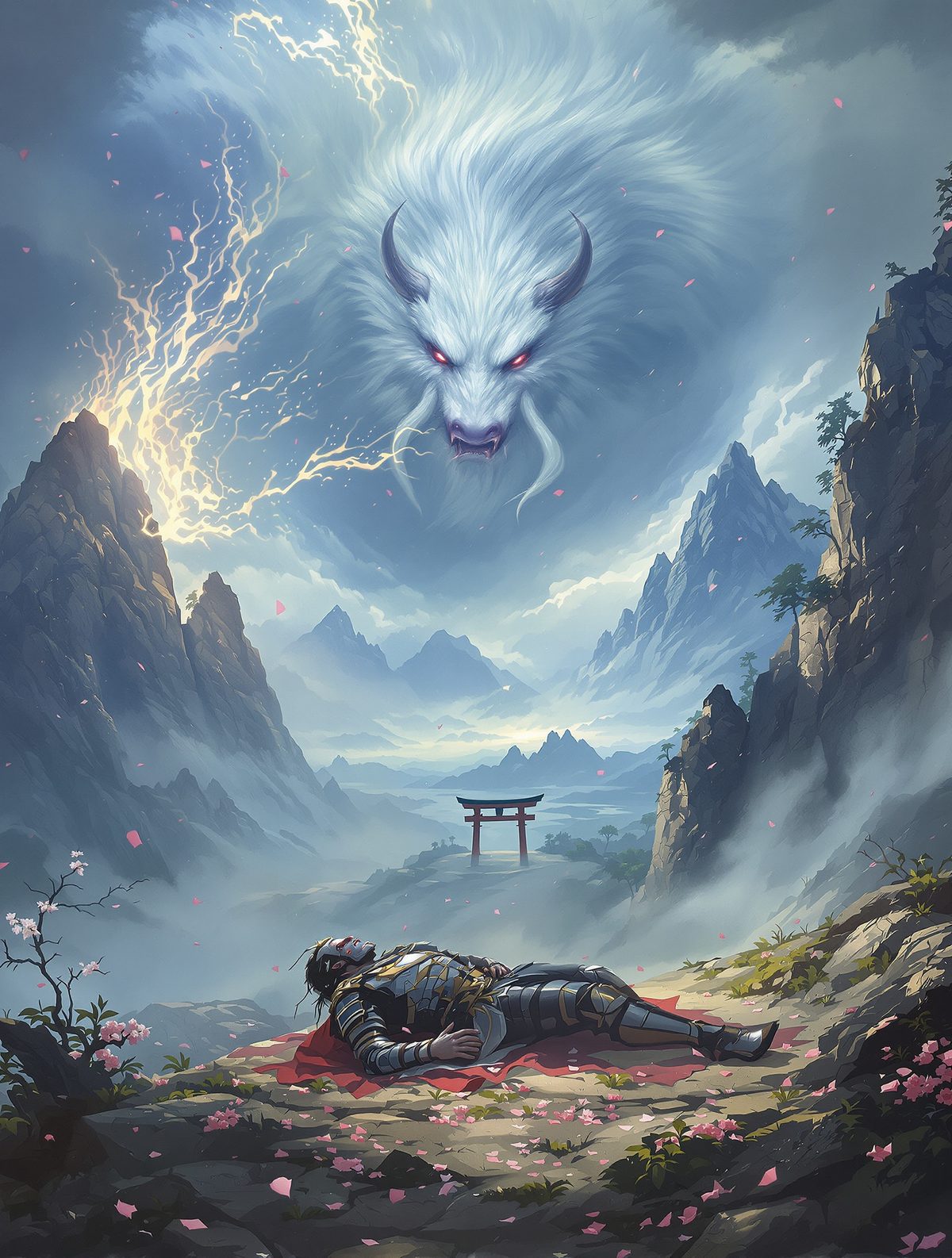
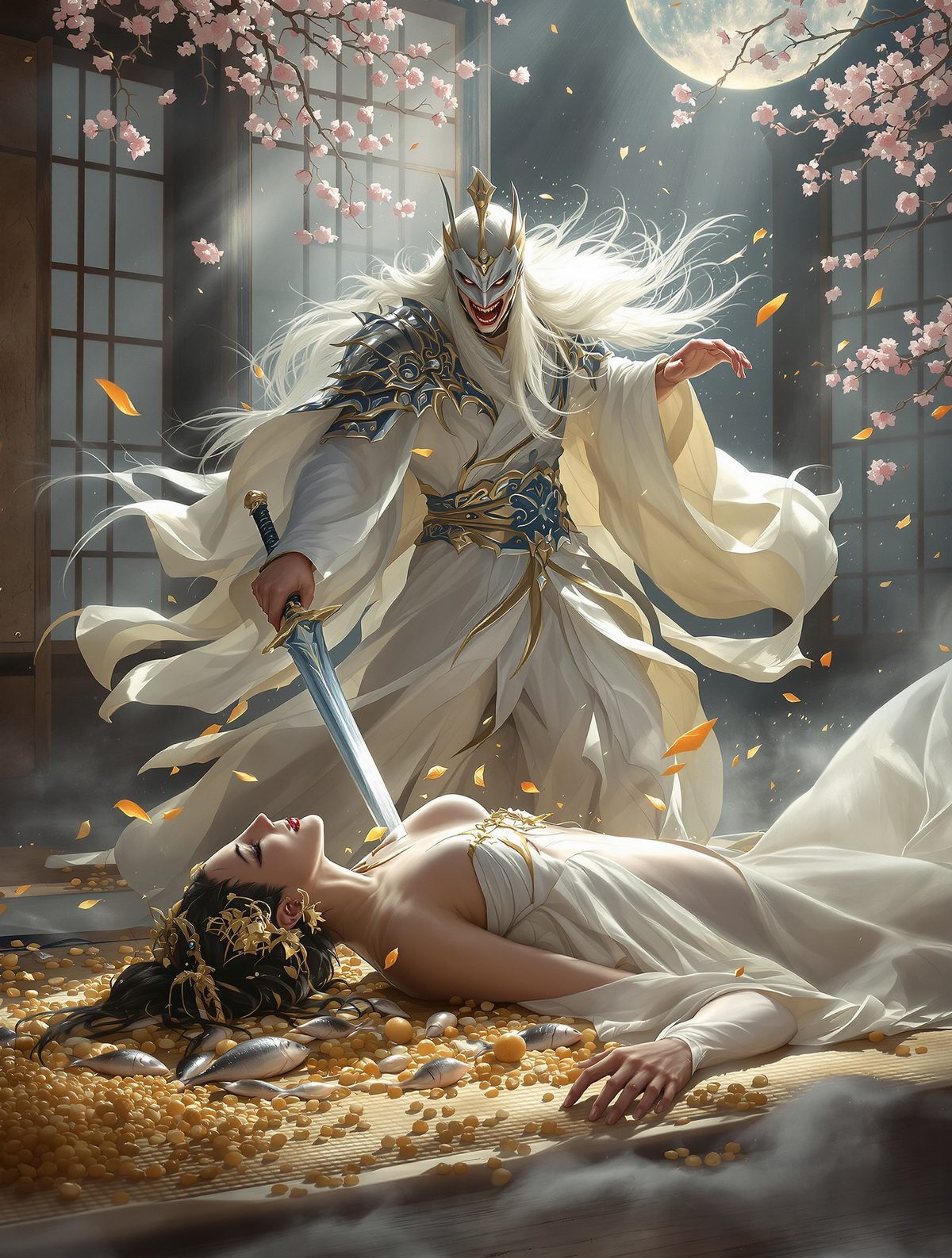
In the swirling mists of primordial Japan, when gods walked between realms and divine blood flowed through celestial veins, a single moment of revulsion would tear the heavens asunder forever. Picture this: the luminous moon god Tsukuyomi, silver-haired and proud, his hand trembling with rage as he grips the hilt of his celestial blade. Before him lies the lifeless form of Uke Mochi, the food goddess, her divine essence already beginning to transform into the grains and creatures that would nourish humanity for millennia to come. Above them both, the sun goddess Amaterasu—sister, lover, and eternal partner to Tsukuyomi—feels her heart shatter like a mirror struck by lightning. What had begun as a simple dinner invitation would end with day and night becoming eternal strangers, never again to share the same sky.
The Divine Siblings of Heaven's Court
To understand the magnitude of this cosmic catastrophe, we must first journey back to the birth of the Japanese pantheon itself. In the Kojiki—Japan's oldest surviving chronicle, completed in 712 CE—we encounter the primordial couple Izanagi and Izanami, whose tragic love story birthed the islands of Japan and countless deities. But it was from Izanagi's ritual purification after his descent into the underworld that the three most powerful kami emerged: Amaterasu from his left eye, Tsukuyomi from his right eye, and Susanoo from his nose.
These weren't merely siblings—they were cosmic forces given divine form. Amaterasu, radiant as ten thousand suns, commanded light, life, and the fertile warmth that makes rice grow. Tsukuyomi ruled the mysterious realm of night, the tides, and the silver pathways that connect dreams to reality. Unlike the tempestuous Susanoo, who would rage and storm across heaven and earth, Tsukuyomi was known for his serene composure and methodical nature. Ancient texts describe him as "the god who measures time," eternally calm and possessed of otherworldly beauty that complemented his sister's blazing magnificence.
Here's what makes their relationship particularly fascinating: in some versions of the myth, Amaterasu and Tsukuyomi weren't just siblings but divine consorts, ruling heaven together in perfect harmony. The concept of sibling deities as lovers wasn't unusual in ancient mythologies—it represented the union of complementary cosmic forces. Day and night, sun and moon, light and shadow—they were two halves of a perfect whole, sharing both throne and bed in the celestial palace.
An Invitation That Doomed Eternity
The chain of events that would shatter this cosmic marriage began with what seemed like a simple diplomatic courtesy. Uke Mochi, whose name literally translates to "possessing food," had extended an invitation to the solar court. She was no minor deity—as the goddess of food and sustenance, she held dominion over one of humanity's most essential needs. Her realm was abundance itself: endless rice paddies stretching beyond horizons, rivers teeming with fish, and forests where game moved in perpetual plenty.
When word reached Amaterasu's palace, the sun goddess found herself too occupied with her celestial duties to attend personally. The rice harvest prayers of ten thousand villages needed answering, and the delicate balance of seasonal light required her constant attention. So she made a decision that seemed perfectly reasonable: she would send Tsukuyomi as her representative. After all, who better to honor the food goddess than her own beloved brother and consort?
Tsukuyomi accepted the mission with characteristic grace. Donning his finest court robes—described in the Nihon Shoki as being "woven from moonbeams and night-blooming flowers"—he descended from the High Plain of Heaven to Uke Mochi's earthly domain. The food goddess received him with all the pomp befitting celestial royalty: her palace gates were adorned with rice sheaves and fishing nets, while the air itself seemed to shimmer with the promise of divine nourishment.
The Feast of Horrors
What happened next would be seared into Japanese mythology forever, a scene so viscerally disturbing that it reveals profound anxieties about food, purity, and the boundaries between civilization and nature. Uke Mochi, eager to honor her divine guest with the finest possible banquet, began to demonstrate her supernatural abilities. But her method of food production was unlike anything Tsukuyomi had ever witnessed—or imagined in his most fevered nightmares.
First, she turned toward the land and opened her mouth. Rice grains poured forth in a seemingly endless stream, each kernel perfect and gleaming. Then she faced the ocean, and fish of every variety emerged from her rectum—salmon, sea bream, and tuna, all fresh and glistening as if just pulled from the waves. Finally, turning toward the mountains, she produced game animals and wild vegetables from various other bodily orifices, creating a feast that would have fed thousands.
The Kojiki records Tsukuyomi's reaction in stark, brutal terms: "The moon god, seeing this, deemed it filthy and defiled." Here was divine abundance in its rawest form—nourishment emerging directly from the goddess's body in a display that was simultaneously miraculous and revolting. For Tsukuyomi, raised in the pure, ethereal heights of heaven where sustenance came from ambrosia and celestial nectar, this earthly method of food creation represented the ultimate contamination.
Modern scholars have interpreted this scene as a clash between different concepts of purity and pollution—kegare in Japanese—that would become central to Shinto beliefs. The food goddess represented the messy, biological reality of sustenance: that all nourishment ultimately comes from processes of growth, decay, and bodily function. Tsukuyomi embodied the desire for transcendence above such base realities.
The Blade That Split the Cosmos
What followed happened in the space of a single heartbeat—a moment that would echo through eternity. Tsukuyomi's revulsion transformed into something darker and more primal: a rage so pure and violent that it seemed to crack the very foundations of reality. Drawing his celestial blade—forged from compressed starlight and capable of cutting through the fabric of existence itself—he struck down Uke Mochi where she stood.
The murder was swift and absolute. One moment the food goddess was proudly displaying her divine gifts; the next, her lifeless form lay crumpled amid the feast she had created. But death could not contain her power. Even as her spirit departed for the underworld, her corpse began an extraordinary transformation that would become one of mythology's most beautiful examples of death giving birth to life.
From her eyes grew rice shoots, their green stalks reaching toward heaven. Her ears sprouted millet, while soybeans emerged from her nose. From her rectum came cattle and horses—the animals that would help humanity cultivate the earth. Her forehead produced silkworms, and from her belly grew the five sacred grains that would become the foundation of Japanese agriculture. In killing the food goddess, Tsukuyomi had inadvertently ensured that her gifts would be permanently woven into the natural world.
But the cosmic consequences were only beginning. As Tsukuyomi stood over his victim's transforming corpse, a terrible realization began to dawn: he would have to face Amaterasu's judgment for what he had done.
The Eternal Separation
When Tsukuyomi returned to heaven and reported his actions to Amaterasu, her response was immediate and irrevocable. The Kojiki records her words with devastating simplicity: "You are an evil god. I will not look upon you face to face." With those words, she banished him from her presence forever, declaring that they would never again share the same sky.
This wasn't merely divine divorce—it was the fundamental restructuring of reality itself. Where once day and night had blended seamlessly, with sun and moon dancing together across the heavens, now they became eternal strangers. Amaterasu would rule the day in solitary splendor, while Tsukuyomi was condemned to the lonely sovereignty of night. The ancient Japanese believed this explained why we never see the sun and moon together in the sky—they are former lovers whose relationship was destroyed by a single act of violence.
The separation had profound implications for humanity as well. The eternal cycle of day and night became a constant reminder of divine discord, but also of the natural order that emerged from chaos. Uke Mochi's death had given the world agriculture, while the siblings' separation had given it the reliable rhythm of time itself.
Interestingly, some regional variations of the myth suggest that Tsukuyomi's punishment went beyond mere separation. In certain Shinto traditions, he is forever trying to apologize to Amaterasu, which explains the phases of the moon—his attempts to show different faces to his beloved sister in hopes that one might finally earn her forgiveness.
Why Ancient Murders Still Matter
This blood-soaked tale from Japan's mythological dawn might seem like merely another violent legend from humanity's superstitious past, but it carries profound relevance for our modern world. At its heart, this is a story about the collision between purity and necessity, disgust and sustenance—themes that resonate powerfully in our contemporary debates about food production, environmental ethics, and cultural sensitivity.
Tsukuyomi's revulsion at Uke Mochi's methods reflects an ancient tension that still haunts us today: our simultaneous dependence on and disgust with the messy biological processes that keep us alive. Modern industrial agriculture hides the realities of food production behind sterile packaging and corporate marketing, but the fundamental truth remains unchanged—all nourishment comes from processes that many would rather not examine too closely.
The myth also speaks to the devastating consequences of letting cultural prejudices override understanding and compassion. Tsukuyomi's inability to see past his own standards of purity led him to destroy not only Uke Mochi but also his eternal relationship with Amaterasu. In our interconnected world, where different cultures and value systems must coexist, this ancient warning against the dangers of rigid thinking feels remarkably contemporary.
Perhaps most powerfully, the story suggests that even cosmic catastrophes can give birth to unexpected gifts. The murder that split heaven also gave humanity agriculture and the reliable rhythm of day and night. Sometimes the most profound advances emerge from the darkest moments—a lesson that ancient Japanese storytellers embedded in the very structure of time itself.