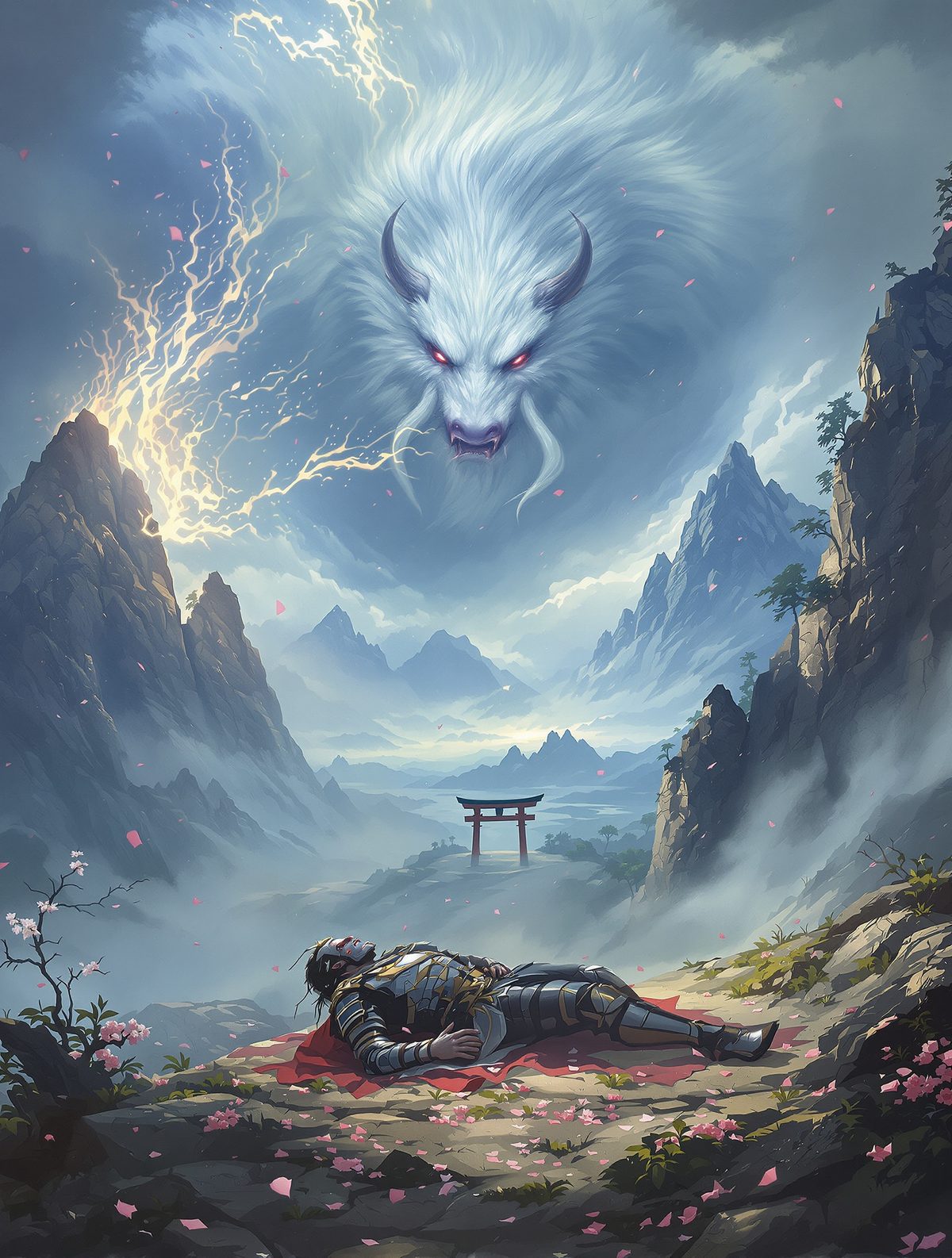
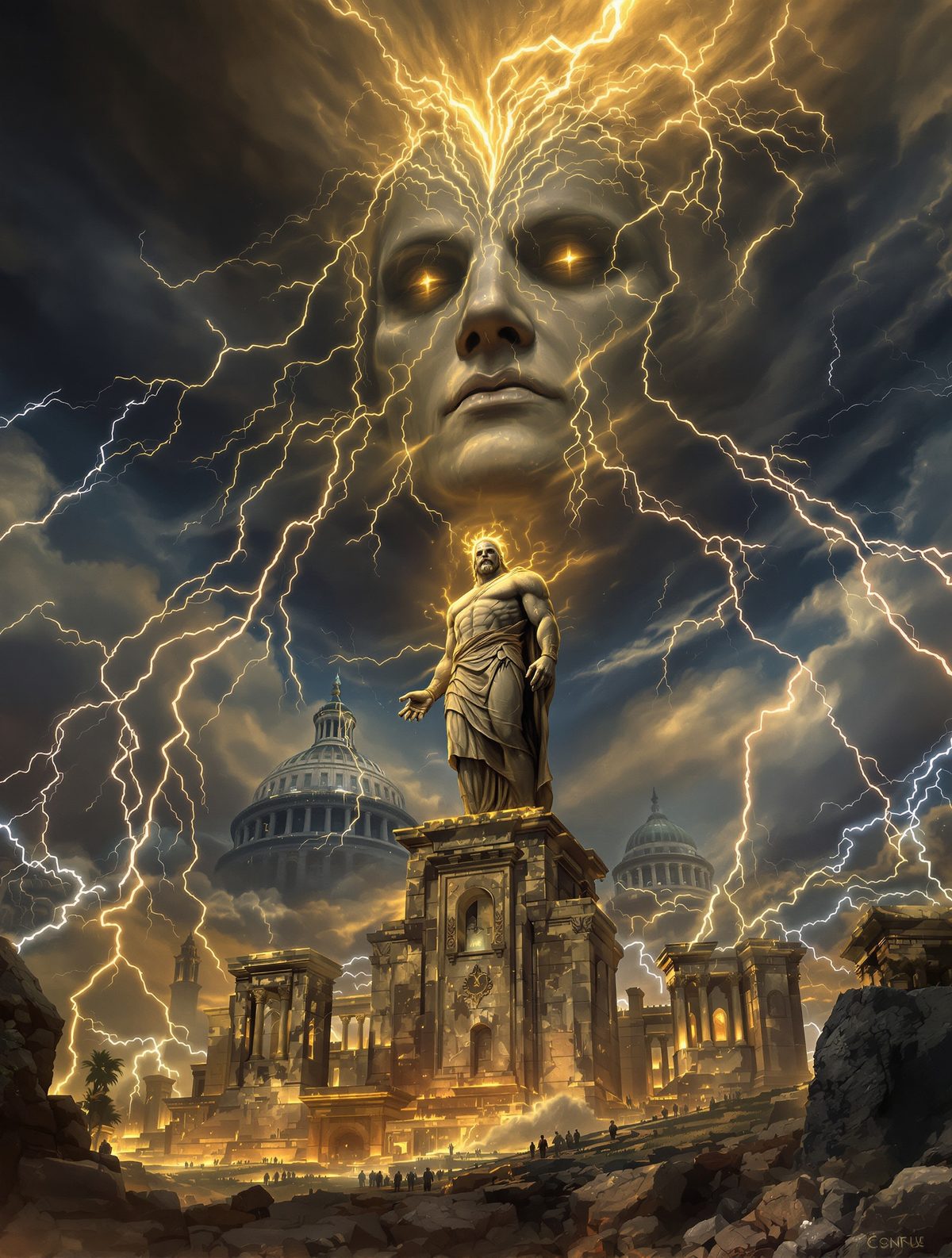
Picture this: the most powerful deity in the Roman pantheon stands toe-to-toe with what amounts to a glorified fence post. Jupiter, wielder of thunderbolts and king of the gods, has just issued a divine eviction notice to every sacred presence on Capitol Hill. One by one, ancient deities pack up their ethereal belongings and flee in terror. But there, amid the cosmic chaos, stands one stubborn god who looks Jupiter straight in the eye and delivers the ancient equivalent of "Make me."
This wasn't just any ordinary divine standoff—it was the moment that would define Roman culture for centuries to come, establishing a principle so fundamental that even the gods themselves had to respect it.
When Gods Played Real Estate Developer
In the 6th century BCE, Rome was transforming from a collection of hilltop villages into something resembling a proper city. The Romans had big dreams, and nothing said "we've made it" quite like a temple complex that would make the Greeks weep with envy. Capitol Hill—the Capitoline, as it came to be known—offered the perfect spot: high ground with commanding views, strategically positioned, and already sacred to multiple deities.
But here's where things get interesting. The hill wasn't empty real estate. It was already a divine neighborhood, bustling with the shrines and sacred spaces of various gods who had set up shop there long before Jupiter had his grand architectural vision. Juventas (goddess of youth), Mars (the war god), and several other divine residents had established their holy ground on the heights.
According to the historian Livy, writing in the 1st century BCE, this all came to a head around 509 BCE when the last king of Rome, Tarquin the Proud, decided to build the most magnificent temple the world had ever seen. The Templum Iovis Optimi Maximi—the Temple of Jupiter Best and Greatest—would cover nearly 2,000 square meters and stand as a monument to Roman power for centuries.
There was just one problem: the existing tenants.
The Great Divine Eviction
What happened next depends on whether you believe the Romans consulted Jupiter directly or simply assumed his divine will. Either way, word came down from on high: everyone had to go. The king of the gods wanted the entire hill for his temple complex, and he wasn't taking no for an answer.
The scene that followed must have been like watching a supernatural game of musical chairs. Every single deity on Capitol Hill received their eviction notice, and their response was immediate and unanimous: pack up and get out. Mars, the god of war who had faced down countless enemies, took one look at Jupiter's demand and decided discretion was the better part of valor. Juventas, who had been happily blessing Roman youth from her hilltop shrine, gathered up her divine belongings without so much as a protest.
The exodus was swift and complete. Gods who had ruled their respective domains for centuries suddenly became divine refugees, seeking new accommodations elsewhere in the rapidly expanding city. The message was clear: when Jupiter wants your real estate, you don't negotiate—you relocate.
Well, almost everyone got the message.
The God Who Wouldn't Budge
Enter Terminus, the most unlikely hero in the pantheon of Roman deities. If the Roman gods were a corporate hierarchy, Terminus would have been middle management at best—important, but hardly the type to challenge the CEO. His job was simple but crucial: he protected boundaries. Property lines, territorial borders, the sacred spaces between yours and mine—Terminus made sure they stayed exactly where they were supposed to stay.
But here's what made Terminus special: his very nature made it impossible for him to move. He wasn't just the god of boundaries—he was the boundary. Every boundary stone (called a terminus in Latin) was both his shrine and his physical manifestation. To move Terminus wasn't just to relocate a deity; it was to violate the fundamental principle he embodied.
When Jupiter's eviction notice reached the sacred boundary stones marking Terminus's domain, something unprecedented happened. The stones didn't budge. The god refused to acknowledge the order. For the first time in divine memory, a lesser deity had told the king of the gods exactly where he could stuff his development plans.
The implications were staggering. Here was Jupiter—the same god who had overthrown the Titans, who hurled thunderbolts for fun, who could command the very heavens—being defied by what amounted to a cosmic surveyor.
When Even Gods Must Yield to Law
What happened next reveals something profound about Roman thinking. Jupiter, faced with Terminus's immovable opposition, did something that would have been unthinkable for a Greek deity: he backed down. Not out of weakness, but out of respect for a principle greater than divine authority.
The solution was elegant in its simplicity. The Temple of Jupiter would be built around Terminus's boundary stones, incorporating them into the structure itself. The roof of the temple was left with a carefully planned opening—an compluvium—directly above Terminus's shrine, ensuring that the boundary god remained technically "outdoors" and thus unmoved from his original position.
This wasn't just architectural accommodation—it was a theological statement. Even Jupiter, king of the gods, ruler of heaven and earth, acknowledged that some things were more sacred than power itself. Boundaries, once established, were inviolable.
The Romans celebrated this divine compromise with the Terminalia, a festival held every February 23rd where neighbors would gather at boundary stones, offer sacrifices, and reaffirm their property lines. It wasn't just a religious observance—it was a celebration of the rule of law itself.
The Boundary Stone That Built an Empire
The story of Terminus and Jupiter became foundational to Roman identity, but its significance went far beyond religious observance. This myth encoded one of Rome's most crucial innovations: the idea that law transcended personal power, that even divine authority had limits when it came to established rights and boundaries.
Consider what this meant in practical terms. Rome was expanding rapidly, absorbing new territories and peoples at a breakneck pace. Without a reliable system of property rights and boundary recognition, the whole enterprise would have collapsed into chaos. The story of Terminus provided divine sanction for the legal frameworks that made Roman civilization possible.
Roman surveyors, called agrimensores, carried out their work under Terminus's protection. Every time they set a boundary stone, they were participating in a sacred act validated by the god who had stood up to Jupiter himself. The precision of Roman land management—still visible today in the straight lines of European field systems and city grids—owes its existence to this divine precedent.
But the influence went deeper still. Roman law, with its emphasis on property rights, contracts, and established boundaries between legal categories, drew its moral authority from the same source. When Roman jurists declared that certain legal principles were immutable, they were channeling the spirit of Terminus.
Why Ancient Fence Posts Still Matter
In our modern world of contested borders, property disputes, and questions about the limits of authority, the confrontation between Jupiter and Terminus feels remarkably contemporary. Here was a civilization that understood something we're still grappling with: sustainable societies require boundaries that even the most powerful must respect.
The genius of the Roman solution wasn't that it made boundaries absolute—it was that it made them negotiable only through proper process. Terminus could be honored and accommodated, but he couldn't simply be bulldozed. Even divine authority had to work within the system.
Today's property law, international borders, and constitutional limits on government power all trace their conceptual DNA back to that moment when a stubborn boundary god refused to move for the king of heaven. Every time a court rules against a powerful defendant, every time an international border is respected, every time someone says "you can't do that—there are rules"—the spirit of Terminus lives on.
The Romans understood that civilization isn't built by the powerful doing whatever they want. It's built by everyone—even gods—agreeing to respect the lines that keep society from dissolving into chaos. In a world where boundaries of all kinds are under constant pressure, maybe we could use a little more of Terminus's stubborn wisdom.