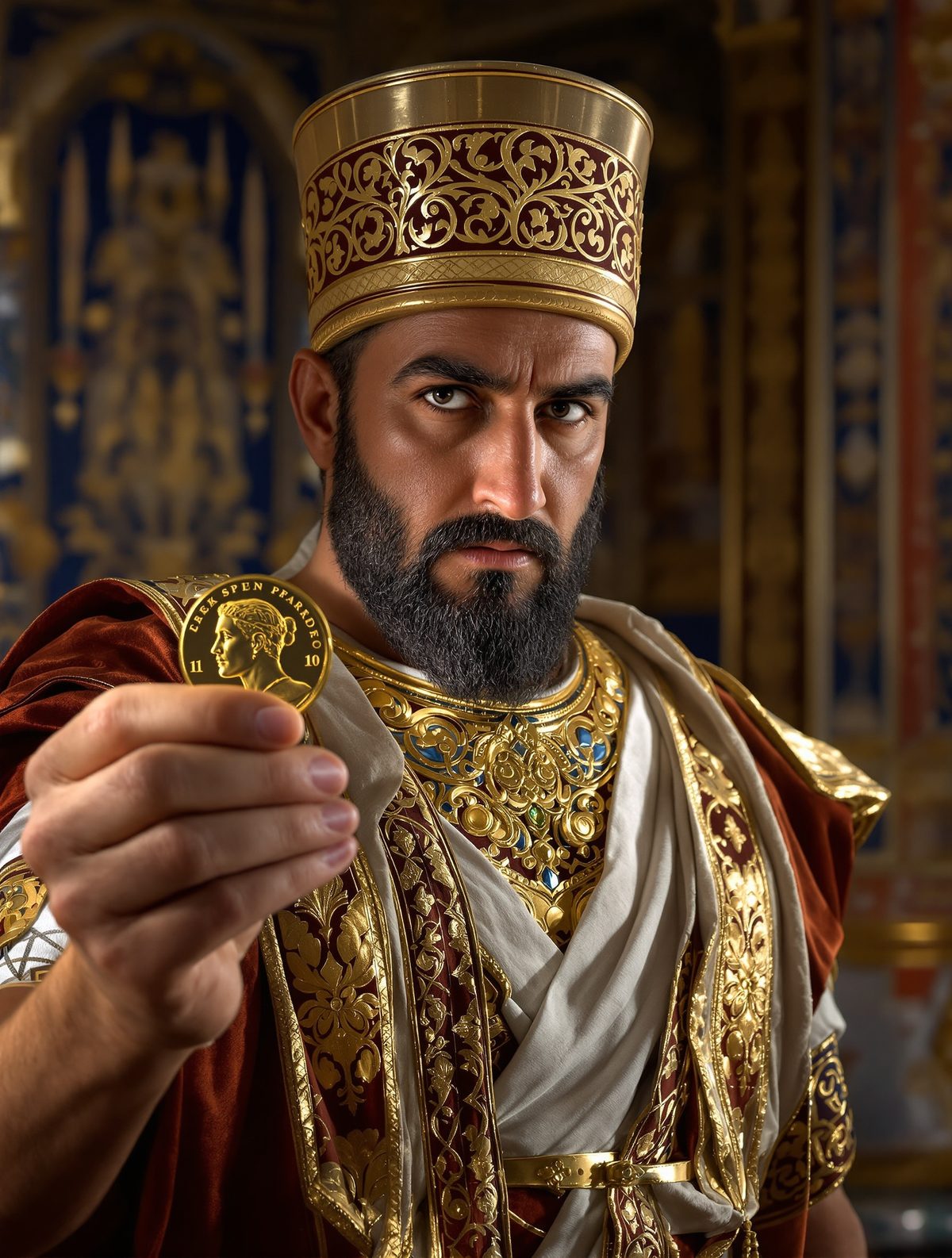
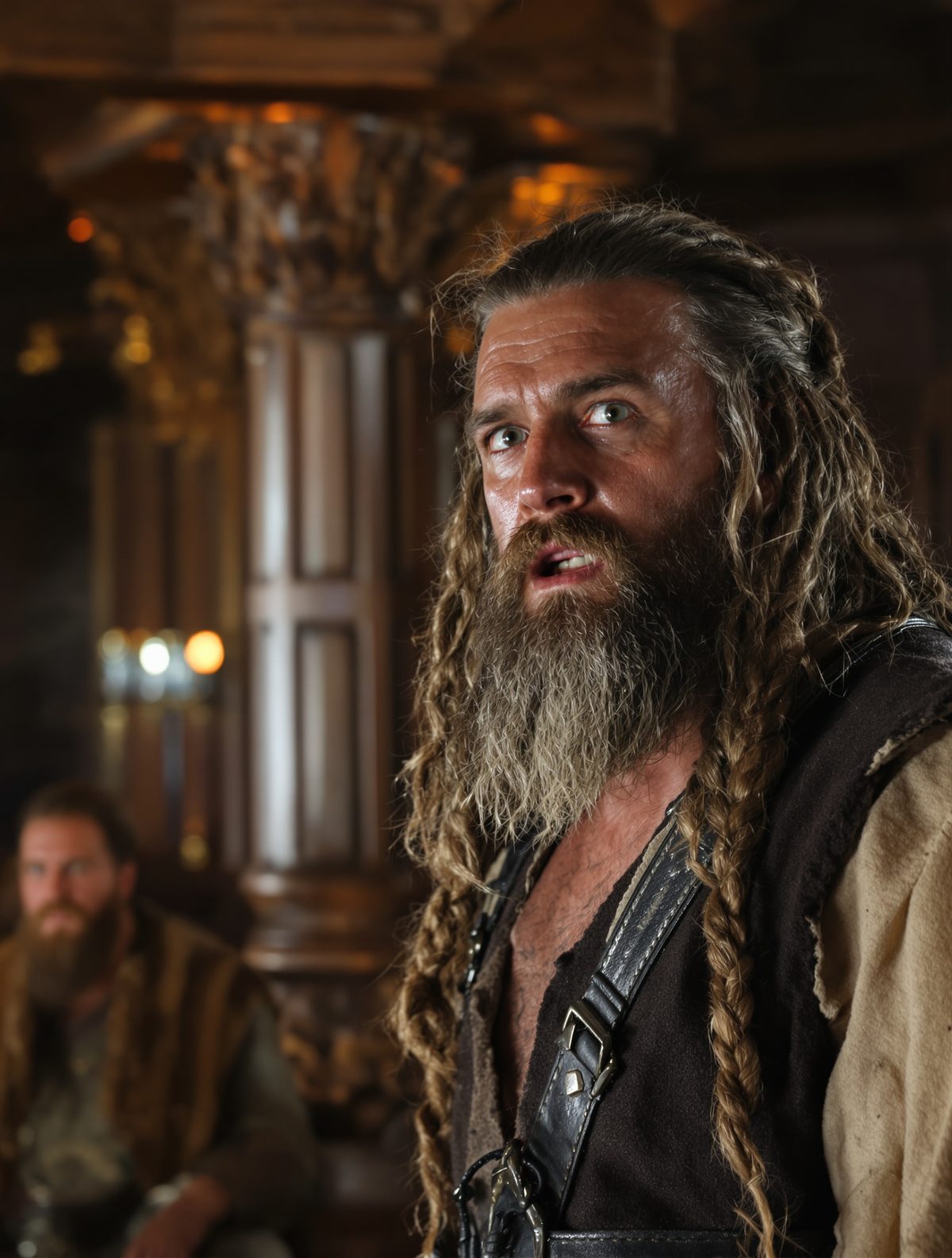
The torches flickered against the stone walls of York's royal hall as dawn approached in 954 AD. Outside, the first pale threads of light crept across the sky like fingers reaching toward a condemned man's final moments. Inside, Egill Skallagrímsson—the most feared warrior-poet in all the Norse lands—knelt in chains before his greatest enemy, King Erik Bloodaxe. The king's ultimatum hung in the air like smoke: compose a poem worthy of legends before sunrise, or meet the headsman's axe.
What happened next would become one of the most extraordinary tales of wit, courage, and artistic brilliance in Viking history—a story that reveals how poetry could be more powerful than any sword.
The Unlikely Hero: A Warrior Who Wielded Words
Egill Skallagrímsson was no ordinary Viking. Born around 910 AD in Iceland to Skalla-Grímr, a formidable warrior who had fled Norway, Egill embodied the dual nature that defined the Viking elite: brutal fighter by day, eloquent poet by night. Standing nearly seven feet tall with a massive, intimidating frame, he was said to be so strong he could split a man's skull with a single blow from his bare fist. Yet this same giant could craft verses so beautiful they moved hardened warriors to tears.
By his twenties, Egill had already earned a reputation that stretched across Scandinavia. He had composed his first poem at age three—a feat that seems impossible until you understand that Viking culture venerated poetry as much as prowess in battle. The complex alliterative verse forms, known as dróttkvætt, required not just artistic skill but intellectual gymnastics that could take decades to master. Egill mastered them as a child.
But Egill's quick tongue and quicker temper had made him powerful enemies. Chief among them was King Erik Bloodaxe of Norway, a ruler whose nickname came from his habit of eliminating rivals—including his own brothers—with ruthless efficiency. The two had clashed repeatedly over the years, their animosity deepening with each encounter like a wound that refused to heal.
A Fateful Journey to York
The events that led to that dramatic night began when Erik Bloodaxe, having been driven from the Norwegian throne, established himself as the Viking King of York in northern England. This wasn't unusual—York had become a sort of consolation prize for displaced Scandinavian royalty, a place where exiled kings could carve out new realms among the fractured kingdoms of 10th-century Britain.
Egill, meanwhile, had been shipwrecked off the English coast while returning from a trading expedition. Here's where the story takes an almost unbelievable turn: rather than flee or hide, Egill decided to march straight into York and confront his nemesis face-to-face. Some historians suggest he was driven by the Viking concept of honor that made hiding from an enemy worse than death itself. Others believe he had simply calculated that a bold move might catch Erik off-guard.
Instead, he walked straight into a trap. Erik's men seized him immediately, and the king saw his chance for revenge. But Erik Bloodaxe was no simple brute—he understood the power of spectacle and the value of a worthy opponent. Rather than order an immediate execution, he devised something far more dramatic.
The Challenge: Twenty Stanzas Before Dawn
The terms Erik set were breathtakingly audacious: Egill had until sunrise to compose a drápa—a formal praise poem of exactly twenty stanzas—in honor of the very man who was about to kill him. Not just any verses would do; they had to follow the incredibly complex rules of dróttkvætt meter, with its intricate patterns of alliteration, internal rhyme, and metaphorical riddles called kennings.
To understand the magnitude of this challenge, imagine being asked to solve twenty interconnected crossword puzzles while composing a symphony—all while facing death in a few hours. Each stanza required six lines with specific syllable counts, multiple alliterations, and at least two internal rhymes. The content had to praise the king's achievements while following narrative conventions that had been refined over centuries.
But here's what makes the story even more remarkable: Egill had to praise a man he genuinely despised, finding genuine-sounding compliments for someone who represented everything he opposed. The poem couldn't be mere flattery—Viking audiences were too sophisticated for that. It had to be a genuine work of art that happened to celebrate his enemy's virtues.
The Masterpiece: "Höfuðlausn" (Head-Ransom)
As the night wore on and dawn crept closer, Egill worked with the focused intensity of a man whose life depended on every syllable—because it did. The poem he created, later known as "Höfuðlausn" or "Head-Ransom," became one of the most celebrated works in Old Norse literature.
The opening lines set the tone with their sophisticated wordplay: "The western sea's wave-steed / bore me to the land of the generous ruler." The "wave-steed" was a ship, but the metaphor transformed a simple journey into an epic voyage. Egill systematically praised Erik's generosity, his prowess in battle, his wisdom as a ruler—all while demonstrating his own mastery of the most challenging poetic form in medieval Europe.
Perhaps most remarkably, Egill managed to weave in subtle references to his own situation without seeming to plead for mercy. He compared himself to a wolf caught in a trap—dangerous even in captivity—while simultaneously acknowledging Erik's power to grant life or death. The poem walked a razor's edge between respect and defiance, between submission and pride.
When Egill finished reciting the twentieth and final stanza just as the sun's first rays penetrated the hall's narrow windows, the assembled warriors sat in stunned silence. Even Erik's hardest-bitten veterans recognized they had witnessed something extraordinary.
The King's Dilemma: When Enemy Becomes Artist
Erik Bloodaxe found himself in an impossible position. The poem was undeniably masterful—to execute its creator would be tantamount to destroying a priceless work of art. More importantly, in Viking culture, a truly great poem was believed to confer immortality on both its subject and its composer. By creating a work that would be remembered and recited for generations, Egill had effectively made himself too valuable to kill.
But there was another dimension to Erik's dilemma. Vikings believed that words had power—not metaphorically, but literally. A well-crafted praise poem could enhance a king's reputation and legitimacy, while a curse poem could bring actual misfortune. By accepting Egill's praise, Erik was also acknowledging his skill and, by extension, his right to live.
The king's decision was swift and dramatic. He not only granted Egill his freedom but also gifted him with gold and a ship for his journey home. Some sources suggest Erik even offered Egill a permanent place at his court—an offer the proud Icelander politely declined.
Why This Ancient Tale Still Matters
The story of Egill and Erik resonates across centuries because it captures something fundamental about the power of creativity under pressure. In our age of instant communication and shortened attention spans, we might wonder whether words could ever again hold such life-or-death importance. Yet the basic dynamic—the ability of artistic expression to transcend political boundaries and personal animosity—remains as relevant as ever.
Modern neuroscience has shown that creating poetry activates the same brain regions involved in music and mathematics, requiring a unique combination of linguistic skill, pattern recognition, and emotional intelligence. Egill's achievement was essentially solving an incredibly complex cognitive puzzle while under extreme stress—a feat that would challenge anyone in any era.
Perhaps more importantly, the tale reminds us that even in the brutal world of medieval warfare, there was recognition that some achievements transcend immediate political concerns. Erik Bloodaxe chose to preserve genius over satisfying revenge, suggesting that even the most ruthless leaders understood the value of cultural achievement.
In our own polarized time, when enemies seem irreconcilable and compromise appears impossible, the image of a warrior-poet transforming mortal enmity into enduring art offers a different model. Egill Skallagrímsson saved his life not through violence or escape, but by creating something beautiful enough to change his enemy's heart. It's a lesson worth remembering in any century.