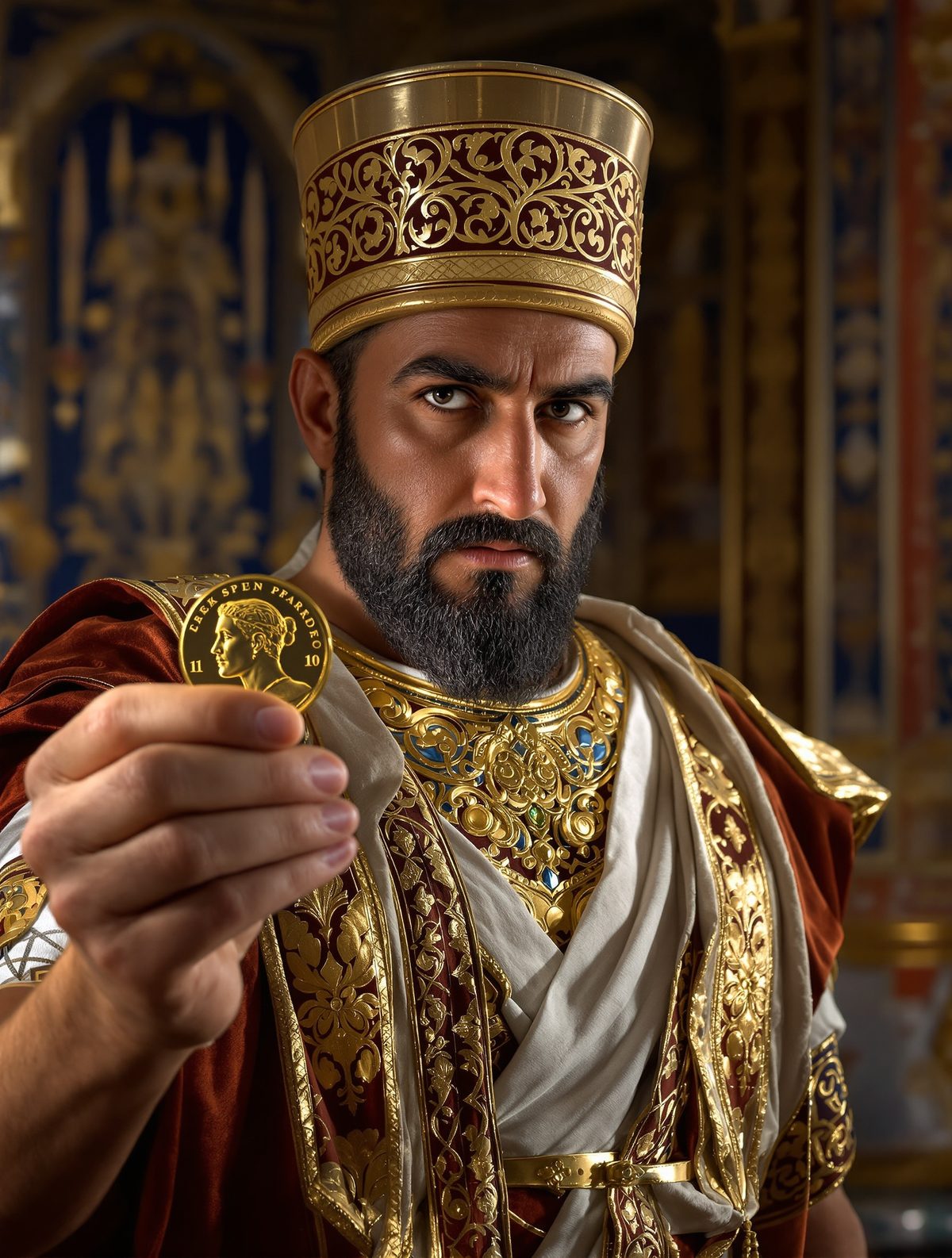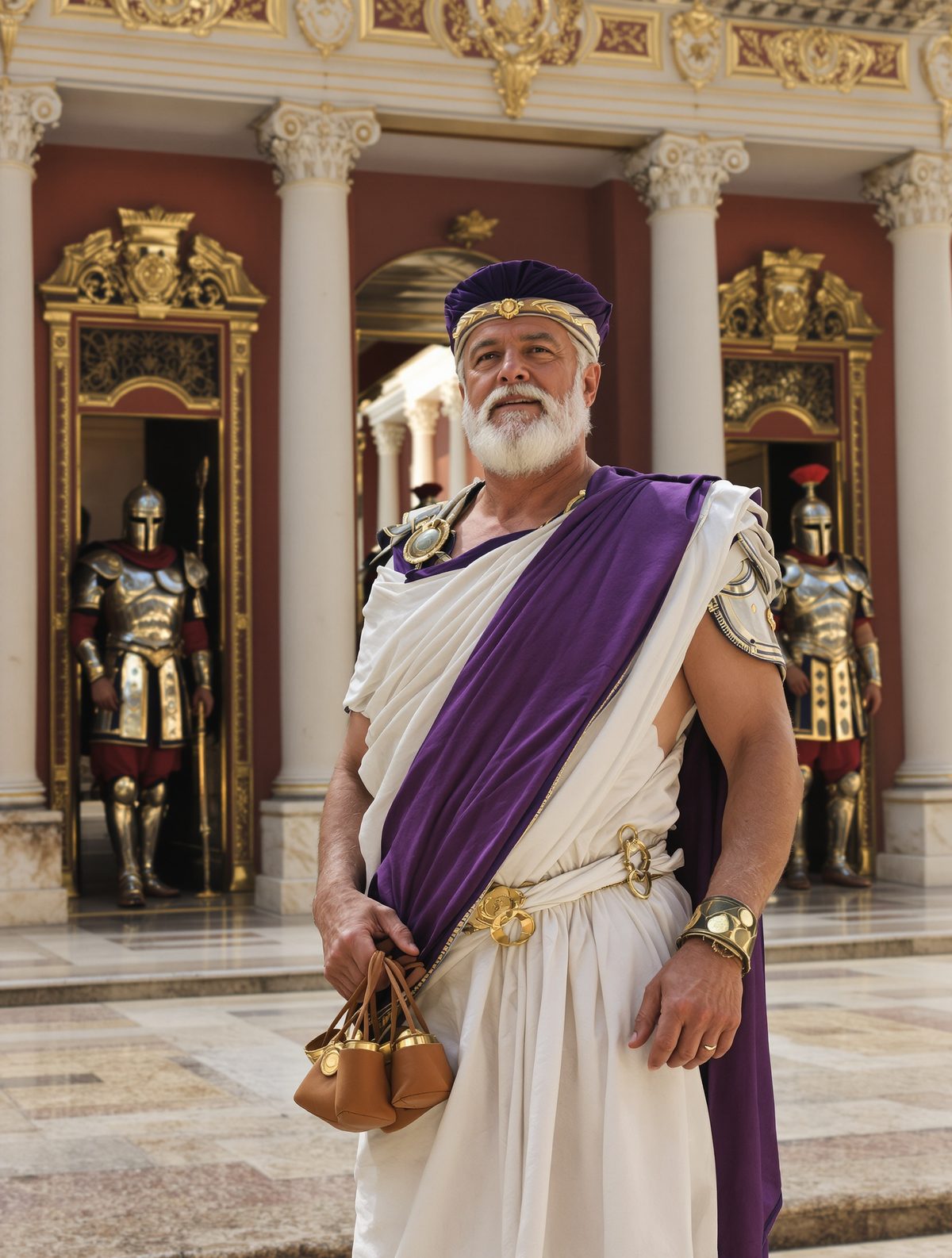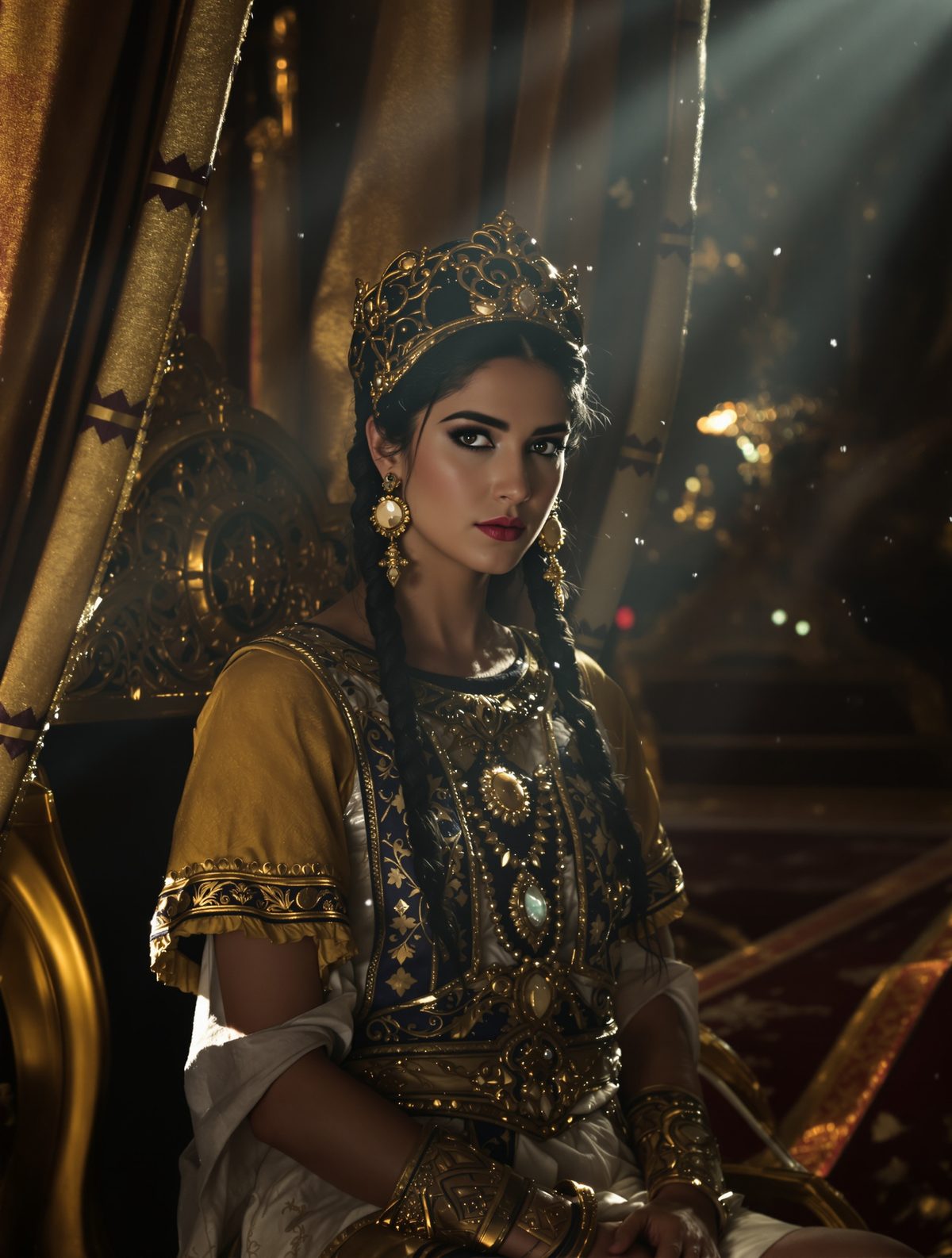
The scorching Persian sun beat down mercilessly on the caravan as it snaked across the endless dunes between Persepolis and the distant oasis of Kharg. It was the fifteenth day of the month of Viyakhna, in what we now call October of 522 BC, and the most heavily guarded procession in the Achaemenid Empire was about to become the setting for one of history's most baffling mysteries.
Inside a magnificent golden palanquin, carried by eight of the strongest bearers in Darius I's court, rode Princess Roxana—daughter of the Persian satrap Artaphernes and niece to the Great King himself. The ornate conveyance, adorned with intricate carvings of winged lions and inlaid with precious lapis lazuli, had never left the sight of its forty-man escort. Yet when the caravan reached the palm-shaded springs of Kharg three days later, the guards would discover something that defied all logic: the princess had vanished into thin air.
The Princess Who Challenged an Empire
To understand the magnitude of this disappearance, we must first understand who Princess Roxana was—and why her journey across the desert was so politically charged. Unlike the typically sequestered women of Persian nobility, Roxana had earned a reputation as a formidable intellect who dared to challenge the empire's traditions.
Historical records from the Persepolis Administrative Archives reveal that Roxana, then twenty-three years old, had been conducting secret correspondence with Greek philosophers in Ionia. More scandalously, she had been advocating for women's participation in the Zoroastrian fire ceremonies—a practice strictly forbidden by the Magi priesthood. Her father, Artaphernes, governed the wealthy satrapy of Lydia, but even his influence couldn't shield his daughter from the growing pressure to conform.
The journey to Kharg wasn't a pleasure trip. Roxana was being transported to marry Gobryas, an elderly Persian general whose loyalty Darius needed to secure. The marriage would effectively end her intellectual pursuits and political influence. According to court records, she had protested the arrangement so vehemently that her father ordered her confined to the palanquin for the entire three-day journey—a gilded cage from which there seemed to be no escape.
The Impenetrable Golden Prison
The palanquin itself was a marvel of Persian craftsmanship, but on this journey, it served as much as a prison as a royal conveyance. Measuring eight feet long, six feet wide, and seven feet high, it was constructed from cedar wood and covered entirely in beaten gold. The interior was lined with silk cushions and Persian carpets, with small latticed windows providing glimpses of the outside world.
What made the princess's disappearance so extraordinary were the security measures in place. The palanquin's door was sealed from the outside with the signet rings of three different officials: her father Artaphernes, the caravan commander Hystaspes, and the high priest Kartir, who had insisted on overseeing the journey to ensure Roxana didn't escape her fate. Breaking any one of these seals without the others present would have been immediately noticed.
The forty-man escort maintained formation around the palanquin at all times, with guards positioned no more than twenty feet away on all sides. Captain Megabyzus, who led the escort, later testified that the palanquin was never out of sight for more than a few minutes at a time—and only then when the caravan navigated particularly difficult terrain where the guards had to spread out slightly to maintain their footing in the shifting sand.
Three Days Across the Burning Sands
The caravan departed Persepolis on a clear morning, following the ancient trade route that connected the Persian heartland to the western satrapies. The journey was meticulously planned: travel would begin before dawn and continue until midday, when the heat became unbearable. After resting through the hottest hours, they would resume travel until well after sunset, navigating by the stars.
On the first day, everything proceeded normally. Guards reported hearing movement from within the palanquin and occasionally glimpsed a figure through the latticed windows. Roxana's meals were passed through a small slot in the door, and the empty dishes were returned the same way. The princess even called out once, demanding to know their progress—her voice clearly recognizable to guards who had served in her father's household for years.
The second day passed similarly, though the guards noted that Roxana seemed quieter than usual. When Captain Megabyzus inquired about her well-being through the door, she responded that she was "contemplating her fate"—words that would later take on an ominous significance.
It was on the third day, as the distant palms of Kharg oasis shimmered in the desert heat ahead, that the first signs of something amiss emerged. The morning meal, passed through the slot as usual, remained untouched. No sounds came from within the palanquin. Most disturbing of all, no movement could be detected behind the latticed windows, despite the constant swaying motion of the conveyance as it crossed the uneven terrain.
The Impossible Discovery
When the caravan finally reached the cool shade of Kharg's date palms, the three seal-holders gathered to open the palanquin. Captain Megabyzus later described the scene in his official report to Darius I, preserved in cuneiform tablets discovered at Susa in 1901.
The seals were intact—neither broken nor tampered with. The door opened smoothly on its golden hinges. And inside... nothing. Or rather, almost nothing. The princess was gone, but her elaborate traveling robes lay neatly folded on the silk cushions, topped with her gold circlet and the ceremonial dagger that marked her royal status. Even her sandals were arranged precisely beside the robes, as if she had simply dissolved out of her clothing.
The guards immediately searched the surrounding area, but the hard-packed earth around the oasis showed no footprints other than those of the caravan members and their animals. More puzzling still, the sand along their route had been swept smooth by the constant desert winds, making it impossible for anyone to have left the palanquin during the journey without leaving obvious traces in the soft dunes.
Captain Megabyzus ordered his men to retrace their entire route, searching for any sign of where the princess might have escaped. They found nothing—no footprints, no disturbance in the sand, no evidence that the palanquin had ever stopped long enough for someone to exit unnoticed.
Theories, Investigations, and Royal Rage
News of Princess Roxana's disappearance reached Darius I within days, carried by the empire's famous mounted courier system. The Great King's fury was legendary—palace records describe him ordering investigations that extended across three satrapies and involved hundreds of officials. The fate of Captain Megabyzus and his guards was swift and brutal; most were executed for their "failure to protect" the princess, despite the impossibility of their situation.
Several theories emerged to explain the vanishing. The Zoroastrian priests claimed divine intervention—that Ahura Mazda had spirited away the princess to prevent her from corrupting the faith further. More practical minds suggested an elaborate escape plot involving hidden accomplices, though how they could have approached the heavily guarded caravan unseen remained unexplained.
The most intriguing theory came from Greek scholars in Ionia, who had maintained correspondence with Roxana. They proposed that she had discovered a way to fake her own death and assume a new identity—pointing out that several of her letters had contained references to "transformation" and "becoming someone new." However, this theory failed to explain the physical impossibility of her escape from the sealed palanquin.
Perhaps most mysteriously, reports began filtering in from across the empire of a veiled woman matching Roxana's description, appearing at various scholarly gatherings and philosophical discussions. These sightings were never confirmed, and the woman always vanished before anyone could get close enough to verify her identity.
The Legacy of an Impossible Mystery
Princess Roxana's disappearance remains one of history's most confounding puzzles, ranking alongside the vanishing of the Roanoke Colony and the fate of Amelia Earhart. What makes it particularly fascinating isn't just the mystery itself, but what it reveals about the constraints placed on intelligent, ambitious women in ancient societies—and the lengths some might go to escape them.
Whether through divine intervention, elaborate conspiracy, or some method we can't imagine, Roxana's vanishing act represents something profoundly human: the desire for freedom and self-determination in the face of overwhelming opposition. In a world where royal women were treated as political pawns, her disappearance stands as either the ultimate tragedy or the ultimate triumph.
Today, as we grapple with questions of individual agency versus societal expectations, Princess Roxana's story resonates across the millennia. Her golden palanquin may have reached its destination empty, but perhaps that emptiness itself was the most powerful statement of all—a reminder that the human spirit, like the desert winds, cannot always be contained by walls, no matter how golden they may be.