Picture this: it's March 28th, 193 AD, and Roman citizens are gathering around strange notices that have appeared throughout the eternal city. The proclamation is so outrageous that people read it twice, certain they've misunderstood. The Praetorian Guard—the elite soldiers sworn to protect the emperor—have just announced that the Roman Empire is for sale. Not a province, not a building, not even a palace. The entire empire. Whoever brings the most gold to the gates can become Caesar.
This wasn't some desperate last act of a crumbling state. This was the Roman Empire at its territorial peak, stretching from Britain to the Euphrates, controlling the Mediterranean like a private lake, commanding legions that had never known defeat. And it was about to be sold to the highest bidder like a piece of furniture at market.
The 87-Day Emperor Who Tried to Clean House
To understand how Rome reached this unprecedented moment, we need to rewind three months to January 1st, 193 AD. Publius Helvius Pertinax had just become emperor under circumstances that were already bloody. The previous emperor, Commodus—yes, the gladiator-obsessed madman from the movie Gladiator—had been strangled in his bath by a wrestler named Narcissus on New Year's Eve.
Pertinax seemed like exactly what Rome needed. At 66, he was a seasoned military commander and administrator who had risen from humble beginnings as a schoolteacher's son to become one of the most respected men in the empire. The Senate loved him. The people respected him. There was just one problem: he actually intended to govern.
For decades, the Praetorian Guard had grown fat on bribes, bonuses, and the general chaos that weak emperors brought. They were used to being kingmakers, not servants. When Pertinax announced he was cutting their massive bonuses, investigating their corruption, and restoring military discipline, the Guard realized they had made a terrible mistake.
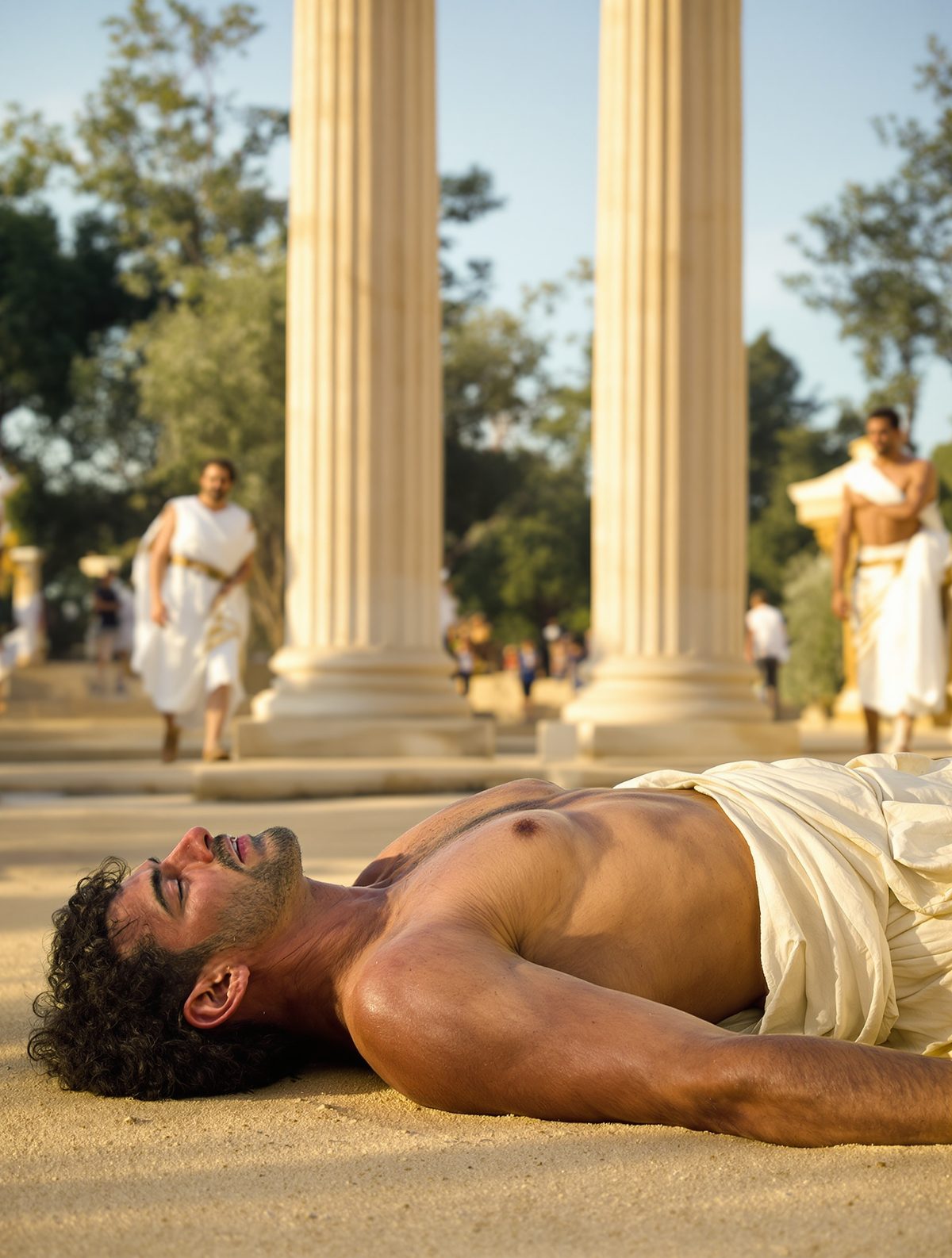
On March 28th, about 300 Praetorian soldiers marched to the imperial palace. When Pertinax came out to address them—confident he could win them over with reason—they cut him down without ceremony. His reign had lasted exactly 87 days. But what happened next would shock even the Romans, who thought they had seen everything.
The Most Shameless Sales Pitch in History
Standing over Pertinax's corpse, the Praetorian Guard faced a problem. They had just murdered their second emperor in three months. The Senate was furious. The legions were asking uncomfortable questions. And they had no obvious candidate to replace him with—at least, no one willing to pay their asking price.
Then Praetorian Prefect Quintus Aemilius Laetus had an idea so brazen it was almost genius. If they couldn't find a buyer privately, why not hold a public auction?
The Guard marched to the gates of Rome and made their announcement. The empire was for sale. Interested parties should come to the Praetorian camp with their offers. No financing available. Cash only. The highest bidder would receive the purple robes, the imperial seal, and command of thirty legions spanning three continents.
The reaction was immediate and explosive. Senators rushed to their homes to calculate their liquid assets. Wealthy merchants wondered if they had enough gold to buy an empire. Common citizens gathered in the Forum, unsure whether to laugh, cry, or flee the city entirely. Even by Roman standards—and Romans had witnessed some spectacular political theater—this was unprecedented.
Two Men, Two Fortunes, One Empire
When auction day arrived, only two serious bidders appeared at the Praetorian camp, both carrying the kind of wealth that could fund armies. The first was Titus Flavius Sulpicianus, father-in-law of the murdered Pertinax and a senator of impeccable credentials. He had rushed to the camp immediately after learning of his son-in-law's death, initially to seek justice, but now found himself in the surreal position of bidding for the throne.
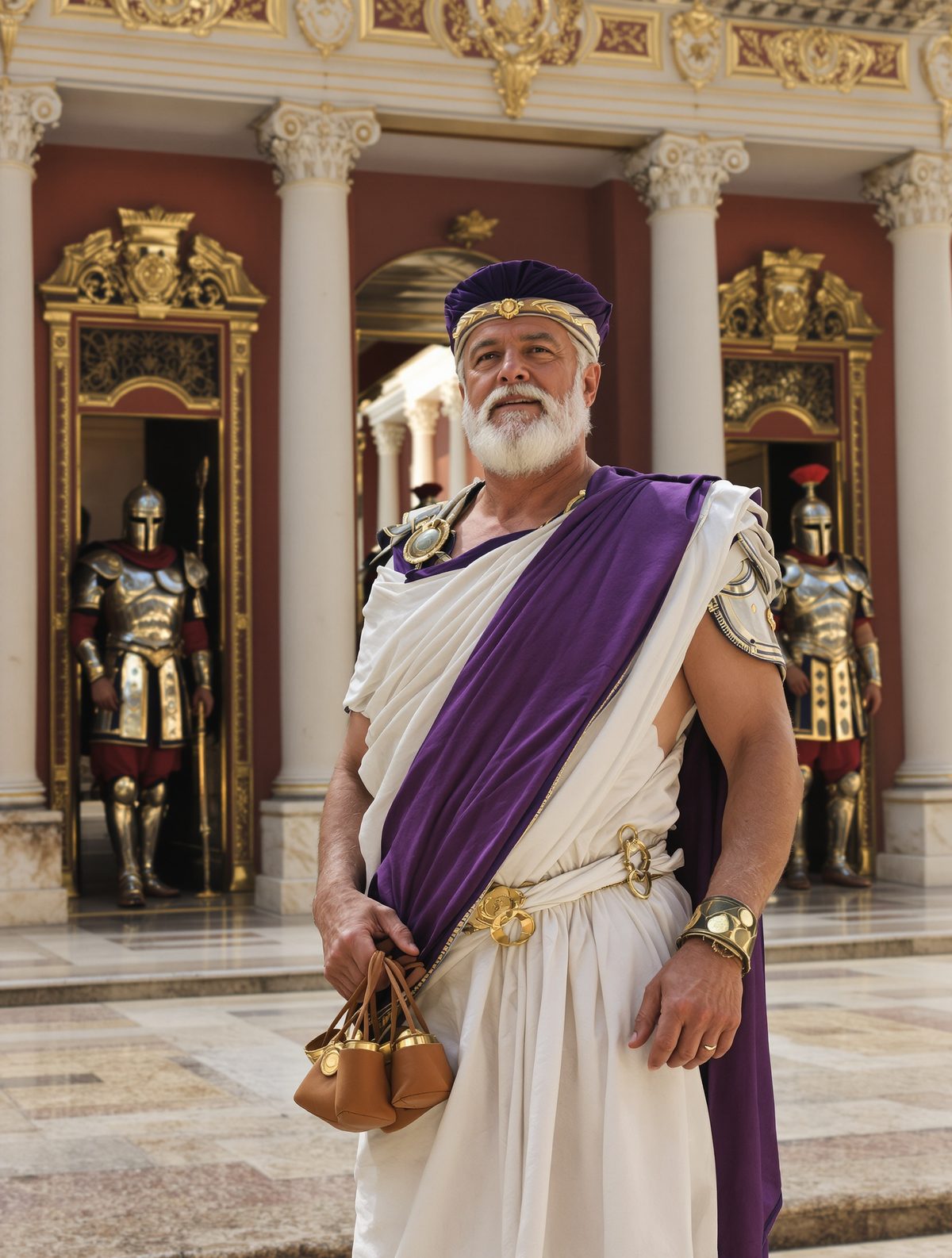
The second bidder was Marcus Didius Julianus, another wealthy senator known more for his riches than his principles. At 60 years old, Julianus had spent decades accumulating a fortune that rivaled the imperial treasury itself. His friends had reportedly convinced him to attend the auction, arguing that if someone was going to buy the empire, it might as well be him.
What followed was the most expensive auction in human history. The Praetorian Guard acted as auctioneers, shouting bids back and forth between the two senators like they were selling livestock. Sulpicianus opened with an offer of 20,000 sestertii per guardsman—already an astronomical sum that would have bankrupted most provinces.
Julianus countered with 25,000 sestertii per man. The bidding continued to climb. 30,000. 35,000. Finally, Julianus made an offer that ended the competition: 25,000 sestertii per guardsman, plus additional bonuses and promises of future rewards. The total package was worth roughly 250 million sestertii—enough to fund the entire Roman army for months.
The Praetorian Guard declared Julianus the winner. Just like that, a man had bought the Roman Empire.
The Buyer's Remorse That Shook the World
Didius Julianus quickly discovered that buying an empire and actually ruling it were two very different propositions. The moment news of the auction spread beyond Rome, the empire erupted in revolt. Legions across the provinces declared their own commanders emperor, refusing to acknowledge a ruler who had literally purchased his position.
In Britain, Clodius Albinus claimed the purple. In Syria, Pescennius Niger did the same. But the most dangerous challenger was Septimius Severus, commanding the powerful Danubian legions on the empire's northern frontier. When Severus heard about the auction, he reportedly declared that "the empire is not for sale" and began marching on Rome with 16 battle-hardened legions.
Meanwhile, in Rome itself, Julianus found that his purchased subjects had little enthusiasm for their new emperor. The people mocked him in the streets. The Senate treated him with barely concealed contempt. Even the Praetorian Guard who had sold him the throne began to have second thoughts as reports arrived of multiple armies marching on the capital.
Julianus's reign lasted just 66 days. When Severus's legions appeared outside Rome's walls, the Praetorian Guard made their final transaction—they sold out their purchased emperor. On June 1st, 193 AD, Julianus was executed in the imperial palace, still wearing the purple robes he had bought for more money than most people could imagine.
The Year of Five Emperors
The auction of 193 AD kicked off what historians call the "Year of Five Emperors"—a period of civil war that nearly tore the empire apart. Septimius Severus would eventually triumph, but not before years of warfare that devastated provinces and consumed vast resources.
Severus's first act as emperor was to disband the Praetorian Guard entirely, executing those who had participated in the auction and replacing them with loyal soldiers from his own legions. He declared that never again would the Guard be in a position to sell the empire to the highest bidder.
But the damage was done. The auction had revealed something deeply disturbing about the Roman system: the throne had become so disconnected from any legitimate source of authority that it could literally be bought and sold like merchandise. The empire would continue for centuries, but the mystique of imperial power never fully recovered from that day when it was auctioned off like a used chariot.
When Democracy Goes to the Highest Bidder
The auction of 193 AD serves as perhaps history's most literal example of what happens when political power becomes a commodity to be bought rather than earned or legitimately transferred. In our modern world, where concerns about money in politics dominate headlines and wealthy individuals can spend unlimited amounts influencing elections, the story of Didius Julianus feels disturbingly relevant.
The Roman Empire survived the auction, but it was never quite the same. Trust in institutions, once broken, proved nearly impossible to fully restore. The precedent set by the Praetorian Guard—that loyalty could be bought, that sacred oaths meant nothing against sufficient gold—echoed through the remaining centuries of Roman history.
Today, as we grapple with questions about the role of wealth in determining political outcomes, the auction of 193 AD stands as a stark reminder of what happens when the answer to "How much is power worth?" becomes "Whatever someone is willing to pay for it." The Romans learned the hard way that some things shouldn't be for sale. The question is: have we?