The crowd at Olympia fell silent as they watched two of Greece's greatest fighters locked in mortal combat. One man's arm was wrapped around his opponent's throat in a crushing chokehold, victory seemingly within his grasp. But in the span of a few heartbeats, the tide would turn in the most extraordinary fashion. When the dust settled, judges would crown a champion who would never hear the roar of applause—because Arrhichion of Phigalia had just achieved the impossible: winning an Olympic gold medal while dead.
This wasn't just another athletic competition. This was pankration at the 54th Olympic Games in 564 BC, where men fought with everything short of biting and eye-gouging until one submitted or could no longer continue. What happened in that final match would become the stuff of legend, a story so incredible that it would be retold for over two millennia.
The Brutal World of Ancient Olympic Combat
To understand the magnitude of Arrhichion's final victory, you need to grasp just how savage ancient Olympic competition truly was. The Olympics we know today—with their emphasis on participation, sportsmanship, and protective gear—would have been utterly foreign to ancient Greeks. These were contests where death wasn't just a possibility; it was an occupational hazard.
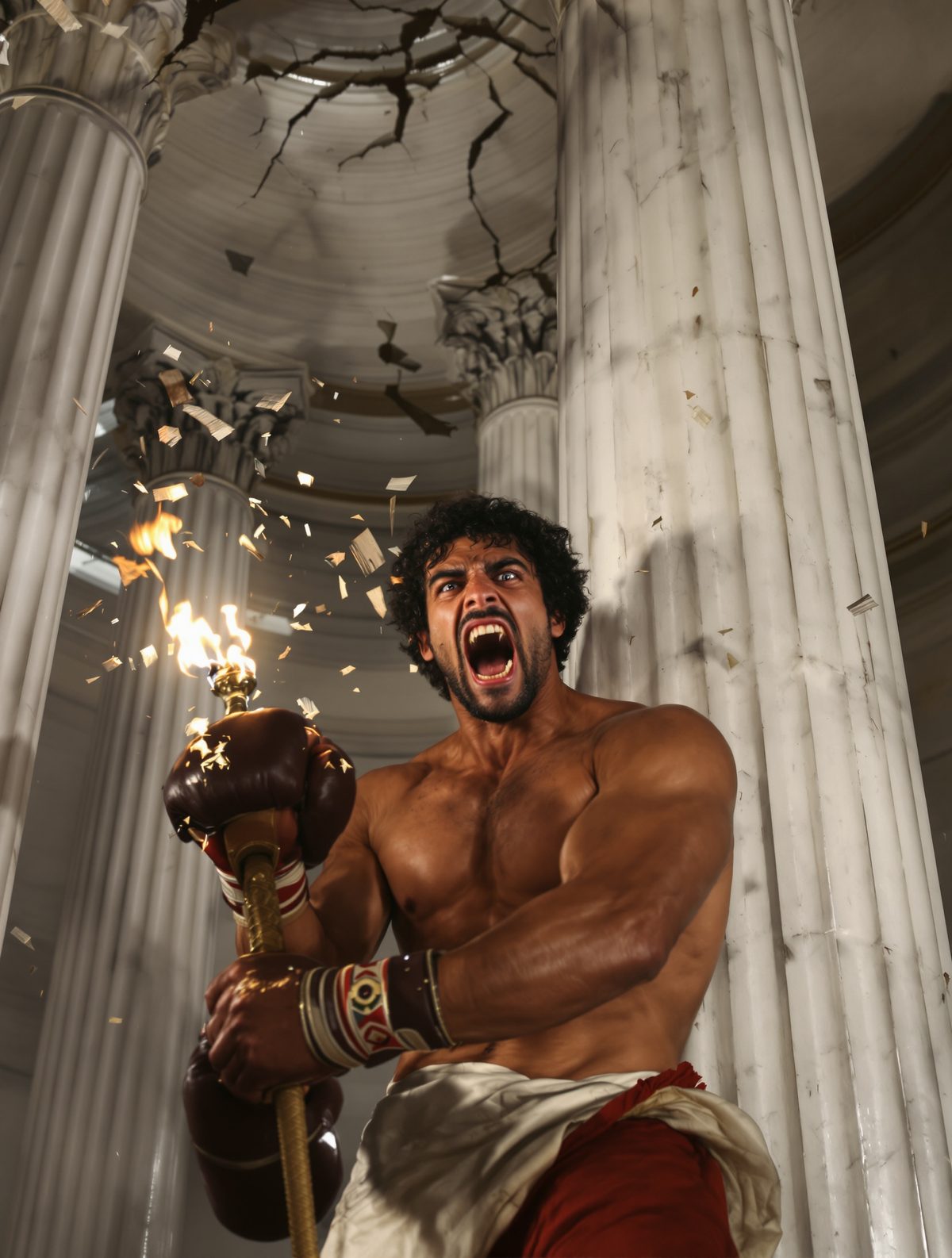
Pankration, introduced to the Olympics in 648 BC, was essentially mixed martial arts without rules. The name literally means "all powers" in Greek, and competitors could punch, kick, wrestle, and apply joint locks and chokes. Only biting and gouging out eyes were forbidden—everything else was fair game. Fighters competed completely nude, their bodies glistening with olive oil, making holds even more difficult to maintain and escapes more treacherous.
The arena wasn't a soft-matted ring but hard-packed earth under the blazing Mediterranean sun. There were no rounds, no time limits, no referee to stop the action if things got too dangerous. Matches continued until one fighter either raised his hand in submission—called "acknowledging defeat"—or was rendered unconscious or dead. This was combat sports at its most primal and unforgiving.
By 564 BC, Arrhichion had already proven himself a master of this brutal art. He'd won the pankration competition at two previous Olympics—in 572 BC and 568 BC—making him one of only a handful of men to achieve such dominance. But now, at what would be his final Olympics, he was no longer the young lion who had first seized victory. His body bore the accumulated damage of years in the arena, and he entered the competition already nursing injuries that would have sidelined a lesser warrior.
A Champion's Last Stand
The 54th Olympic Games attracted competitors from across the Greek world. City-states sent their finest athletes not just for glory, but for the immense prestige that Olympic victory brought. A pankration champion didn't just win a crown of olive leaves—he became a living legend, his hometown often providing him with free meals for life and front-row seats at all public events.
Arrhichion arrived at Olympia as the defending champion, but whispers followed him through the training grounds. His movements weren't as fluid as they once were. His reflexes, while still formidable, had lost that lightning-quick edge that separated champions from mere competitors. Some observers noted he seemed to favor one side of his body, suggesting an injury that hadn't fully healed.
Yet he pressed forward through the preliminary rounds, dispatching opponents with the calculated precision of a master craftsman. This was a man who had studied every possible hold, every pressure point, every way one human body could dominate another. His experience compensated for what age and injury had stolen from his physical abilities.
But the finals would present his greatest challenge yet. His opponent—whose name history has frustratingly failed to preserve—was younger, stronger, and hungrier for the glory that had twice eluded him in previous competitions. Ancient sources describe him as a formidable grappler with particular expertise in choke holds, the kind of fighter who could put you to sleep before you realized you were in danger.
The Final Moments of Immortality
The match began at midday, with thousands of spectators packed into the stadium. Among them sat officials from dozens of Greek city-states, wealthy merchants, poets looking for their next epic subject, and common citizens who had traveled for days just to witness Olympic competition.
From the opening moments, it was clear this would not be a quick victory for either man. They grappled and struck, tested each other's defenses, searched for that one opening that would lead to dominance. Arrhichion's experience showed as he countered several submission attempts, but his opponent's youth and strength gradually began to tell.
Then it happened. Arrhichion's opponent managed to slip behind him and lock in what modern fighters would recognize as a rear naked choke. His arm wrapped around Arrhichion's throat like a python, cutting off the blood flow to his brain. In the brutal mathematics of pankration, this was usually the end—a fighter caught in such a hold had perhaps seconds to escape before unconsciousness took him.
The crowd could see what was happening. Arrhichion's face was turning red, then purple. His struggles were becoming weaker, more desperate. His opponent tightened the hold, sensing victory was mere moments away. All he had to do was maintain the choke for a few more seconds, and he would be Olympic champion.
But Arrhichion had one last card to play. As his vision darkened and consciousness slipped away, he managed to shift his weight and grab his opponent's foot. With the final surge of strength that only comes from a man facing death, he twisted violently, dislocating his opponent's ankle with an audible pop that spectators later claimed they could hear over the roar of the crowd.
The pain was immediate and excruciating. Unable to bear the agony of his shattered ankle, Arrhichion's opponent raised his hand in submission—the universal signal of defeat in pankration.
Victory in Death, Glory Eternal
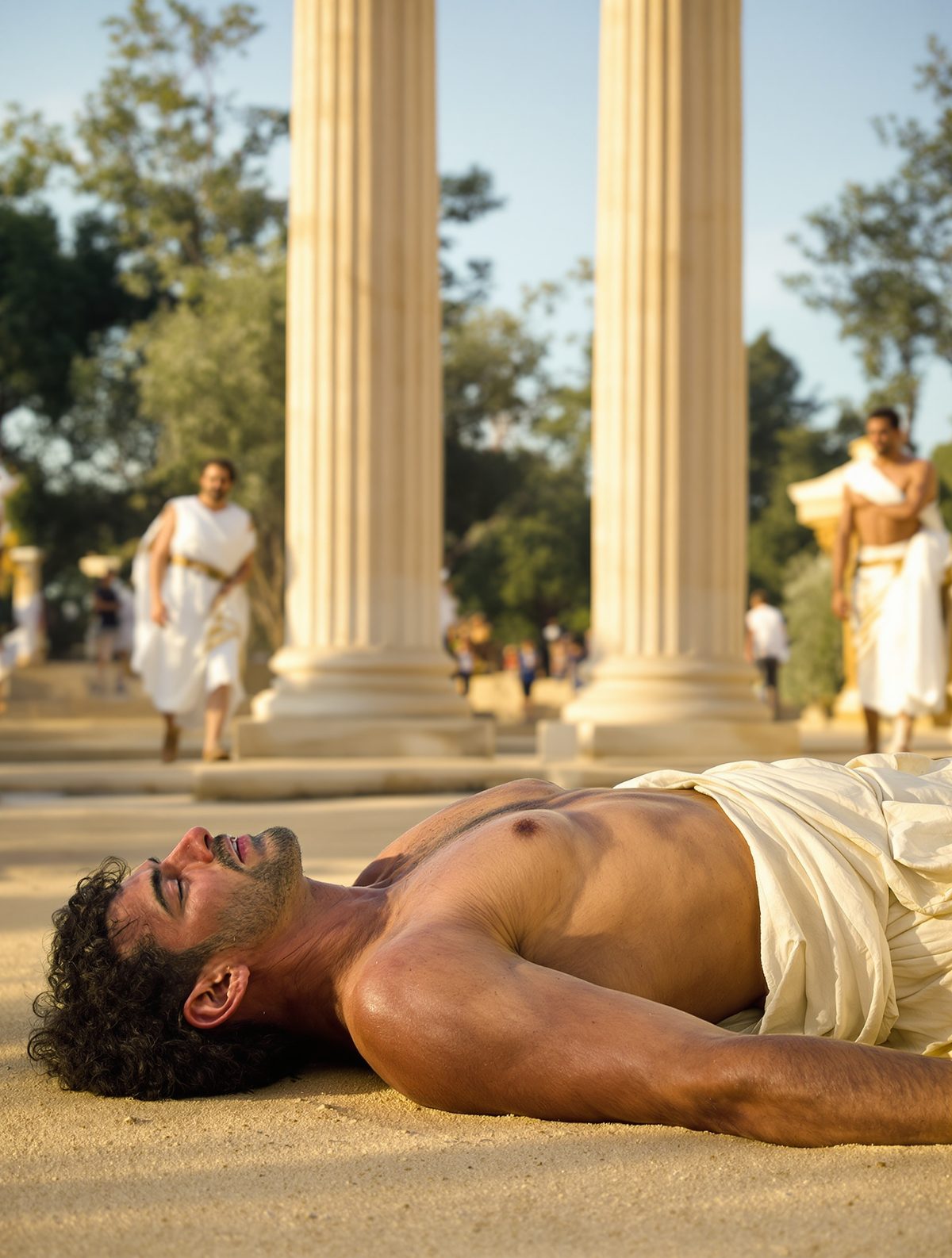
The crowd erupted as they saw the submission, but their cheers quickly turned to stunned silence. Arrhichion wasn't moving. He lay motionless on the hard earth, his body slack, his eyes staring sightlessly at the Greek sky. The realization rippled through the stadium like a wave: the champion was dead.
Olympic officials faced an unprecedented situation. Never before had a competitor died at the exact moment of victory. After hurried consultation, they made a decision that would echo through history: Arrhichion would be declared the winner. He had not submitted, and his opponent had acknowledged defeat. By the rules of pankration, Arrhichion was the Olympic champion—posthumously.
The victory ceremony that followed was unlike any other in Olympic history. Instead of stepping forward to receive his olive crown, Arrhichion's lifeless body was propped up while officials placed the winner's wreath on his head. The crowd, initially stunned into silence, began to cheer—not just for a victory, but for the most incredible display of warrior spirit they had ever witnessed.
News of Arrhichion's posthumous victory spread throughout the Greek world faster than wildfire. Poets composed verses about the man who refused to surrender even to death itself. His hometown of Phigalia erected a statue in his honor, and his story became required telling at athletic competitions across Greece. The philosopher Apollodorus would later write: "He conquered his rival while being conquered by death."
The Legacy of the Ultimate Competitor
Arrhichion's story resonates across the millennia because it captures something fundamental about the human spirit—the refusal to quit even when facing impossible odds. In our modern world of participation trophies and safety regulations, his tale might seem like brutal ancient barbarism. But look deeper, and you'll find a truth that transcends any single era: greatness often requires sacrifice that goes beyond what we think humanly possible.
Today's Olympic athletes, despite all our advances in sports science and safety protocols, still understand what Arrhichion knew in his final moments. Victory sometimes demands everything you have, and then a little bit more. The difference is that modern competitors are protected by rules designed to preserve life—ancient Greek athletes competed knowing that glory might come at the ultimate price, and they chose to compete anyway.
Arrhichion's victory also raises profound questions about what constitutes winning. He achieved his goal—Olympic victory—but never experienced the joy of success, never heard the crowd's acclaim, never felt the olive wreath placed on his head. His triumph was complete and hollow simultaneously, perfect and tragic in equal measure. In a world obsessed with experiencing and sharing every moment of success, Arrhichion reminds us that some victories exist beyond personal gratification—they become gifts to history, inspiration for generations yet unborn.
The next time you face a moment when giving up seems like the rational choice, remember the man who won his greatest victory after he was already gone. Sometimes the most important battles aren't won by those who live to celebrate them, but by those who refuse to surrender even when surrender would be merciful. In the end, Arrhichion's legacy isn't just about athletic achievement—it's about the price of immortality, and whether some victories are worth dying for.