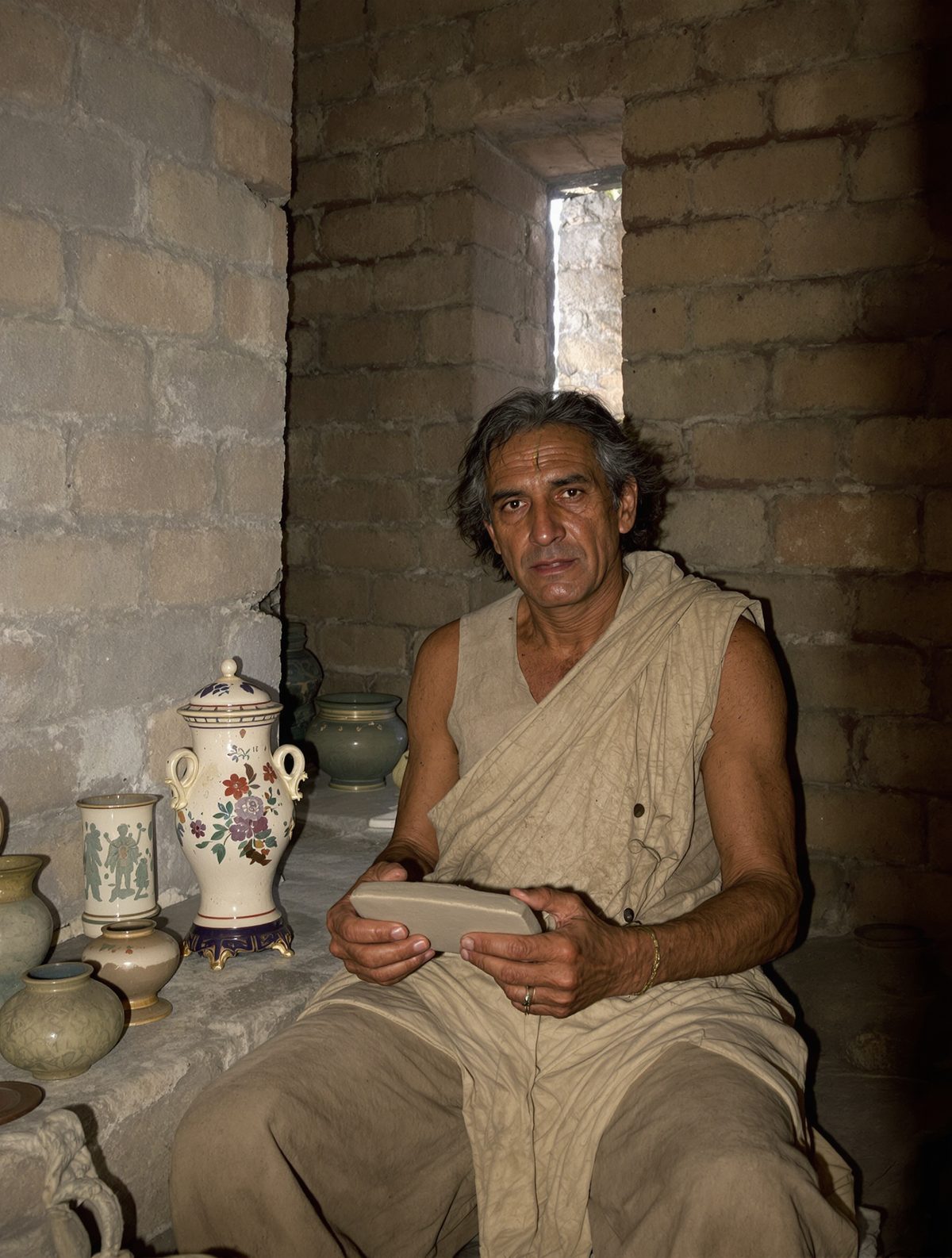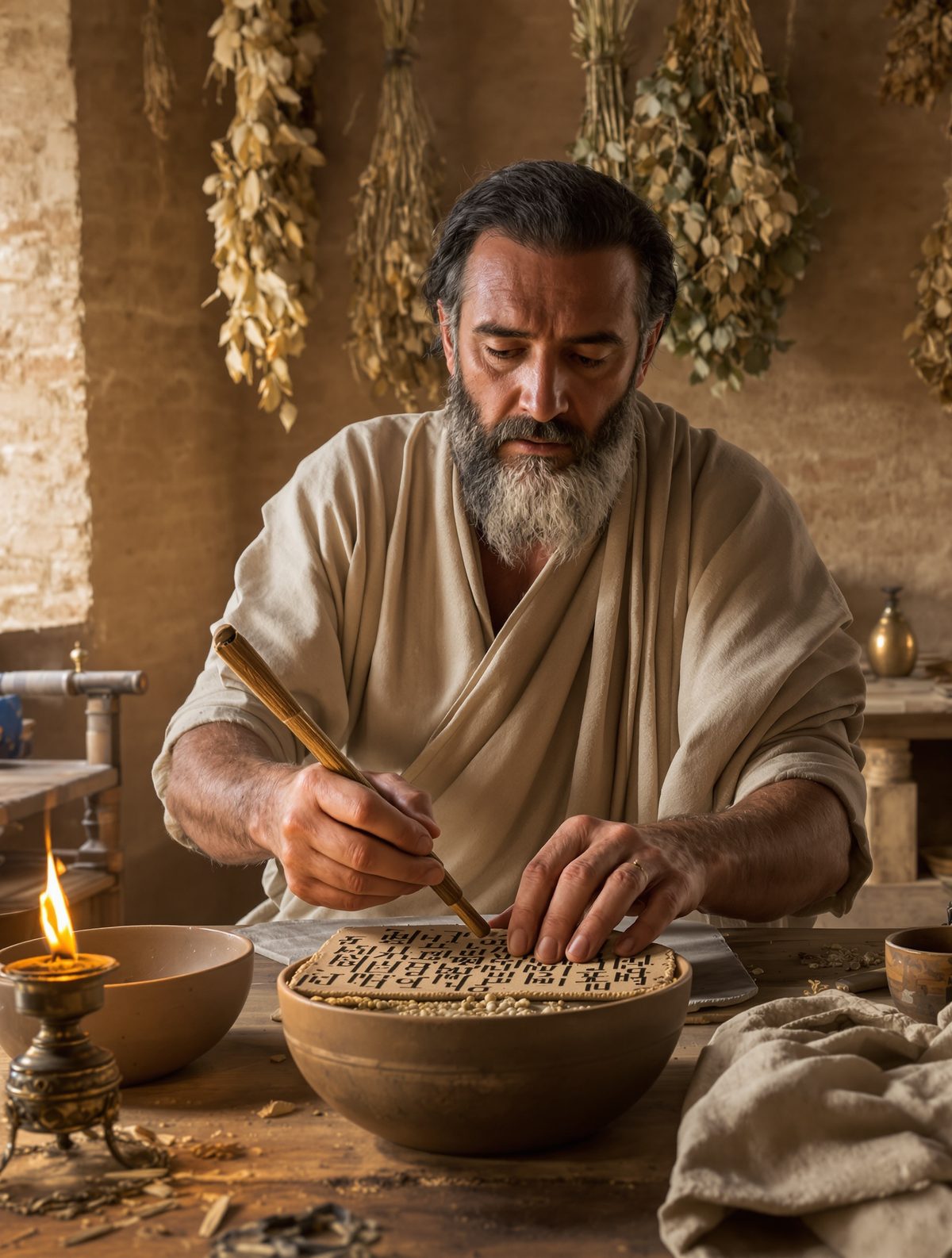
The clay tablet was still warm from the kiln when Lulu pressed his reed stylus into its surface one final time. It was 2700 BC in the ancient Sumerian city of Nippur, and this physician had just done something no human being had ever done before. He had written down exactly how to make medicine.
The patient—a young merchant named Enlil-bani—lay on a reed mat nearby, his infected leg wound finally beginning to heal after days of Lulu's careful treatment. But Lulu wasn't satisfied with simply curing one man. As he carved the final cuneiform symbols into the clay, he was creating something that would outlast empires: the world's first medical prescription.
The recipe was deceptively simple. Two parts beer, one part crushed turtle shell, a pinch of salt from the Persian Gulf, and tree resin from the cedar forests of Lebanon. Mix at dawn, apply to wound at midday, wrap with clean linen. But in those 47 wedge-shaped marks pressed into clay, Lulu had just invented the foundation of modern medicine—the idea that healing knowledge should be recorded, shared, and perfected.
The Healer Who Changed Everything
Lulu wasn't just any physician. Archaeological evidence suggests he served in the temple complex of Enlil, the Sumerian god of wind and storms, where he treated everyone from high priests to canal diggers. Unlike the medicine men of other cultures who guarded their secrets jealously, Lulu belonged to a revolutionary tradition—the Sumerian scribal schools that had already given the world the first written language, the first law codes, and the first literature.
But medicine remained stubbornly oral. For thousands of years, healers had passed down their knowledge through apprenticeships, songs, and sacred rituals. A master physician might train a handful of students in his lifetime, and when he died, decades of hard-won medical knowledge often died with him. Lulu was about to change all that.
The breakthrough came, according to later Sumerian texts, when Lulu treated a series of wounded soldiers returning from campaigns against the Elamites. Faced with dozens of infected wounds and limited time, he began systematically testing different combinations of treatments. Some worked. Others failed catastrophically. And for the first time in medical history, someone wrote it all down.
Beer, Shells, and Ancient Chemistry
Modern analysis of Sumerian medical tablets reveals that Lulu's prescription wasn't primitive folk medicine—it was sophisticated pharmacology. The beer wasn't just a pleasant-tasting vehicle for medicine; Sumerian beer was thick, nutrient-rich, and contained natural antibiotics from the fermentation process. Archaeological evidence from Sumerian breweries shows they used techniques that wouldn't look out of place in a modern pharmaceutical lab.
The turtle shell powder was even more ingenious. Turtle shells contain high concentrations of calcium carbonate and trace minerals that promote tissue regeneration. When mixed with the slightly acidic beer, it created a paste with the perfect pH balance for wound healing. Lulu had accidentally invented what we would recognize today as a topical antibiotic with mineral supplements.
But perhaps the most remarkable ingredient was the tree resin. Cedar resin from Lebanon contains powerful antiseptic compounds—the same ones that made cedar wood so prized for Egyptian mummies. Trade records carved in cuneiform show that a single ounce of Lebanese cedar resin cost more than a month's wages for a skilled craftsman. Lulu was literally prescribing liquid gold.
The salt wasn't just a preservative. The Sumerians had discovered that salt from different sources had different healing properties. Persian Gulf salt contained trace elements of magnesium and potassium that helped reduce inflammation. Lulu's prescription specified not just salt, but salt from a specific location—the first example in history of pharmaceutical sourcing requirements.
The Clay Tablet That Started It All
The original tablet containing Lulu's prescription was discovered in 1889 by German archaeologist Hermann Hilprecht, but its true significance wasn't recognized for decades. Buried in the ruins of Nippur's temple complex, the tablet had survived floods, invasions, and 4,700 years of desert sandstorms. When cuneiform expert Samuel Noah Kramer finally translated it in 1954, he realized he was looking at something extraordinary.
The tablet didn't just contain one prescription—it contained fifteen. Lulu had created the world's first medical reference book. There were treatments for everything from kidney stones (a mixture of ground minerals and goat's milk) to depression (a complex brew involving poppy extracts and honey). Each prescription included precise measurements, preparation instructions, and even dosage guidelines based on the patient's age and weight.
Most remarkably, Lulu had included what we would recognize today as clinical trial notes. Next to several prescriptions, he had carved symbols indicating how many patients he had treated, success rates, and side effects. One treatment for fever came with the warning: "Do not give to pregnant women or children under seven summers." Lulu had invented evidence-based medicine 4,700 years before the term existed.
The Birth of Medical Literature
Word of Lulu's innovation spread quickly through the Sumerian Empire. Within a generation, physicians across Mesopotamia were creating their own medical tablets. The Great Library of Ashurbanipal, built 2,000 years later, contained over 800 medical texts—all descendants of Lulu's original concept.
But Lulu's influence extended far beyond medicine. The idea that practical knowledge should be written down, tested, and improved upon became a cornerstone of Sumerian civilization. Agricultural manuals appeared describing crop rotation techniques. Engineering texts documented architectural innovations. Military treatises analyzed battle tactics. Lulu had accidentally invented the concept of technical writing.
The prescription format he created—listing ingredients, quantities, preparation methods, and usage instructions—became the template for technical documentation that we still use today. Every cookbook, every assembly manual, every software tutorial traces its lineage back to those cuneiform marks pressed into clay in ancient Nippur.
Even more importantly, Lulu established the principle that medical knowledge belonged to humanity, not to individual practitioners. By writing down his treatments, he was essentially open-sourcing medicine. Other physicians could read his work, test his theories, and build upon his discoveries. Medical progress, which had crawled along for millennia, suddenly began to accelerate.
Legacy Written in Stone
Archaeological evidence suggests that Lulu's prescriptions were still being used more than 1,000 years after his death. Tablets found in Babylonian cities contain references to "the treatments of Lulu of Nippur." Egyptian medical papyri include adaptations of his wound-healing formulas. Even early Greek physicians like Hippocrates may have been influenced by Sumerian medical texts that ultimately traced back to Lulu's innovations.
The turtle shell prescription that started it all proved remarkably durable. Variations of the formula appear in medical texts from China, India, and medieval Europe. As late as the Renaissance, European physicians were prescribing treatments that bore a striking resemblance to Lulu's 4,700-year-old recipe. The active ingredients he identified—antiseptics, mineral supplements, and alcohol-based solutions—remain staples of modern wound care.
Today, when a doctor scribbles a prescription on a pad and hands it to a patient, they're participating in a ritual that began with Lulu pressing a reed stylus into wet clay. When pharmaceutical companies document their formulas, test their effectiveness, and publish their results, they're following protocols that trace back to ancient Nippur. When medical students learn treatments that have been refined and improved over generations of practitioners, they're benefiting from the revolutionary idea that one Sumerian physician had nearly five millennia ago.
In our age of precision medicine and personalized treatments, it's humbling to remember that it all started with a man named Lulu who simply wanted to help more people heal. His clay tablet, now housed in the University of Pennsylvania Museum, remains one of humanity's most important documents—proof that the desire to preserve and share knowledge for the benefit of future generations is as old as civilization itself. Sometimes the most profound revolutions begin with the simplest acts of human compassion.