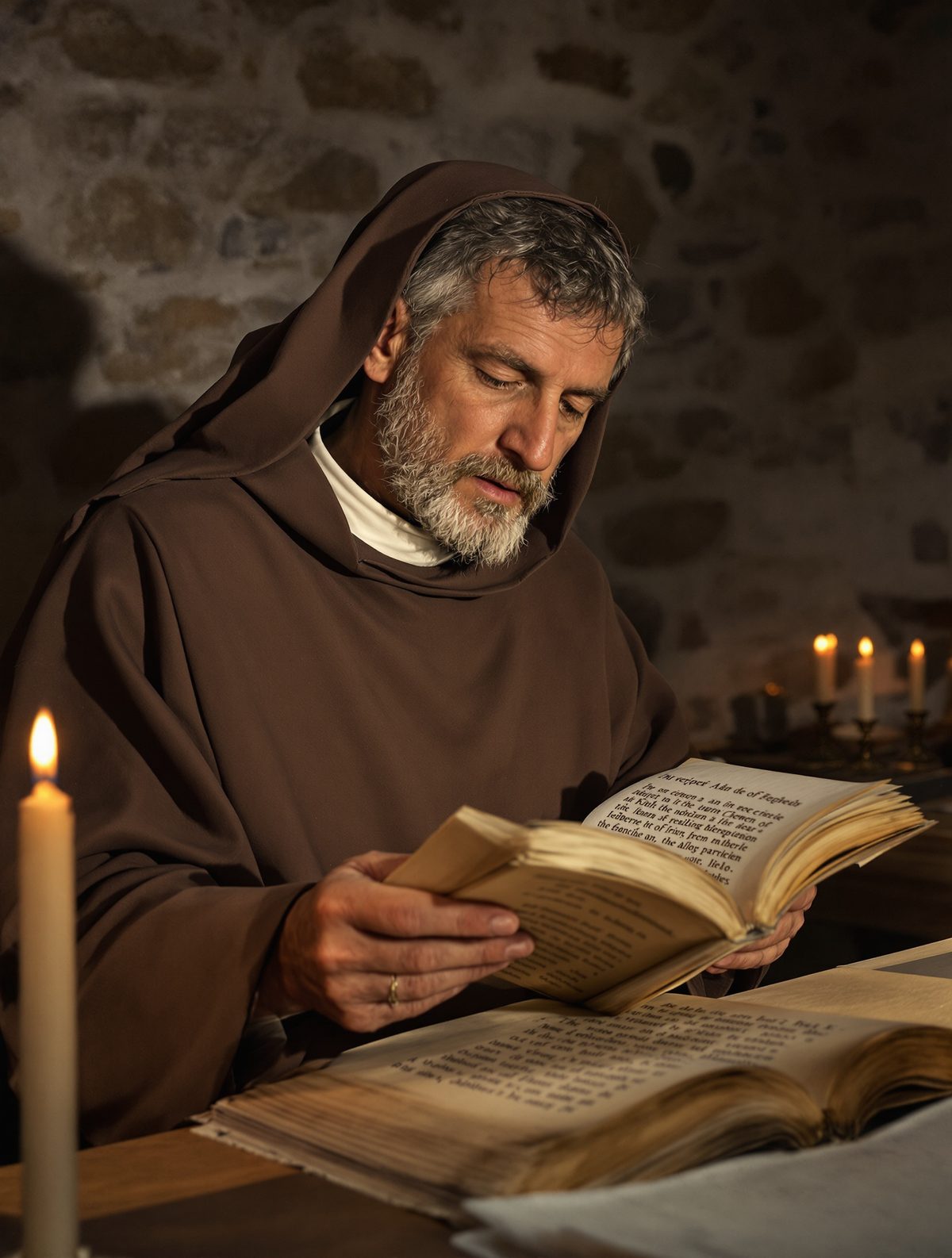

The wooden spoon trembled in Brother Aldric's weathered hands as he stared at the mountain of food before him. Wheels of cheese towered like fortress walls. Loaves of bread formed battlements. Barrels of ale and wine stood sentinel around the refectory table. Outside the abbey walls, the clash of steel and the shouts of mercenaries echoed through the morning air. Inside, thirty-seven monks watched in horrified silence as their brother prepared to commit the most unusual act of sacrifice in medieval history.
It was October 15th, 1224, and Brother Aldric was about to eat himself to death to save them all.
When War Came to God's House
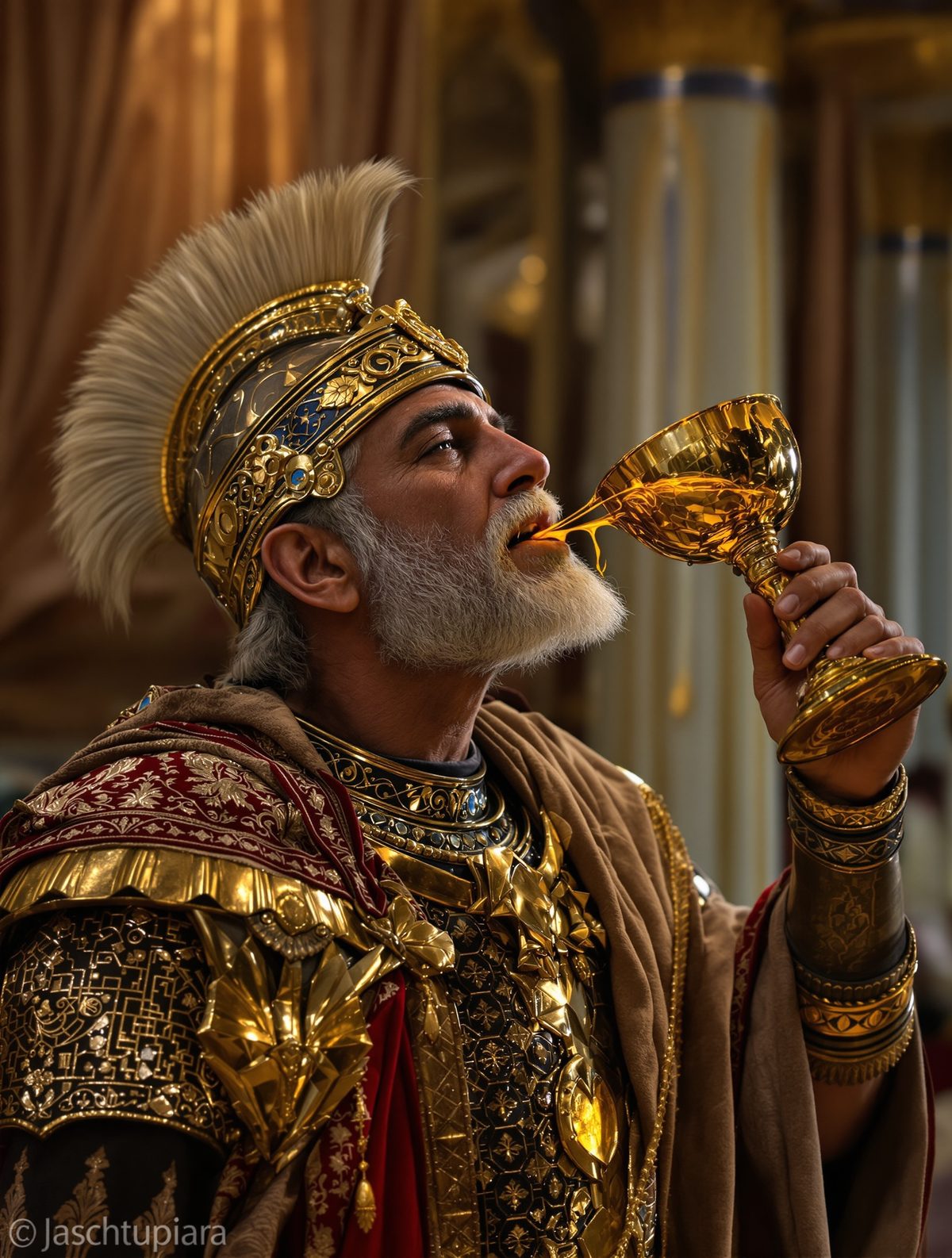
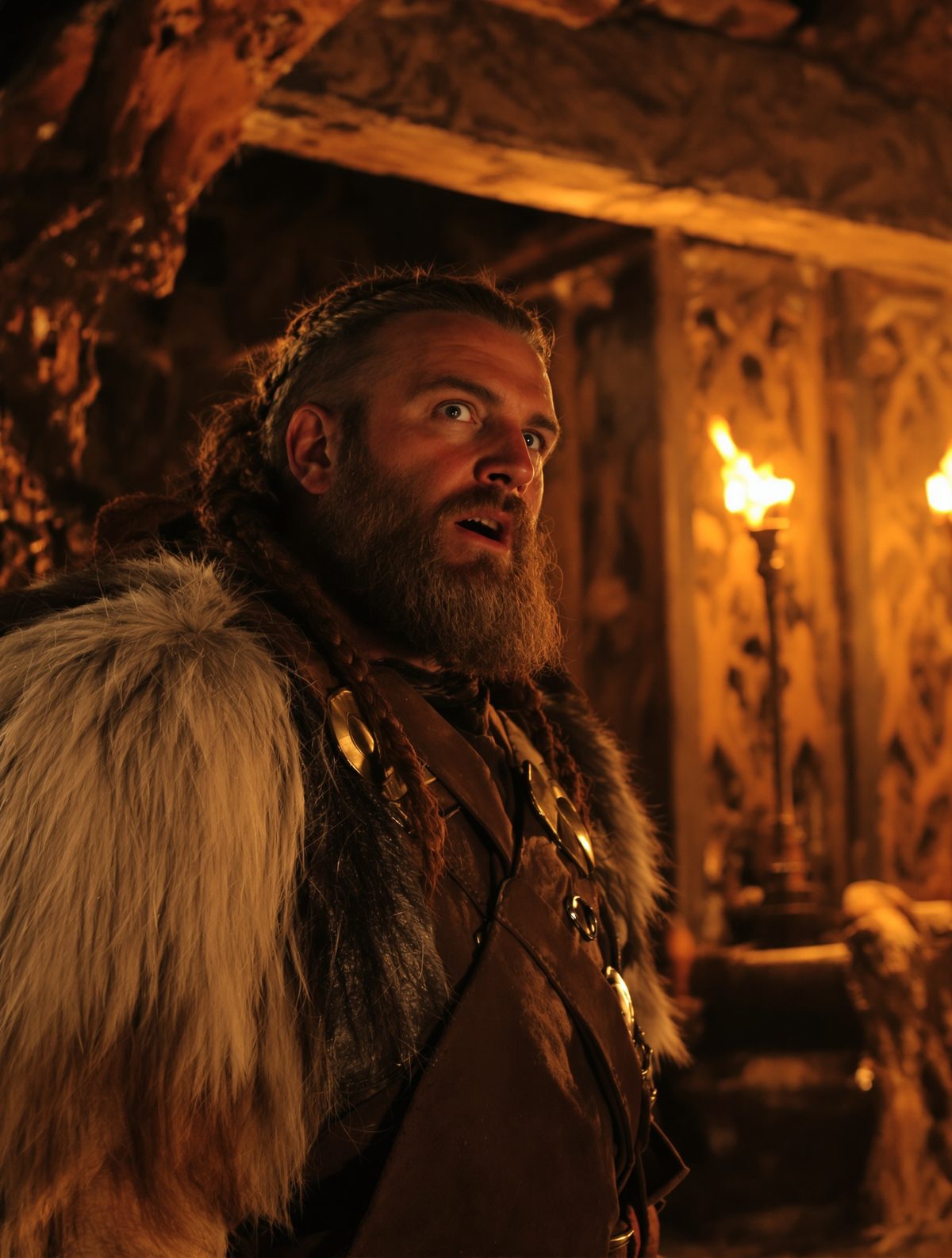
The Abbey of Saint-Denis had stood as a beacon of learning and spirituality in northern France for over four centuries when Captain Guillaume de Montfort and his company of mercenaries came thundering across its carefully tended fields. These weren't the noble knights of chivalric romance—they were routiers, professional soldiers who sold their swords to the highest bidder and lived off the land like locusts.
The mercenaries had been hired by a local lord embroiled in one of the countless feudal disputes that plagued medieval France, but when their employer ran out of coin, they simply decided to collect their wages from whoever had wealth worth taking. The Abbey of Saint-Denis, with its golden reliquaries and well-stocked granaries, presented an irresistible target.
Brother François, the abbey's chronicler, recorded the terrifying scene in his journal: "They came like demons from Hell itself, their armor black with soot and blood, their banners bearing no noble coat of arms, only the crude symbols of murder and greed." What the good brother didn't know was that these mercenaries employed a particularly cruel siege tactic—they would surround their target and simply wait, allowing starvation to do their work for them. It was cheaper than assault ladders and battering rams, and it guaranteed that any survivors would be too weak to resist.
The Mathematics of Desperation
Inside the abbey walls, Abbot Bernard quickly took stock of their situation. Thirty-seven monks, twelve novices, and six lay brothers—fifty-five souls in total. Their granaries held enough food for perhaps three weeks if carefully rationed. The mercenaries showed no signs of leaving, having established a proper camp complete with cooking fires and makeshift latrines. They were clearly prepared for a long siege.
Medieval siege warfare was a brutal numbers game. Historical records from the period show that a defending force typically consumed their food stores within two to four weeks, depending on their preparation and the size of their garrison. After that came the horror of true starvation—first the leather belts and book bindings, then bark stripped from trees, and finally, in the most desperate cases, acts too terrible for the chroniclers to record.
The monks tried everything they could think of. They sent messages via trusted servants, begging neighboring lords for assistance. They offered to pay ransom from their modest treasury. They even attempted to negotiate directly with Captain de Montfort, but the mercenary leader's response was brutally simple: surrender everything of value, or starve.
It was then that Brother Aldric, a fifty-three-year-old monk who had served the abbey for over thirty years, proposed his desperate plan.
The Last Supper of Saint-Denis
Brother Aldric's strategy was based on a profound understanding of medieval siege psychology. If the mercenaries believed the abbey was already experiencing deaths from starvation, they might break camp and seek easier prey rather than wait weeks more for a handful of starving survivors to emerge.
The plan was as brilliant as it was horrifying: Aldric would consume the abbey's entire remaining food supply in a single, massive feast. His inevitable death would be staged for the mercenaries to witness, convincing them that the monks inside were already dying of hunger. The remaining brothers would then survive on carefully hidden reserves that Aldric had helped them conceal throughout the monastery's many chambers and passages.
What makes this story even more remarkable is the sheer quantity of food involved. According to Brother François's detailed records, Aldric prepared to consume: forty-seven loaves of bread, six wheels of aged cheese, thirty-two apples, two entire roasted chickens, eight pounds of salted pork, countless eggs, and washing it all down with wine, ale, and milk. Modern medical experts estimate this represented roughly 15,000-20,000 calories—enough food to sustain a grown man for more than a week.
The feast began at dawn on October 16th. Brother François wrote: "Our beloved Aldric sat before this mountain of sustenance like a warrior facing his final battle. He blessed the food, blessed us all, and began to eat with the methodical determination of a man building his own tomb, bite by bite."
A Death Both Sacred and Strategic
What followed was both magnificent and terrible to behold. Brother Aldric ate steadily for six hours straight, pausing only to drink wine or water. His fellow monks took turns reading scripture aloud, singing hymns, and offering prayers for his soul. As the hours passed, Aldric's breathing became labored, his face flushed red, then pale. Yet he continued eating with grim determination.
Medieval medicine had no understanding of acute gastric dilatation or cardiac stress from massive food consumption, but the monks could see their brother's body beginning to fail. By midday, Brother Aldric could barely lift the food to his mouth. His hands shook violently, and sweat poured down his face despite the October chill.
The end came suddenly. At approximately two o'clock in the afternoon, Brother Aldric collapsed forward onto the table, his body finally succumbing to the massive strain he had imposed upon it. Brother François recorded the moment with heartbreaking simplicity: "And so our beloved brother gave his life as surely as any martyr, though his weapon was bread instead of sword, and his battlefield a humble wooden table."
But Aldric's sacrifice was only the beginning of the deception. The monks immediately began their macabre theater, carrying their brother's body to the abbey's highest window where the mercenaries could clearly see it, wailing and mourning in exaggerated fashion, and even staging fake arguments over the remaining scraps of food.
The Fruits of an Impossible Gamble
The psychological warfare worked beyond their wildest hopes. Captain de Montfort, seeing what appeared to be clear evidence that the monks were already dying of starvation, faced a crucial decision. His men were growing restless after days of inactivity, and rumors had reached him of a wealthy merchant caravan traveling the roads just two days' ride to the south.
Why wait weeks for a handful of starving monks to surrender their meager treasures when rich merchants with full purses were practically begging to be robbed? On October 18th, just two days after Brother Aldric's death, the mercenaries broke camp and rode south in search of easier prey.
The monks of Saint-Denis were saved, though at a terrible cost. They mourned Brother Aldric as both martyr and hero, eventually petitioning Rome for his canonization (though the Church, perhaps understandably, declined to make a saint of someone who had died from gluttony, however noble his intentions).
Brother François completed his chronicle of these events in 1225, writing: "Let no man say that the servants of God know not the arts of war, for Brother Aldric defeated thirty armed men with nothing but his own appetite and the courage to die for his brothers."
The Strangest Hero of Medieval France
Brother Aldric's story challenges everything we think we know about medieval heroism. In an age that celebrated the warrior's sword and the knight's lance, a humble monk saved his community with the most unlikely weapon imaginable: food itself. His sacrifice reminds us that heroism takes many forms, and that sometimes the greatest acts of courage happen not on battlefields, but at dinner tables.
In our modern world of calculated risks and safety nets, it's difficult to imagine the desperate circumstances that would drive someone to such an extreme sacrifice. Yet Brother Aldric's story resonates because it speaks to something timeless about human nature—our willingness to give everything for those we love, even when the method of giving defies all logic and convention.
Perhaps most remarkably, this bizarre episode of medieval history worked precisely because it was so unthinkable. The mercenaries never suspected deception because who could imagine anyone deliberately eating themselves to death? Sometimes the most effective strategies are those so outrageous that no one thinks to guard against them.
Brother Aldric died as he had lived—in service to his community, with quiet determination, and in a manner so uniquely his own that eight centuries later, we're still trying to understand the strange courage of the monk who turned gluttony into heroism.