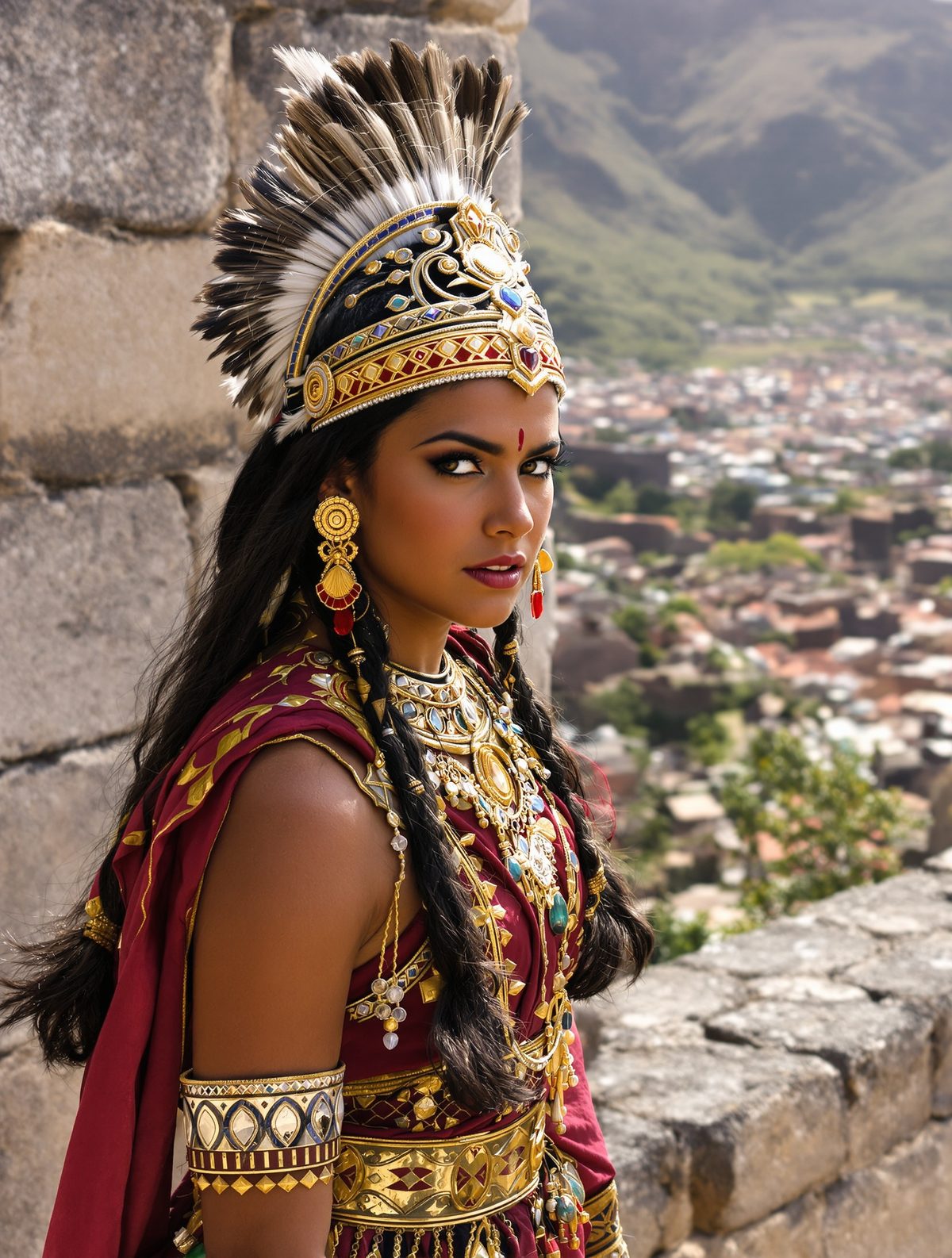
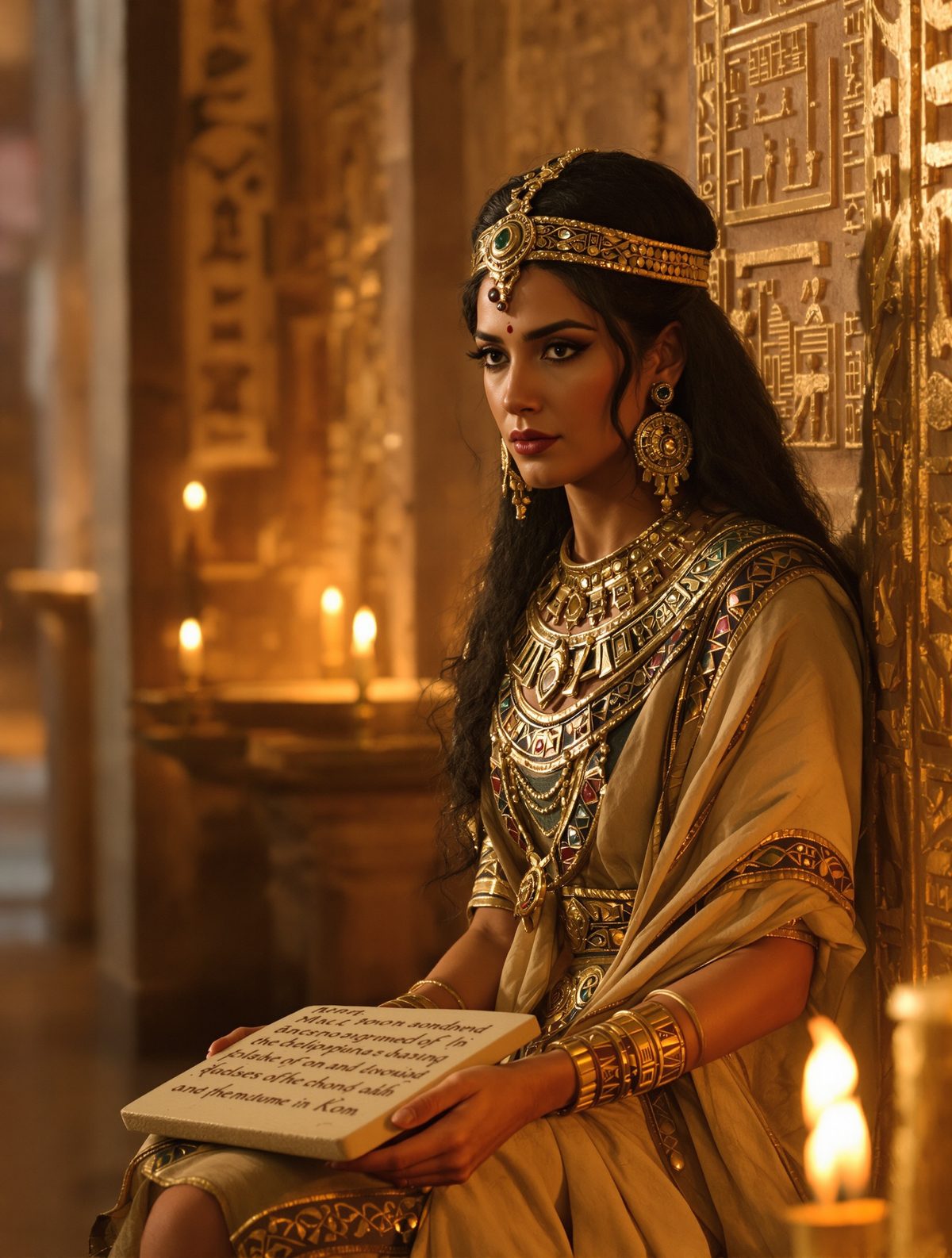
Picture this: A powerful priestess sits in exile, stripped of her sacred robes and banished from the gleaming ziggurat that had been her kingdom. But instead of accepting defeat, she picks up a reed stylus and presses it into wet clay. The words she carves will echo through 4,000 years of human history, making her the first person we know by name to say "I wrote this."
Her name was Enheduanna, and in 2285 BC, she did something that would change civilization forever: she signed her work.
The Princess Who Ruled Through Prayer
Long before Homer sang of Troy or Moses parted seas, Enheduanna wielded power from atop the great ziggurat of Ur in ancient Mesopotamia. Born around 2285 BC, she was no ordinary princess—she was the daughter of Sargon of Akkad, the world's first emperor, who had conquered the Sumerian city-states and forged history's first multi-ethnic empire.
But Sargon was clever. Rather than simply crushing Sumerian culture, he wove it into his empire's fabric. His masterstroke? Installing his daughter as high priestess of Nanna, the moon god, at Ur's most important temple. This wasn't just nepotism—it was political genius wrapped in religious authority.
Imagine the scene: A young woman ascending the massive ziggurat's 150-foot height, its mud-brick steps gleaming in the Mesopotamian sun. Below her stretched the bustling city of Ur, with its 65,000 inhabitants going about their daily lives. From her temple chambers, Enheduanna could see merchant ships navigating the Euphrates, loaded with goods from across the known world. She wasn't just a priestess—she was the spiritual bridge between the conquered Sumerians and their Akkadian rulers.
For decades, this arrangement worked beautifully. Enheduanna performed the sacred rituals, managed vast temple estates, and kept the religious establishment loyal to her father's dynasty. But empires, like the clay tablets they're recorded on, can crack.
When Gods and Politics Collide
Around 2250 BC, political earthquakes shook the Akkadian Empire. Sargon was dead, and his grandson Naram-Sin faced rebellion from every corner of his realm. In this chaos, Enheduanna found herself caught between worlds that were no longer willing to coexist peacefully.
The crisis came to a head when a Sumerian rebel named Lugal-Ane—likely her own nephew through political marriage—seized control of Ur and the surrounding region. In one swift move, he stripped Enheduanna of her sacred office and expelled her from the temple that had been her home for nearly four decades.
For most people in the ancient world, this would have meant the end of the story. Exiled religious figures typically faded into obscurity, their names forgotten by history. But Enheduanna wasn't most people. She was literate in an age when perhaps one in a thousand people could read and write. More importantly, she understood something that wouldn't be fully grasped again until the printing press: words have power.
What happened next was unprecedented. Instead of accepting her fate, Enheduanna launched history's first known literary campaign for political restoration.
The Birth of Personal Literature
Sitting in exile, Enheduanna composed what may be humanity's most consequential poem: "The Exaltation of Inanna." But this wasn't just any religious hymn—it was a masterpiece of personal expression disguised as divine praise.
The poem opens with traditional religious language, praising Inanna, the goddess of love and war. But then something remarkable happens. Enheduanna inserts herself directly into the narrative: "I, Enheduanna, high priestess of the moon god, I will speak of your fury, holy Inanna." She doesn't hide behind anonymous tradition—she claims ownership of her words.
Reading between the lines, the poem becomes a sophisticated political argument. Enheduanna portrays herself as Inanna's chosen representative on earth, suggesting that her removal was not just politically illegitimate but religiously blasphemous. She describes her exile in visceral terms: "He has turned that temple, whose attractions were inexhaustible, whose beauty was endless, into a destroyed ruin."
But here's the truly revolutionary part: she ends with a personal signature. "The compiler of the tablets was Enheduanna. My king, something has been created that no one had created before." Those words, pressed into clay tablets and copied by scribes across Mesopotamia, represent the birth of individual authorship.
The Power of the Pen (and Reed)
Enheduanna's literary gambit worked spectacularly. Her poems spread throughout the Sumerian and Akkadian world, carried by networks of scribes and priests who had once served under her. These weren't just artistic exercises—they were sophisticated propaganda that reframed her exile as a cosmic injustice that demanded correction.
The religious establishment, already uncomfortable with the political upheaval, began to see Lugal-Ane's rule as illegitimate. If the gods' chosen high priestess had been wrongfully expelled, what did that say about the new order? Enheduanna had weaponized doubt.
Historical records suggest that within a few years, she was restored to her position. The first author in human history had literally written her way back to power. She would serve as high priestess for the rest of her life, eventually dying around 2250 BC after a career spanning nearly half a century.
But her influence extended far beyond her political restoration. Enheduanna composed at least 42 temple hymns that standardized religious practices across Mesopotamia. Her works were copied, studied, and revered for over 1,500 years—imagine if Shakespeare's plays were still being performed as religious ceremonies today.
The Literary Revolutionary
What made Enheduanna truly revolutionary wasn't just that she wrote—it was how she wrote. Before her, literature was anonymous, communal, and traditional. Sacred texts were attributed to gods or passed down through generations without individual credit. Enheduanna changed this forever by inserting her personal voice into divine narrative.
She pioneered techniques that seem startlingly modern. Her poems blend personal confession with religious devotion, creating intimate portraits of divine relationships. She wrote about her emotional states, her fears, and her hopes. In "The Exaltation of Inanna," she even includes what might be literature's first recorded anxiety attack: "My flesh is in turbulence, my teeth chatter."
Archaeological evidence of her lasting impact is remarkable. Copies of her works have been found in temple libraries across ancient Mesopotamia, some dating to over a thousand years after her death. A beautiful disc discovered at Ur shows her image alongside those of her male scribes—remarkable recognition for a woman in the ancient world.
Her literary innovations influenced religious writing for millennia. Scholars argue that her first-person spiritual narratives helped establish patterns that would later appear in Hebrew psalms and early Christian literature. The idea that individuals could have personal relationships with divine powers—rather than accessing them only through communal ritual—traces back to her revolutionary poems.
Why History's First Author Still Matters
In our age of social media and personal branding, Enheduanna's story resonates with surprising relevance. She understood that controlling narrative could be more powerful than controlling armies. When traditional power structures failed her, she created new ones through the force of her written voice.
Her example reminds us that authorship—the act of claiming credit for our thoughts and words—is inherently political. Every time we sign our names to our work, we're asserting our right to individual expression, something Enheduanna pioneered 4,300 years ago.
Perhaps most importantly, her story challenges our assumptions about the ancient world. This wasn't a primitive society stumbling toward literacy—it was a sophisticated civilization where a woman could wield words as weapons, reshape religious tradition, and secure political power through pure literary skill.
The next time you see an author's name on a book cover, remember Enheduanna. She was the first human being to look at her own words and declare: "I made this." In doing so, she didn't just create literature—she created the very idea that individual human voices matter enough to preserve forever.