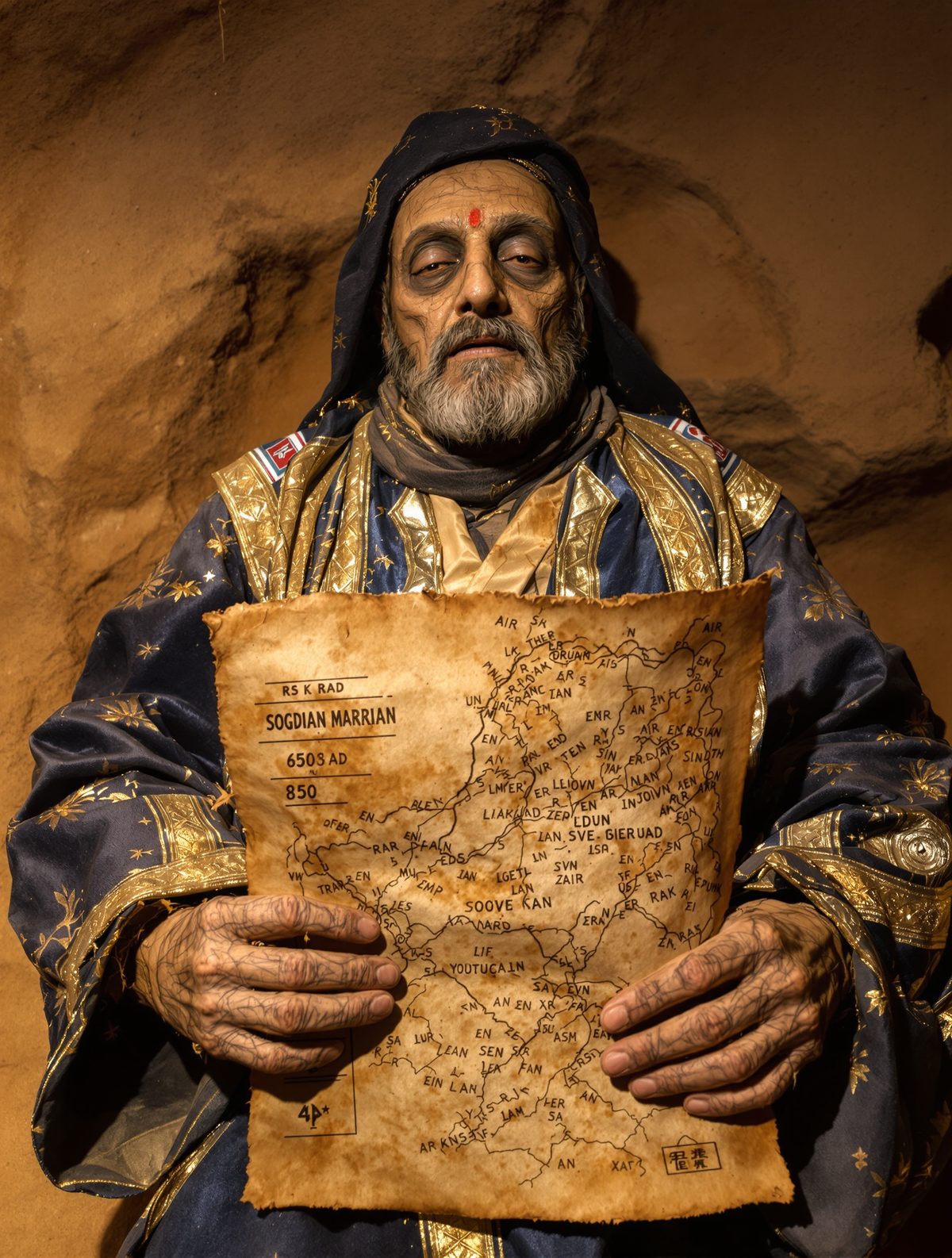
In the suffocating heat of the Taklamakan Desert, where temperatures soar to 120°F and sand dunes shift like ocean waves, Chinese archaeologist Dr. Wang Binghua made a discovery that would rewrite our understanding of Silk Road history. Kneeling beside what appeared to be just another wind-carved depression in 1995, he brushed away centuries of sand to reveal something extraordinary: a perfectly mummified hand, its desiccated fingers still wrapped around a piece of silk cloth. But this wasn't just any ancient traveler—this was Marco Aurel, a Sogdian merchant who had vanished into the desert's hungry embrace 1,145 years earlier, taking with him one of history's greatest mysteries.
The Last Journey of a Silk Road Prince
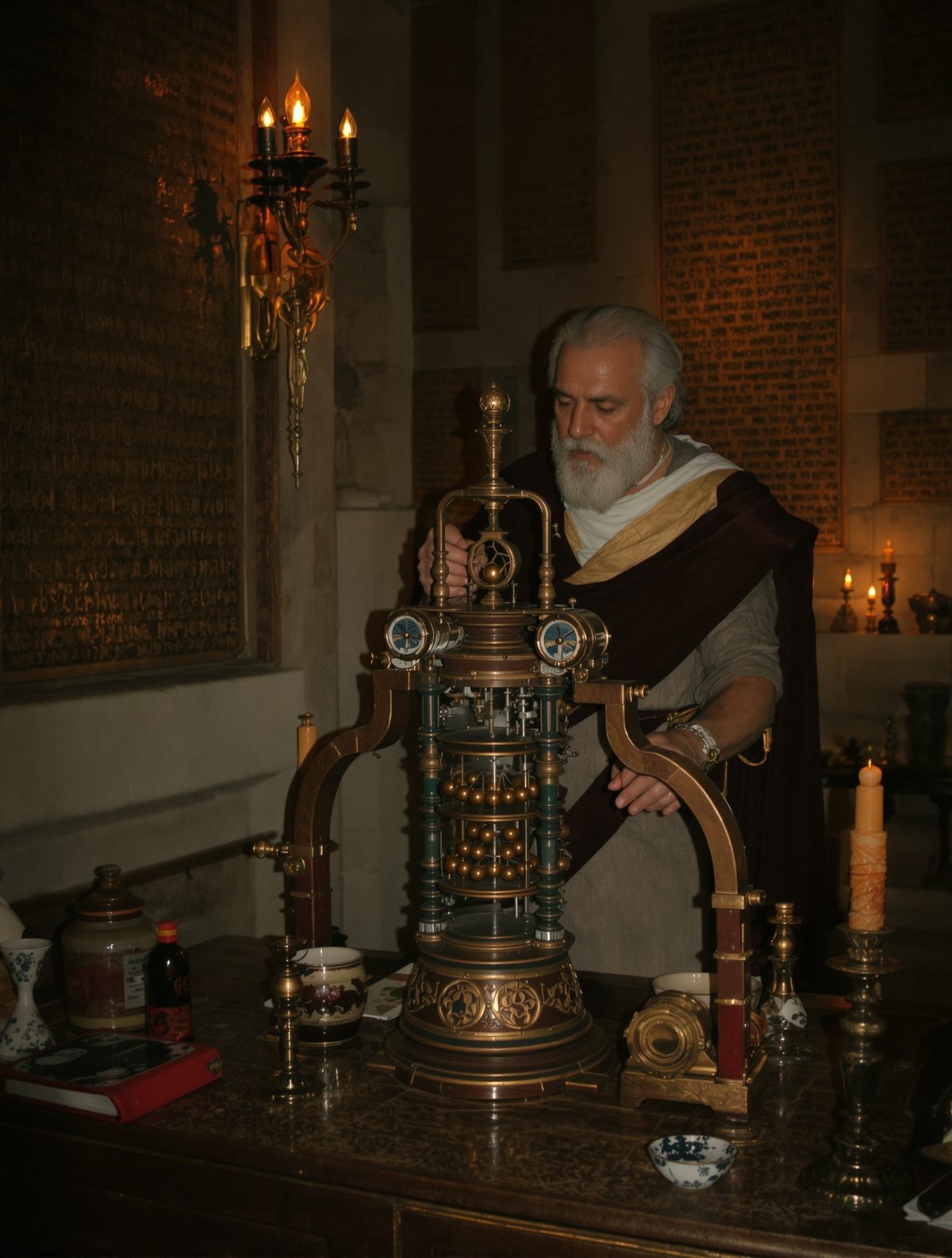
Marco Aurel wasn't your typical medieval trader. By 850 AD, this Sogdian merchant had built an empire that stretched from Samarkand to Chang'an, dealing in the most precious commodities of his age: Chinese silk, Central Asian jade, and Indian spices. The Sogdians were the ultimate middlemen of the ancient world—polyglots who spoke Persian, Chinese, Arabic, and Turkish with equal fluency, and whose commercial networks made them fabulously wealthy.
On a scorching July morning in 850 AD, Aurel departed from Dunhuang, the last major oasis before the treacherous Taklamakan crossing. His caravan was a sight to behold: 40 Bactrian camels loaded with 2,000 bolts of finest Chinese silk, 300 pounds of nephrite jade, and enough supplies to last three months in the desert. Contemporary Chinese records from the Tang Dynasty describe his entourage as including 23 men, two Buddhist monks, a Nestorian Christian priest, and—most unusually—a Han Chinese cartographer named Liu Wei.
But Aurel wasn't just carrying goods. Tucked inside his robes was something far more valuable: a map that would consume the final weeks of his life and puzzle archaeologists for decades to come.
Into the "Desert of Death"
The Taklamakan Desert earned its ominous nickname honestly. Stretching across 130,000 square miles of western China, it's the world's second-largest shifting sand desert, where dunes can move up to 150 feet in a single year. The very name "Taklamakan" translates roughly to "you go in, but you don't come out" in the local Uyghur language—a warning that countless merchants chose to ignore at their peril.
What made the Taklamakan especially treacherous wasn't just its size or heat, but its complete unpredictability. Unlike other deserts with established routes and landmarks, the Taklamakan's shifting sands could erase entire oasis towns overnight. Wells that had sustained caravans for centuries would suddenly vanish beneath towering dunes, leaving travelers stranded without water in one of Earth's most hostile environments.
Medieval accounts describe the psychological horror of Taklamakan crossings: the eerie singing sounds created by shifting sand, mirages so convincing that entire caravans would chase phantom oases for days, and the mummified remains of previous travelers serving as macabre waypoints. The 13th-century explorer Marco Polo wrote that travelers could hear "the voices of demons" calling them off the safe path—likely the result of dehydration-induced hallucinations combined with the desert's haunting acoustic phenomena.
The Map to Nowhere
When Dr. Wang's team carefully pried open Marco Aurel's preserved fingers in their Beijing laboratory, they expected to find coins, jewelry, or perhaps a religious amulet—the typical possessions clutched by the dying. Instead, they discovered a silk fragment unlike anything in their archaeological experience: a detailed map drawn with mineral-based inks that had remained vivid despite eleven centuries in the sand.
The map depicts a city that shouldn't exist. Located roughly 200 miles southeast of the ancient oasis of Niya, the cartographer had drawn elaborate buildings, gardens, and what appears to be a large temple complex surrounded by a distinctive star-shaped wall. Most intriguingly, the city is labeled in Sogdian script as "Yotkan Padshah"—literally "The Jade Emperor's City."
But here's where the mystery deepens: extensive archaeological surveys of the region described on Aurel's map have revealed nothing but empty desert. Ground-penetrating radar, satellite imagery, and decades of excavation have failed to locate any trace of the city he died trying to reach. Some scholars suggest the map depicts a real place that was subsequently buried by the desert's relentless advance. Others propose a more intriguing possibility—that Aurel was chasing a legend, drawn to his death by tales of a mythical city of jade.
Analysis of the map's ink revealed something even more puzzling: it contains traces of lapis lazuli, a precious blue stone that in 850 AD was only mined in Afghanistan's Badakhshan region. This expensive pigment suggests the map wasn't a crude fake designed to fool a gullible merchant, but a carefully crafted document someone believed to be genuinely valuable.
Secrets Written in Sand and Bone
Marco Aurel's mummified remains told a story more detailed than any historical chronicle. His stomach contents revealed his final meal: dried dates, mare's milk cheese, and surprisingly, fragments of gold leaf—suggesting either extreme desperation or a ritualistic act before death. His clothing, preserved by the desert's dry conditions, included a silk robe dyed with kermes, a crimson colorant so expensive it was reserved for royalty and the wealthiest merchants.
Most remarkably, chemical analysis of his hair revealed he had been slowly poisoned over several weeks before his death. Traces of mercury, arsenic, and antimony—substances not naturally occurring in the Taklamakan—suggest deliberate poisoning, possibly by members of his own caravan. The positioning of his body, found separate from his camels and supplies, indicates he was abandoned while still alive.
But perhaps the most chilling discovery was found sewn into the lining of his boots: a letter written in Sogdian to his wife in Samarkand, describing his growing suspicion that someone in his party was trying to kill him, and his determination to reach the jade city despite the danger. "I have seen the signs," he wrote, "but the jade emperor calls to me stronger than fear."
The Search Continues
Modern technology has breathed new life into the search for Aurel's lost city. In 2019, Chinese and British archaeologists launched "Project Yotkan," using advanced satellite imaging and artificial intelligence to analyze decades of aerial photographs of the Taklamakan region. Their algorithms, trained to recognize the signatures of buried cities, have identified seventeen anomalous sites that warrant ground investigation.
Meanwhile, climatologists studying ancient weather patterns have discovered that 850 AD marked the beginning of a severe drought that lasted nearly a century—potentially explaining how an entire city could have been abandoned and subsequently buried. Ancient Chinese weather records describe sandstorms so severe they blocked out the sun for days, and wells drying up across the western provinces.
The mystery has also attracted treasure hunters and conspiracy theorists, some claiming the jade city contains technological secrets or Buddhist artifacts of immense value. The Chinese government has declared the search area an archaeological preserve, but illegal excavations continue to plague the region.
Why Marco Aurel Still Matters
The story of Marco Aurel and his phantom city speaks to something timeless in human nature—our willingness to risk everything for the promise of discovery. In an age when we assume every corner of Earth has been mapped and catalogued, the Taklamakan Desert reminds us that mysteries still exist, waiting beneath the sand.
But Aurel's tale also serves as a cautionary reminder about the fragility of civilization itself. The Silk Road cities that once seemed permanent—Niya, Karadong, Miran—are now archaeological sites, their populations scattered by climate change, political upheaval, and economic collapse. In our era of rapid environmental change, Aurel's last journey feels less like ancient history and more like a preview of futures we might face.
Perhaps most importantly, Marco Aurel's story challenges our assumptions about what we really know about the past. Despite centuries of scholarship, despite advanced technology and international cooperation, one man's obsession with a city that may never have existed continues to confound us. In the shifting sands of the Taklamakan, the line between history and legend remains as blurred as the horizon on a desert morning, reminding us that the greatest mysteries aren't always the ones we've forgotten—sometimes they're the ones we never understood in the first place.