The messenger's horse thundered through the gates of Camulodunum at dawn on September 15th, 83 AD, its flanks heaving and foam streaming from its mouth. But it was the dark stains on the leather saddle that made the Roman sentries freeze—blood, still wet, mixed with something else they couldn't identify. The horse carried no rider, no message, no explanation for the terror that seemed to radiate from its wild eyes. Three days earlier, Marcus Caecilius Secundus had led five thousand of Rome's finest soldiers into the mist-shrouded highlands of Caledonia. Now, only his horse had returned.
What happened to the Ninth Legion remains one of history's most baffling mysteries—a riddle that has consumed archaeologists, historians, and treasure hunters for nearly two millennia. Five thousand trained killers, the backbone of the Roman war machine, had simply vanished into the Scottish wilderness without a trace.
The Eagle's Last Flight
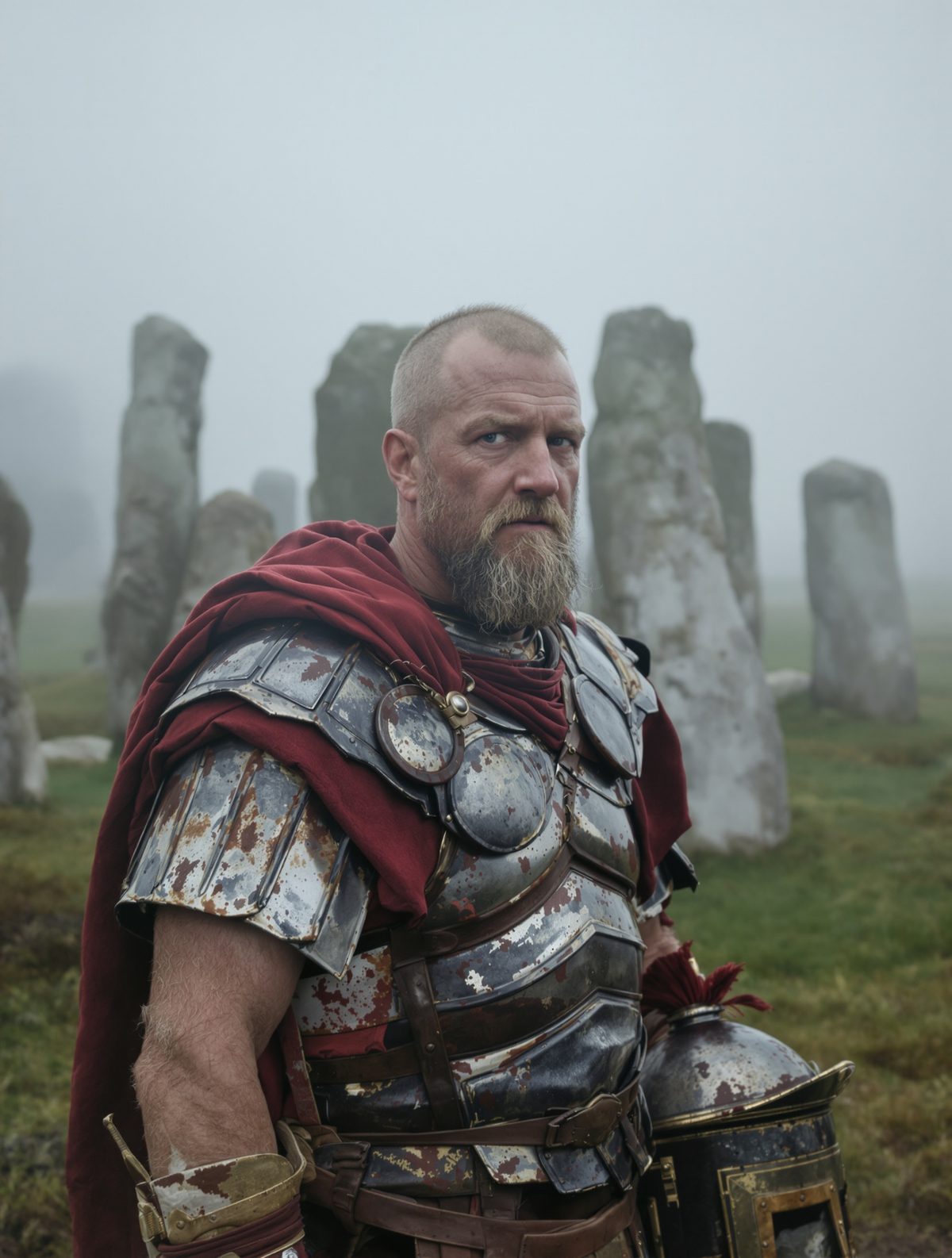
Marcus Caecilius Secundus wasn't just any soldier—he was a decorated centurion whose tactical brilliance had earned him command of Legio IX Hispana, one of Rome's most battle-hardened legions. These weren't green recruits trembling at their first taste of war. The Ninth had cut their teeth in the Spanish campaigns, survived the brutal Germanic wars, and helped crush Boudicca's rebellion in Britain just twenty years earlier. They were professional soldiers who could march twenty-five miles a day in full armor and build a fortified camp before nightfall.
The mission seemed straightforward enough: pursue a band of Pictish rebels who had been raiding Roman settlements along the northern frontier. Intelligence suggested the enemy numbered no more than a few hundred warriors—hardly a threat to a full legion. Governor Gnaeus Julius Agricola had given Secundus explicit orders: "Hunt them down, make an example, and return within the week."
On September 12th, the legion marched north from their base at Eboracum (modern York), their hobnailed boots keeping perfect rhythm on the Roman road. Witnesses described the sight as magnificent: five thousand men moving as one organism, their red shields blazing in the morning sun, the golden eagle standard glinting at their head. Local Britons watched from a respectful distance, knowing better than to interfere with Rome's war machine in motion.
Into the Heart of Darkness
The trail leads us into a landscape that Romans considered the edge of the civilized world. Beyond Hadrian's Wall—though it wouldn't be built for another forty years—lay Caledonia, a realm of endless forests, treacherous bogs, and mountains that seemed to scrape the belly of the gods themselves. The native Picts knew every hidden path, every natural trap, every secret that the land whispered to those who understood its ancient language.
Roman accounts describe Caledonia as a place where civilization went to die. The historian Tacitus, who was actually Agricola's son-in-law and present during these campaigns, wrote of "forests primeval, where the very air seems thick with malevolence." The Romans, masters of engineering and organization, found themselves in a world where their advantages meant nothing—where roads ended in swampland and their heavy armor became a death sentence in the sucking mud.
Here's what makes the mystery even stranger: Roman military protocol was obsessively detailed. Every legion was required to send daily reports, maintain constant communication with command, and establish supply lines. The fact that five thousand soldiers could disappear without sending a single message back suggests something catastrophic happened—and happened fast.
The Blood on the Saddle
That messenger horse holds clues that historians are still debating today. Analysis of similar archaeological finds suggests the blood wasn't just human—there were traces of what appeared to be animal blood mixed in, possibly from horses or cattle. Even more disturbing, witnesses reported that the horse's eyes had a wild, almost human-like terror in them, and it refused to eat for days after its return.
The Romans immediately launched a massive search operation. Three additional legions swept the highlands, following the Ninth's last known route. They found... nothing. No bodies, no weapons, no scattered coins or armor pieces. It was as if five thousand men had simply been swallowed by the earth itself. The only trace was a single sandal found floating in a mountain tarn, identified by its distinctive hobnail pattern as standard Roman military issue.
But here's where the story gets truly spine-chilling: local Pictish oral traditions, passed down through generations, speak of the night when "the earth opened its mouth and the iron men fell into darkness." These weren't written accounts that could be dismissed as Roman propaganda—these were stories told around Pictish fires for centuries before any historian thought to record them.
The Forbidden Knowledge
Modern archaeology has only deepened the mystery. In 1954, construction workers building a reservoir near Loch Ness discovered something extraordinary: a cache of Roman weapons buried in what appeared to be a ritual pattern. The swords had been deliberately bent and broken, their points driven into the earth. This wasn't the aftermath of a battle—it was something far more disturbing.
The weapons bore the markings of the Ninth Legion.
Even more unsettling, ground-penetrating radar surveys conducted in the 1990s detected what appeared to be a massive underground chamber system beneath the discovery site. Local authorities, citing "geological instability," have refused to allow excavation. Some researchers privately speculate that they know exactly what happened to the Ninth Legion—and that certain knowledge is too dangerous for public consumption.
Recent analysis of pollen samples from the area shows something that shouldn't be possible: evidence of Mediterranean plants that never grew in Scotland, concentrated in soil layers dating to exactly 83 AD. It's as if a piece of the Roman world was somehow transported to the Scottish highlands and then buried beneath centuries of Highland peat.
Echoes in the Mist
The disappearance of the Ninth Legion marked a turning point in Roman policy toward Britain. After Secundus and his men vanished, Rome effectively abandoned its plans to conquer Scotland. Hadrian's Wall, built forty years later, wasn't just a defensive barrier—it was an admission of defeat, a concrete acknowledgment that there were some places where even Rome feared to tread.
Local legends persist to this day. Highland shepherds report finding perfectly preserved Roman coins that crumble to dust when touched. Hikers describe hearing the ghostly sound of marching feet echoing through mountain passes on foggy nights. In 2003, a metal detector enthusiast claimed to have found a Roman helmet near the original discovery site, but when he returned the next day with archaeologists, the helmet had vanished—and there was no trace it had ever been there.
Perhaps most disturbing of all, satellite imagery has revealed geometric patterns in the Highland landscape that become visible only during certain atmospheric conditions. These patterns, invisible to ground-based observation, form precise geometric shapes that align with astronomical events. They're centered exactly on the location where the Ninth Legion was last seen.
The Question That Haunts History
What really happened to Marcus Caecilius Secundus and his five thousand soldiers? The rational mind wants to believe in ambush, strategic retreat, or simple military disaster. But the complete absence of evidence, the disturbing archaeological finds, and the persistent local legends suggest something far more unsettling.
The mystery of the Ninth Legion reminds us that history is full of gaps—dark spaces where conventional explanation fails and we're forced to confront the possibility that our ancestors encountered forces we still don't understand. In our age of satellite surveillance and digital communication, it's almost impossible to imagine five thousand people simply vanishing without a trace. Yet it happened, in broad daylight, to the most meticulously organized military force in human history.
The Scottish Highlands keep their secrets well. Somewhere beneath the heather and peat, the truth about the Ninth Legion waits in the darkness—and perhaps some truths are meant to stay buried. After all, there's a reason Rome, master of the known world, chose to build a wall rather than discover what lay beyond it. Some doors, once opened, can never be closed again.