
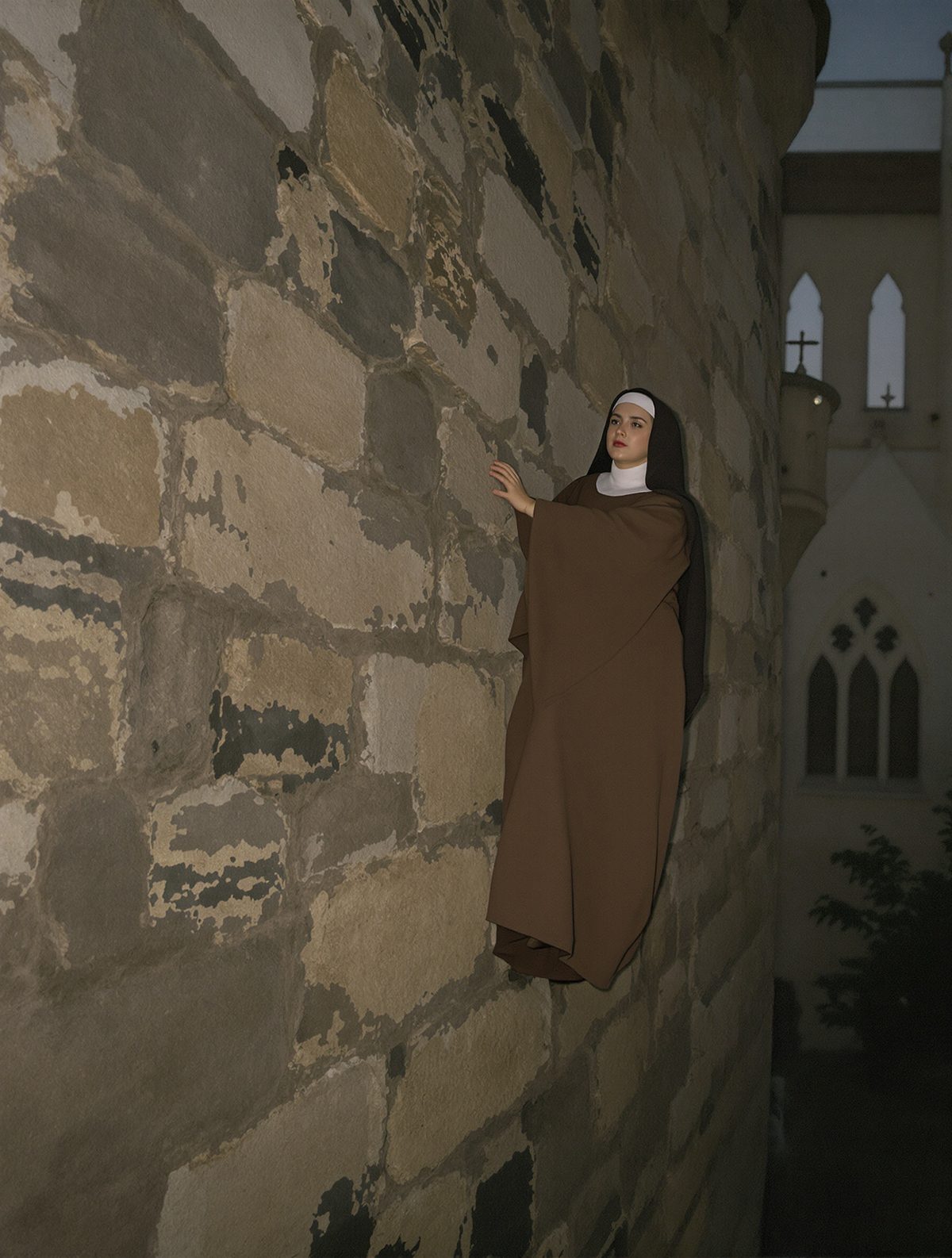
On a fog-shrouded morning in October 1485, the bells of Santa Maria delle Grazie convent in Florence rang out in frantic alarm. The nuns had discovered, once again, that Sister Benedetta's cell was empty, her window unlatched, and a rope of torn bedsheets dangling into the cobblestone courtyard below. This was her forty-ninth escape.
What made this particular morning different wasn't just the sheer audacity of yet another breakout—it was the fact that half of Florence seemed to be in on it. Merchants had been spotted passing coins through the convent's iron gates. Noble ladies whispered encouragement during Mass. Even the city's most respected bankers had been caught funding what amounted to medieval Italy's most persistent jailbreak artist.
Sister Benedetta wasn't just escaping a convent. She was waging a one-woman war against a system that had stolen her childhood, her choices, and her freedom. And for nearly two decades, she refused to surrender.
The Gilded Prison of Medieval Convents
To understand Benedetta's extraordinary rebellion, we must first grasp the suffocating reality of 15th-century convent life. In 1460s Florence, convents weren't just houses of worship—they were dumping grounds for inconvenient daughters. Wealthy families routinely shipped off their "extra" girls to make room for more advantageous marriages among their remaining children.
Benedetta Carlini—born to a prosperous cloth merchant family—was barely twelve years old when her parents delivered her to Santa Maria delle Grazie with a dowry of 200 florins and a promise she would never see home again. The convent's records, miraculously preserved in Florence's state archives, reveal the stark transaction: "Received this day, one female child, to be consecrated to God's service in perpetuity."
The medieval Church had made the rules crystal clear. Once a girl took vows—regardless of her age or consent—she belonged to God forever. Breaking those vows wasn't just rebellion; it was heresy, punishable by excommunication or worse. But nobody had informed twelve-year-old Benedetta of these theological niceties.
Life inside Santa Maria delle Grazie was a masterclass in controlled misery. The nuns rose at 2 AM for matins, spent eight hours daily in prayer, and survived on a diet of thin gruel, stale bread, and whatever vegetables grew in their small garden. Speaking was forbidden except during designated hours. Contact with the outside world was limited to brief, supervised visits from family members—visits that became increasingly rare as the years passed.
The Art of Medieval Escape
Benedetta's first escape attempt came just six months after her arrival, in the spring of 1461. According to the convent's disciplinary records, she simply walked out the front gate during the chaos of morning prayers, wearing a lay woman's dress smuggled in by a sympathetic kitchen servant. She made it three miles before being spotted by a neighbor who recognized her shaved head—the distinctive mark of a nun.
Her methods grew increasingly sophisticated. She learned to pick locks using bent hairpins. She discovered that the convent's ancient walls had loose stones that could be pried away to create handholds for climbing. Most ingeniously, she developed an entire network of accomplices among Florence's merchant class.
Here's where the story gets truly remarkable: Medieval Florence was supposed to be a deeply religious society where helping a nun escape would be considered a mortal sin. Instead, Benedetta's plight captured the imagination of ordinary citizens who saw in her struggle a reflection of their own trapped lives.
Lorenzo de' Medici's personal banker, Giuliano Ricci, secretly funneled money to pay for Benedetta's civilian clothes and safe houses. The wife of a prominent silk merchant provided disguises. Even members of the clergy—priests who should have been scandalized by her behavior—offered quiet assistance. A 1478 letter from Father Antonio Marsilli to his brother reveals the stunning truth: "The whole city speaks of nothing but the brave sister who refuses to accept her cage."
Forty-Nine Times Freedom
Each escape followed a similar pattern that became almost ritualistic in its precision. Benedetta would disappear in the pre-dawn hours, often using increasingly creative methods. She hid in delivery carts filled with vegetables. She disguised herself as a male apprentice. Once, she reportedly convinced a group of pilgrims that she was a wealthy widow seeking to join their journey to Rome.
The townspeople's support wasn't just financial—it was logistical. Safe houses were prepared in advance. Fresh clothes waited at predetermined locations. Local blacksmiths crafted specialized tools for lock-picking and wall-climbing. What had begun as one desperate girl's escape attempts had evolved into a sophisticated underground railroad.
But every escape ended the same way. Within days or weeks, her family would track her down and drag her back to Santa Maria delle Grazie. Her father, Donato Carlini, was reportedly furious not just at the embarrassment, but at the financial implications. If Benedetta successfully escaped and married, he would be required to provide an additional dowry—money he had no intention of spending.
The convent's punishments grew harsher with each return. Benedetta endured solitary confinement, reduced rations, and ritual humiliation before the other nuns. The Abbess, Mother Superior Francesca, wrote increasingly desperate letters to Church authorities, begging for guidance on how to contain what she called "this demon in holy vestments."
The Network of Sympathizers
What makes Benedetta's story extraordinary isn't just her persistence—it's how her rebellion exposed the deep hypocrisy of medieval society. While Church doctrine proclaimed that women who rejected convent life were sinful and ungrateful, the streets of Florence told a different story.
Contemporary documents reveal that wealthy merchant wives saw Benedetta as a symbol of female determination. Young men viewed her as a romantic figure, fighting for love and freedom against impossible odds. Even hardened criminals respected her audacity—several escape attempts were aided by members of Florence's thriving underworld.
The poet Agnolo Poliziano, friend of Lorenzo de' Medici, apparently wrote verses celebrating her escapes, though these poems have been lost to history. What survives is a letter from 1482 describing how "the streets empty when news spreads that our brave sister has once again chosen freedom over captivity."
Perhaps most surprisingly, Benedetta's rebellion inspired other nuns. Convent records from across Tuscany show a marked increase in escape attempts during the 1470s and 1480s. The Church was forced to implement new security measures, including higher walls, barred windows, and constant surveillance—measures that reveal just how widespread the problem had become.
The Final Flight
On November 15th, 1489, Benedetta vanished for the fiftieth and final time. She was thirty-seven years old and had spent more than half her life plotting escapes from Santa Maria delle Grazie. This time, however, something was different.
Instead of her usual solo departure, evidence suggests she had help from the very beginning. A merchant's ledger discovered in the 19th century shows large payments made to "secure passage for precious cargo" on that exact date. Ship manifests from Pisa indicate that a woman matching Benedetta's description boarded a vessel bound for Marseille, France, traveling under the name "Madonna Caterina."
Most tellingly, her family made no effort to pursue her. After twenty-five years of dragging their daughter back to the convent, Donato and Maria Carlini simply... gave up. Some historians speculate that they had grown weary of the public embarrassment. Others suggest that Benedetta had finally found leverage—perhaps threatening to expose family secrets or business irregularities.
Whatever the reason, Sister Benedetta had achieved the impossible: she had escaped medieval Italy's most restrictive institution and lived to tell the tale.
Legacy of a Medieval Rebel
Benedetta's story disappeared from official Church records after 1489, but her legend lived on in Florence's oral traditions. For generations, mothers would tell their daughters about the nun who refused to surrender her dreams. Young women facing unwanted marriages drew inspiration from her example.
More importantly, her rebellion exposed fundamental flaws in medieval society's treatment of women. The widespread support she received proved that ordinary people understood the injustice of forced religious vocation, even if they lacked the courage to speak against it openly.
Today, as we grapple with questions about personal autonomy, institutional power, and individual rights, Benedetta's story feels remarkably contemporary. She was, in essence, medieval Italy's first prominent advocate for a woman's right to choose her own life path. Her forty-nine escape attempts weren't just acts of rebellion—they were declarations that human dignity cannot be bought, sold, or locked away behind convent walls.
In an age when most people accepted their assigned roles without question, one determined young woman looked at her prison walls and saw only temporary obstacles. Her legacy reminds us that the most powerful force in human history isn't armies or institutions—it's the simple, stubborn refusal to accept that freedom is impossible.