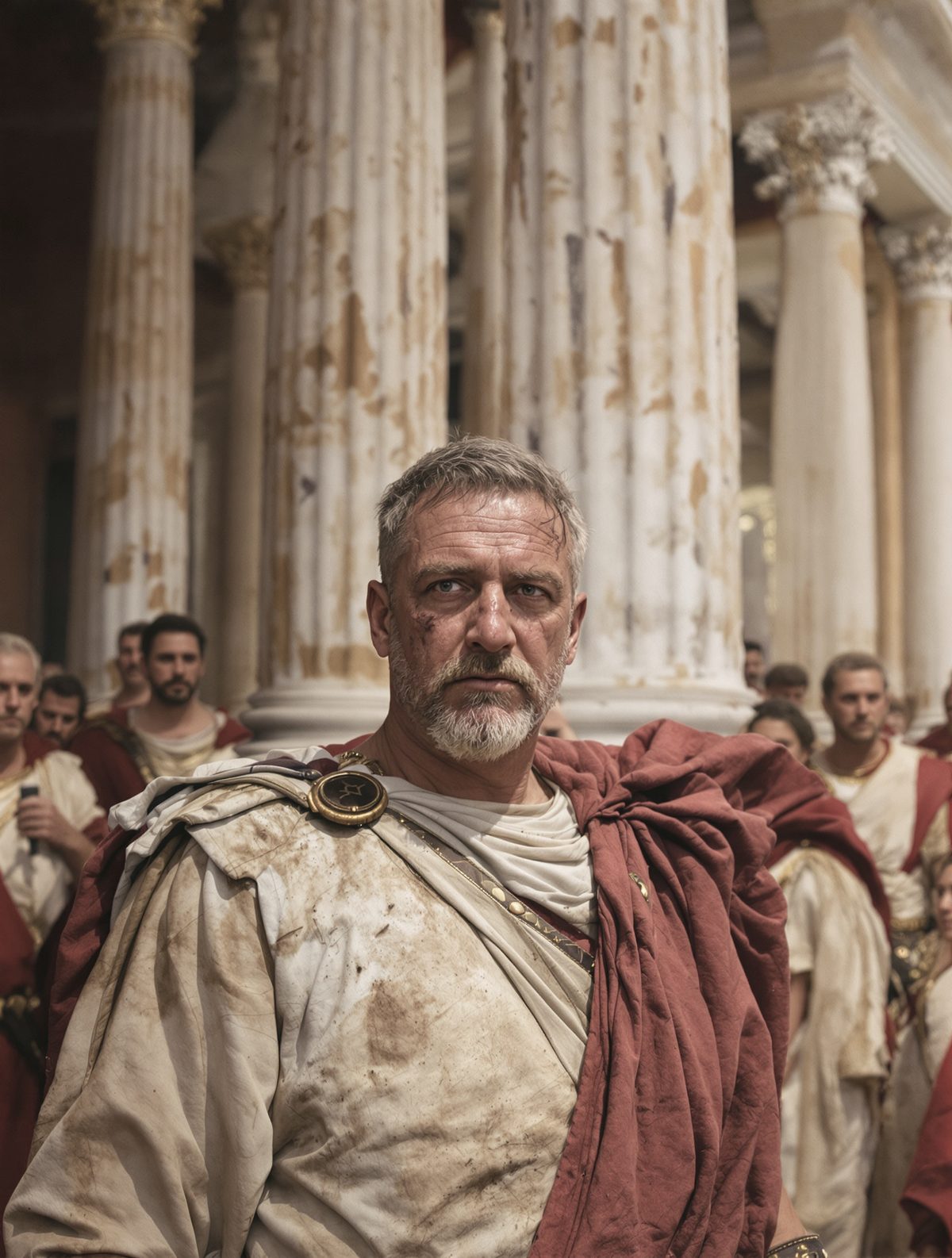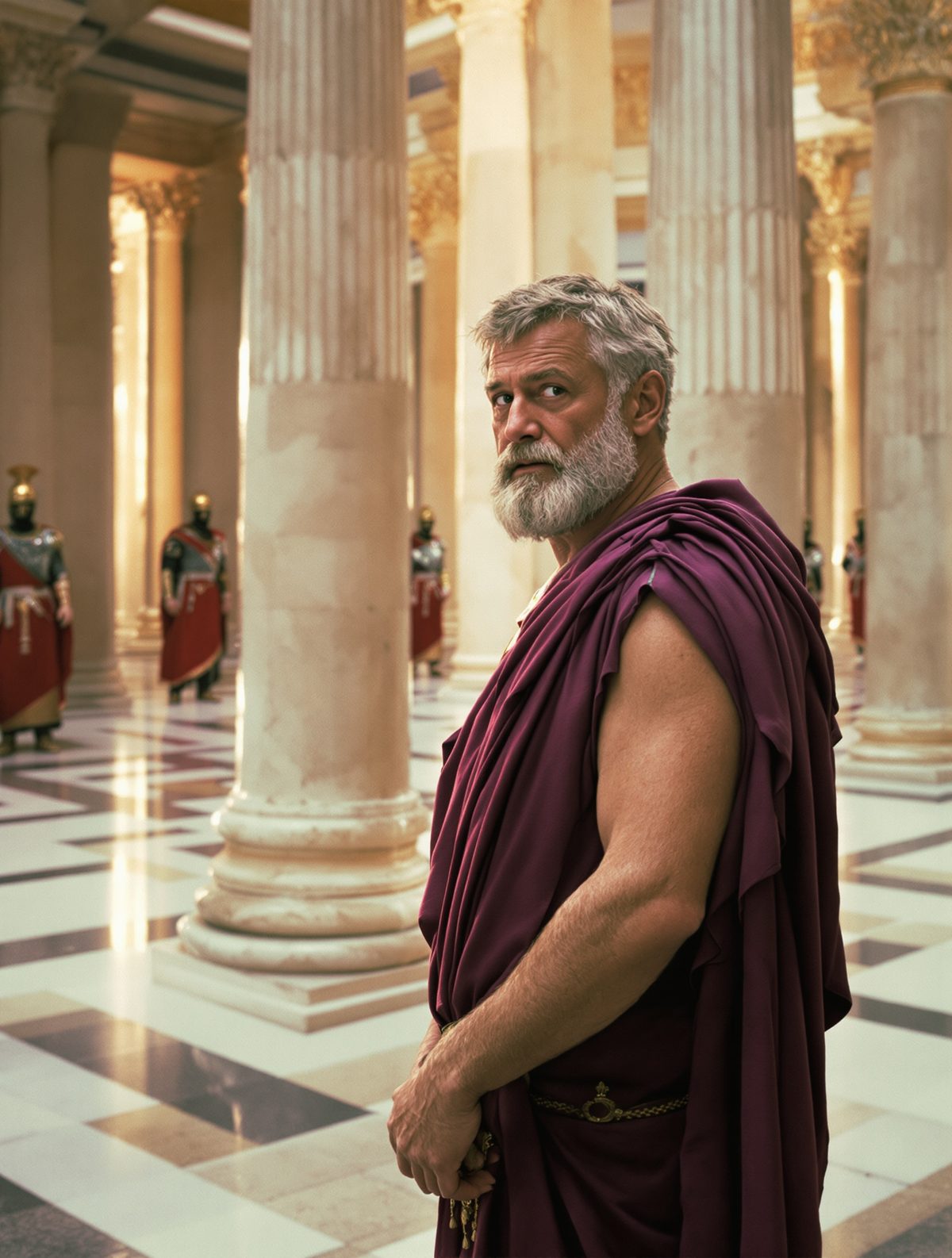
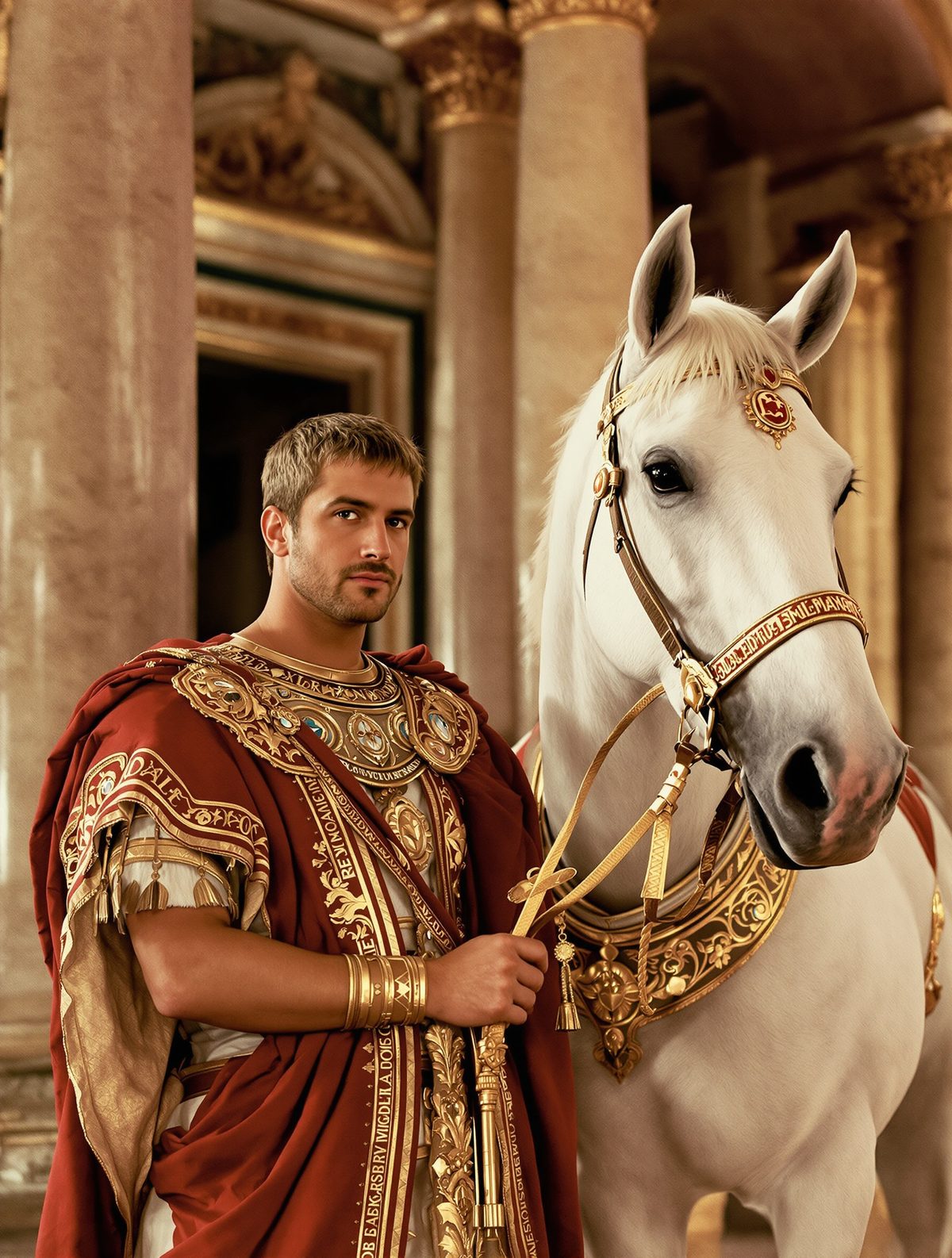
Picture this: It's 40 AD, and in the marble halls of the Roman Senate, the most powerful men in the world sit in stunned silence. The Emperor Gaius Julius Caesar Augustus Germanicus—better known as Caligula—has just announced his intention to appoint a new consul. Not unusual, except this particular candidate has four legs, a flowing mane, and an appetite for oats. The senators watch in horror as their emperor seriously discusses making his racehorse, Incitatus, the second-highest official in the Roman Empire.
What sounds like ancient fake news was, according to historians, a very real possibility that sent shockwaves through the corridors of power in the greatest empire the world had ever known.
The Boy Who Would Be Mad Emperor
To understand how Rome nearly ended up with a horse in its highest office, we need to rewind to March 37 AD, when eighteen-year-old Caligula ascended to the throne. Born Gaius Julius Caesar Germanicus, he earned the nickname "Caligula" (meaning "little boot") as a child when he wore miniature military boots around Roman army camps, charming the soldiers who served under his father, the beloved general Germanicus.
Initially, Caligula's reign seemed promising. He freed political prisoners, gave generous bonuses to the Praetorian Guard, and hosted spectacular gladiatorial games that thrilled the masses. Romans celebrated having a young, energetic emperor after the paranoid final years of his predecessor, Tiberius. But this honeymoon period lasted barely seven months.
In October 37 AD, Caligula fell seriously ill. Some historians suspect brain fever; others point to possible poisoning or epilepsy. When he recovered, those closest to him noticed something had fundamentally changed. The promising young emperor had been replaced by someone else entirely—someone whose grip on reality grew increasingly tenuous with each passing month.
Enter Incitatus: The Horse That Nearly Ruled Rome
Among Caligula's many obsessions, none captured his attention quite like Incitatus, whose name means "Swift" in Latin. This wasn't just any horse—Incitatus was a champion racehorse who competed in the Circus Maximus, where 250,000 screaming Romans would pack the stands to watch chariot races that made modern Formula One look tame.
But Caligula's affection went far beyond typical imperial patronage of athletics. He constructed a luxurious stable made of marble for Incitatus, complete with a manger crafted from ivory and a water trough carved from precious stone. The horse dined from golden bowls and wore purple blankets—a color reserved for royalty. Servants attended to Incitatus's every need, and the emperor reportedly spent more on the horse's care in a single month than most Romans saw in their entire lives.
The extravagance didn't stop there. Caligula threw elaborate dinner parties where Incitatus was the guest of honor, complete with his own furnished house, complete with servants and furniture. Guests were expected to toast the horse and treat him with the same reverence they would show a human member of the imperial family. Those who failed to show proper respect faced exile—or worse.
The Consulship That Shook an Empire
The consulship of Rome was no ceremonial position. Consuls were the highest elected officials in the empire, second only to the emperor himself. They commanded armies, presided over the Senate, and wielded executive power that could affect the lives of millions across three continents. The idea of granting such authority to a horse wasn't just absurd—it was a direct assault on centuries of Roman tradition and governance.
According to the Roman historian Suetonius, writing roughly eighty years after the events, Caligula "planned to make him consul." The historian Cassius Dio, writing in the early 3rd century, corroborates this account, noting that the emperor "was about to appoint him consul." While modern historians debate whether Caligula actually went through with the appointment or merely threatened it, contemporary sources suggest the emperor was deadly serious about the proposal.
The announcement sent senators into barely concealed panic. Here were men who had spent decades climbing the political ladder, building alliances, and demonstrating their worthiness to lead the greatest empire on Earth. Now they faced the prospect of serving alongside a horse who couldn't even understand the concept of legislation, let alone draft it.
But perhaps that was exactly Caligula's point. By 40 AD, the emperor had grown increasingly contemptuous of the Senate, viewing the institution as an obsolete relic that merely rubber-stamped his decisions. What better way to demonstrate the senators' irrelevance than by showing that even a horse could perform their duties?
Method to the Madness
Was Caligula truly insane, or was there a calculated cruelty behind his actions? Modern historians increasingly lean toward the latter interpretation. The horse consulship wasn't just the random act of a madman—it was a carefully orchestrated humiliation designed to break the spirit of Rome's traditional ruling class.
Consider the broader context of Caligula's reign. He systematically dismantled republican institutions, forced senators to run alongside his chariot for miles in their togas, and made them worship him as a living god. He claimed to have conversations with Jupiter and allegedly planned to move the capital of the empire to Egypt, where he could rule as a pharaoh-deity. Each outrageous act served to demonstrate that under his rule, traditional Roman values and institutions meant nothing.
The threat to make Incitatus consul was psychological warfare of the highest order. Every day the appointment remained a possibility, senators were reminded that their centuries-old institution—the body that had once governed the Roman Republic—was now so meaningless that an animal could join their ranks without diminishing their effectiveness.
Some historians suggest Caligula never intended to follow through with the appointment. Instead, he dangled it as a constant threat, watching with amusement as Rome's most powerful men squirmed at the possibility of being upstaged by a horse. It was the ultimate expression of imperial contempt: You are so useless that my horse could do your job.
The Plot That Saved Rome from a Four-Legged Consul
By 41 AD, Caligula's behavior had pushed even his most loyal supporters past their breaking point. The emperor's spending had nearly bankrupted the empire, his military campaigns had proved disastrous, and his increasingly erratic behavior made effective governance impossible. The final straw came when he announced plans to permanently relocate to Alexandria, effectively abandoning Rome itself.
On January 24, 41 AD, a conspiracy involving senators, Praetorian Guards, and even some of Caligula's own family members reached its climax. As the emperor left theatrical games at the palace, a group of conspirators cornered him in a narrow underground passage. Cassius Chaerea, a Praetorian tribune whom Caligula had repeatedly humiliated, struck the first blow. Within moments, the man who had nearly made his horse a consul was dead, stabbed over thirty times.
The assassination saved Rome from the unprecedented spectacle of a consulship held by Incitatus. But it also marked a turning point in Roman history—the moment when it became clear that the old republic was truly dead, and that imperial power, unchecked by meaningful institutions, could lead to absurdities that would have been unthinkable just decades earlier.
Lessons from History's Most Expensive Pet
Nearly two thousand years later, the story of Caligula and Incitatus remains one of history's most vivid examples of power corrupting absolutely. But it also serves as a timeless warning about what happens when institutions become so weakened that they lose all practical meaning.
In our modern world of political theater and symbolic appointments, Caligula's horse consul doesn't seem quite as far-fetched as it once did. The emperor's actions remind us that when traditional checks and balances erode, the distance between governance and performance art can shrink dramatically. Whether in ancient Rome or contemporary democracies, the health of institutions depends on leaders who respect their purpose and citizens who demand meaningful representation.
Incitatus never did become consul—but his near-appointment remains one of history's most powerful reminders that in politics, as in horse racing, it's important to know when someone is taking you for a ride.