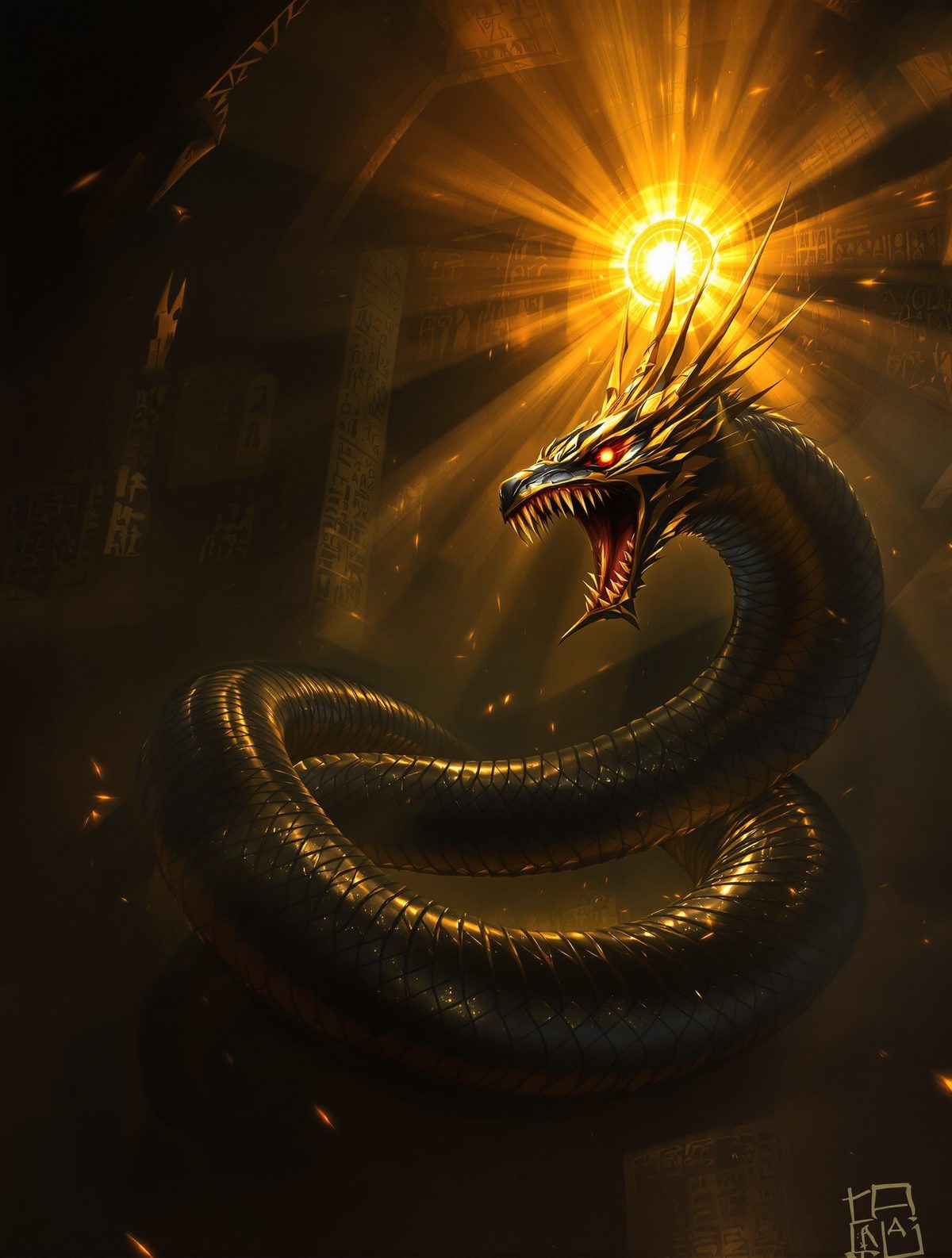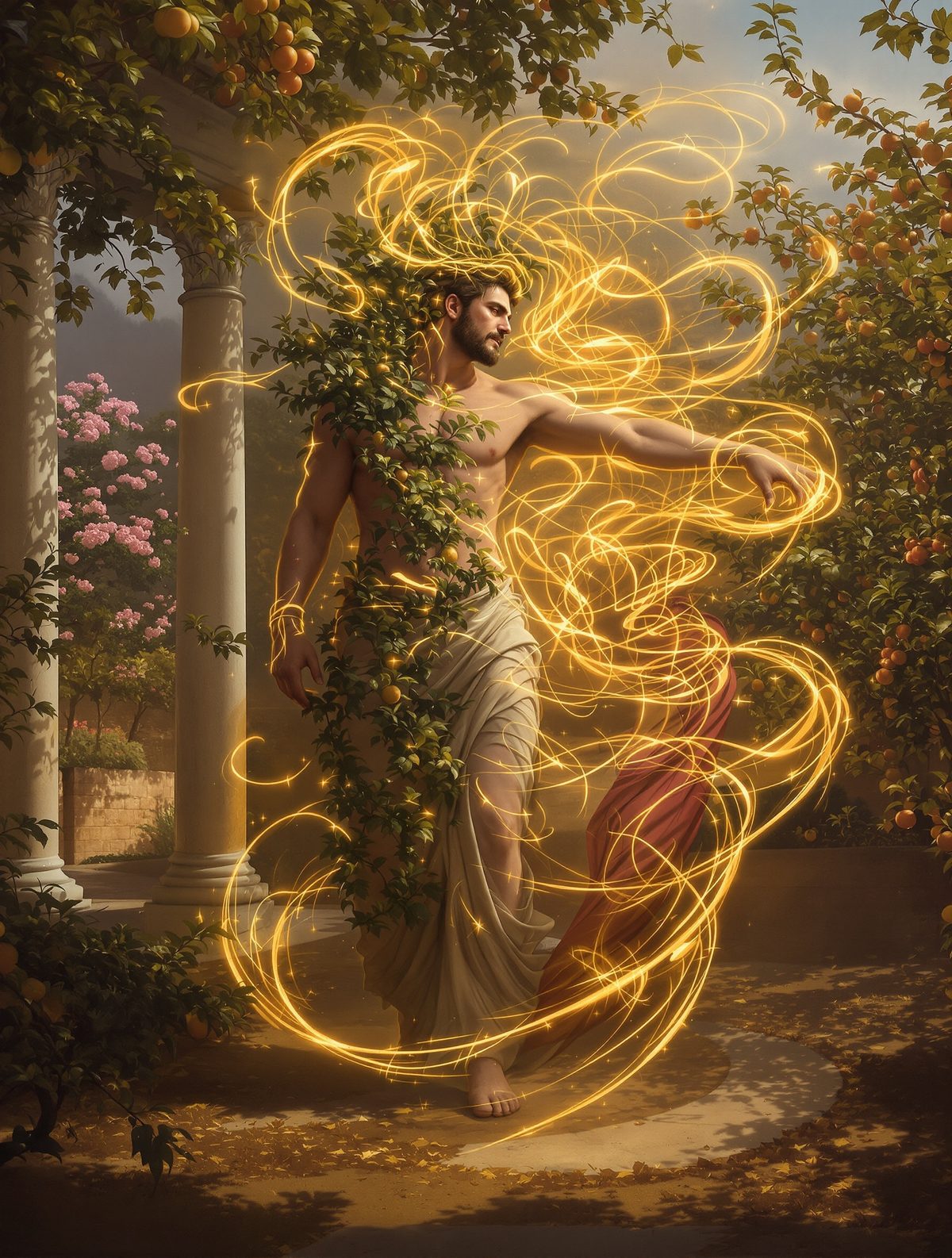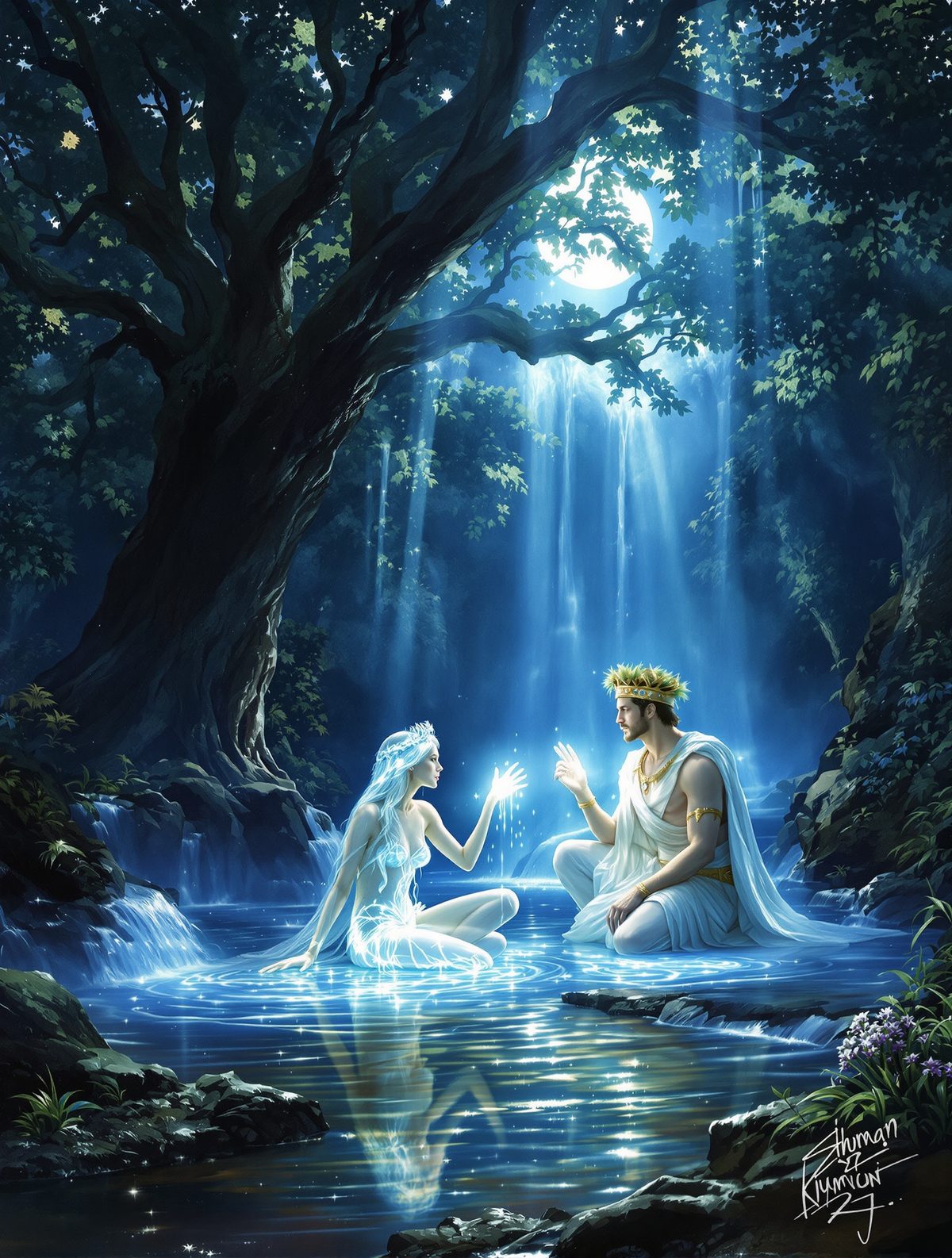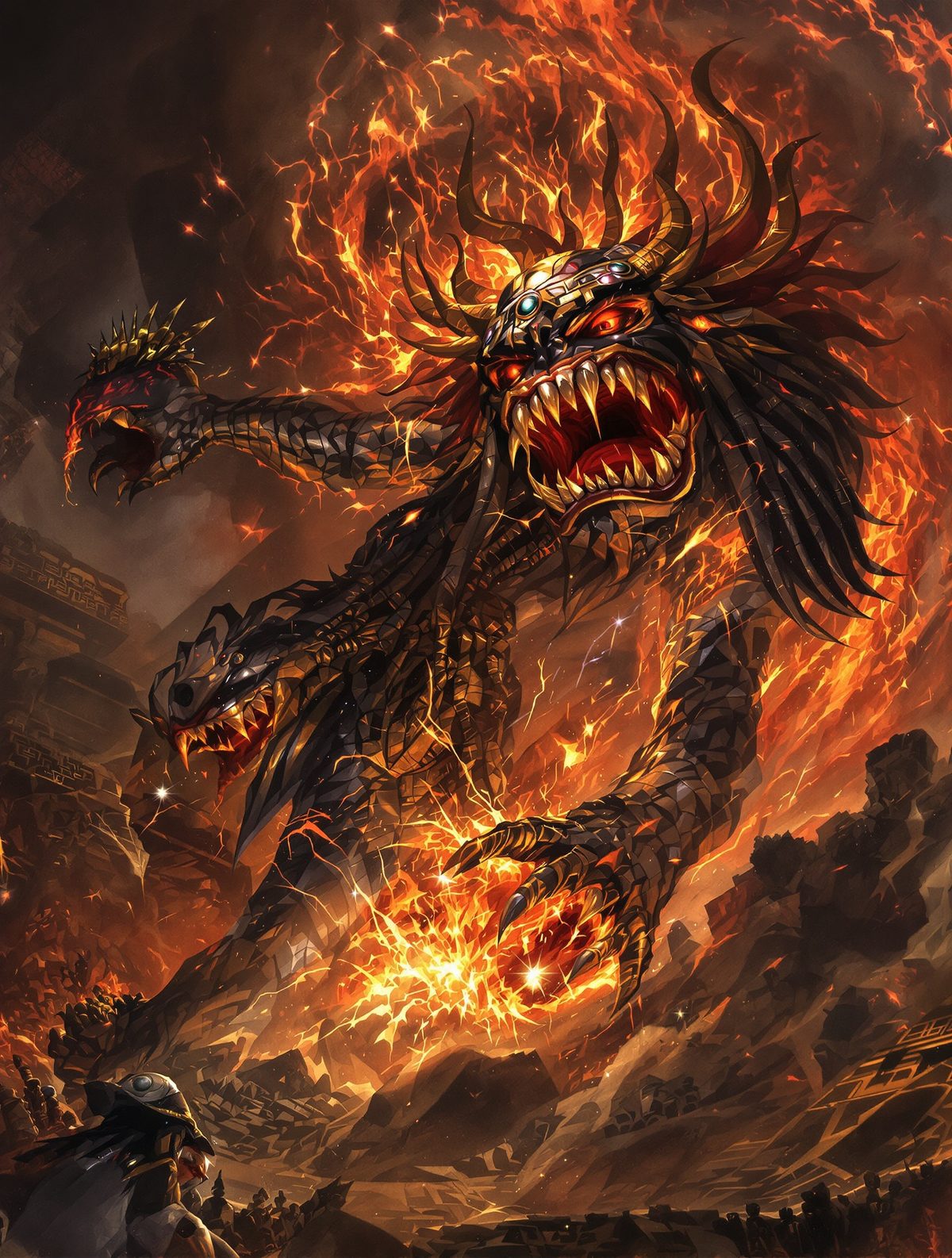
In the obsidian darkness before dawn, before mountains pierced the sky or oceans carved their boundaries, something terrible writhed in the cosmic void. The Earth Monster Tlaltecuhtli—whose name means "Earth Lord" in Nahuatl—was a creature of such horrifying appetite that every surface of her body sprouted gnashing mouths. Her joints were caverns lined with teeth, her skin rippled with hungry maws, and from every pore oozed the insatiable desire to devour everything that dared to exist. This was the primordial world according to the Aztecs: not empty, but consumed by endless hunger.
What happened next would cost the god Tezcatlipoca his foot—and give birth to the world we know today.
The Devourer of All Things
To understand the magnitude of Tezcatlipoca's sacrifice, you must first grasp the sheer terror that was Tlaltecuhtli. Unlike the familiar earth goddesses of other mythologies—nurturing mother figures who provided sustenance and shelter—the Aztec Earth Monster was creation's dark mirror. She represented the brutal truth that all life depends on death, that every act of creation requires destruction.
Spanish chronicler Bernardino de Sahagún, writing in the 16th century just decades after the conquest, recorded Nahua informants describing Tlaltecuhtli as a creature whose every joint was a mouth. Imagine trying to picture this: elbows that could bite, knees studded with fangs, a torso that was essentially one massive digestive system. The Codex Fejérváry-Mayer, created sometime between 1200-1521 CE, depicts her as a toad-like being whose body forms the foundation of the world—but look closely at the artwork, and you'll see those characteristic mouths dotting her form like a cosmic case of carnivorous acne.
But here's what most people don't realize: Tlaltecuhtli wasn't evil in the way we might understand it. In Aztec cosmology, she was a necessary force. Her hunger represented the earth's endless appetite for the dead, the way soil consumes fallen leaves and decomposing bodies to create new life. She was entropy personified—the universal truth that everything that exists will eventually be consumed by something else.
The Smoking Mirror's Terrible Plan
Enter Tezcatlipoca, whose name translates to "Smoking Mirror"—a reference to the obsidian mirrors Aztec priests used for divination. He was complexity incarnate: simultaneously the god of conflict and beauty, of jaguars and judgment, of the night sky and earthly power. Where other deities might represent single concepts, Tezcatlipoca embodied the fundamental duality that the Aztecs saw as the engine of existence itself.
The surviving codices suggest this creation myth was already ancient by the time of the Aztec Empire (roughly 1345-1521 CE). Archaeological evidence from Teotihuacan, which flourished from 100-550 CE, shows similar themes of cosmic sacrifice and divine dismemberment, suggesting these stories had been evolving for over a millennium before the Spanish ever arrived.
According to the myth preserved in sources like the Histoyre du Mechique (a 16th-century French translation of lost Aztec texts), Tezcatlipoca surveyed the cosmic situation and realized something profound: creation could only happen if someone was willing to pay the ultimate price. The Earth Monster's hunger made normal existence impossible—anything that tried to come into being was immediately devoured. But what if, instead of fighting this force, someone could transform it?
Here's where the story gets fascinatingly strategic: Tezcatlipoca didn't plan to destroy Tlaltecuhtli. He planned to become her first meal—and in doing so, to fundamentally change what she was.
The Cosmic Sacrifice
Picture the scene: In the lightless void before creation, Tezcatlipoca approaches the Earth Monster. Some versions of the story say he transformed himself into a giant, others that he appeared as a colossal jaguar—his sacred animal. But in every telling, he does something that seems like cosmic suicide: he offers himself to Tlaltecuhtli's hunger.
The moment of contact is described in the codices with startling violence. Tlaltecuhtli's massive jaws clamp down on Tezcatlipoca's foot—or in some versions, his entire leg up to the knee. The god's blood, described as liquid obsidian in some sources, sprays across the cosmos. His screams of pain echo through the void, creating the first sounds in a universe that had known only the wet grinding of the Earth Monster's endless feeding.
But here's the twist that makes this myth brilliantly subversive: Tezcatlipoca's sacrifice doesn't destroy him or satisfy Tlaltecuhtli. Instead, it transforms her hunger from chaotic consumption into structured creation. By feeding herself on divine flesh, the Earth Monster becomes capable of supporting life rather than merely devouring it. Her body becomes the foundation of the world, but now her mouths serve a different purpose—they become caves and valleys, cenotes and canyons, the sacred spaces where water flows and life takes root.
Archaeological evidence from sites like Templo Mayor in Tenochtitlan shows that Aztec priests regularly reenacted this cosmic sacrifice. Excavations led by Eduardo Matos Moctezuma in the 1970s uncovered offerings that seem designed to "feed" the earth: jade beads, obsidian blades, and yes, human hearts placed directly into the soil. The Aztecs understood something we're only beginning to grasp through modern ecology—that creation and destruction are not opposites but partners in an endless dance.
The Price of Making Worlds
Tezcatlipoca's missing foot became one of Mesoamerican mythology's most powerful symbols. In codices and stone carvings throughout central Mexico, the god is consistently depicted with his right foot replaced by an obsidian mirror, a serpent, or sometimes simply empty space. This wasn't just artistic license—it was a theological statement.
The empty space where his foot should be represented something profound: the idea that creation requires genuine loss. Not trade-offs or temporary setbacks, but permanent, irreversible sacrifice. Every time an Aztec looked at an image of Tezcatlipoca, they were reminded that their world existed because someone had been willing to pay a price they could never recover.
This concept influenced Aztec society in ways that Spanish chroniclers found both fascinating and disturbing. The practice of human sacrifice, so shocking to European sensibilities, made perfect sense within this cosmological framework. If the gods themselves had to sacrifice their bodies to create and maintain the world, then humans had a reciprocal obligation to feed the cosmic system that sustained them.
But here's a detail that often gets overlooked: Tezcatlipoca's sacrifice wasn't a one-time event. According to Aztec belief, the Earth Monster's hunger never truly ends—it's simply been redirected and structured. Every earthquake was Tlaltecuhtli stirring restlessly, demanding more nourishment. Every harvest required the soil to consume seeds before producing crops. The god's missing foot was a constant reminder that creation is an ongoing process, not a finished product.
The Hungry Earth Beneath Our Feet
What's remarkable about this myth is how accurately it captures something modern science is only beginning to fully appreciate: the earth really is hungry. Every ecosystem on the planet depends on constant consumption and recycling of organic matter. The soil beneath our feet teems with billions of microorganisms whose job is essentially to eat dead things and transform them into nutrients for new life.
Recent research in soil ecology has revealed that healthy earth contains as many as 50 billion microbes per gram—each one a tiny mouth contributing to the planet's endless process of breaking down and building up. In a very real sense, Tlaltecuhtli's body covered with consuming mouths was less mythological metaphor than ecological insight.
The Aztec understanding of sacrifice as the price of creation also resonates with contemporary discussions about sustainability and climate change. Every convenience of modern life comes at a cost—usually paid by ecosystems and communities far from where we live. Tezcatlipoca's missing foot asks us uncomfortable questions: What are we willing to give up to maintain the world we've created? And what happens when we try to avoid paying the price entirely?
In the end, the story of Tezcatlipoca and the Earth Monster isn't just about gods and monsters—it's about the fundamental bargains that make existence possible. Every time we plant a garden, we're participating in Tlaltecuhtli's ancient hunger, feeding her soil with compost and mulch so she can produce new growth. Every time we make a genuine sacrifice for something we believe in, we're walking in the footsteps of the Smoking Mirror, offering pieces of ourselves to transform chaos into creation.
The Aztecs knew something we've largely forgotten: that creation isn't free, that worlds don't build themselves, and that sometimes the price of making something beautiful is higher than we want to pay. But they also knew that someone has to be willing to step forward, to offer themselves to the hungry dark, to lose something precious so that everything else can exist. In our age of easy answers and convenient solutions, perhaps we need to remember the god who gave his foot to feed the world—and ask ourselves what we're prepared to sacrifice for the futures we claim to want.