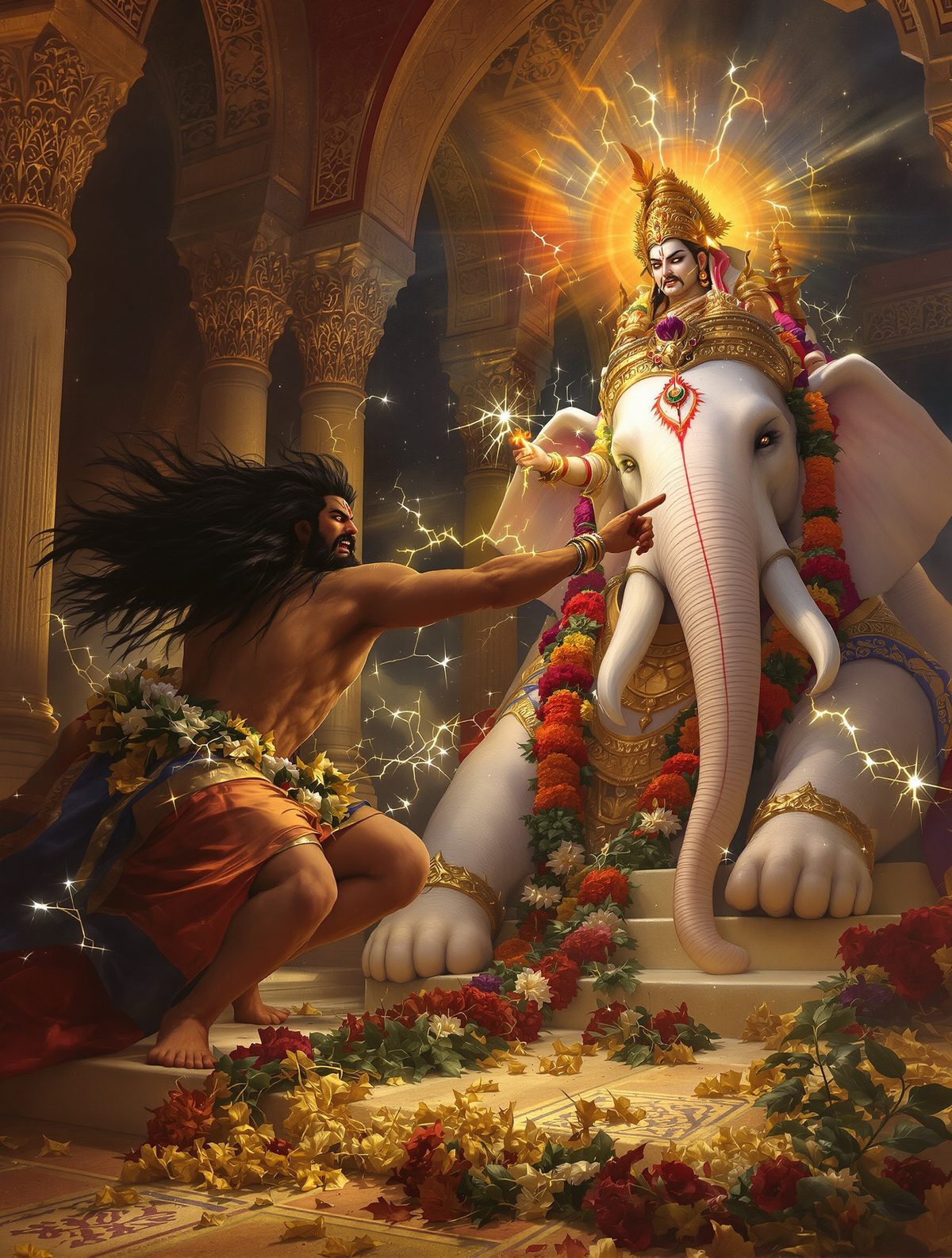

Picture this: while the citizens of early Rome slumbered in their mud-brick homes, their king crept through moonlit streets like a lovesick teenager. But Numa Pompilius wasn't sneaking off to meet a mortal woman—he was rushing to a clandestine rendezvous with a divine water nymph who would whisper the secrets of civilization into his ears. Night after night, for over four decades, Rome's second king claimed he learned everything from law to liturgy in the arms of the goddess Egeria.
It sounds like ancient fan fiction, but this wasn't just pillow talk between a mortal and a deity. These midnight meetings allegedly produced the foundational legal code that would eventually grow into the system governing half the known world. While modern scholars debate whether Numa was a brilliant political strategist using divine authority to legitimize his reforms, or simply a man genuinely inspired by something beyond the material world, the story of his nocturnal education remains one of history's most intriguing tales of divine intervention.
The Unlikely King Who Preferred Books to Battles
When Romulus died—or vanished in a mysterious cloud during a thunderstorm, depending on which version you believe—Rome faced its first succession crisis in 716 BCE. The Romans could have chosen another warrior-king to continue their founder's legacy of conquest and expansion. Instead, they made a choice so surprising it would be like modern America electing a pacifist philosopher as president during wartime.
Numa Pompilius wasn't even Roman. This scholarly Sabine lived quietly in the hills of Cures, about 26 miles from Rome, content with his books, his contemplation of the divine, and his simple life. When a delegation arrived to offer him the crown, he initially refused. The idea of leaving his peaceful existence to rule a city of warriors seemed absurd.
But the Romans were desperate for legitimacy. Romulus had built Rome through violence and cunning, attracting outcasts, criminals, and adventurers. Now they needed someone who could transform their rough settlement into a proper civilization. Numa's reputation for wisdom and piety had spread throughout central Italy, and the Romans believed only a holy man could teach them how to live in peace.
After much persuasion—and perhaps some divine signs—Numa finally accepted the crown in 715 BCE. He would rule for 43 years, never once leading Rome into battle. Instead, he would give them something more valuable than conquered territory: the foundation of law, religion, and culture that would define Roman identity for centuries.
Midnight Lessons in the Sacred Grove
According to Numa himself, his transformation from reluctant king to legendary lawgiver didn't happen in the palace or senate house. It happened in the dead of night, in a grove sacred to the Camenae—the Roman goddesses of springs and prophecy—located near the Porta Capena gate in Rome's southeastern wall.
Here, beneath ancient oak trees beside a natural spring, Numa claimed to meet regularly with Egeria, a water nymph of extraordinary beauty and wisdom. The Roman historian Plutarch describes her as "a goddess who loved and was beloved by Numa," while Livy suggests she was his divine counselor and teacher. Some sources hint she was both lover and mentor, embodying the ancient belief that wisdom and desire were intimately connected.
These weren't brief encounters. Numa would spend entire nights with Egeria, learning the intricate details of religious ritual, the principles of just governance, and the delicate art of maintaining peace. She taught him which gods required which offerings, how to read omens in the flight of birds, and how to structure laws that would satisfy both divine will and human nature.
The spring where they met became known as the Fons Camenarum, and it remained a sacred site for centuries. Roman brides would come here seeking Egeria's blessing on their marriages, believing the nymph who had loved a king could ensure their own happiness in love.
The Laws That Built an Empire
What emerged from these nocturnal tutorials was nothing short of revolutionary. Numa didn't just give Rome a legal code—he gave them a completely new way of thinking about society, religion, and governance.
First came the calendar reform. The old Roman year had only ten months and 304 days, leaving a gap of over two months that created chaos for agriculture and religious observance. Following Egeria's guidance, Numa added January and February, created a 355-day lunar year, and established the system of intercalation to keep the calendar aligned with the seasons. This wasn't just administrative housekeeping—it was the foundation of civilized life.
Then came the religious innovations. Numa established the Vestal Virgins, six priestesses who tended Rome's sacred flame and whose purity guaranteed the city's survival. He created the College of Pontiffs to oversee religious law, and the office of Pontifex Maximus—a title that would eventually be claimed by Julius Caesar and later adopted by the Pope.
Perhaps most remarkably, Numa established the ius divinum, the divine law that governed religious practice, and began codifying the ius civile, the civil law that would evolve into Rome's greatest export to posterity. These weren't arbitrary rules imposed by royal decree—they were presented as divine commandments received directly from the gods through Egeria's teachings.
The king also established Rome's first professional guilds, organizing craftsmen into groups that would persist for centuries: flute players, goldsmiths, carpenters, dyers, shoemakers, tanners, copperworkers, and potters. Each guild had its own religious festivals and protections under law—a system so effective that medieval Europe would later adopt similar structures.
The Skeptics and the Believers
Even in ancient times, not everyone bought Numa's story about his divine girlfriend. The Roman historian Valerius Maximus suggested that Numa invented the whole affair to give his reforms religious authority. After all, it's much easier to get people to follow laws supposedly dictated by gods than rules created by human judgment.
Cicero, ever the rationalist, argued that Numa was simply a brilliant political strategist who understood that "religion is the foundation of all government." By claiming divine inspiration, Numa could introduce radical changes without appearing to threaten traditional Roman values.
But others took the relationship seriously. The poet Ovid treated Egeria as a real goddess, describing her grief when Numa died as so intense that her tears literally transformed the landscape. Plutarch, while noting the skeptical interpretations, seemed inclined to believe that Numa experienced genuine divine guidance, whether through dreams, meditation, or actual supernatural encounters.
Archaeological evidence adds another layer to the mystery. Excavations near the traditional site of Egeria's grove have revealed extensive ritual deposits—bronze mirrors, small figurines, and votive offerings spanning centuries. Whatever people believed about Numa's midnight meetings, they continued to seek Egeria's blessing long after both the king and his supposed divine lover had passed into legend.
Tears That Became a Spring
When Numa died in 673 BCE at the age of 80, Rome mourned the loss of its wisest king. But according to legend, no one grieved more deeply than Egeria. The nymph who had shared four decades of nights with the philosopher-king was inconsolable.
Ovid tells us that Egeria wept so continuously and with such intensity that the goddess Diana took pity on her. To end the nymph's suffering, Diana transformed Egeria into a spring—not just any spring, but one whose waters would flow forever, carrying her wisdom to future generations. The Lacus Camenarum, the lake fed by Egeria's spring, became one of Rome's most sacred sites.
This wasn't merely a poetic ending to a romantic tale. In Roman thought, the transformation represented the institutionalization of Numa's wisdom. Egeria's divine knowledge didn't die with the king—it became literally embedded in the landscape, available to anyone wise enough to seek it out.
The spring continued to flow for centuries, and Roman poets, politicians, and philosophers would come there seeking inspiration. Even the satirist Juvenal, centuries later, complained about the commercialization of the site, lamenting how the sacred grove had been overrun by vendors and tourists.
The Divine Right to Legislate
Why does this ancient story of midnight meetings between a king and a water nymph still matter today? Perhaps because it captures something essential about the relationship between power, legitimacy, and the search for wisdom that transcends human limitations.
Numa's claim to divine guidance solved a fundamental problem that still plagues societies today: how do you convince people to follow laws and social arrangements that might conflict with their immediate desires? Whether Egeria was real or invented, she served as a powerful symbol that law should come from something higher than mere human will—whether divine inspiration, natural reason, or moral principle.
The story also reveals the Romans' sophisticated understanding that effective leadership requires more than force. Numa ruled for 43 years without waging a single war, yet he accomplished more for Roman civilization than most of his military successors. His reign suggests that sometimes the most revolutionary act is to stop, listen, and seek wisdom from sources beyond our own limited experience.
In our age of polarized politics and declining trust in institutions, there's something appealing about a leader who claimed his authority came not from polls, focus groups, or partisan advantage, but from patient communion with forces larger than himself. Whether those forces were divine, natural, or simply the deep wisdom that emerges from sustained reflection doesn't matter as much as the humility to seek guidance beyond our own certainties.
Perhaps that's why Egeria's spring continued to flow long after Numa died, and why people still seek it out today. In a world that often seems to value noise over wisdom, speed over reflection, there's something eternally compelling about the image of a leader stealing away in the darkness to learn from the divine—or at least from something greater than his own ambition.