In the shadowed halls of Asgard, where gods walked among gleaming pillars and golden mead flowed like rivers, a terrible silence had fallen. The most beloved of all the Æsir lay dead—Baldr the Beautiful, struck down by a mistletoe dart guided by Loki's malice but thrown by his own blind brother's hand. As Odin All-Father gazed upon his son's lifeless form, something darker than grief stirred in his single eye. The laws of the gods demanded blood for blood, but how could he ask one son to kill another? The answer would require him to father a child unlike any other—a being born not of love, but of vengeance itself.
The Weight of Divine Law
The death of Baldr sent shockwaves through the Nine Realms that would ultimately herald Ragnarök itself. But in those first terrible hours after the tragedy, Odin faced an impossible dilemma. According to the ancient laws that governed both gods and mortals, a kinslayer could not go unpunished—blood demanded blood, death demanded death. Yet Höðr, the blind god who had unwittingly thrown the fatal dart, was also Odin's son, manipulated by Loki into the deed.
The Prose Edda tells us that Odin's solution was as calculated as it was ruthless. If none of his existing sons could bear the burden of fraternal vengeance, then he would create a new one—a child conceived for the sole purpose of setting the cosmic balance right again. But this would be no ordinary divine coupling. The All-Father would need to seek out Rindr, a giantess whose very name meant "frozen earth," dwelling in the harsh lands of the east.
What many don't realize is that Odin's pursuit of Rindr was not a romantic courtship but a campaign as strategic as any military conquest. The Gesta Danorum reveals that Rindr initially rejected Odin's advances three times, sensing perhaps the dark purpose behind his desire. Only through disguise and persistence—appearing first as a warrior, then as a goldsmith, and finally as a maiden skilled in magic—did he finally succeed in his grim mission.
The Child Born of Winter's Wrath
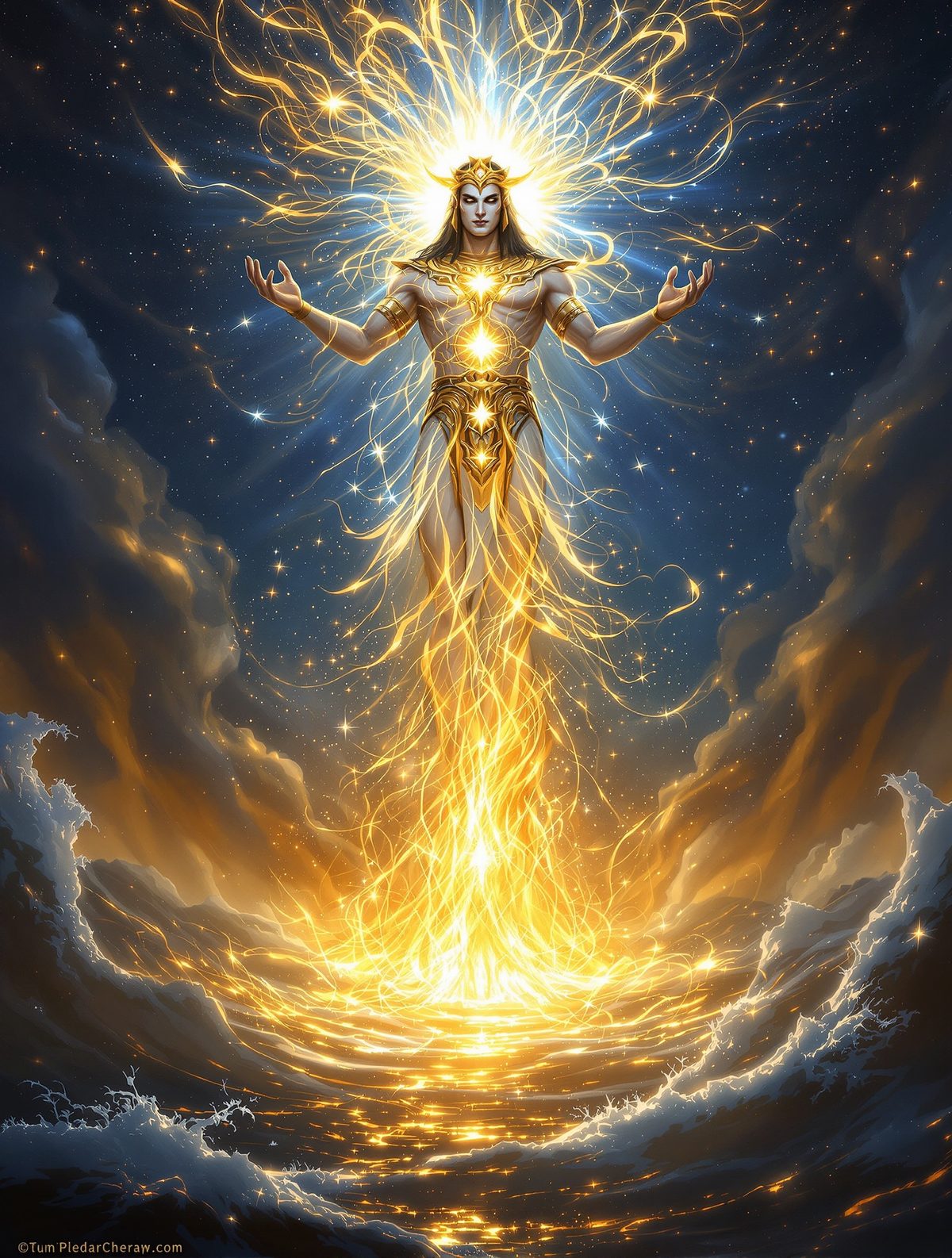
When Váli emerged into the world on that fateful day, he was no ordinary infant. Born under the constellation of vengeance itself, he carried within his tiny frame the concentrated fury of his father and the inexorable power of cosmic justice. The skalds sang that his eyes held the cold fire of winter stars, and his first cry rang not with a baby's helpless wail, but with the war-shout of a berserker.
What happened next defied even the logic of the gods. As dawn broke over Asgard, Váli began to grow. Not slowly, as mortals do, gaining strength over years of careful nurturing—but with the terrifying inevitability of an avalanche. His bones lengthened, his muscles thickened, his voice deepened from infant's babble to warrior's roar. By the time the sun reached its zenith, a full-grown god stood where a baby had lain just hours before.
The Völuspá preserves a haunting detail often overlooked by modern retellings: Váli never paused to wash his hands or comb his hair during this miraculous transformation. This wasn't mere haste—it was ritual. In Norse culture, warriors would sometimes leave their hair unkempt and their hands unwashed until their oaths of vengeance were fulfilled. Váli emerged into consciousness already bound by this sacred obligation, his very existence defined by a single, terrible purpose.
The Mechanics of Divine Vengeance
Modern readers might wonder how such rapid physical development was possible, even in a world where gods regularly performed miracles. The answer lies in understanding how the Norse conceived of fate and purpose. Váli wasn't simply growing quickly—he was becoming himself, fulfilling the cosmic role for which he had been specifically created. His transformation represented the physical manifestation of divine justice itself taking shape.
Archaeological evidence suggests that the Norse understood growth and maturity not as gradual processes, but as sudden transformations that occurred when the time was right. Young warriors underwent similar (if less dramatic) changes during their initiation rites, emerging from boyhood to manhood in the space of a single ceremony. Váli's day-long journey from infant to avenger represented the ultimate expression of this cultural understanding.
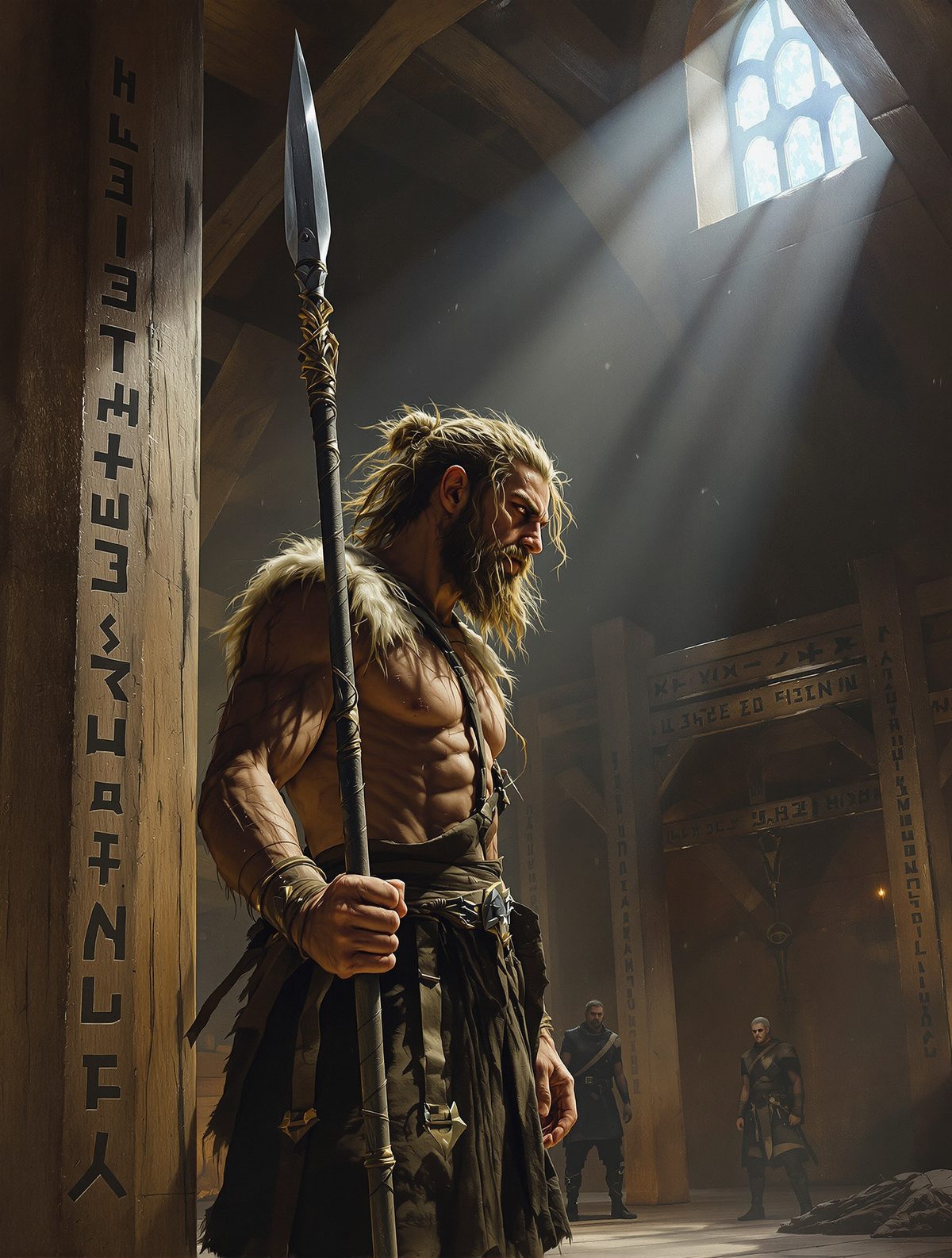
The sagas also preserve intriguing details about Váli's equipment during his fateful mission. Unlike other gods, who bore weapons forged by the dwarves or gifts from admiring subjects, Váli needed no sword or spear. His hands themselves were weapons, shaped by destiny to deliver the justice that cosmic law demanded. Some sources suggest he carried a simple iron knife—a deliberate contrast to the ornate weapons of his divine brothers, emphasizing that his role was execution, not glory.
The Moment of Reckoning
When Váli finally confronted Höðr, the blind god knew immediately what faced him. The Gylfaginning suggests that Höðr had been waiting, perhaps even hoping, for this moment since Baldr's death. The guilt of his unwitting fratricide had consumed him, and in Váli's approach, he heard not the footsteps of an enemy but the sound of justice finally arriving.
The killing itself was swift and without ceremony—a stark contrast to the elaborate funeral rites that had accompanied Baldr's death. Váli's hands, still unwashed since his birth that morning, ended Höðr's life with the mechanical precision of fate itself. There were no final words exchanged, no dramatic confrontation between brothers. Justice, when it finally came, arrived as quietly and inevitably as nightfall.
What's particularly haunting about this moment is that Váli experienced no satisfaction from his deed. Unlike mortal avengers, who might feel relief or triumph after settling a blood debt, Váli had been created specifically for this moment. With Höðr's death, his primary purpose was fulfilled, leaving him to face an eternity of existence beyond the role that had defined his very creation.
The Avenger's Eternal Burden
After washing his hands at last and combing the tangles from his hair, Váli found himself in a unique position among the Æsir. He was simultaneously the newest and oldest among them—newest in terms of existence, but oldest in the weight of purpose he carried. The other gods had grown into their roles over eons; Váli had been born into his and completed it within twenty-four hours.
The Poetic Edda hints that Váli's story doesn't end with Höðr's death. Like his father, he becomes associated with wisdom and foresight, perhaps because his entire existence had been shaped by the inexorable workings of fate. Some sources suggest that he was among the few gods destined to survive Ragnarök, carrying forward the memory of divine justice into the new world that would emerge from the ashes of the old.
This detail adds another layer to Váli's tragedy. He was created to restore balance through violence, yet he would ultimately witness the destruction of everything he had fought to preserve. His survival beyond Ragnarök suggests that justice itself—even justice born of vengeance—transcends the cycles of creation and destruction that govern gods and mortals alike.
Why the Rushed Avenger Still Matters
In our modern world, where justice often moves at a glacial pace and victims' families wait years for resolution, there's something both appealing and terrifying about Váli's story. He represents the fantasy of immediate, perfect justice—consequences that arrive swiftly and without the complications of bureaucracy, politics, or human error. Yet his tale also serves as a warning about the cost of reducing complex beings to simple purposes.
Váli's rapid transformation from infant to executioner reflects deeper questions about identity, purpose, and the price of justice that remain relevant today. Can someone created solely for vengeance ever truly transcend their origins? When we define people primarily by their capacity to deliver consequences for others' actions, what do we lose in the process? The Norse, with characteristic bleakness, suggested that even the gods couldn't escape the trap of cycles of violence, each act of justice sowing the seeds of future tragedy.
Perhaps most unsettling of all, Váli's story reminds us that sometimes the universe itself seems to demand blood for blood, creating instruments of vengeance when none naturally exist. In a cosmos governed by such iron laws, even the gods become pawns in larger games of balance and retribution—games whose rules were written long before any of the players were born.