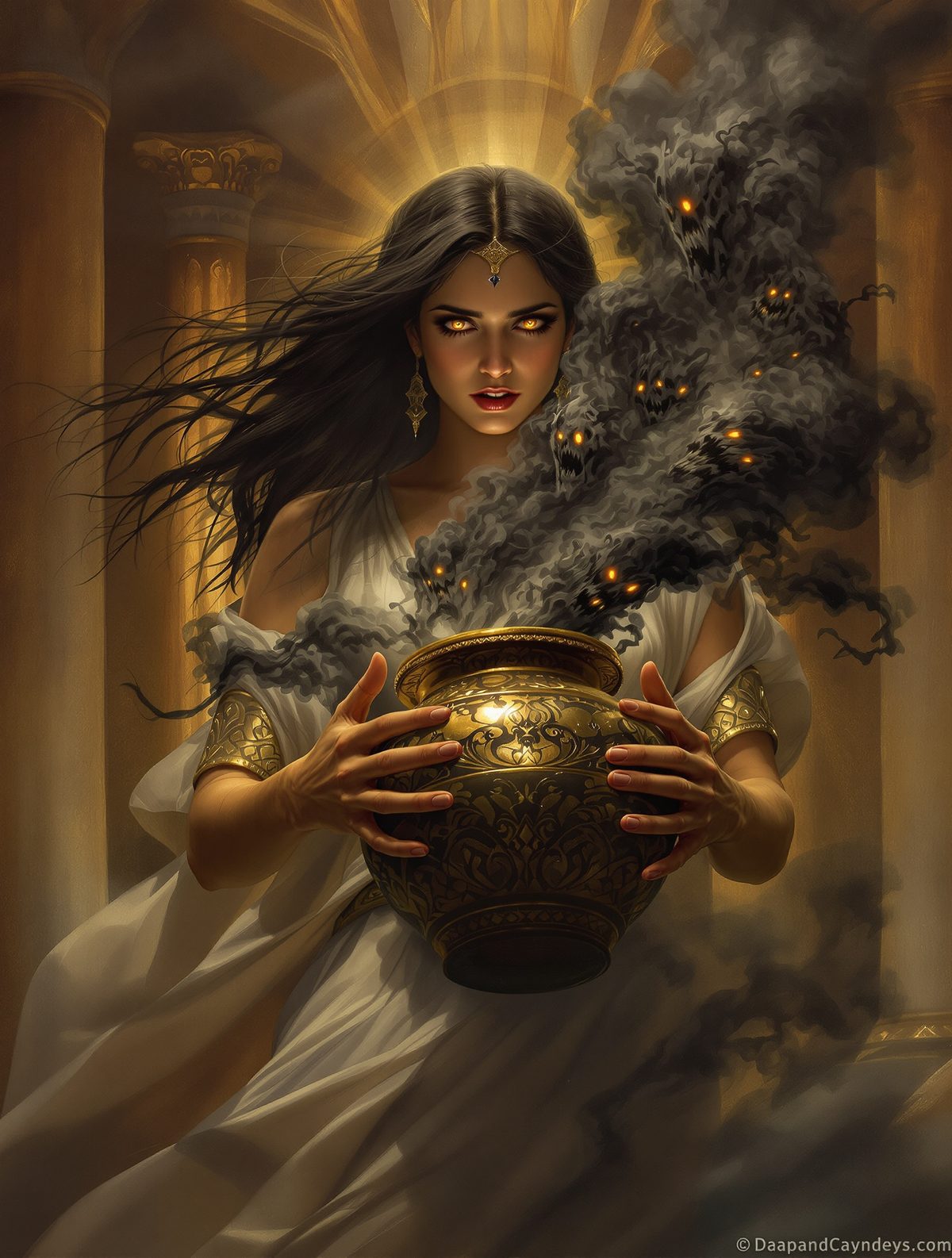
Picture this: a pagan king lounging on his throne, wine cup in hand, watching what he believes will be the most amusing spectacle of his reign. Before him stands a Christian woman asking for land—not gold, not cattle, not political favor—just a patch of earth for her monastery. The year is around 470 CE, and King Dubthach of Leinster is about to witness something that will shake his understanding of the world forever.
The woman is Brigid of Kildare, soon to become one of Ireland's most revered saints. But on this particular day, she's simply a determined abbess facing down a monarch who thinks he's found the perfect way to humiliate her. "You may have as much land as your cloak can cover," he declares with a cruel smile, gesturing dismissively at her simple woolen garment. The court erupts in laughter. After all, how much ground could one cloak possibly encompass?
Brigid smiles back. The king has just made the worst bargain of his life.
The Woman Who Would Not Be Denied
Saint Brigid of Kildare wasn't your typical 5th-century religious figure. Born around 451 CE in Faughart, County Louth, she emerged during one of the most turbulent periods in Irish history—when Christianity was spreading like wildfire through a land still dominated by ancient Celtic traditions and pagan kings. Unlike many saints whose stories are shrouded in centuries of embellishment, Brigid's tale is remarkable for its specificity and the sheer audacity of her recorded actions.
What makes Brigid's story particularly fascinating is that she wasn't born into nobility or privilege. Her father, Dubthach, was indeed a chieftain, but her mother, Broicsech, was his slave—a Pictish woman captured in raids. This mixed heritage would prove crucial to understanding Brigid's later ability to navigate both pagan and Christian worlds with equal skill.
By the time she stood before the King of Leinster seeking land, Brigid had already established herself as a force to be reckoned with. She had founded several religious communities and demonstrated an uncanny ability to appear exactly where she was needed most. But she required something permanent—a base of operations that could serve as the heart of her growing religious movement.
The Challenge: When Mockery Meets Miracle
The location Brigid had chosen wasn't random. The plains of Kildare—Cill Dara, meaning "Church of the Oak"—held deep significance in pre-Christian Ireland. This was sacred ground, associated with ancient druids and the Celtic goddess also named Brigid. Some scholars suggest this wasn't mere coincidence but rather a calculated move by a woman who understood the power of claiming spiritually significant territory.
King Dubthach of Leinster (not to be confused with Brigid's father of the same name—a common name in ancient Ireland) controlled these fertile lands with the typical iron fist of a 5th-century monarch. When this Christian woman approached him requesting territory for her monastery, he saw an opportunity for entertainment at her expense.
The exact exchange, recorded in various forms across multiple medieval texts, reveals the king's condescending attitude: "I'll grant you this, holy woman—you may have as much land as that cloak of yours can cover. Surely that's generous enough for your humble needs?" The assembled nobles chuckled at what seemed like clever wordplay. In their minds, they were witnessing a master class in how to dismiss an uppity religious figure while maintaining the appearance of magnanimity.
What they didn't expect was for Brigid to immediately accept the bargain.
The Miracle Unfolds: When Wool Defies Physics
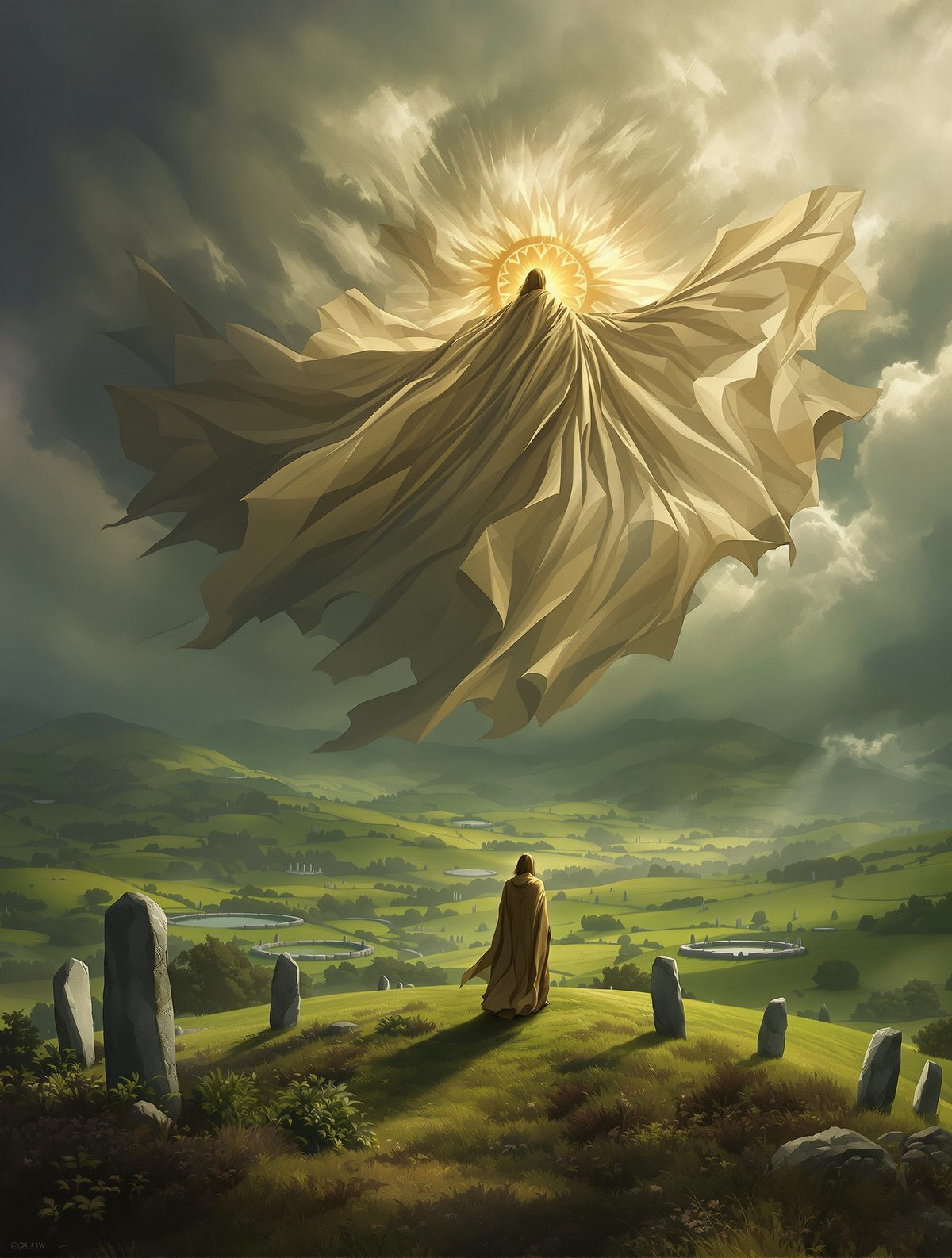
What happened next became the stuff of legend, recorded by multiple chroniclers and passed down through generations of storytellers. Brigid removed her simple woolen cloak—the kind worn by countless Irish women of her era—and laid it carefully on the ground. Then, according to the Vita Prima Sanctae Brigidae (the earliest written life of Saint Brigid, composed around 650 CE), something extraordinary occurred.
The cloak began to spread.
Not gradually, not subtly, but with the inexorable force of a tide rushing across the landscape. The edges of the garment stretched and expanded, covering acre after acre of the king's most valuable agricultural land. Witnesses described the wool flowing like water across the plains, maintaining its integrity even as it grew to impossible dimensions.
The medieval chronicler Cogitosus provides the most detailed account: "The cloak extended in all directions, covering a vast area of land, more than sufficient for the building of a monastery and all its dependencies." But even this description may be conservative compared to local oral traditions, which claim the cloak ultimately covered nearly 5,000 acres—roughly eight square miles of prime Irish countryside.
As the miracle continued, the king's amusement transformed into horror. He watched his jest become his downfall, his clever wordplay turning into a binding contract enforced by divine intervention. The laughter of his court died away, replaced by awed silence and, undoubtedly, more than a little fear.
The King's Terror: When Gods Walk Among Men
To understand the full impact of this moment, we must place ourselves in the mindset of 5th-century Ireland. This was a world where the boundary between the natural and supernatural remained thin, where power—both political and spiritual—could shift in an instant. King Dubthach wasn't just losing land; he was being publicly demonstrated as powerless against forces beyond his comprehension.
Medieval accounts describe the king's growing panic as he realized the scope of what was unfolding. Some versions of the story suggest he attempted to renege on the deal, crying out for Brigid to stop the expansion. But the saint, now revealed as something far more formidable than a simple abbess, reportedly replied that a king's word, once given, could not be taken back.
The psychological impact extends beyond mere embarrassment. In Celtic tradition, land wasn't just property—it was the physical manifestation of a ruler's connection to the divine. For a king to lose control of his territory in such a dramatic, public fashion suggested that the gods themselves had withdrawn their support. Dubthach wasn't just watching his acreage disappear; he was witnessing the visible collapse of his legitimacy.
Archaeological evidence suggests that the site Brigid claimed did indeed become one of medieval Ireland's most important religious centers. Kildare Abbey would grow to rival even the famous monasteries of Clonmacnoise and Glendalough in terms of influence and wealth. The foundation she established on that miraculously obtained land would survive for over a thousand years, until its dissolution during the Protestant Reformation.
The Sacred Mathematics of Divine Real Estate
Modern scholars have attempted to calculate the practical implications of Brigid's miracle. If we accept the traditional accounts suggesting coverage of approximately 5,000 acres, the economic value of this land transfer would have been staggering. In 5th-century Ireland, such an expanse of fertile agricultural territory could support several hundred families and generate enough surplus to fund extensive building projects.
This wasn't just about providing space for a small religious community. Brigid's expanding cloak secured the economic foundation for what would become one of medieval Europe's most significant centers of learning, manuscript production, and artistic creation. The Book of Kildare, described by medieval chroniclers as one of the most beautiful illuminated manuscripts ever created, was produced here (though sadly lost during the Reformation).
The monastery Brigid established also became famous for an unusual feature: it was double monastery, housing both monks and nuns under the abbess's authority. This arrangement was virtually unheard of in the broader Christian world but reflected Brigid's ability to blend Christian innovation with Celtic traditions of powerful female leadership.
Legacy of the Impossible: Why Ancient Miracles Still Matter
Whether we interpret Brigid's expanding cloak as literal miracle or masterful negotiation enhanced by centuries of storytelling, its significance extends far beyond the boundaries of religious belief. This story represents something profoundly human: the moment when determination meets opportunity, when the underestimated reveal their true power.
In our modern world of contracts and legal fine print, there's something deeply satisfying about a story where clever wordplay backfires so spectacularly. King Dubthach thought he was making an impossible offer, but Brigid understood something he didn't—sometimes the impossible is simply waiting for the right person to attempt it.
The legend of Brigid's cloak reminds us that throughout history, transformative change has often begun with someone bold enough to accept what others considered an unreasonable challenge. Whether in boardrooms, laboratories, or the halls of government, progress frequently depends on individuals willing to bet everything on their vision of what might be possible.
Today, visitors to Kildare can still see the grounds where Brigid's monastery once stood, now home to a modern cathedral and the Brigidine Sisters' spirituality center. The exact boundaries of that miraculous land grant may be lost to history, but the impact of one woman's audacious faith—and one king's ill-considered jest—continues to ripple through time, reminding us that sometimes the most powerful force in the world is simply the refusal to accept "impossible" as a final answer.