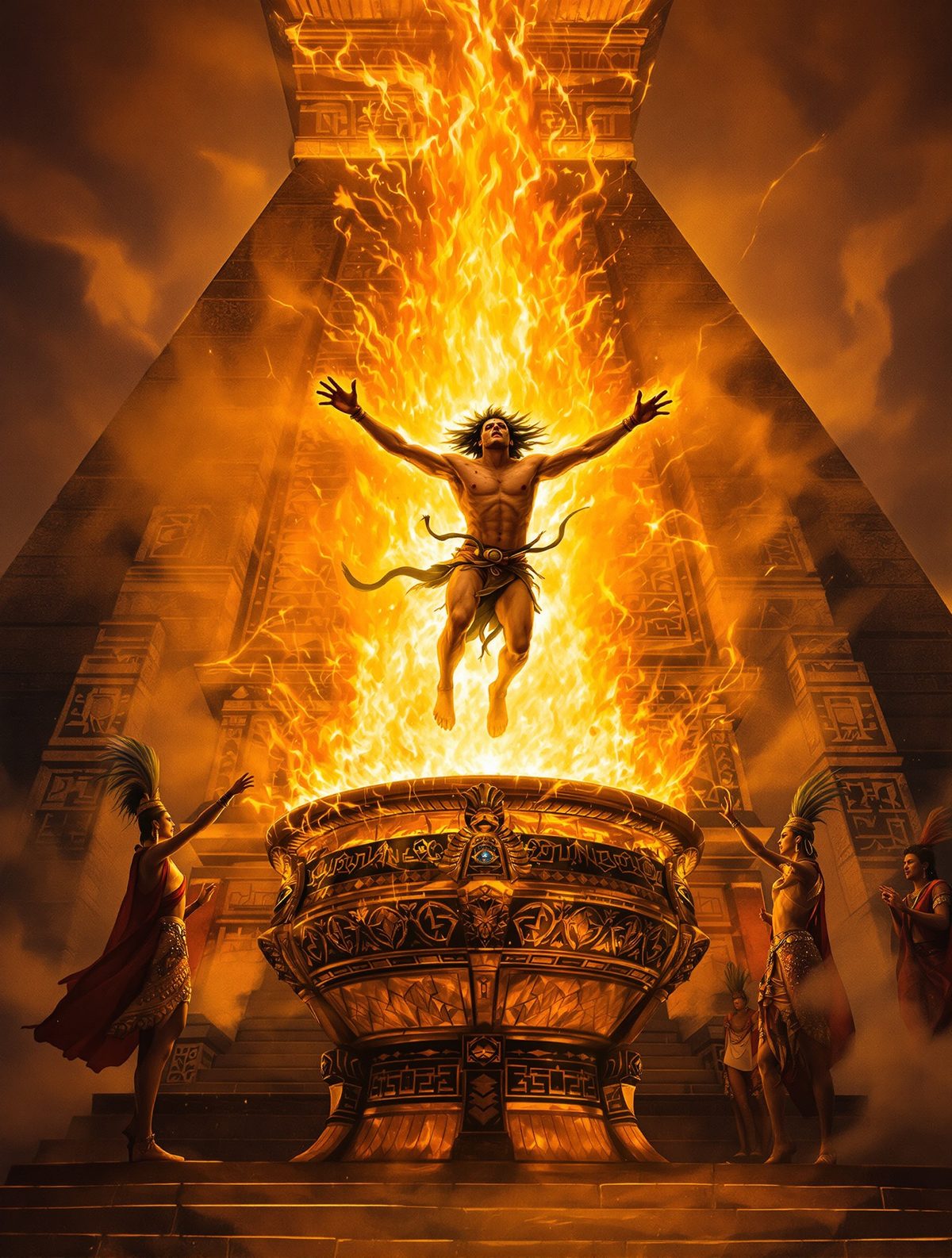

The golden bangles caught the firelight as they slid up and down the warriors' muscled forearms, each piece worth more than a Roman farmer might see in a lifetime. From her perch atop the Capitoline Hill, Tarpeia watched the enemy camp below with hungry eyes, counting the gleaming treasures that adorned every Sabine soldier. She had no way of knowing that those very ornaments would soon become her tomb, crushing the life from her treacherous body in one of history's most brutally poetic acts of justice.
The Rape That Started a War
To understand Tarpeia's fatal greed, we must first journey back to the earliest days of Rome, around 750 BCE, when Romulus had just founded his city on the banks of the Tiber. The new settlement faced a critical problem that would make any modern urban planner break into a cold sweat: Rome had plenty of men but virtually no women. Romulus had welcomed outlaws, exiles, and fortune-seekers from across the Italian peninsula, creating a thriving but decidedly masculine city.
The solution Romulus devised would become legendary for all the wrong reasons. He invited the neighboring Sabines to a grand festival honoring Neptune, complete with games, feasts, and entertainment. The Sabines came in droves, bringing their wives and daughters to witness the spectacle. At a predetermined signal, the Roman men seized the Sabine women, carrying them off to become their brides in what history remembers as the "Rape of the Sabine Women."
The Sabine king Titus Tatius was, understandably, furious. What followed was not the quick retribution you might expect, but a carefully planned campaign that would take months to unfold. The Sabines weren't going to rush headlong into Roman spears—they would use cunning, patience, and ultimately, Roman greed against the city itself.
Fortress in the Clouds
The Capitoline Hill rose like a natural fortress above early Rome, its steep cliffs making it nearly impregnable to direct assault. Here stood the most sacred temples and the city's final refuge—what the Romans called the arx or citadel. When enemy armies approached, the entire population could theoretically retreat behind its walls and wait out any siege.
But here's what most history books gloss over: the citadel's main weakness wasn't its walls or its position, but human nature itself. The garrison was small, composed largely of older men and a handful of guards. Among them was Spurius Tarpeius, the fortress commander, and his daughter Tarpeia.
Tarpeia wasn't just any guard's daughter—she was a Vestal Virgin, or at least closely associated with the sacred duties of maintaining Rome's holy fires. This made her betrayal even more shocking to ancient Roman sensibilities. She had sworn to protect not just the physical city, but its spiritual heart. Yet when she gazed down at the Sabine camp with its glittering warriors, all thoughts of duty dissolved like morning mist.
The Glitter of Temptation
The Sabines had been camped outside Rome for weeks, their siege lines growing tighter each day. Unlike the relatively spartan Romans, Sabine warriors were renowned for their love of gold and silver ornaments. They wore thick torcs around their necks, heavy bracelets on both arms, and carried shields decorated with precious metals. To Tarpeia, watching from her stone tower, they must have looked like walking treasure chests.
Ancient sources differ on exactly how the contact was made. Some say Tarpeia ventured outside the walls to draw water from a sacred spring—a detail that adds another layer of irony, since she abandoned her sacred duties for profane gain. Others suggest the Sabines called up to her from below, their voices carrying promises that would prove devastatingly literal.
The bargain seemed straightforward: Tarpeia would open the citadel gates in exchange for "what they wore upon their arms." She was thinking of those heavy golden bracelets, each one probably weighing several pounds and worth a fortune. What she failed to consider was that warriors carry more than jewelry on their arms.
King Tatius agreed to her terms with what the ancient historian Livy describes as a knowing smile. The Sabine warriors began preparing for their nocturnal assault, but they were planning a very different kind of payment than what their Roman collaborator expected.
The Gates of Betrayal Swing Open
On the appointed night, Tarpeia crept through the silent citadel to the main gate. The other guards were asleep or distracted—exactly how she managed this remains one of history's unsolved mysteries, though it speaks to either careful planning or incredible luck. The massive wooden doors, reinforced with iron and designed to withstand battering rams, opened silently on their hinges.
The first Sabine warriors slipped through like shadows, their hobnailed sandals muffled against the stone. More followed, then dozens more, until the supposedly impregnable fortress was swarming with enemy soldiers. The Roman garrison, caught completely by surprise, could offer little resistance.
Tarpeia stood waiting near the gate, probably already imagining her newfound wealth. Ancient sources describe her as practically vibrating with anticipation, her eyes fixed on the golden ornaments adorning each warrior who passed. She had betrayed her city, her family, and her sacred vows, but in her mind, she was about to become the richest woman in central Italy.
Then King Tatius approached, and Tarpeia extended her hands for her payment. What happened next became the stuff of legend.
When Gold Becomes Lead
Tatius looked at the expectant young woman and spoke the words that would echo through Roman memory for centuries: "Yes, we shall give you what we wear upon our arms." But instead of removing his golden bracelets, he hefted his shield—his heavy, bronze-and-leather shield that every warrior carried on his arm—and hurled it at Tarpeia with crushing force.
The other Sabines immediately understood their king's interpretation of the bargain. One by one, they threw their shields at the traitor. These weren't lightweight movie props—a Sabine shield could weigh 15-20 pounds and was designed to stop sword blades and spear points. The first few blows knocked Tarpeia to the ground; the rest buried her under a mountain of bronze and leather.
Ancient writers differ on whether this was always the plan or a spontaneous act of disgust at her betrayal. Some sources suggest the Sabines couldn't stomach working with a traitor, even one who had just handed them victory. Others propose that Tatius was demonstrating to his men that betrayers could never be trusted—if she would sell out her own people, she might eventually sell out her new allies too.
The Rock That Bears Her Name
The spot where Tarpeia died became known as the Tarpeian Rock, and for centuries afterward, Rome used it for a very specific and grimly appropriate purpose: it became the execution site for traitors. Convicted betrayers of the Roman state were hurled from its heights, their bodies shattering on the rocks below in conscious echo of Tarpeia's fate.
But here's the twist that makes this legend even more fascinating—the Sabines' victory was short-lived. According to Roman tradition, the very Sabine women who had been abducted years earlier intervened in the battle that followed. They threw themselves between their Roman husbands and their Sabine fathers and brothers, pleading for peace. Their intervention led not to continued warfare, but to the merger of the two peoples under joint kings.
In the end, Tarpeia's betrayal accomplished nothing except her own destruction. Rome survived, the Sabines were eventually integrated into Roman society, and the greedy gatekeeper became a cautionary tale told to Roman children for generations.
Today, as we watch modern scandals unfold involving politicians, business leaders, and public figures who sacrifice principles for profit, Tarpeia's story resonates with uncomfortable relevance. The details change—golden bracelets become offshore accounts, citadel gates become classified information—but the fundamental human weaknesses remain unchanged. Her tale reminds us that betrayal often destroys the betrayer as thoroughly as the betrayed, and that those who offer easy wealth for moral compromise rarely honor their bargains in the way their victims expect.