Picture this: the most powerful being in all the Nine Realms, standing at the edge of a dark well, preparing to mutilate himself with his bare hands. No anesthesia. No hesitation. Just the cold knowledge that wisdom comes only to those willing to pay its price in flesh and blood. This isn't some barbarian ritual or desperate act of madness—this is Odin, the All-Father, about to make a transaction that would echo through eternity.
The year was sometime around the 8th to 11th centuries CE, when Viking longships carved bloody paths across European waters and Norse skalds first wove this tale into their epic poems. But the story they told wasn't of conquest or gold—it was of a god so terrified of the future that he was willing to blind himself to see it clearly.
The Weight of Prophetic Doom
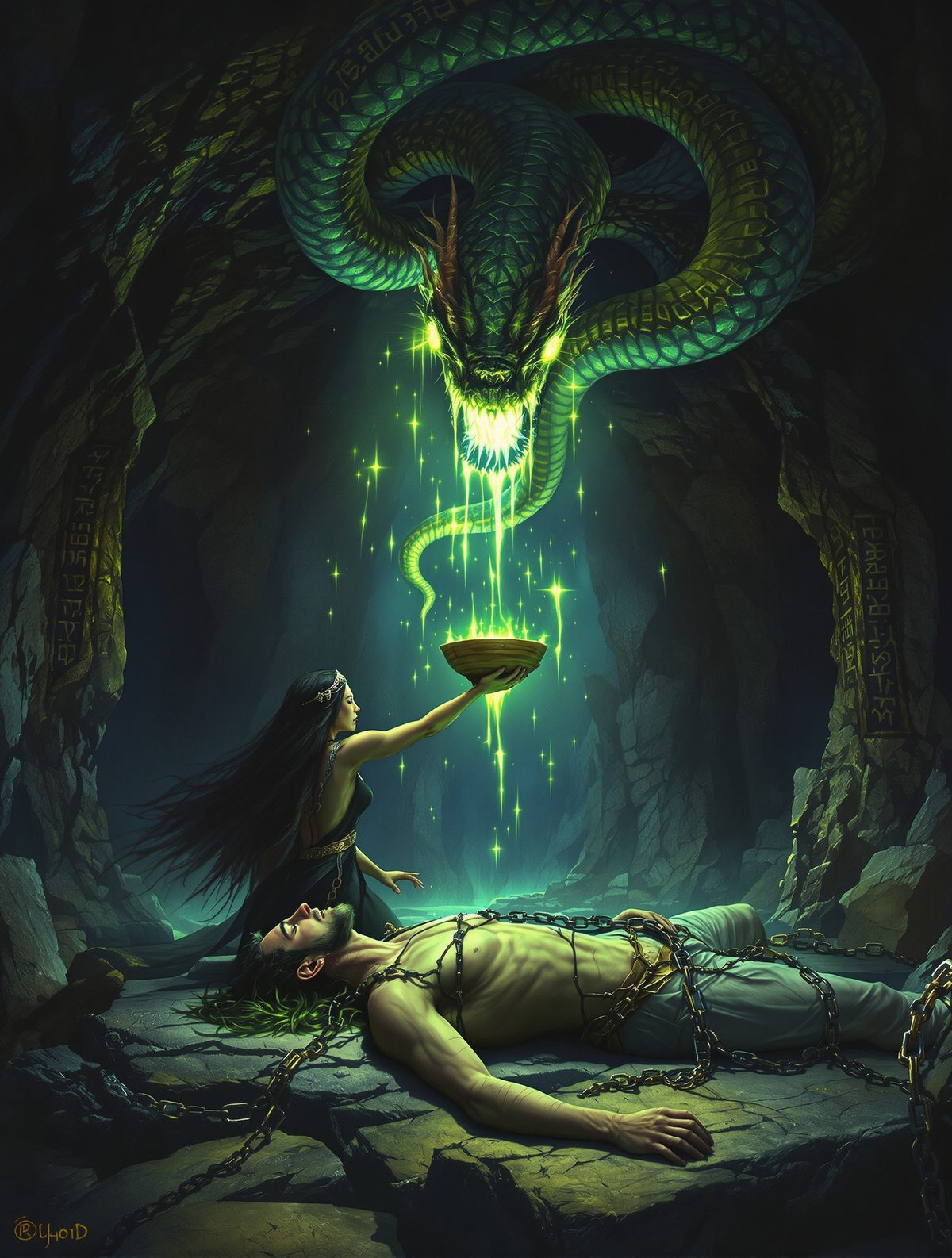
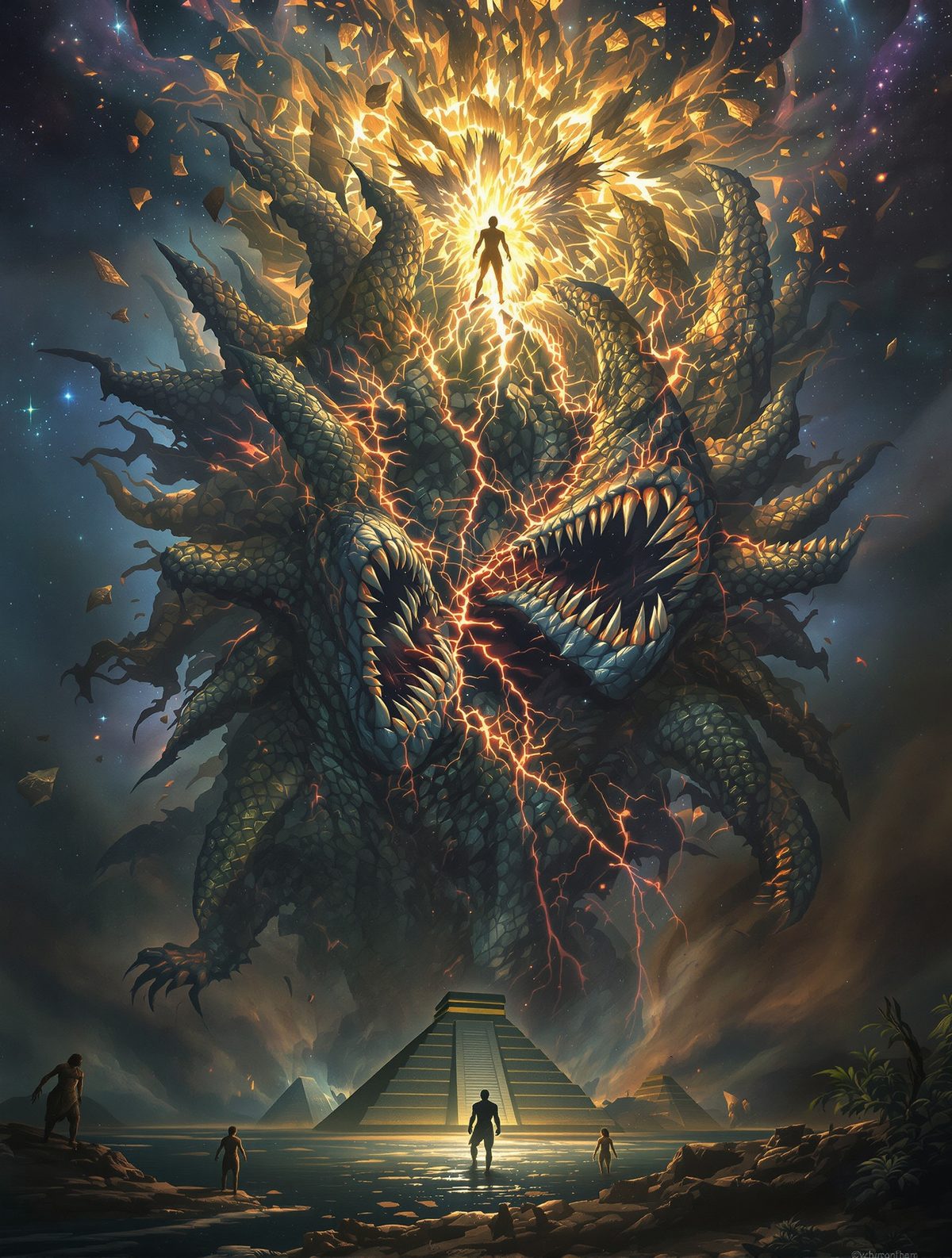
Odin wasn't your typical deity lounging in celestial comfort. The Norse conceived of their gods as deeply flawed beings caught in an cosmic trap—they knew exactly how their story would end. Ragnarok, the twilight of the gods, loomed like a death sentence over Asgard. The prophecies were clear: Odin would be devoured by the monstrous wolf Fenrir, his son Thor would die battling the World Serpent, and the entire cosmos would burn.
But here's what most people don't realize about Odin: he was essentially the Norse god of anxiety. While other mythologies depicted their chief deities as confident rulers, Odin was portrayed as a restless wanderer, constantly seeking knowledge, allies, and advantages. He collected the souls of the bravest warriors not out of honor, but out of desperate preparation for the final battle. Every raven that returned to his shoulders, every whisper from his eight-legged horse Sleipnir, every scrap of intelligence—it all fed his obsession with averting the inevitable.
The Norse had a word for this kind of cosmic dread: wyrd, often translated as "fate," but closer in meaning to the weight of consequences that bind all things together. Odin lived under wyrd's crushing pressure, knowing that even gods couldn't escape the web of destiny—unless they possessed wisdom profound enough to find the loopholes.
The Well at the Edge of Everything
Beneath Yggdrasil, the World Tree whose branches supported all of existence, lay three wells of immense power. Most famous was the Well of Urd, where the Norns—the three sisters who wove fate itself—dwelt beside the roots. But it was the second well that called to Odin: Mímisbrunnr, the Well of Mímir, whose waters contained the memory of all things that had been and the wisdom of all things that could be.
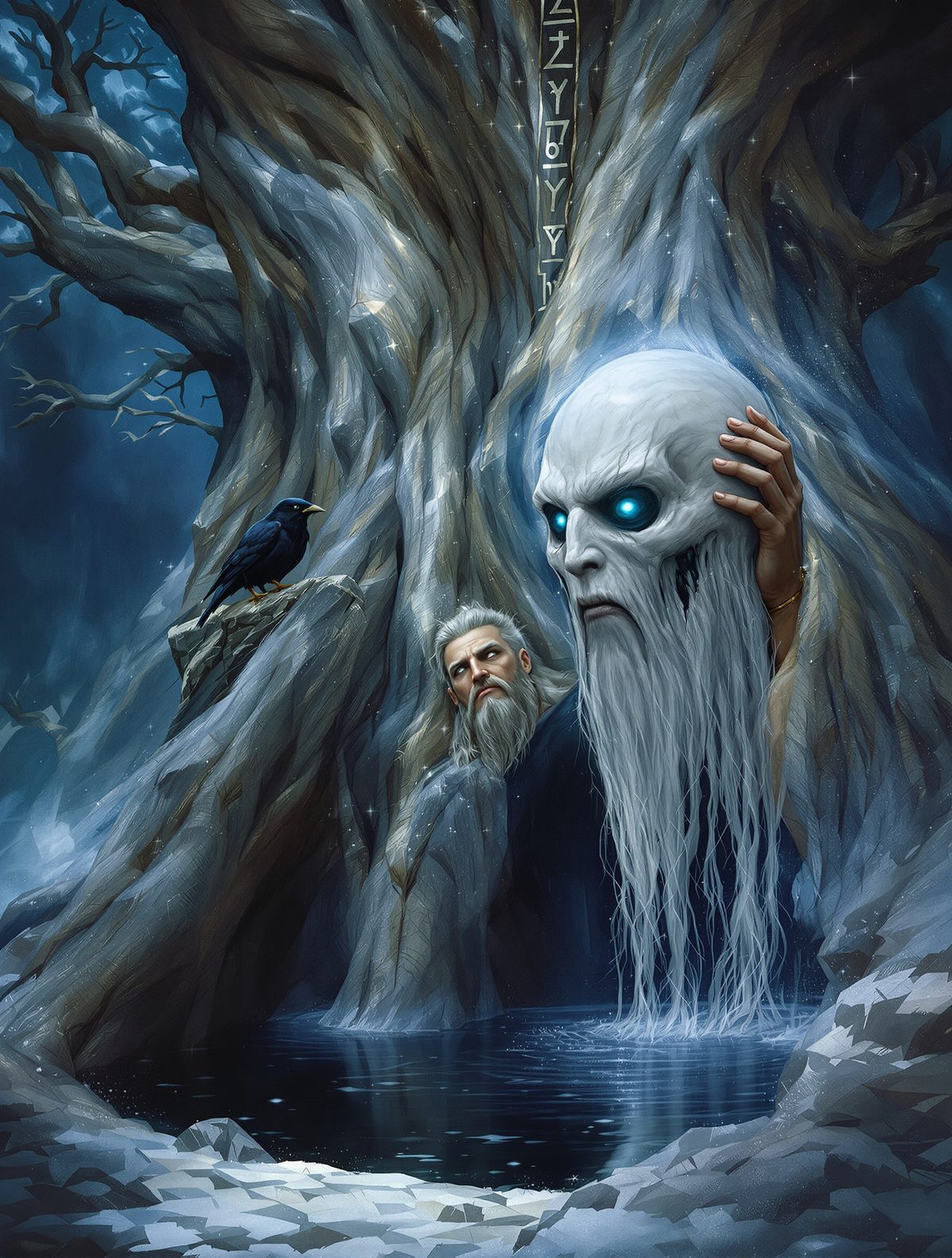
Mímir himself was no ordinary guardian. This wasn't some mystical force or abstract concept—he was a severed head, kept alive by Odin's magic after his decapitation during the brutal Æsir-Vanir war. The Norse sagas tell us that Odin had preserved Mímir's head with herbs and spells, and in return, this ancient being had become the keeper of ultimate wisdom. Every day, Mímir drank from his well using the horn Gjallarhorn, maintaining his supernatural knowledge of past, present, and future.
The well itself was described in the Völuspá—one of our oldest sources for Norse mythology—as a place where "wisdom and wit" lay hidden beneath the World Tree's roots. But here's the detail that sends chills down your spine: the waters were dark as midnight, and once something sank into those depths, it could never be retrieved.
The Negotiation That Changed Everything
When Odin approached Mímir's well, he didn't come as a supplicant. He came as a king making a business proposition. The exchange, as recorded in the 13th-century Prose Edda by Snorri Sturluson, was startlingly direct. Mímir knew what the All-Father wanted—to drink from the well and gain the wisdom needed to prevent Ragnarok. But the severed head also knew the price such knowledge demanded.
"Your eye," Mímir declared. Not gold, not promises, not even another's eye. Odin's own eye. The symbolism wasn't lost on either party—sight for insight, the physical capacity to see the present world in exchange for the supernatural ability to perceive hidden truths.
What makes this moment so psychologically brutal is that Odin didn't hesitate. The sagas describe no internal struggle, no attempt to negotiate alternative payment. The All-Father understood something that lesser beings couldn't: true wisdom requires genuine sacrifice. You can't cheat your way to cosmic understanding. The universe demands that you give up something you can never replace.
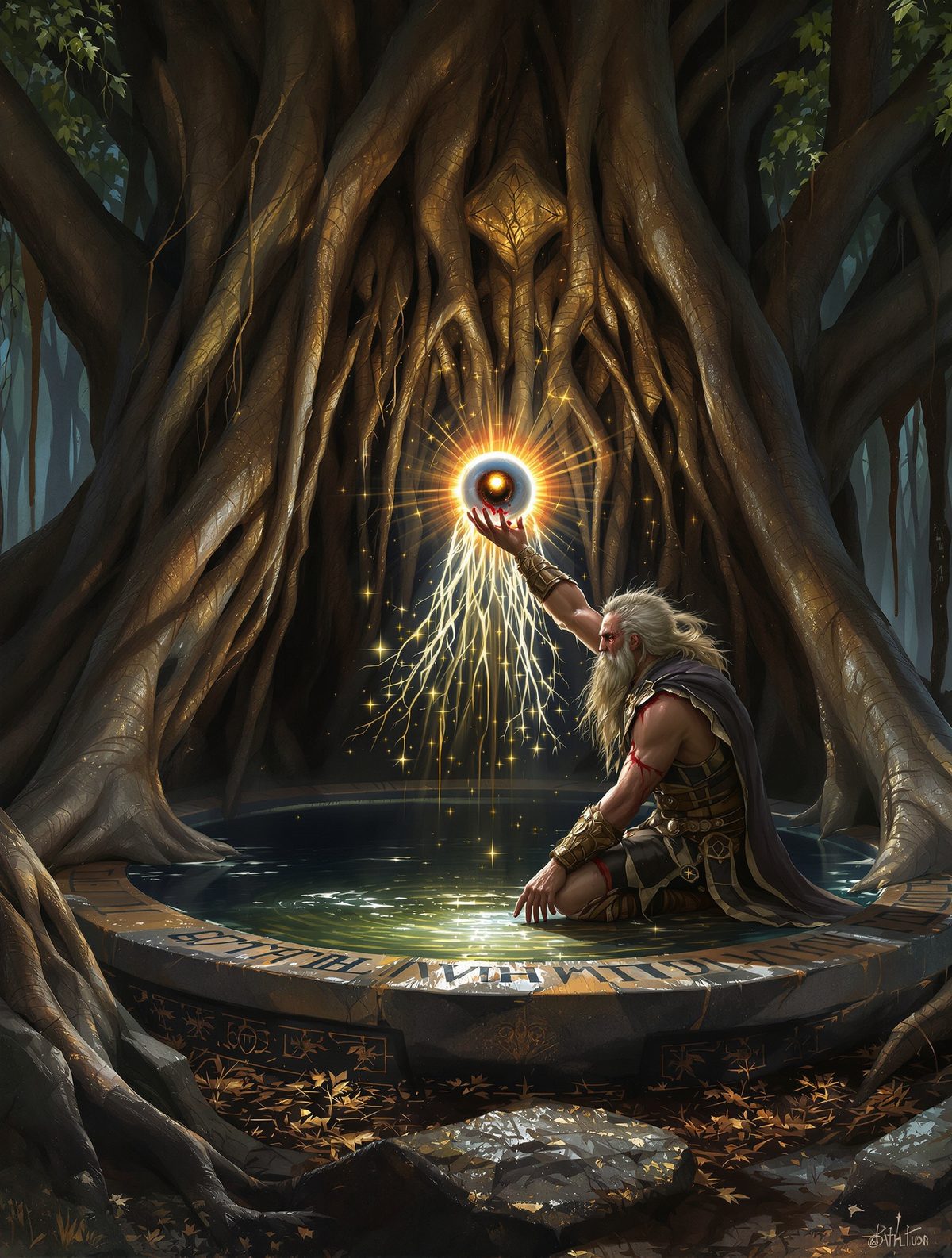
So Odin reached up to his own face and tore out his eye with his bare hands. The Norse poets spared no detail—they wanted their audiences to understand the physical reality of this sacrifice. Blood ran down the All-Father's face as he cast his eye into the dark waters, where it sank immediately to the bottom, joining the other mysteries that lay hidden in Mímir's depths.
The Wisdom That Broke a God
The moment Odin drank from the well, everything changed. The wisdom that flooded his consciousness wasn't the gentle enlightenment of philosophical tradition—it was the devastating awareness of cosmic truth in all its terrible complexity. He could see the threads that connected all events, understand the hidden meanings behind every action, and perceive the true nature of the gods' predicament.
But here's the twist that most retellings miss: the wisdom didn't save him. Even after sacrificing his eye, even after gaining unprecedented insight into the workings of fate, Odin still couldn't prevent Ragnarok. The prophecies remained unchanged. His death at Fenrir's jaws was still inevitable. All that wisdom had done was allow him to see his doom with perfect clarity.
This is what made the Norse vision of divinity so unique among world mythologies. Their gods weren't omnipotent beings who could reshape reality at will—they were tragic figures trapped by the same cosmic forces that bound mortals, only with the added burden of seeing their fate approaching. Odin's sacrifice had purchased not salvation, but the terrible gift of understanding exactly why salvation was impossible.
Yet the one-eyed god continued his quest for knowledge. He would later hang himself from Yggdrasil for nine days and nights to discover the secrets of the runes. He would steal the mead of poetry from the giants. He would gather an army of the greatest warriors who ever lived. All of it informed by the wisdom bought with his eye, all of it ultimately futile against the turning of the cosmic wheel.
The Price of Leadership in a Doomed World
The story of Odin's eye resonated powerfully with its original audience—the Vikings of medieval Scandinavia. These were people who lived on the edge of survival, who understood that leadership meant making impossible choices and bearing unbearable knowledge. Their kings and jarls often faced decisions where any choice led to suffering, where wisdom meant accepting tragic realities rather than clinging to comfortable illusions.
The archaeological record confirms this harsh worldview. Excavations of Viking-age settlements reveal lives of constant struggle against hostile environments, failed harvests, and violent conflicts. These weren't people who believed in happy endings—they believed in facing doom with eyes wide open, in fighting hopeless battles with grim determination, in paying whatever price was necessary to protect their people even when protection was ultimately impossible.
Odin's self-mutilation wasn't seen as madness—it was the ultimate expression of responsible leadership. A true king, the story suggested, must be willing to sacrifice anything, including his own body, to gain the knowledge needed to guide his people. The fact that such knowledge often brought despair rather than hope was simply the burden that leaders must bear.
Modern Echoes of Ancient Sacrifice
In our age of easy answers and instant gratification, Odin's bargain at Mímir's well offers a disturbing challenge. We live in a world where we expect wisdom without cost, insight without sacrifice, and leadership without personal price. But the old Norse tale suggests that real understanding—the kind that allows us to navigate truly impossible situations—still demands that we give up something we can never get back.
Consider the modern leaders who have gained profound wisdom through terrible loss: the parents who understand child safety only after losing a child, the generals who grasp war's true cost only after sending soldiers to die, the scientists who comprehend their research's implications only after witnessing its destructive potential. Like Odin at the well, they gained sight by losing sight, understood the world more clearly by experiencing irreversible blindness to their former innocence.
Perhaps that's why this story continues to echo through popular culture, from Marvel comics to literary fiction. We recognize something true in the image of the most powerful being in existence choosing to wound himself in exchange for wisdom. In a world facing climate change, political upheaval, and technological disruption—all problems that seem to demand wisdom we don't possess—Odin's sacrifice reminds us that real understanding has always come at a price that can't be negotiated away.
The eye still rests at the bottom of Mímir's well, a permanent reminder that some knowledge can only be purchased with irreplaceable pieces of ourselves. And somewhere in the depths of that dark water, the wisdom that couldn't save even the gods continues to watch, waiting for the next desperate seeker willing to pay the price for sight.