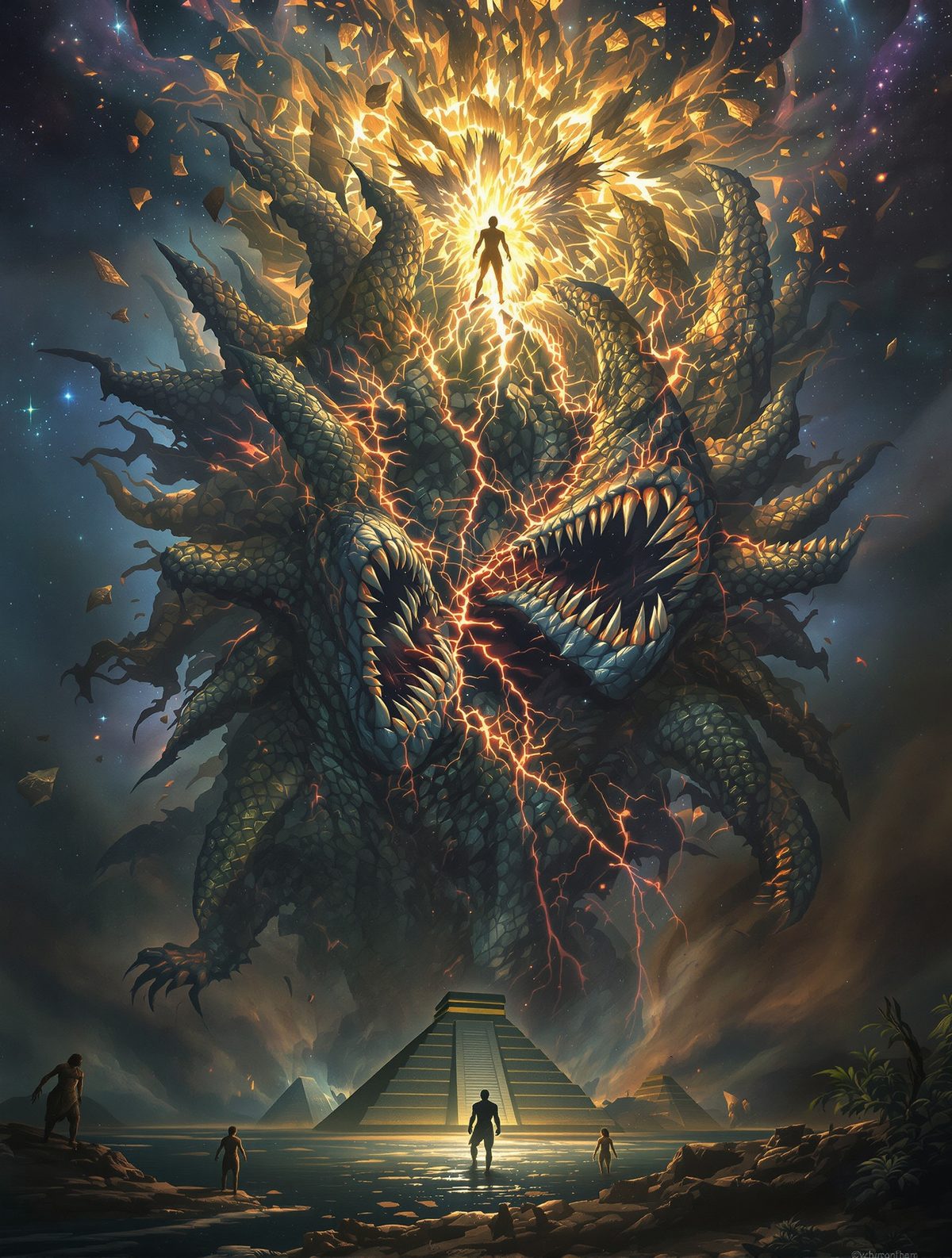
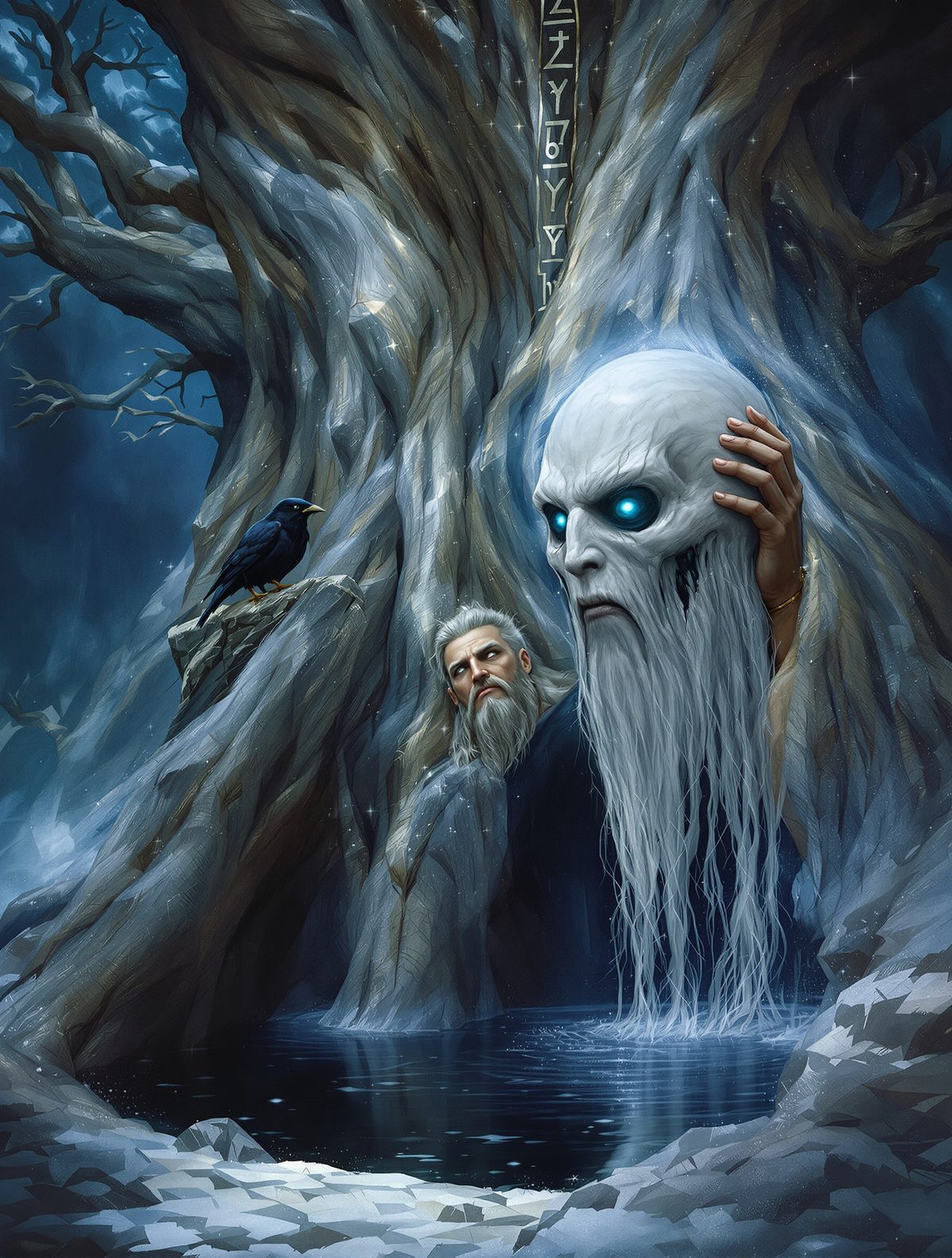
In the misty halls of Asgard, the All-Father Odin cradles something that would horrify mortals and gods alike—a severed head that still speaks, still sees, still remembers everything that ever was or ever will be. This is no mere trophy of war, but the preserved remains of Mímir, the wisest giant who ever lived, whose counsel Odin values more than all the treasures of the nine realms combined. When death claimed Mímir's body, the one-eyed god refused to let such profound wisdom slip into oblivion.
What unfolds is perhaps the most macabre tale of friendship and desperation in all of Norse mythology—a story of how far one god would go to preserve knowledge, and how death itself became merely an inconvenience to true wisdom.
The Giant Who Knew Everything
Long before his gruesome fate, Mímir was no ordinary giant. While his kin were known for their strength and chaos, Mímir possessed something far more dangerous—absolute knowledge. He was the guardian of the Well of Wisdom that bubbled beneath the roots of Yggdrasil, the World Tree that connected all nine realms of Norse cosmology.
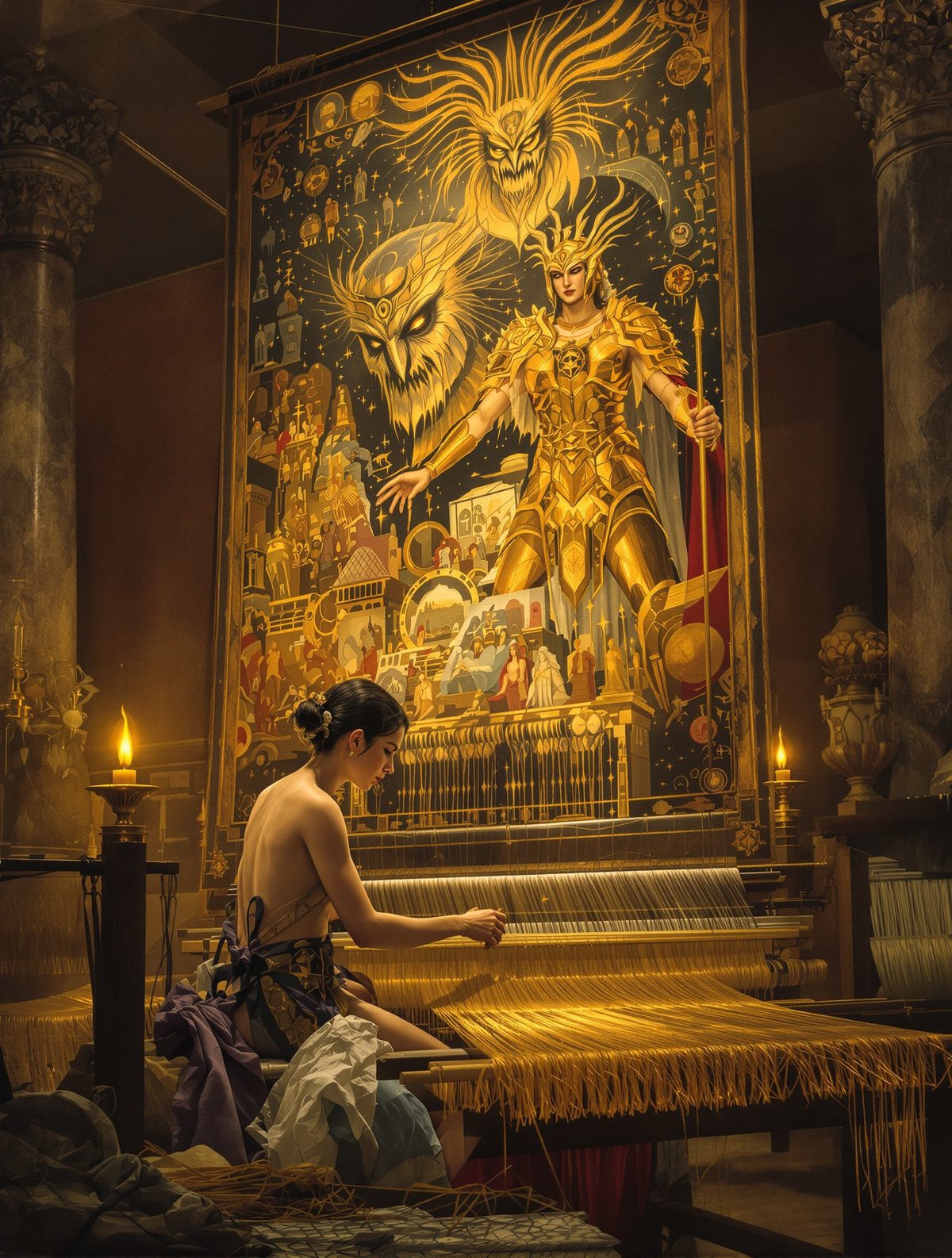
This wasn't just any spring of water. Mímir's well contained the memories of everything that had ever occurred in the cosmos, from the first spark of creation to whispers of Ragnarök yet to come. Each day, Mímir would drink from this well with his golden horn, Gjallarhorn, absorbing layers of wisdom that accumulated like sediment in his ancient mind. The Norns—those mysterious sisters who wove fate itself—would visit this well daily, mixing its sacred waters with clay to tend the roots of Yggdrasil.
But here's what most don't realize: Mímir was older than the gods themselves. He had witnessed the formation of the cosmos from the void of Ginnungagap, had seen Odin and his brothers slay the primordial giant Ymir to create Midgard. While gods rose and fell, Mímir simply watched, remembered, and grew wiser.
The Hostage Exchange That Went Horribly Wrong
The trouble began with a war between two tribes of gods that most people have never heard of. Everyone knows about the Æsir—Odin's family of warrior gods dwelling in Asgard. But before they ruled supreme, they fought a bitter conflict with the Vanir, an older group of fertility and prosperity deities led by the sea-god Njörðr and his twin children, Freyr and Freyja.
This wasn't some brief skirmish. The Æsir-Vanir War raged across multiple realms, with both sides wielding powers that shook the foundations of reality. Odin hurled his spear Gungnir to officially declare hostilities, while the Vanir responded with seiðr magic so potent it could reshape the minds of gods themselves. Eventually, exhausted by endless battle, both sides agreed to an unusual peace treaty.
The terms were simple: each tribe would exchange hostages as a guarantee of good faith. The Æsir sent Mímir along with Hœnir, a god blessed with incredible beauty and perceived wisdom. The Vanir, in return, sent their most precious members—Njörðr and his children—to dwell in Asgard.
But here's where the exchange became a deadly deception. Hœnir wasn't actually wise at all. He was merely handsome and relied entirely on Mímir's counsel for every decision. At first, the Vanir were impressed. Whenever they brought problems to their new leaders, Hœnir would pause thoughtfully, Mímir would whisper the perfect solution, and the beautiful god would relay the wisdom as his own.
The Moment Everything Went Wrong
The deception unraveled when the Vanir decided to test their new leaders separately. They presented Hœnir with a complex dispute while deliberately keeping Mímir at a distance. Without his giant advisor, the supposedly wise god could only stammer, "Let others decide," over and over again.
The Vanir felt utterly betrayed. They had given up their most beloved deities in exchange for what they now saw as a beautiful fool and his puppet-master. In their fury, they seized Mímir and performed an execution that would echo through mythology forever. They severed his head from his shoulders and sent it back to Odin as a grim message about the price of deception.
But what the Vanir couldn't have anticipated was Odin's reaction. Rather than rage or despair, the All-Father saw an opportunity. He knew that Mímir's wisdom was too precious to lose to something as mundane as death. As he cradled the giant's severed head, Odin made a decision that would define his character forever: he would preserve Mímir through the darkest magic available.
The Spells That Conquered Death
What happened next reveals the true depth of Odin's desperation for knowledge. Using herbs from the most remote corners of the nine realms and chanting galdr magic—the masculine counterpart to the feminine seiðr—Odin slowly transformed Mímir's severed head into something that transcended normal death.
The process was neither quick nor pleasant. Ancient sources describe Odin whispering preservation spells for days, watching as decay reversed itself, as dead flesh regained the pale glow of life. The empty eye sockets slowly kindled with an otherworldly light that had nothing to do with mortal existence. When Mímir's lips finally parted and spoke Odin's name, it marked the first time in Norse mythology that death had been truly conquered—not through resurrection, but through a willful refusal to let go of wisdom.
From that day forward, Odin carried Mímir's head with him, consulting it before every major decision. Before the binding of the wolf Fenrir, before his quest for the runes, before preparing for the final battle of Ragnarök—Mímir's counsel guided the All-Father through the most crucial moments in cosmic history.
The head became more than just an advisor; it was Odin's constant reminder that some things are more important than life itself. Knowledge, wisdom, understanding—these could justify any sacrifice, endure any horror, transcend any boundary between life and death.
The Wisdom That Survived Ragnarök
Perhaps the most fascinating aspect of Mímir's story is what it reveals about Norse attitudes toward death and knowledge. In a culture that celebrated glorious death in battle, Mímir represented something different—the idea that true wisdom could make even death irrelevant.
Unlike the einherjar warriors who would die again at Ragnarök, Mímir's wisdom was destined to survive the end of everything. The Poetic Edda suggests that after the final battle, when new gods emerge to rule a reborn world, they will seek out Mímir's well to drink the wisdom needed for a better age. Even cosmic destruction couldn't diminish what the wise giant had learned.
This creates a paradox that would have resonated deeply with Norse audiences: the giant who never lifted a weapon in anger became more indestructible than any warrior. His severed head achieved an immortality that the mightiest gods could never claim.
The Legacy of Radical Preservation
Today, when we anxiously back up our digital files and preserve endangered languages, Mímir's story feels unexpectedly relevant. Odin's desperate preservation of the wise giant's knowledge reflects our own modern terror of losing irreplaceable wisdom to the march of time.
But Mímir's tale asks uncomfortable questions about how far we should go to preserve knowledge. Odin chose to defy death itself rather than accept the loss of wisdom—and Norse mythology treats this as admirable rather than horrifying. In our age of artificial intelligence and digital preservation, we might ask ourselves: what would we be willing to sacrifice to ensure that crucial knowledge survives? What boundaries are we prepared to cross when wisdom itself hangs in the balance?
The image of Odin consulting Mímir's severed head reminds us that the relationship between knowledge and mortality has always been complicated. Some things, it suggests, are simply too valuable to let die—even when preserving them requires us to embrace the macabre, to whisper spells in the dark, to carry our wisdom in forms that would horrify those who have never faced the prospect of losing everything they know.
In the end, Mímir achieved something that neither gods nor giants could claim: his wisdom became truly eternal, speaking truth from beyond death itself, whispering counsel that would outlast the stars.