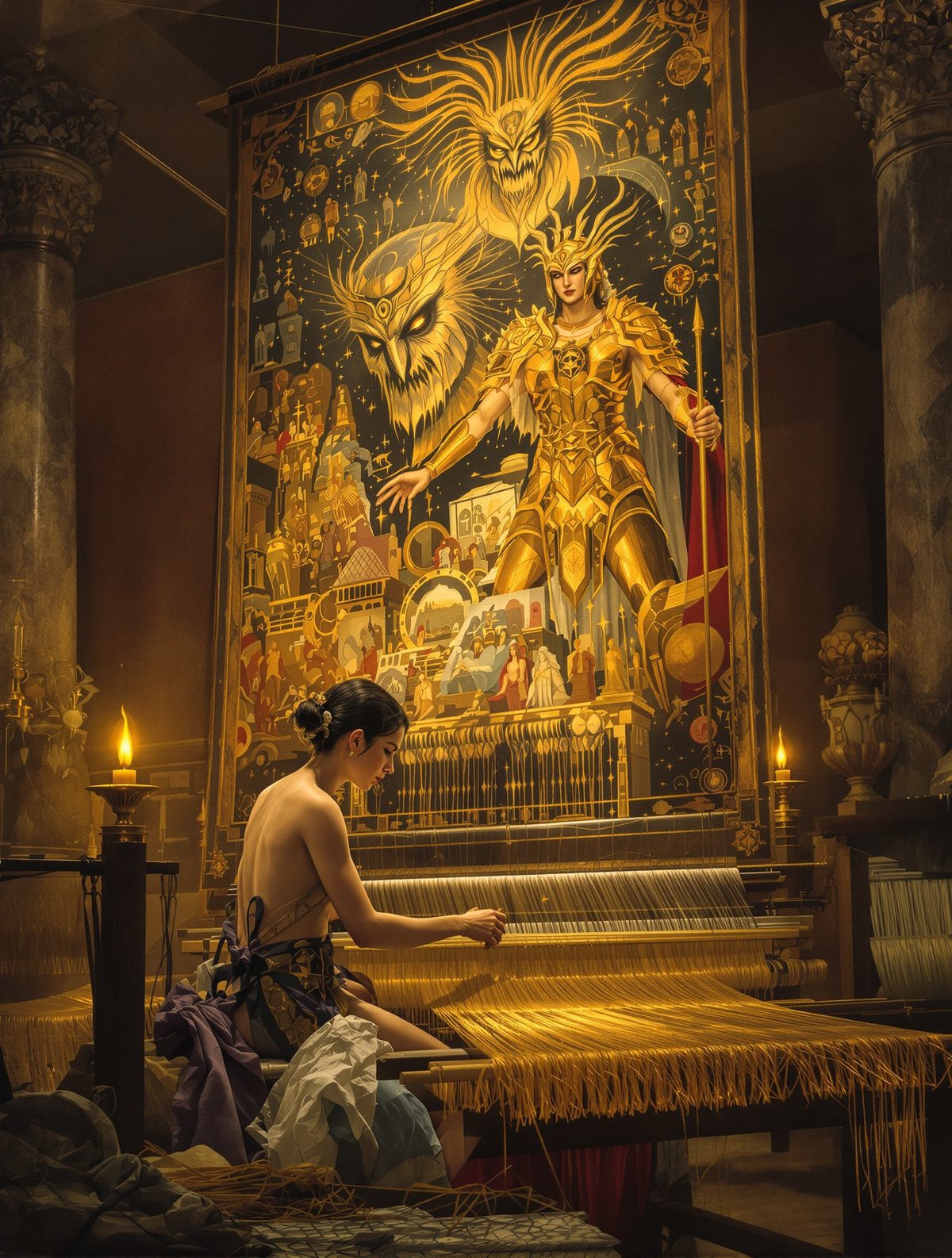

The autumn winds of 987 CE howled across the rocky coastline of Meizhou Island, whipping the South China Sea into a frenzy of white-capped fury. While most sensible souls huddled indoors, sixteen-year-old Lin Moniang stood alone on the jagged cliffs, her dark eyes scanning the horizon for any sign of her father's fishing boat. The typhoon had struck without warning, swallowing vessels whole and turning the familiar waters into a graveyard of splintered wood and desperate prayers. What happened next would transform a fisherman's daughter into one of China's most beloved deities—a goddess whose temples now dot coastlines from Taiwan to California, protecting millions of souls who brave the ocean's wrath.
The Miracle Child of Meizhou Island
Lin Moniang was no ordinary girl, even before her legendary transformation. Born into the Lin family of fisherfolk on Meizhou Island in Fujian Province, she reportedly emerged from the womb without crying—a silence that villagers would later interpret as the first sign of her divine nature. Her father, Lin Yuanjue, was a respected fisherman who taught his daughter to read the subtle language of wind and wave that meant the difference between a full net and a watery grave.
But Moniang possessed abilities that went far beyond weather prediction. Villagers whispered that she could fall into mysterious trances and somehow project her spirit across vast distances. During one such episode, her family reportedly watched in amazement as she seemed to guide her father and brothers safely through a violent storm while sitting motionless in their humble home. When she finally awakened, she described in perfect detail the treacherous rocks they had navigated and the exact moment when the winds had shifted to fill their sails.
These supernatural gifts made her both revered and feared among the tight-knit fishing community. Some called her blessed; others worried she was touched by spirits. What no one could deny was her uncanny ability to sense danger on the water—knowledge that would prove both her greatest gift and her ultimate destiny.
The Night the Sea Claimed Everything
The typhoon of 987 CE arrived like a vengeful dragon, its winds reaching speeds that could strip bark from trees and send fishing boats tumbling like toys. Lin Yuanjue and his sons had ventured out that morning under deceptively calm skies, following schools of fish that promised a profitable catch. By afternoon, the weather had turned murderous.
As darkness fell and no boats returned to Meizhou's harbor, families gathered on the shore, lighting fires and beating gongs in the desperate hope of guiding their loved ones home. Lin Moniang stood apart from the crowd, her slight figure silhouetted against the storm-lashed sky. Witnesses later claimed they saw her lips moving in what appeared to be an ancient incantation, her hands weaving patterns in the air as she called out to forces beyond mortal understanding.
Then, through sheets of driving rain, she spotted something that made her blood freeze—fragments of wood bearing her father's distinctive red markings, washing ashore like pieces of a shattered dream. Without hesitation, the sixteen-year-old girl kicked off her shoes and sprinted toward the cliff's edge. Villagers shouted warnings, but their voices were lost in the wind's roar as Lin Moniang launched herself into the raging sea below.
The Moment Heaven Touched Earth
What occurred next defies rational explanation, yet the story has been passed down through more than a thousand years with remarkable consistency. Witnesses claimed that the moment Lin Moniang's body touched the churning waters, an otherworldly light erupted from the waves. The violent sea, which had been devouring everything in its path, suddenly grew calm in a perfect circle around her.
But this was no rescue—it was a transformation. According to legend, Lin Moniang's mortal form dissolved into pure spirit, ascending from the depths clothed in flowing robes that shimmered like captured starlight. In her hands appeared a magical lamp that could pierce any darkness, and at her command, the winds themselves seemed to bow in submission.
The newly divine Mazu—as she would come to be known—immediately set about her first act of celestial mercy. Guided by her supernatural light, the scattered fishing boats began finding their way back to shore. Her father and brothers, though battered and terrified, arrived safely at dawn, swearing they had seen a glowing figure walking on water, leading them through the treacherous night.
Here lies one of history's most fascinating details: Lin Moniang's sacrifice wasn't just about saving her family. In choosing death to preserve life, she embodied the Confucian ideal of filial piety taken to its ultimate extreme—a daughter's love so pure it transcended mortality itself.
From Local Legend to Imperial Patron
Word of the miraculous rescue spread like wildfire across China's vast network of fishing communities. Within decades, crude shrines began appearing along the coastline, where sailors would burn incense and leave offerings before embarking on dangerous voyages. But Mazu's transformation from local folk deity to official imperial patron reveals just how pragmatic Chinese religious politics could be.
The Song Dynasty (960-1279 CE) was facing constant threats from northern invaders and relied heavily on naval power to protect its borders. When Admiral Wang Quanbin reported that a mysterious goddess had appeared to guide his fleet to victory against enemy forces in 1122 CE, Emperor Huizong took notice. The court's official recognition of Mazu marked a turning point—she was no longer just a fisherman's daughter but a divine protector of the Chinese state itself.
Subsequent dynasties continued this elevation, with each ruler adding new titles to Mazu's divine resume. By the Ming Dynasty (1368-1644 CE), she bore the magnificent title "Celestial Consort Who Protects the Nation and Shelters the People." The Qing emperors went even further, designating her as "Empress of Heaven"—remarkable recognition for a deity whose origins lay not in royal palaces but in the humble huts of fishing families.
The Goddess Who Conquered Oceans
Perhaps the most surprising aspect of Mazu's story is how a Chinese folk goddess became a truly global phenomenon. When Chinese traders, fishermen, and immigrants ventured beyond their homeland's borders, they carried Mazu's protective power with them. Her temples now span from Malaysia to Brazil, with some of the most spectacular shrines found thousands of miles from her birthplace.
In Taiwan alone, there are over 1,500 Mazu temples, visited by millions of pilgrims annually. The island's most famous religious festival involves carrying Mazu's statue on a spectacular 300-kilometer journey that takes eight days and attracts over a million participants—making it one of the world's largest religious processions.
But Mazu's influence extends far beyond Asian communities. In San Francisco's Chinatown, Portuguese fishermen working alongside Chinese immigrants began invoking her protection, adapting their own maritime prayers to include the Chinese sea goddess. Similar cross-cultural adoption occurred throughout Southeast Asia, where Mazu merged with local sea spirits to create unique hybrid deities that reflected the multicultural nature of ocean-going communities.
The Eternal Vigil
Today, more than a millennium after Lin Moniang's legendary leap, Mazu remains one of the most actively worshipped deities in the Chinese cultural sphere. Modern fishing boats still carry her image, and even contemporary naval vessels of the Republic of China (Taiwan) maintain small shrines to the sea goddess. During Typhoon Morakot in 2009, many survivors credited their rescue to Mazu's intervention—proof that ancient faith continues to provide comfort in an uncertain world.
What makes Mazu's story so enduring isn't just its supernatural elements, but what it reveals about human nature itself. In choosing to sacrifice everything for those she loved, Lin Moniang embodied virtues that transcend cultural boundaries: courage in the face of overwhelming odds, selfless devotion to family, and the willingness to risk everything for others' safety. These aren't uniquely Chinese values—they're human ones, which explains why Mazu's worship has found fertile ground wherever people make their living from the sea.
In our age of GPS navigation and satellite weather forecasting, it might be easy to dismiss such stories as primitive superstition. But every year, as typhoons still ravage Asian coastlines and families still lose loved ones to the ocean's fury, millions continue to light incense before Mazu's image. They understand something that our technological age sometimes forgets: that in the face of nature's awesome power, courage and love remain our most potent defenses. The girl who became a goddess reminds us that sometimes the greatest transformations come not from seeking power, but from surrendering everything for something greater than ourselves.