Picture this: You've just lost the love of your life, and someone tells you there's a chance—just a chance—you might be able to bring them back. What would you risk? Your sanity? Your soul? For Izanagi, the creator god of ancient Japan, the answer was everything. And what he discovered in the rotting halls of the underworld would haunt Japanese spirituality for millennia.
This isn't your typical love story. This is the tale of divine obsession, cosmic horror, and the moment Japan's most powerful deity learned that some doors, once opened, can never be closed again.
The Birth of Islands and the Kiss of Death
Long before Japan had emperors or samurai, before Buddhism crossed the seas from China, the archipelago existed in the realm of myth as the creation of two divine lovers. Izanagi-no-Mikoto ("He-Who-Invites") and Izanami-no-Mikoto ("She-Who-Invites") weren't just husband and wife—they were the cosmic architects of reality itself.
Standing on the floating bridge of heaven, these primordial deities stirred the chaotic waters below with a jeweled spear called Ame-no-Nuhoko. When they lifted the spear, the brine that dripped from its tip crystallized into Onogoro-shima, the first solid land. Here, they built their palace, and here they consummated their divine marriage in what may be mythology's most explicit creation story.
Their passion literally gave birth to the world. Island after island sprang from their union—Awaji, Shikoku, Kyushu, Honshu—each one a child of their cosmic love. They populated their realm with gods of wind, sea, mountain, and field. For eons, creation flowed from their perfect harmony.
But perfection, even among gods, is fragile.
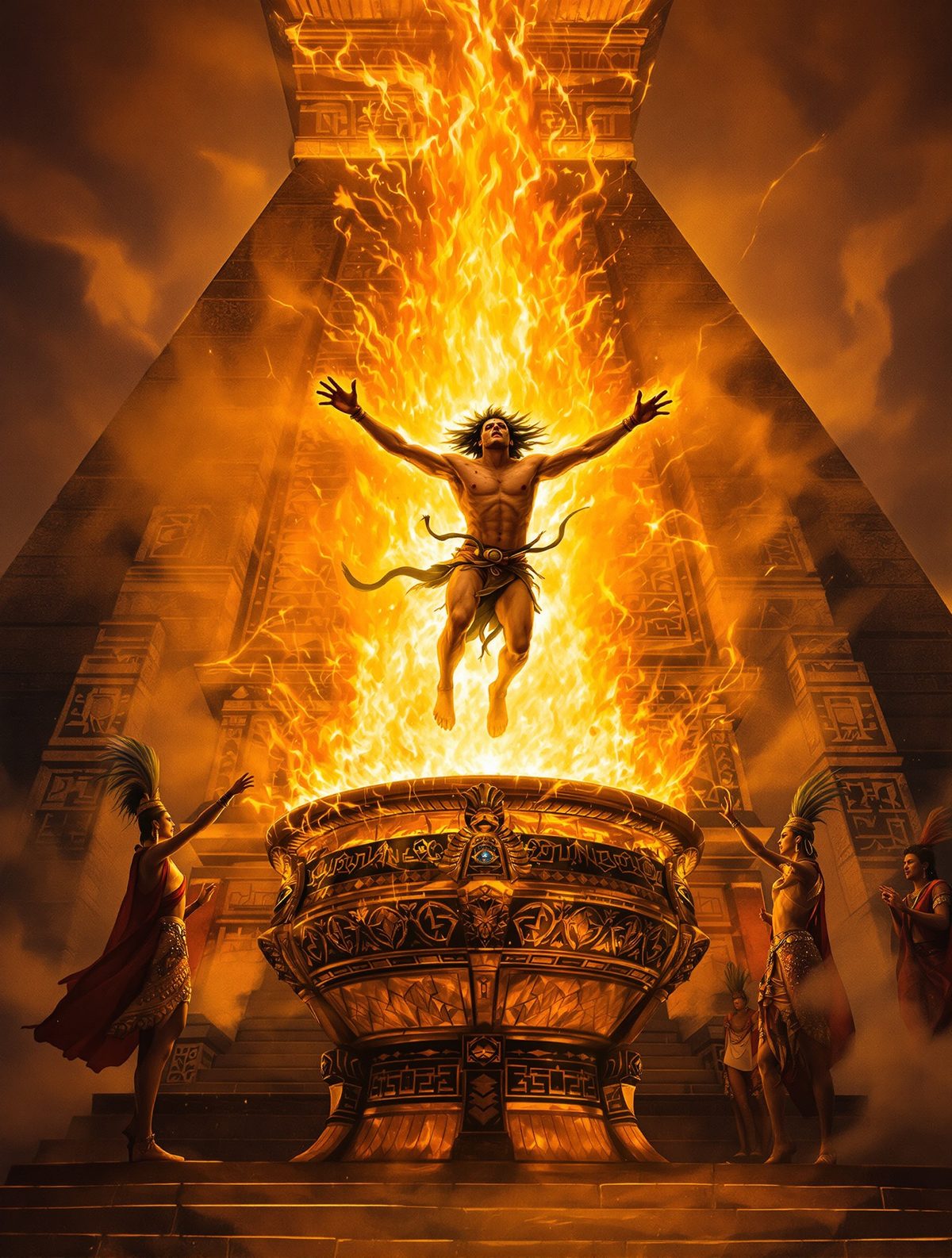
When Izanami gave birth to Kagutsuchi, the god of fire, his blazing body tore through her divine flesh like molten metal through paper. As she lay dying, her tears became the goddess of rivers, her vomit the gods of metal and mining, her excrement the deities of earth and harvest. Even in death, she continued creating—but now her creations carried the taint of mortality and decay.
A Husband's Rage and the First Murder
Grief transformed the creator into destroyer. Izanagi, mad with loss, drew his ten-span sword—a blade so long it took ten hand-spans to measure—and decapitated his own son. Kagutsuchi's blood sprayed across the blade and the ground, spontaneously generating more gods: deities of thunder, lightning, and the mountain peaks where fire meets sky.
This wasn't just divine justice—it was the first murder in Japanese mythology, committed by a father against his son, by a creator against his creation. The cosmos itself recoiled from this unprecedented act of paternal violence. But Izanagi felt no satisfaction, only the gnawing emptiness where his beloved once dwelt.
That's when he made the decision that would reshape the spiritual landscape of Japan forever. He would descend into Yomi-no-Kuni, the shadowy realm of the dead, and bring back his wife. After all, hadn't they created everything together? Surely they could conquer death itself.
The Descent into Japan's Underworld
Yomi-no-Kuni wasn't Hell in the Christian sense—it was something far more unsettling. Imagine a vast, twilight realm that mirrors the world above, but everything is slightly wrong. The palaces are magnificent but made of shadow and bone. Food appears sumptuous but tastes of ash and regret. It's not a place of punishment but of forgetting, where the dead slowly lose their memories, their identities, their very selves.
Izanagi found the entrance at Yomotsu Hirasaka, a slope that exists in every cemetery, every place where the living mourn the dead. As he descended the shadowy path between twisted peach trees, the very air grew thick with the whispers of the departed. The temperature didn't drop—it simply became absent, neither warm nor cold but somehow outside the concept of temperature entirely.
When he reached the palace of shadows where Izanami now dwelt, he called out to her with all the longing of cosmic ages: "My beloved wife, the lands we have created together are not yet finished. Come back with me!"
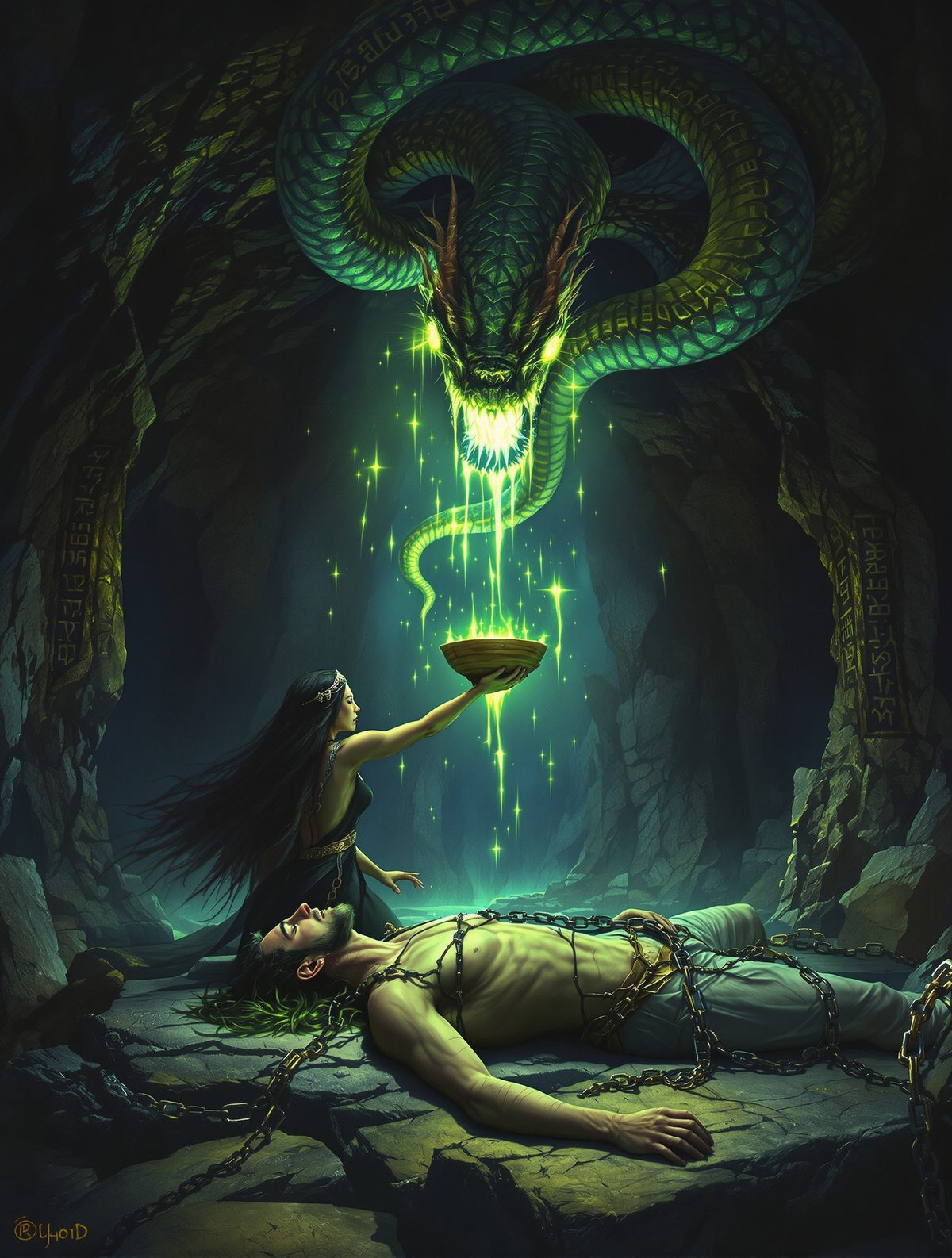
Her voice drifted from behind the palace doors like smoke from a funeral pyre: "My lord, you have come too late. I have already eaten the food of Yomi. I am now part of this realm. But wait—let me speak with the gods of the underworld. Perhaps there is a way. Only promise me this: do not look upon me until I return."
The Torchlight Revelation
Hours passed in the eternal twilight of Yomi. Or perhaps it was days—time moves strangely in the realm of the dead. Izanagi waited with the patience of stone, but even gods have limits. When love transforms into obsession, patience becomes agony.
Finally, he could bear it no longer. Breaking off one of the teeth from his hair comb—a comb that he himself had lovingly placed in her hair during their wedding rites—he lit it as a torch. The flame sputtered to life, casting dancing shadows on the palace walls.
What he saw in that flickering light would haunt Japanese death rituals for thousands of years.
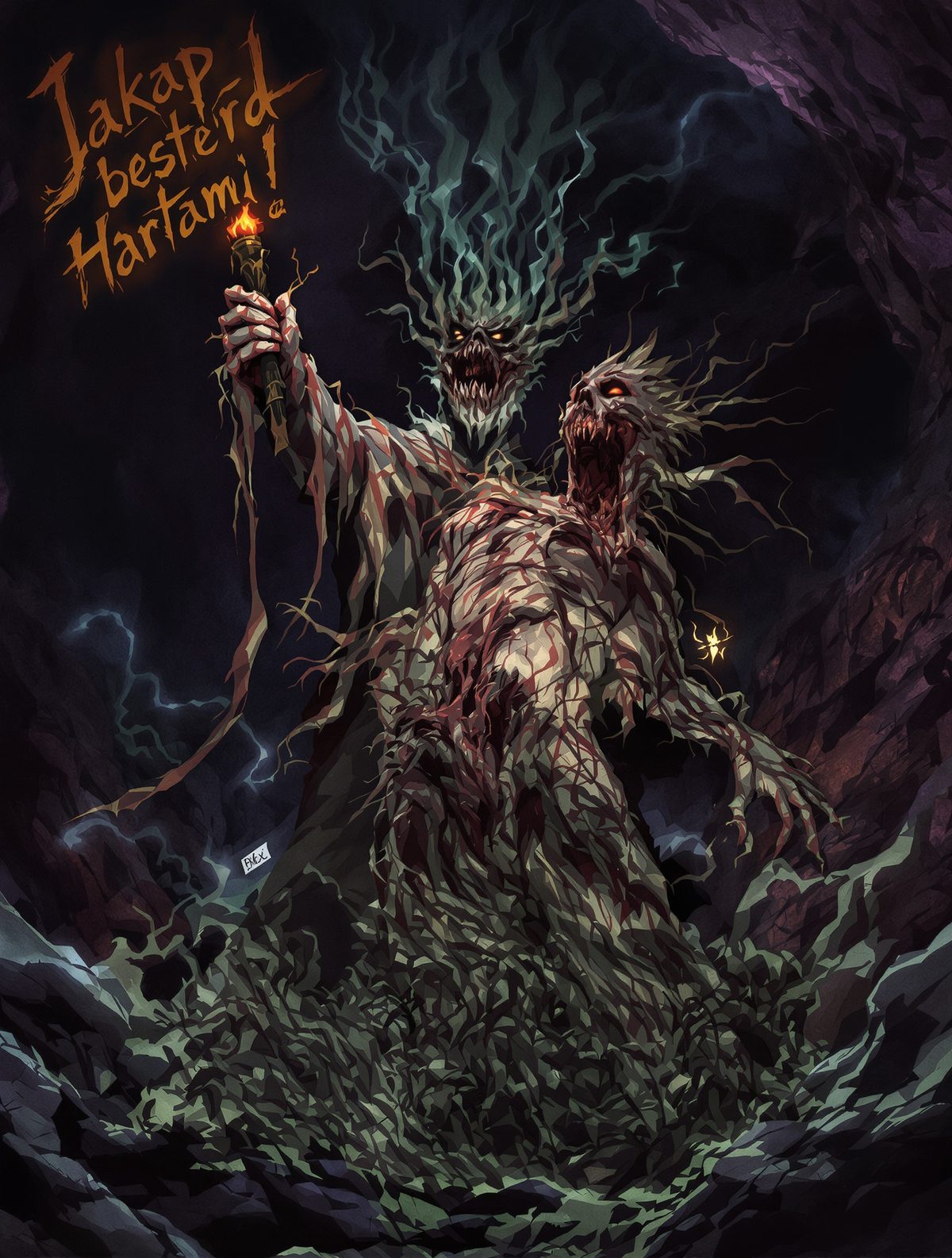
Izanami lay sprawled before him, but this was no longer the radiant goddess who had stirred the primordial waters at his side. Her divine flesh had become a writhing carpet of maggots, each one white and fat as a finger. Thunderous roars echoed from within her rotting body—the Yaksabiko and Yakusahime, eight thunder demons who had taken up residence in her head, chest, belly, and limbs. Her once-beautiful face was a mask of decay, her eyes now hollow sockets where supernatural lightning flickered like trapped starlight.
The smell hit him next—not just the stench of rotting flesh, but the deeper corruption of divine essence turned septic. This was what death did to gods. This was what became of perfect love when it crossed the threshold into the realm of endings.
The Chase of the Damned
Izanagi's horrified gasp echoed through the halls of Yomi like breaking glass. In that instant, whatever remained of his wife's love transformed into cosmic rage. Her voice, when it came, shook the foundations of both worlds:
"You have seen my shame! You have humiliated me before the gods of the dead! For this betrayal, I will kill one thousand of your people every day!"
What followed was the most terrifying chase scene in any mythology. Izanami sent the Yomotsushikome—the hideous hags of Yomi—racing after her fleeing husband. These weren't mere ghosts but incarnations of decay itself, their fingernails long as daggers, their hair writhing like seaweed in a storm surge. Behind them came her army: the eight thunder demons, the restless dead, and finally Izanami herself, her rotting body moving with unnatural speed, leaving a trail of maggots and divine ichor.
Izanagi ran through the shadow-paths of Yomi with the desperation of the truly damned. He threw his crown behind him, and it transformed into wild grapes that delayed his pursuers for precious moments. He cast away his hair comb, which became a grove of bamboo shoots. But still they came, drawn by the scent of living divine essence in their realm of endings.
As he reached the slope leading back to the world of the living, three peach trees appeared—the same twisted trees that had marked his entrance. He grabbed their fruit and hurled them at his pursuers. Remarkably, the peaches drove them back, for these were not ordinary fruit but symbols of life's triumph over death, weapons against the forces of decay.
The Boulder That Birthed Death
But Izanami herself still pursued him, and no mere fruit could stop a goddess of creation turned goddess of death. As Izanagi burst from the entrance to Yomi back into the sunlit world, he seized a massive boulder—one so large it took a thousand men to move—and used his divine strength to seal the entrance forever.
On opposite sides of that stone barrier, the cosmic lovers spoke their final words to each other. Izanami's voice came through the rock like the grinding of tombstones: "Beloved husband, if you block my way like this, I will kill one thousand of your people every day."
Izanagi's reply echoed with the authority of divine law: "Beloved wife, if you do that, I will build fifteen hundred birthing huts every day."
And thus was born the eternal dance of death and life that governs our world. Every day, a thousand souls depart, but fifteen hundred are born. The mathematics of existence itself, negotiated between estranged lovers across a barrier of stone and regret.
The Purification That Created Gods
But our story doesn't end with that bitter exchange. Contaminated by his contact with death and decay, Izanagi sought purification at the mouth of the Tachibana River in Kyushu. As he stripped away his clothes and immersed himself in the flowing water, each discarded garment transformed into a deity. His staff became a god, his sash a goddess, his crown a spirit of protection.
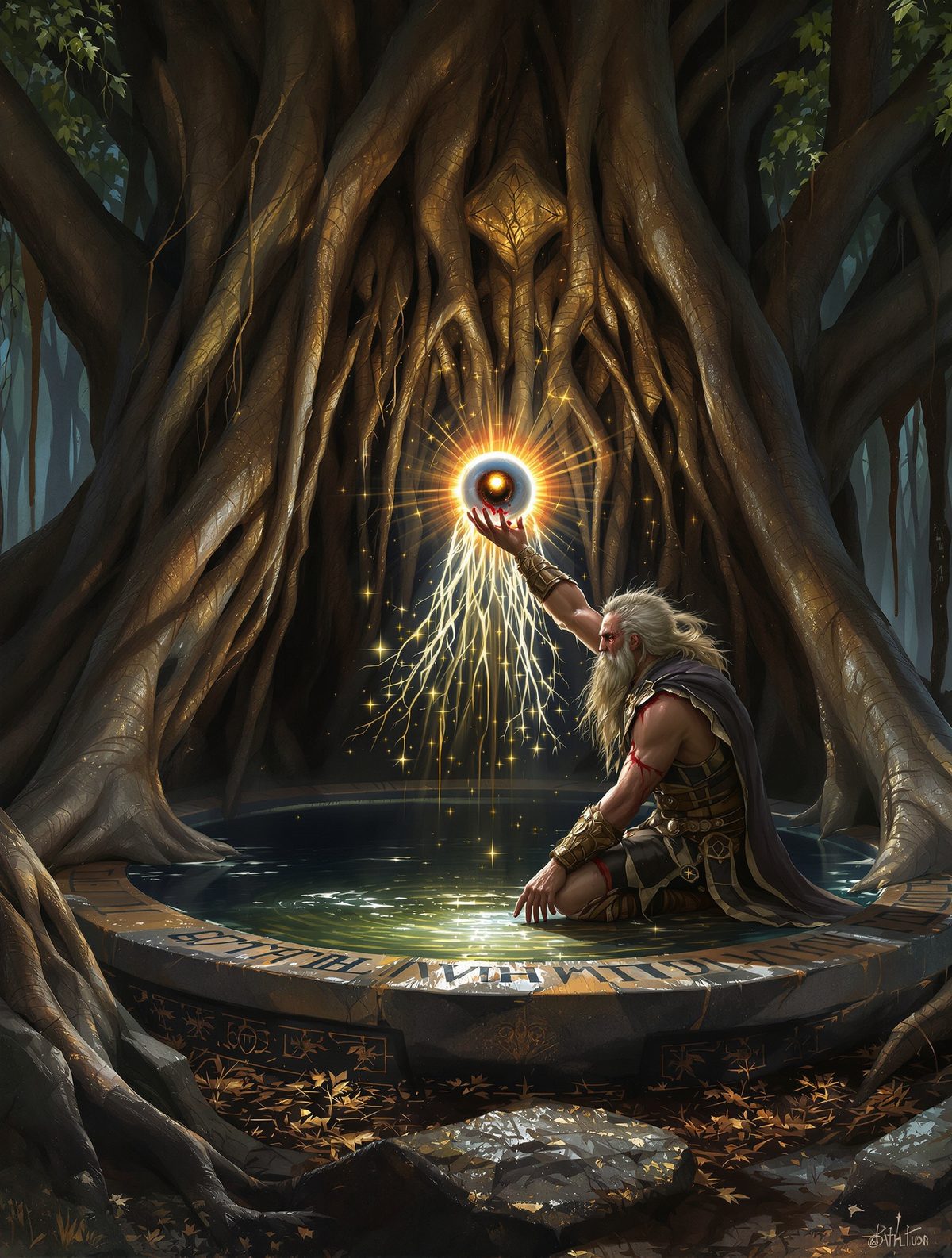
When he washed his left eye, the sun goddess Amaterasu was born, destined to become the most revered deity in the Shinto pantheon and the mythical ancestor of Japan's imperial line. From his right eye came Tsukuyomi, the moon god. And when he cleansed his nose—the final act of purification—out came Susanoo, the storm god whose tempests would shake both heaven and earth.
These three children, born from their father's ritual cleansing after witnessing cosmic horror, would go on to rule the heavens, the night, and the seas. In a sense, it was Izanami's death and corruption that ultimately gave birth to the gods who would protect and govern Japan.
Echoes in Modern Japan
Why does this ancient story of divine love turned cosmic horror still matter today? Walk through any Japanese cemetery, and you'll see offerings of food carefully placed so that no one accidentally eats "the food of Yomi." Attend a traditional Japanese funeral, and you'll witness purification rituals that echo Izanagi's cleansing after his contact with death.
The story reveals something profound about the Japanese understanding of mortality. Death isn't conquered through faith or good works—it's an irreversible transformation that even gods cannot undo. Love doesn't conquer all; sometimes it becomes the very thing that destroys us. And the price of forbidden knowledge—of looking when we've been told not to look—is always higher than we imagine.
In our modern world, where medical advances promise to push death ever further into the future, where technology offers digital immortality and cryogenics hints at resurrection, Izanagi's story serves as a dark reminder. Some thresholds, once crossed, lead only to corruption. Some loves, when they refuse to accept ending, transform into something monstrous.
The boulder still stands at the entrance to Yomi, and the ancient agreement still holds: a thousand deaths, fifteen hundred births, the eternal mathematics of existence negotiated between lovers who could create worlds but could not escape the consequences of their own choices. In the end, perhaps that's the most human thing about these gods—their inability to love without destroying, to create without loss, to live without learning that some doors should never be opened, no matter how much we long for what lies beyond them.