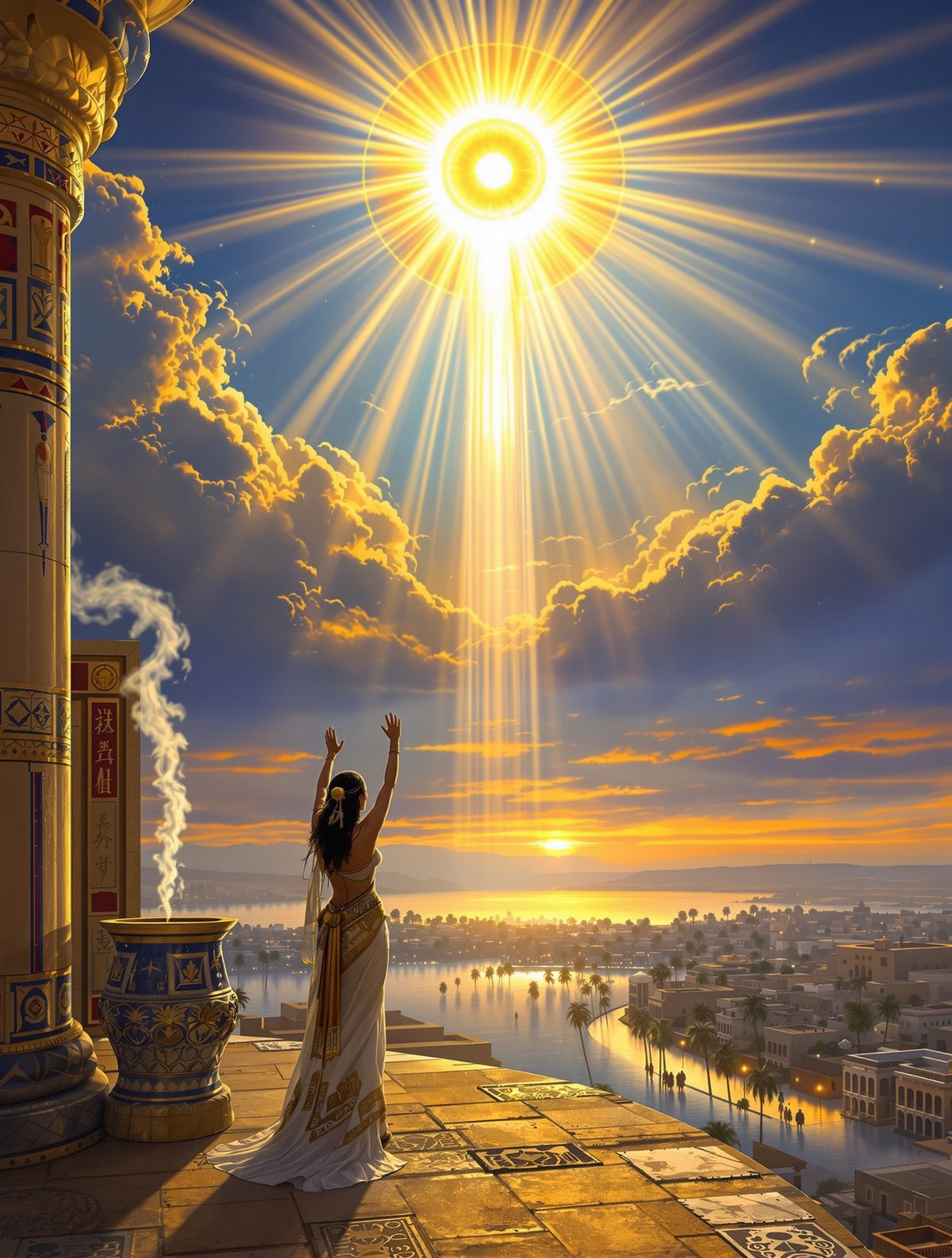
In the sun-scorched sands of ancient Egypt, where myths of gods and mortals intertwined with the Nile's incessant flow, there was a tale so audacious that it was whispered in hushed tones by those who dared remember the day the Earth ran red. Imagine a time when the sun god Ra, the supreme deity who once basked in the reverence of humankind, felt the sting of their ridicule. The laughter of humanity, growing louder with each passing day, urged Ra to unleash a divine fury—a fearsome and unforgettable rage that would echo through eternity.
The Wrath Unleashed
As the sun dipped below the horizon on one fateful evening, Ra's disappointment in mankind transformed into a desire for vengeance. He summoned his devoted daughter, Sekhmet, a lioness goddess with immeasurable power encapsulated in ferocious beauty. Her eyes glowed with the fire of a thousand suns, and her roar could silence armies. Ra instructed her to descend upon Earth as his Eye, a title bestowed upon those tasked with executing his will, to punish insolent humanity.
In the year 2500 BCE, beneath the watchful gaze of the pyramids yet to rise, Sekhmet prowled the lands with a purpose as daunting as her presence. She tore through village after village, her fangs and claws painting rivers red. The ancient texts recount that the beloved daughter of Ra soon discovered a thirst within herself—a hunger for blood that knew no bounds. Every life she claimed only deepened her frenzy, and her maelstrom of death became insatiable.
The Spellbinding Mirage
As the earth trembled under her relentless fury, the gods convened in alarm. Watching from the stars, they realized humanity's extinction was imminent. Guided by wisdom, they devised a ruse—a cunning trick to quell Sekhmet's carnage. They knew that only by stopping the unimaginable force in her could they save what remained of a scarred world.
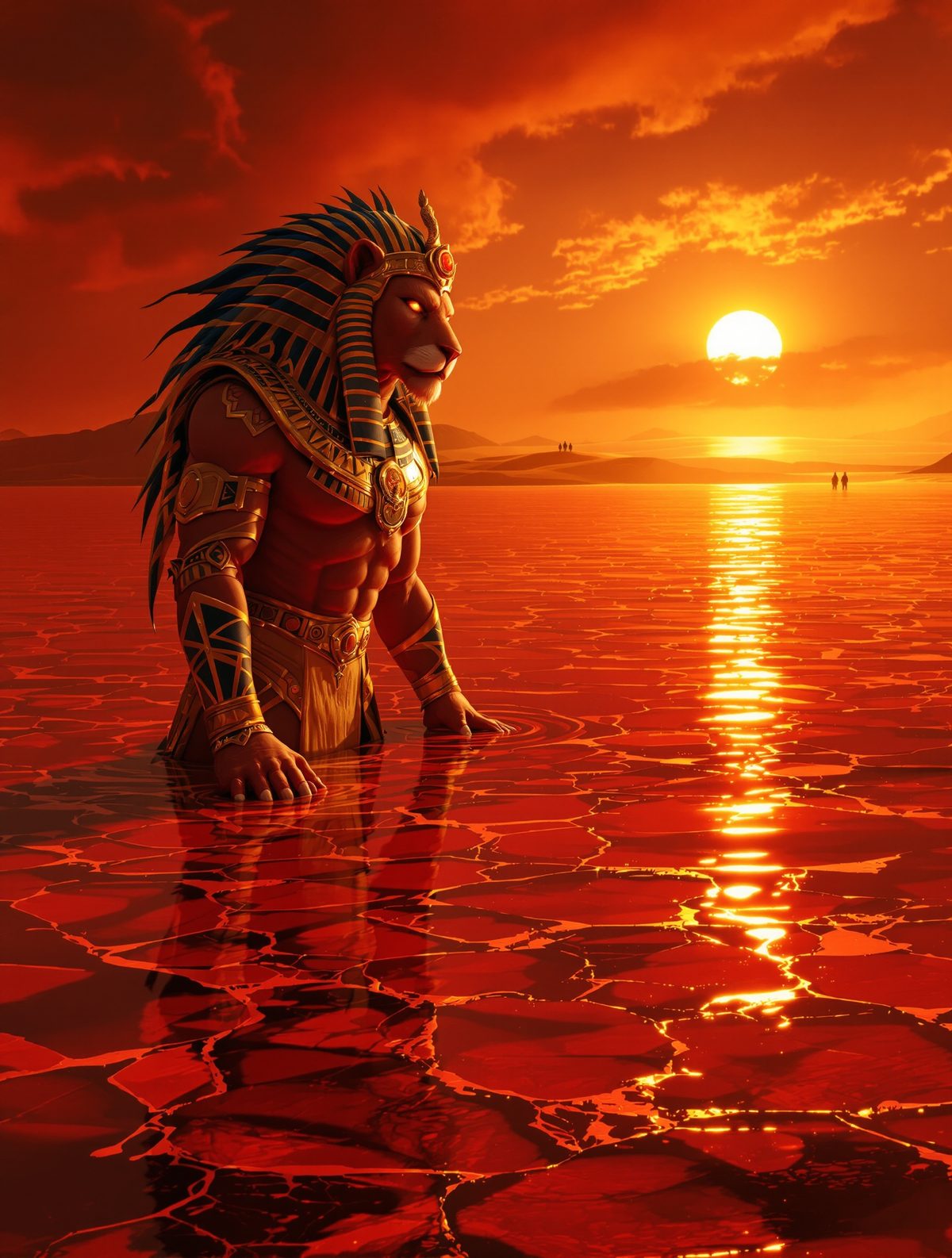
Anubis, the jackal-headed god of the afterlife, along with Thoth, the god of wisdom, hatched a plan as bold as it was desperate. They concocted a river of beer, a staggering 7,000 jars worth, mixed with red ochre from the rich clay of Egypt, to resemble the blood Sekhmet craved so dearly. As the crimson stream flowed through the fertile floodplains, the scene told the story of a living nightmare—a scene where the drink of gods could mimic the life-giving blood of men.
A Lioness Tricked
As dawn broke and Sekhmet prowled amidst the smoking ruins of her father’s rage, she found the ground stained scarlet. Her senses, sharpened by the taste of mortality, told her it was fresh blood, an offering fallen from the skies. Without hesitation, she drank, letting the elixir—one part deity’s wrath, one part gods' mercy—flow into her, sating her terrible thirst.
The effect was immediate and staggering. As she drank deeply, Sekhmet's bloodlust transformed into a placid drowsiness. The goddess, drunk on the divine brew, staggered and fell into a deep, slumberous stupor. In that soft dominion of sleep, her lethal hunger waned and the world sighed an exhausted but hopeful relief.
The Legacy of Survival
With humanity teetering on the brink of annihilation, the cunning of the gods staved off extinction. The survivors of Sekhmet’s wrath emerged into a new world—a world forever marred by the pawprints of a goddess, but blessed by the mercy of divine deception. Reverence for the gods solidified into religious rituals, ensuring such wrath would not come unbidden again.
This tale, while not engraved into the annals of every history book, echoes through dusty temple corridors and the whispers of ancient priests. It is a story that persisted through the ages, reminding mankind of the fragile thread on which their existence hangs. In festivals like the annual Hathor Festival, echoes of this myth are commemorated as beer once again flows, honoring the survival of life against unparalleled divine wrath.
Why This Matters Today
While the story of Sekhmet and her unwitting indulgence in the deceptive crimson tide might be ancient lore, the essence of the narrative is timeless. It serves as a poignant reminder that even in our modern era, humanity must navigate the precarious balance between exploiting the natural world and nurturing it. It challenges us to ponder the limits of our own hubris and to respect the forces greater than ourselves, whether they reside in the cosmos or the potent legends of our past.
Modernity might not boast goddesses prowling through cityscapes, but the legacy of their legends inspires awe and humility. Just as Sekhmet’s unquenchable thirst threatened the world, so too does the unbridled excess threaten contemporary existence. As history’s tapestry unfurls across aeons, the ancient stories invite reflection, urging us to find wisdom in the sands of time, to prevent the folly of repeating the past.