Imagine a pristine nymph, cherished by waves as she danced in the azure embrace of the sea, only to be betrayed by the very water that held her so tenderly. This is the haunting tale of Scylla, whose transformation from beauty to beast is a potent reminder of the cruelty that jealousy can exact. Within the timeless corridors of Greek mythology, the story of Scylla’s metamorphosis remains one of the most tragic, a testament to how desire and envy can intertwine to unleash destruction.
The Nymph in the Crystal Waters
Long before she was a monstrous specter lurking in the depths of the Strait of Messina, Scylla was a captivating nymph, renowned for her beauty and grace. Her story begins not in the shadows of a cave but in the sun-drenched waters of ancient Greece, where she frolicked amid the gentle tides. Worshipped for her allure, Scylla's presence brought joy to mortals and immortals alike, and her laughter harmonized with the melody of the sea.
As history tells it, Scylla called home the coast near Zancle, an ancient city known today as Messina, located at the northeastern tip of Sicily. With cascading locks that shimmered like spun gold and eyes that mirrored the Mediterranean's blue depths, she enchanted all who beheld her. Little did she know, her life was to become a pawn in a game of divine affection and jealousy, as tumultuous as the waters she adored.
The Love of Glaucus
Glaucus, a fisherman turned sea-god, became hopelessly infatuated with Scylla. According to ancient sources, after consuming a mysterious herb from the sea, Glaucus found himself transformed, endowed with the powers of the ocean. Imbued with aquatic majesty and fervent yearnings, he sought Scylla’s affection.
Despite his pleas and demonstrations of love, Scylla did not reciprocate his emotions. Heartbroken, for her beauty captivated him beyond reason, Glaucus turned to Circe, the sorceress known both for her enchantments and fierce passions. If anyone could craft a potion to sway the heart of a nymph, it was Circe.
Circe’s Jealous Wrath
Circe, however, had her own designs on Glaucus. This twist is where fate turned menacing. Enamored of the sea-god herself, she viewed Scylla not as a rival but as an obstacle to be obliterated. Jealousy, a flame kindled by unrequited love, seethed within Circe's heart.
Rejecting Glaucus' request to enchant Scylla, Circe instead enacted a darker magic. She prepared a poison, brimming with her envy and scorn, and introduced it into the waters where Scylla bathed. It was amidst these serene sea ripples that Scylla's life would be irreversibly altered.
From Beauty to Beast
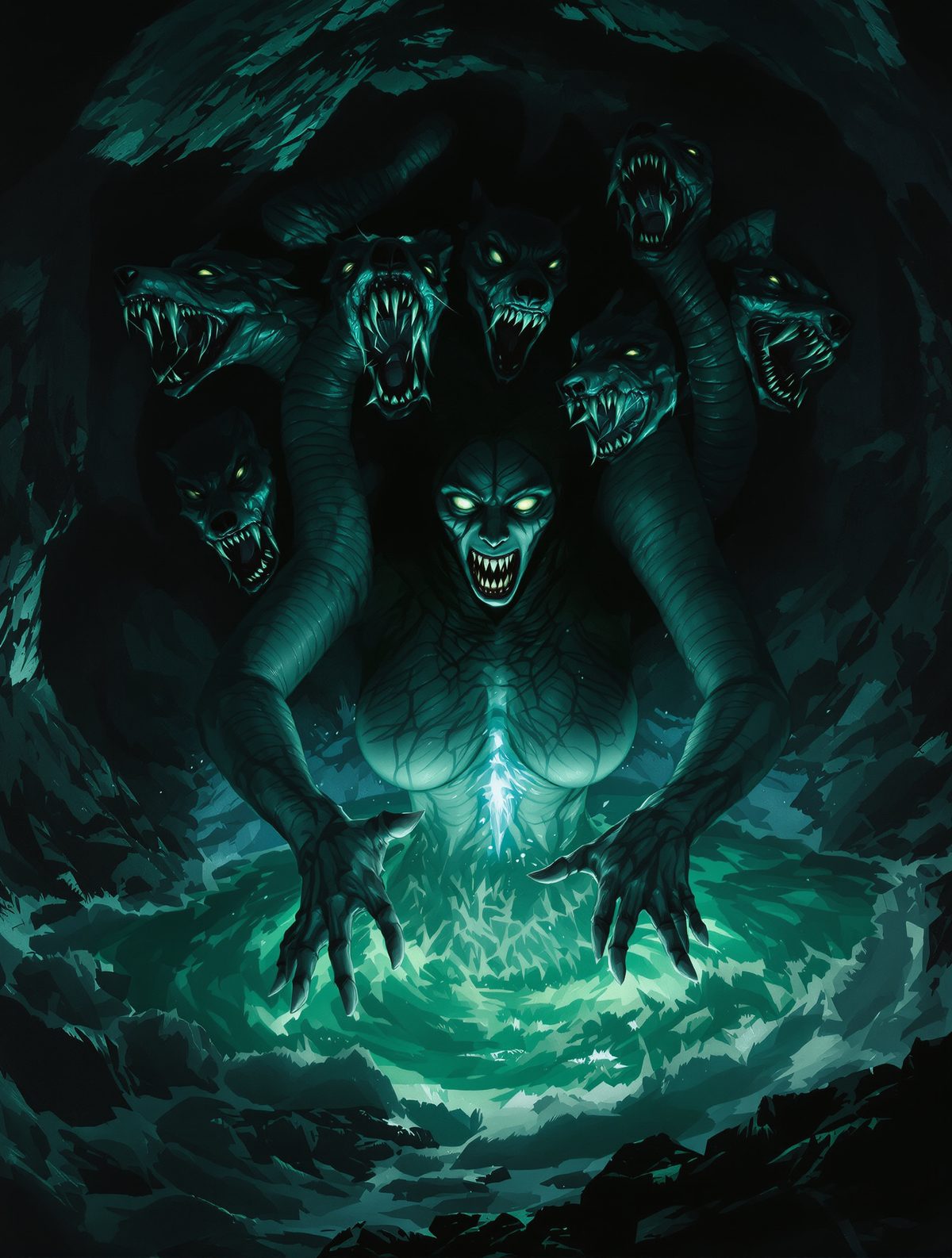
Unaware of the peril lurking beneath the waves, Scylla waded into her usual bathing spot. Almost instantaneously, the oceanic tranquility shattered. Her transformation was both astonishing and agonizing. From her flawless form erupted six monstrous heads, each grotesque and rabid, resembling snarling dogs that coiled and writhed with a hunger that knew no satisfaction.
As her waist transformed into canine horrors, each appendage an insatiable maw searching for prey, Scylla's fate was sealed. Her former beauty echoed in moments of haunting grace only when she retracted into the shadows of the scabrous cliff face, laden with the burdens Circe's jealousy had forced upon her.
The Guardian of the Strait of Messina
Banished from the life she knew, Scylla took residence in a cavern high upon the narrow strait separating Italy and Sicily. Ancient mariners described this perilous passage between Charybdis and Scylla as a venture far more formidable than any sea storm. Grasping sailors with her canine appendages, she became synonymous with death at sea—a legendary peril joining the ranks of mythic terrors.
Scylla’s legend spread far and wide, a myth that combined cautionary tales of envy, allure, and retribution. The transformation of this beloved nymph into a monstrous guardian of maritime doom remains an epic entrenched in the chronicles of Greek mythology, ceaselessly warning of the outcomes when divine emotions intertwine disastrously.
Relevance in Today’s World
The tragedy of Scylla compels us to reflect on the enduring human emotions of jealousy and unrequited love, manifesting often as persistent challenges through time. Her story is a reminder of how envy and desire can lead to unforeseen and catastrophic consequences, reflecting tales spread across civilizations and eras.
Scylla’s narrative embodies more than just myth—it is an allegorical mirror reminding us of our strengths and shortcomings. As we navigate complex social landscapes today, her tale reminds us that unchecked emotions left to fester beneath the surface can manifest roles far removed from our true selves. In studying these myths, it becomes evident that the timelessness of human experience unites us beyond the ages.
Thus, while Scylla’s monstrous transformation stands as a maritime warning, it also serves as a narrative compass—guiding hearts towards awareness and understanding of the destructive power harbored within the shadows of envy.