In the ancient land where myth kissed the fertile grounds of the Middle East, magic and reality intertwined like the winding rivers of the cradle of civilization. Long before the Greeks spoke of their mighty pantheon and the Egyptians invoked their gods beneath the blazing desert sun, the Sumerians of Mesopotamia had woven tales that carved the cosmos itself. Among these narratives, a tale of divine toil, divine rebellion, and divine creation stands steeped in both divine wisdom and profound consequence. Eridu's First Man opens his eyes from the primordial clay, and the world was never the same.
The Fatigue of the Divine
In the beginning, all was not well among the gods. The Anunnaki, those celestial beings revered by the Sumerians, gazed upon the earth and saw their reflection distorted in its chaotic waters, the land untamed and laborious. According to the Sumerians' ancient tomes, this was no idyllic paradise; it was more akin to a provincial backwater of the universe, demanding the grit and toil of its divine overseers.
The gods found themselves mired in the world's demanding upkeep. They dug rivers with their endless hands, chiseled the landscape, and hauled the soil beneath a scorching sun that seemed to care naught for their divine status. Each god felt the burden of existence crack its whip across their eternal backs. The most ancient among them, Anu, the sky god, watched as his brethren toiled endlessly. Here was heaven ground into earth — and it was too much work indeed.
Enter Enki: God of Wisdom and Waters
There arose among the deities a savior, of sorts: Enki, the god of wisdom, water, creation, and mischief. Patron of the city of Eridu, now lost to time but once the first city upon the world, Enki harbored a keen intellect that matched his trickster nature. He adored order but embraced chaos as its necessary counterpart. Thus, when the gods gathered in complaint beneath the star-sprinkled skies, Enki, master of the deep and bearer of brightness, proposed a solution.
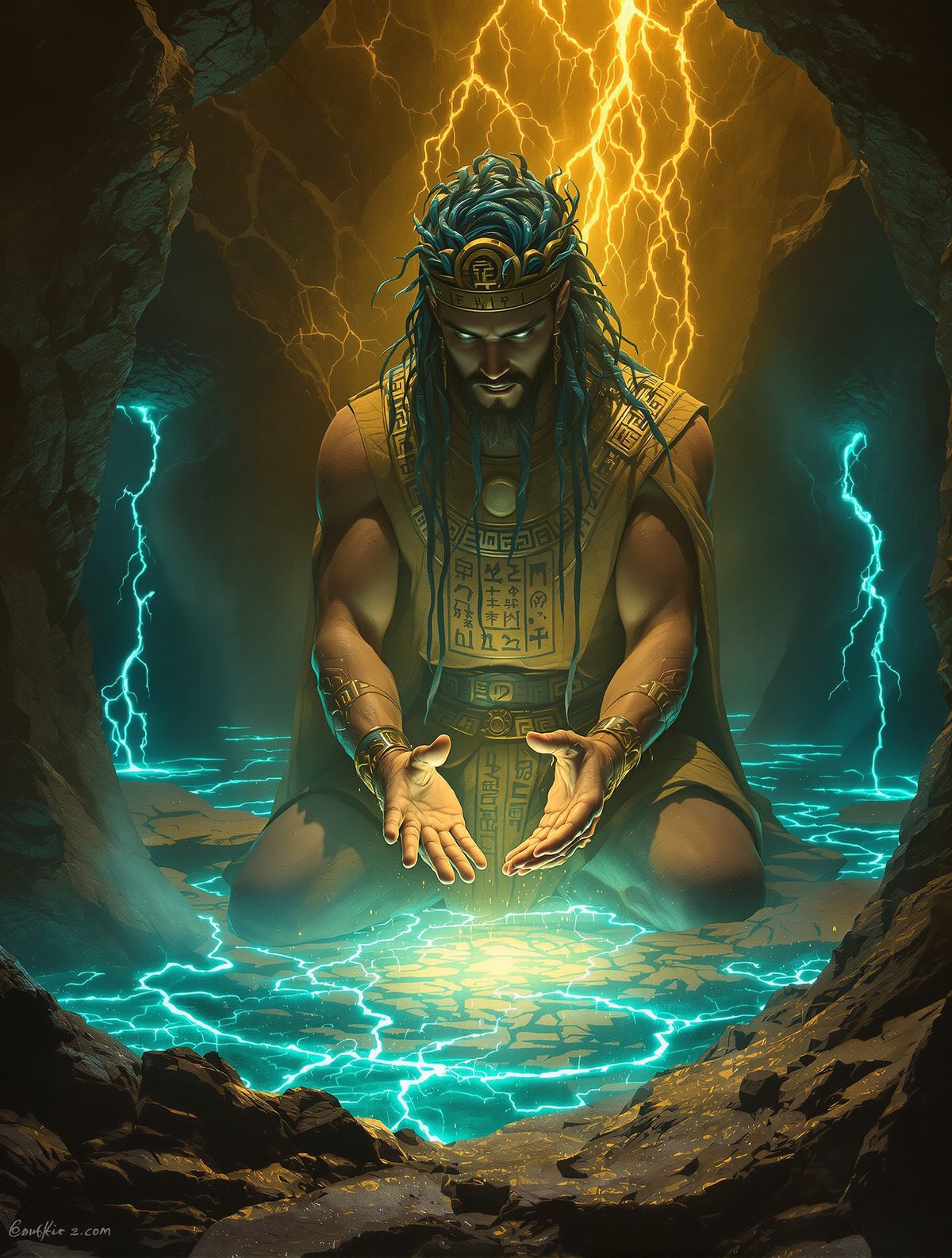
Enki descended into the realm of the subterranean waters, the Apsu, where life stirred in the fertility of its mud. Here, beneath Enki's eye, was the promise of relief for the tired gods. He grasped from the earth its richest clay, mixed it with the essence of the divine, and from that sacred mire began to shape a new being.
Crafting Creation: From Clay and Blood
With careful hands, Enki molded the first human from the primordial clay. Each curve and contour was sculpted with purpose, each line an echo of what lay within his divine mind. But mere clay was not enough for life to spring forth. To grant these creations breath, Enki mixed the clay with the blood of a slain god, an echo of sacrifice immortalized in flesh.
This god was Geshtu-e, a deity of wisdom and a martyr to necessity, whose essence would flow through generations. It is said he gave willingly, recognizing the pressing need for life to bear the burdens of divinity. With this sacrificial act, the first human blinked open eyes of clay and stars under Enki's gentle gaze in the burgeoning city of Eridu.
The First Human Awakes
The new beings stood awkwardly on the banks of the Euphrates, the place where Enki had first drawn the mud from fertile ground. This was the dawn of the Sumerians' own Eve and Adam, albeit unnamed in the myth. Mankind, wrought from the earth itself, was born not for companionship, but for servitude — a revolutionary milestone within the tapestry of creation myths.
This creation was not without precedent, nor was it without irony. They were not equals to their divine creators but were reflections of them, shadows meant to carry the "divine workload." With humanity's arrival, the Sumerian cosmos shifted, for the gods could now step back, let their fingers rest, and rule from the ethereal distance.
Echoes Through Eternity
What Enki crafted rippled beyond the ephemeral days of Sumer. This story of creation laid bedrock principles for civilizations that followed. It speaks to the heart of a question that has reverberated through millennia: what is the true nature of humanity? Born for service, these clay people rose to build the mightiest cities, to scheme, love, war, and create anew.
The rebellions and hearts of these first sentient beings, far from a direct consequence of their origin, mirrored the capricious nature of their progenitors. Thus did Enki's key unlock the doors of human fate; thus did Eridu’s legend set sail upon the rivers of time — propelled by a current of mud and blood.
Today, as we ponder what it means to be human, echoing through our societal desires and structures, the Sumerian myth reminds us of the tantalizing dance between servitude and stewardship. It asks us to consider the legacy born from exhausted gods and the clay of sacred ground.
We share the clay with our mythic forbearers, and so, as Eridu's First Man awoke beneath the watchful eye of Enki, so too might we choose to go beyond the roles ordained to us, crafting our will from the very earth that birthed us.