The Thundering Grief of a King
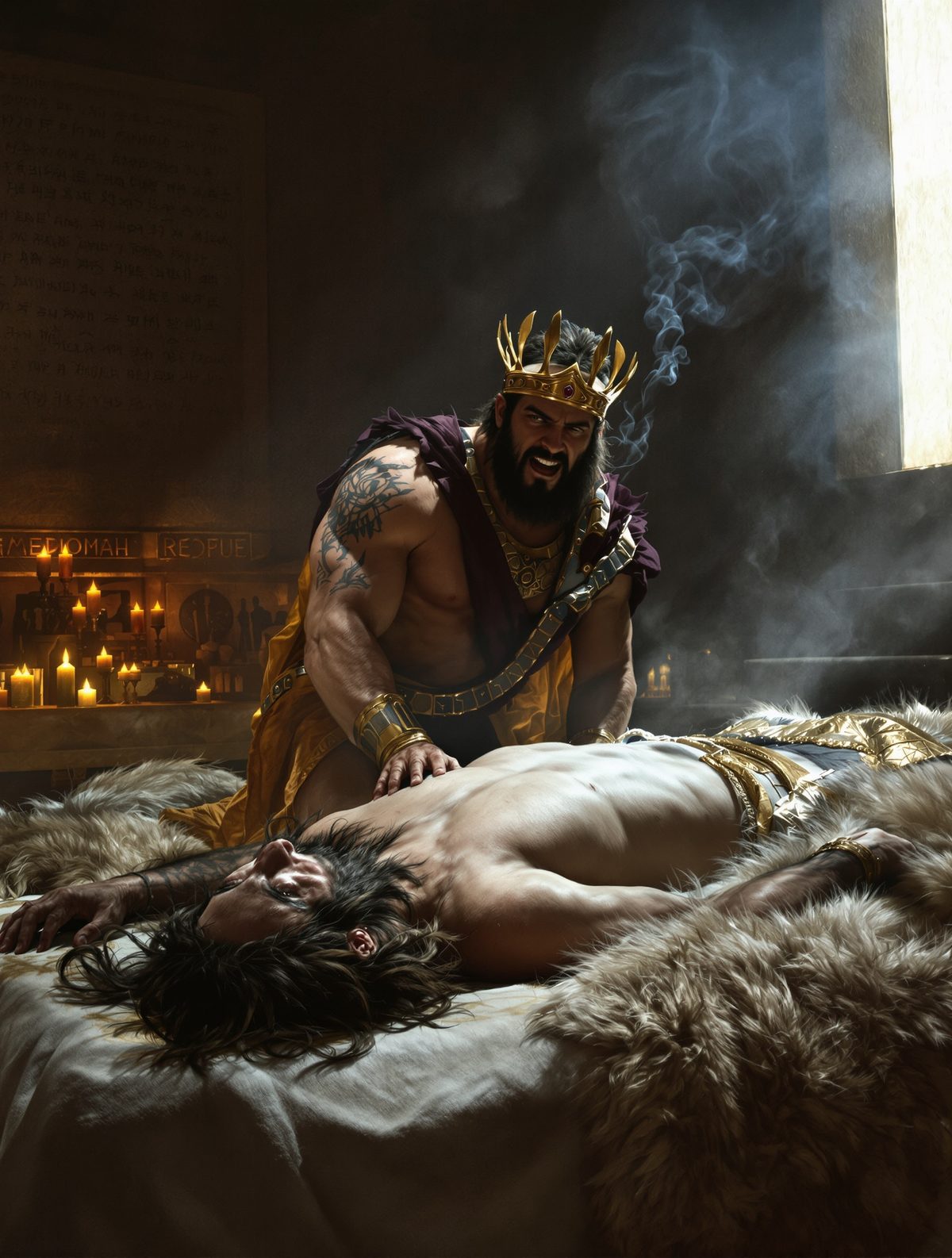
As the scorching sun set over the ancient city of Uruk, painted skies could not shake off the thick curtain of despair draped over its mighty king. Gilgamesh, once feared and exalted, sat beside the cold, motionless form of Enkidu, the wild man who had become his heart. At that moment, the great king crumbled, not with the noise of a wall falling, but silently, like sand slipping through fingers. For seven days, Gilgamesh clung to hope, praying for Enkidu's breath to return, only to face devastating grief. This was the relentless reality of a king left with nothing to fight the inevitable cruelty of the gods.
The Making of a Wild Man
In the vast landscape of Mesopotamian mythology, Enkidu was not just born — he was crafted. The gods created him from clay and river water, elements of the earth, to humble the oppressive Gilgamesh, whose tyrannical reign echoed throughout Uruk around 2700 BCE. Enkidu roamed the steppe like a force of nature, unbound and untameable. Here was a man who could rival Gilgamesh's strength, and yet, who turned into something far more.
Unlike any other, Enkidu was introduced to human civilization through the nurturing kindness of Shamhat, the temple prostitute, whose embrace drew him from wildness to wisdom. It was through her guidance that Enkidu was steered toward Uruk, where he would meet Gilgamesh and change the course of history.
The Friendship That Launched a Thousand Journeys
When Enkidu first confronted Gilgamesh, their clash was as monumental as the apsu waves upon the shores of the Euphrates. What began as a battle of titans grew into an unexpected and profound companionship. Together, they embarked on legendary quests — to fell the monstrous Humbaba in the Cedar Forest and to vanquish the divine Bull of Heaven sent by the goddess Ishtar as vengeance. Each victory cemented their bond, inspiring songs and epics across Sumer.
It was not just Enkidu's strength that captivated Gilgamesh, but his soul. Enkidu taught the king compassion, justice, and friendship — concepts that had been as foreign to Gilgamesh as distant stars. With Enkidu, Gilgamesh discovered a part of himself he never knew existed, reshaping his tyranny into a more compassionate rule.
The Divine Verdict: Enkidu's Death
The gods, however, were not amused by Gilgamesh and Enkidu's defiance, nor their hubris in slaying the Bull of Heaven and offending Ishtar. Enlil, Anu, and Shamash, the divine triad, convened, and with cold resolution, decided that Enkidu must die. This verdict came as an unyielding decree from the heavens, meted out carelessly upon Enkidu, who had grown dearer to the king than his own kin.
As pestilence gnawed at Enkidu's being, Gilgamesh, the world-weary warrior, found himself impotent against a foe that could not be touched with sword or shield. Day by day, the once-mighty Enkidu withered, and Gilgamesh, powerless, could only watch. This was a fateful education in mortality — one that no king could bear lightly.
The Lament of Gilgamesh
At Enkidu's last breath, the state of Gilgamesh's soul was laid bare. His cries of anguish echoed through the halls of Uruk's grand city as he held Enkidu's lifeless body, refusing to believe his dearest friend was truly gone. For seven days, he remained beside his friend, a guardian of the dead, as grief turned his heart into a desolate wilderness.
This was not just any lament — it was the lament of a man forced to confront his limitations, his sovereignty laid at the feet of the inexorable divine. "Was it for this that you exhausted yourself with nightly vigils?" he cried, his voice piercing the heavens, demanding the gods to return what they had so heartlessly taken. But the gods remained silent, their eternal indifference a cruel permanence.
The King Who Now Rests Among Us
The death of Enkidu transformed Gilgamesh in ways the gods had not foreseen. Where once there was tyranny, there emerged empathy; where ignorance once reigned, wisdom took hold. He became a seeker of immortality, journeying far and wide to unravel the mysteries of eternal life, only to realize the truth — that mortality is the true legacy of humanity.
In his search, Gilgamesh discovered the plant of rejuvenation, only to have it stolen by a serpent, confirming mortality's stranglehold over man. The epic tale concludes not with grand triumph but with a wiser, more introspective king returning to Uruk, aware now of the legacy he must leave behind: not one inscribed on stones, but in the hearts of his people.
Why It Matters Today
The poignant tale of Gilgamesh and Enkidu offers ancient wisdom to our modern world. It is an exploration of friendship, mortality, and the human condition — essential themes that remain relatable today. In their friendship, we see a reminder of the power of love to transcend even the most indomitable ego. In Enkidu's death, we reflect upon the transient nature of life, urging us to cherish each moment with those we love.
More than just an epic of mythical proportions, the story of Gilgamesh and Enkidu prompts us to face our fears of mortality, a destiny shared across time and space. Uruk’s timeless king imparts the age-old lesson: whether of clay or flesh, the bonds we form define the true essence of our humanity.