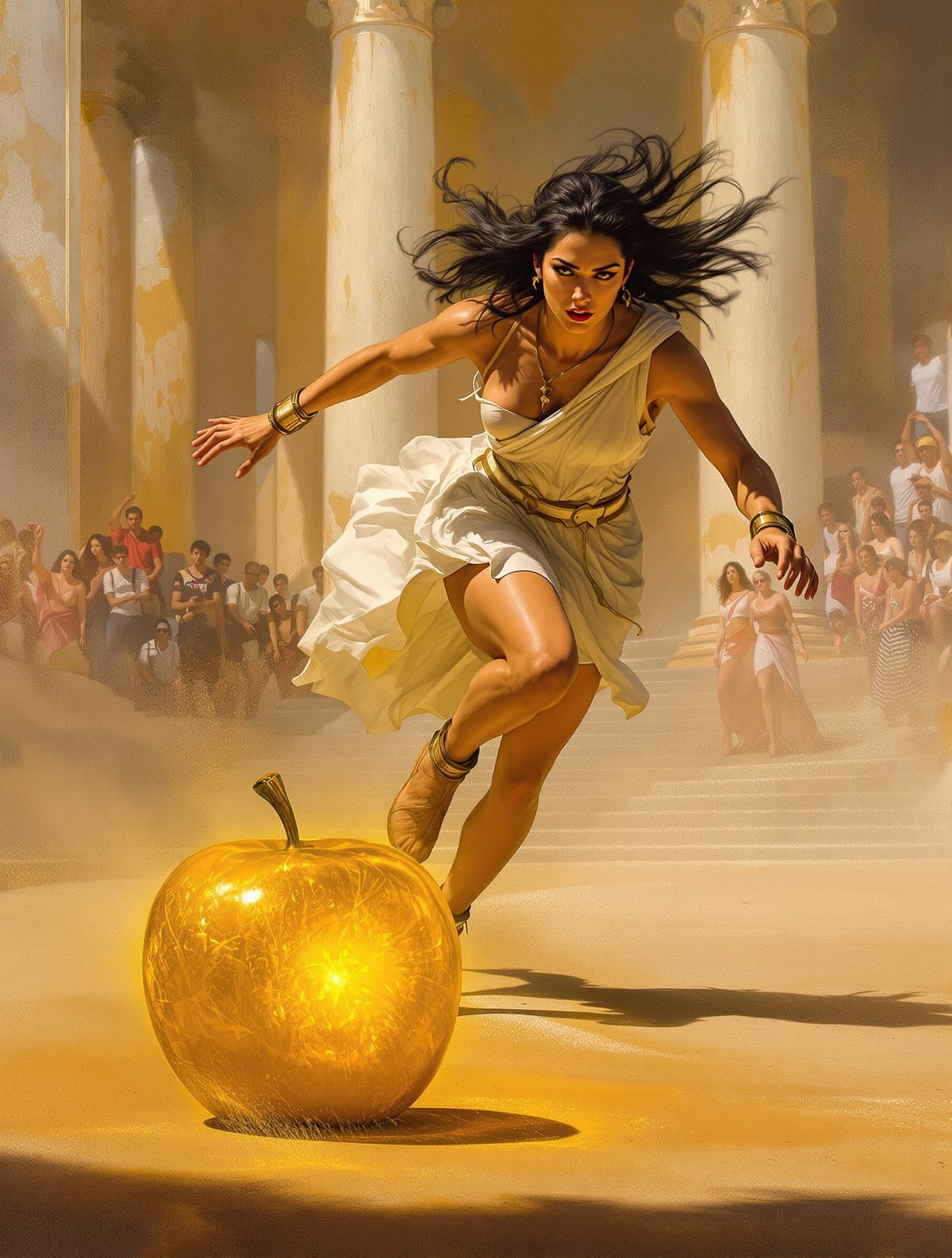

In the dim, ethereal gloom of the ancient Greek underworld, a tremor shifted the shadows—a mortal had entered willingly, a rare event indeed. Her name was Alcestis, and her journey began with a fateful condition offered by the Fates themselves: the exchange of a soul for her husband’s life. It was a tale that challenged the very nature of love, sacrifice, and the divine mechanics of Greek mythology.
The Gift and the Dilemma
The setting was Pherae, a city in Thessaly, the heartland of Greece, around the 13th century BCE. Among its citizens, Admetus, the king of Pherae, was renowned for his hospitality—a trait that earned him the favor of Apollo, the sun god himself. As the story goes, Apollo, punished by Zeus, served as Admetus’s shepherd for a year and found in the king a friend and ally.
In gratitude, Apollo sought to gift Admetus something extraordinary. Enter the Fates—those inexorable weavers of destiny, who decreed life and death even for gods and men. With Apollo’s persuasion, they offered a reprieve: Admetus could escape his preordained death if, and only if, someone else willingly stepped into the realm of Hades in his stead.
Faced with the stark reality that someone he loved dearly must perish, Admetus turned to those closest to him. Astonishingly, both his parents refused, clinging to their own lives with vehemence. Friends, courtiers, and allies all faltered under the weight of such sacrifice. It was Alcestis, his young and devoted wife, who stepped forward without hesitation, her resolve surprising them all.
Alcestis: The Ultimate Act of Love
Alcestis, a princess of Iolcus, was renowned not just for her beauty, but also for her deep sense of loyalty. In a time where political marriages were the norm, hers with Admetus blossomed from sincere love. Her willingness to exchange her vibrancy and vigor for her husband’s survival cast a long shadow, a testament to devotion in its purest form.
Visualize Alcestis as she prepared for her descent—a poignant image: her soft features serene, yet determined, draped in garments white as swan feathers. She bid farewell to her children, leaving them in the care of her now-immortally grateful husband. As she embraced them one last time, the fabled dirge sung in Pherae lamented not just a wife and mother, but a queen whose love defied even the gods.
The Descent into Hades
Greek mythology paints a vivid picture of the afterlife—an underworld carved beneath the earth, commanded by Hades and his queen, Persephone. Here, Alcestis would sit, separated but never forgotten. Unlike others who stumbled across the river Styx reluctantly, Alcestis's entrance was voluntary. The remarkable journey she undertook was shrouded in mystery and sacred reverence, perhaps softened by Persephone, who herself knew the pain of separation.
Within the shadowy boundaries of Hades’ realm, time was an elusive enigma. The souls existed not as they once were, but as echoes, awaiting rebirth or resolution. Alcestis's extraordinary sacrifice added a new tale to the spectral annals of this twilight world—a story of love that dared to transgress immortal boundaries.
Rescue from the Brink
As destiny would have it, Heracles, famed hero of Greece and a guest at Pherae unaware of Alcestis’s fate, discovered the tragic tale upon his arrival. Overcome with admiration for Alcestis’s selflessness, he resolved to rescue her, proving once more that fate in Greek myth was willing to bend for those who dared to challenge it.
Heracles’s descent into the underworld is yet another legend, one among his labors, where his strength and resolve guided him past formidable barriers. Confronting Thanatos, the personification of death itself, Heracles persuaded, fought, and ultimately triumphed, bringing Alcestis back from the abyss. It was a moment that not only redeemed Admetus but immortalized Alcestis as a testament to enduring love.
The Legacy of Alcestis
In the aftermath of her return, Alcestis became more than a myth; she metamorphosed into a symbol. Her story was retold across ages, a beacon within literature, art, and drama. Euripides in the 5th century BCE immortalized her tale in Alcestis, a play exploring the very core of human and divine intentions. In her actions, there is a crucial lesson—a reflection upon the essence of altruism within love.
The Alcestis narrative offers an unwavering gaze into ancient values where divinity intertwined with the human spirit through storytelling—not just to entertain but to convey morality and evoke empathy. Her journey transcends time as it echoes the eternal human themes of self-sacrifice, devotion, and the bold defiance of determined fate.
Why Alcestis Matters Today
In contemplating why Alcestis still resonates across millennia, we are reminded of the enduring power of storytelling in connecting us to the past with lessons relevant for the present. Her tale epitomizes selflessness, prompting reflection on our personal limits when it comes to love and sacrifice.
Today, as we navigate our own complex world, Alcestis’s decision challenges contemporary listeners to consider what they would place on the line for those they cherish. Her courage in stepping toward an unknown end ensures her place among the stars, a patron of the profound strength within the human heart. In a world often lacking altruism, Alcestis gently reminds us of possibilities untold by textbooks but deeply written in the soul.