As the sun tilted towards the horizon on a warm Tuesday afternoon, in an ancient forest under the broad, sweeping limbs of a banyan tree, destiny paused to observe a profound encounter between life and death. It was here that Satyavan, a handsome prince with a doomed fate, breathed his last breath. But the tale does not end with his departure. For lurking in the dappled shadows was his wife, Savitri, a woman of remarkable resolve and unparalleled love. Her story is woven into the fabric of Hindu mythology — a testament to courage and devotion powerful enough to wrest her husband from the very fingers of Death himself.
The Foretold Fate
The tale of Savitri and Satyavan unfolds at the dawn of the iron age, in the verdant lands surrounding the Kingdom of Madra. It was a time when gods and men communicated directly, when destinies were carved by celestial voices, and mortals held their breath in the face of prophecies. Savitri, the luminous daughter of King Ashwapati, was married to Satyavan despite a forecast that he would die exactly one year from their wedding. The astute princess accepted her husband’s tragic fate with a serenity rare for the times, aware that love and destiny would soon collide in an epic confrontation.
Their lives together were idyllic yet haunted by the shadow of their short-lived union. It is said that in the magical lands where they resided, the trees whispered secrets and the rivers sang of time’s relentless march. The impending date of Satyavan's demise loomed large but it only served to deepen their bond, elevating their love to an unearthly level of purity and devotion.
The Day Death Arrived
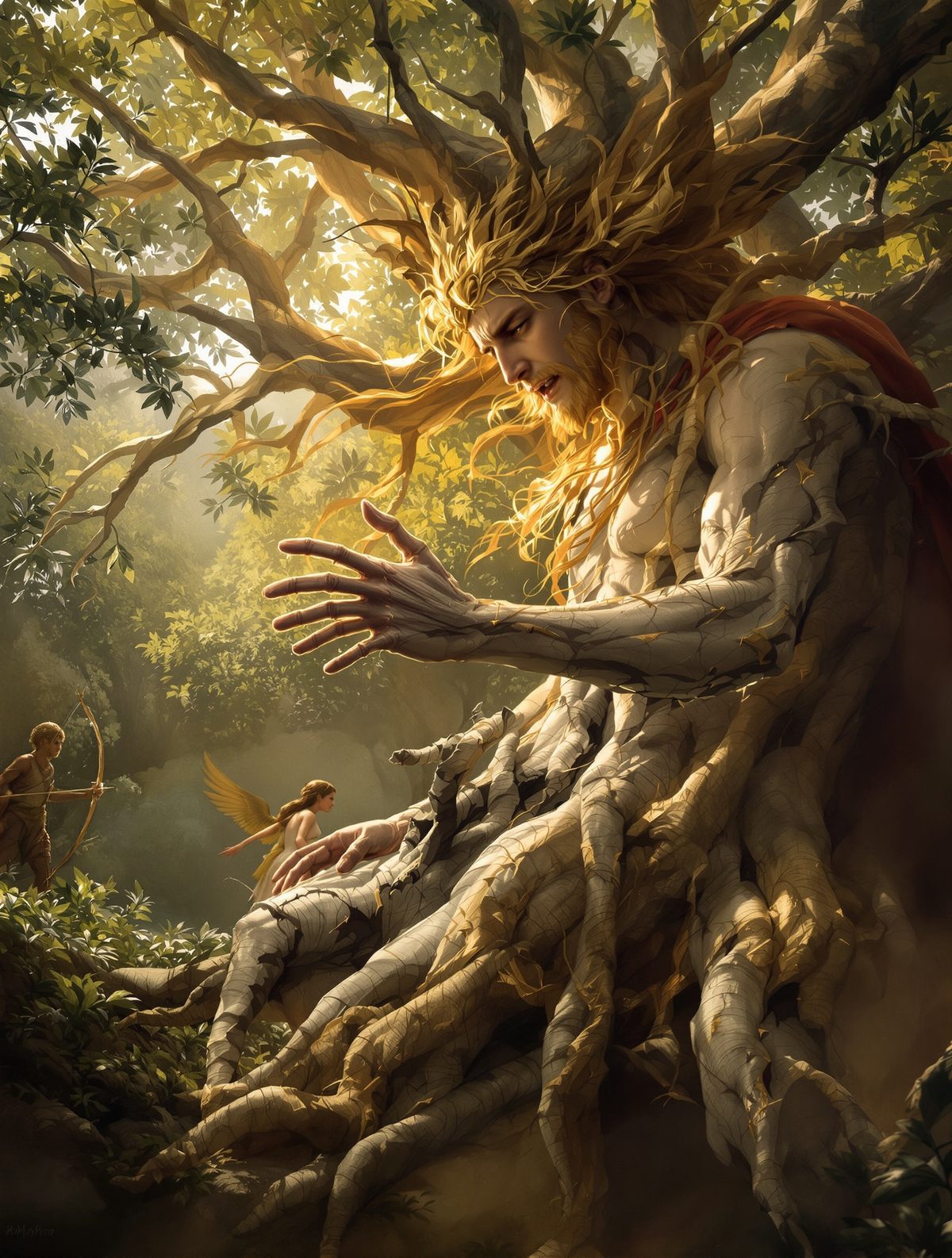
As the appointed day dawned, Savitri was not a woman resigned to her husband’s fate. Instead, she prepared with a stoic resolve that even the gods might have envied. Accompanying Satyavan into the forest, she was determined to counteract the cosmic decree. As the couple loitered beneath a sumptuous canopy of green, Satyavan bent to sever his day’s toil from the earth. He then collapsed, his breath melding with the zephyr of the forest as Yama, the majestic god of death, descended to claim his soul.
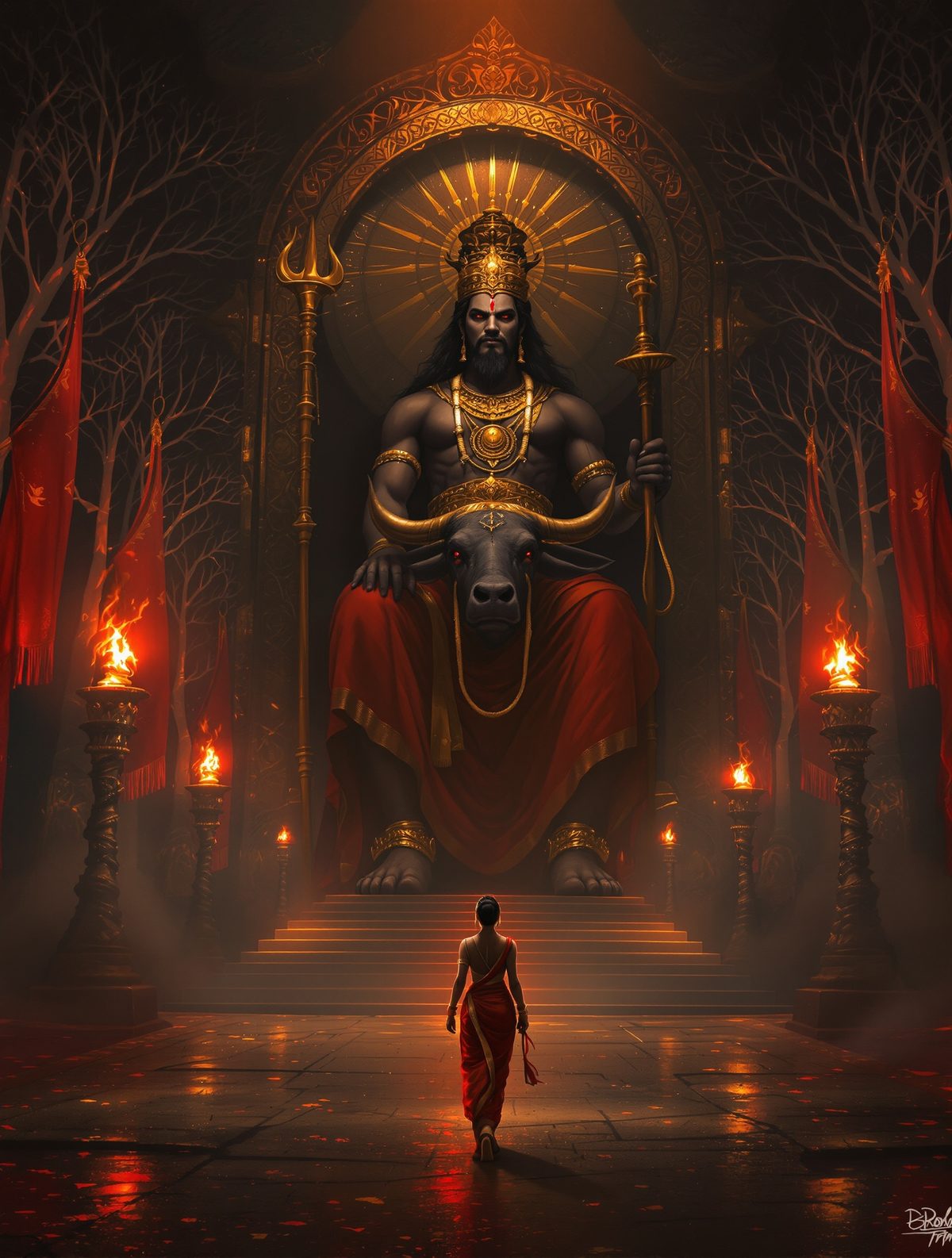
Traditionally, Yama is implacable and impartial, a deity well-versed in the business of life’s ending. Yet, he was not prepared for Savitri. The radiant determination in her eyes was as astonishing as it was bewildering. As Yama took Satyavan’s soul in his ethereal grasp, Savitri commenced a pursuit no mortal had ever dared undertake.
Into the Underworld
With swift, decisive strides, Yama journeyed back towards his dominion, the realm of the afterlife. But every time he turned back, there stood Savitri — undeterred, unbowed, a steadfast silhouette against the glowing horizon. The path they traversed — shrouded in mist and tinged with twilight hues — led towards the threshold of eternity, a boundary few dared cross.
“Turn back, devoted wife, for none accompany the Dead to my kingdom,” intoned Yama, his voice rich as the night and unyielding as the mountains. But Savitri was unfaltering. Her eloquence and virtue warmed the heart of even Death, leading Yama to offer her a boon — anything but the return of her husband’s soul.
With exquisite patience and wisdom, Savitri chose her wishes carefully. First, she requested a boon for her father-in-law to regain his sight and lost kingdom, helping Yama recognize her selflessness. The god of death delivered.
Still, she followed.
Again, she was granted a wish. Savitri asked for her own father to be blessed with a hundred sons, ensuring her lineage would thrive.
Yet, she continued.
The Wisdom of Savitri
As they approached Yama’s kingdom, a place swirling with ancients and ethereal twilight, even the land itself seemed to listen to Savitri’s voice. For her third wish, she shrewdly requested to be the mother of a hundred sons — a request Yama granted without contemplation. Only then did he realize the cleverness of her plea; her wish made no sense unless Satyavan was returned to her living man’s side.
This narrative brilliance struck Yama, a moment where even death acknowledged the richness of life’s weave. Moved by her devotion and cleverness, Yama conceded, granting Satyavan’s soul to return to earth. The very act stood as a testament to the power of love, intellect, and determination over fate.
Legacy and Lessons
In the annals of Hindu mythology, Savitri’s tale resonates with timeless wisdom and profound inspiration. Her story has journeyed through ages as an emblem of feminine prowess and endurance, celebrating the confluence of human will and divine intercession. The triumphant retrieval of Satyavan’s soul from Yama’s grasp reveals much about the complex relationship between fate and free will.
In an era where destiny dictated every whim, Savitri demonstrated that even fate can be rewritten by boundless love and unwavering resolve. Her story serves as an enduring reminder of the strength of the human spirit, transcending earthly confines to touch the divine. This legend may not dwell in modern textbooks, yet it provides a significant insight into understanding ancient beliefs and the eternal themes that govern our lives.
Why does Savitri’s story matter today? In a world where certainty is rare and challenges abound, her tale reminds us that the human spirit can overcome formidable odds. Her unwavering devotion and strategic wit offer hope that, armed with love and determination, we are capable of unthinkable feats.