In the darkness before dawn, when the world holds its breath between night and day, the ancient Aztecs would look to the eastern horizon and whisper the name of their fallen god. There, blazing with ethereal fire, hung the morning star—not merely a celestial body, but the transformed heart of Quetzalcoatl, the Feathered Serpent, who had immolated himself in shame after glimpsing his own monstrous reflection. This wasn't just any creation myth. This was a story of divine vanity, cosmic sacrifice, and the terrible price of self-knowledge that would echo through the corridors of Mesoamerican temples for over a thousand years.
The Lord of the Dawn Wind Faces His Truth
Picture Tollan—the legendary city of the Toltecs, gleaming white in the highland sun around 950 CE. Here ruled Quetzalcoatl, not merely as a god, but as the priest-king of an earthly paradise. The Aztecs who inherited these stories centuries later described him as Ce Acatl Topiltzin Quetzalcoatl—"One Reed, Our Prince the Feathered Serpent"—a figure who straddled the line between mortal ruler and divine being. His reign was perfection incarnate: maize grew without cultivation, cotton bloomed in brilliant colors, and the people wanted for nothing.
But the gods, it seems, were not content to let paradise endure. Tezcatlipoca, the "Smoking Mirror," lord of conflict and change, gazed down from the star-scattered dome of night with growing irritation. Where Quetzalcoatl brought order and light, Tezcatlipoca thrived on chaos and shadow. The two had been locked in cosmic opposition since the world's creation, when Tezcatlipoca had lost his foot to the Earth Monster and Quetzalcoatl had lost an arm in return—a primordial struggle that left both gods forever marked by their conflict.
What most people don't realize is that this wasn't the first time these divine brothers had clashed. According to the Anales de Cuauhtitlan, a crucial 16th-century manuscript, Quetzalcoatl and Tezcatlipoca had already destroyed and recreated the world four times over. Each cosmic age ended when one gained dominance over the other, only to watch their perfect world collapse under the weight of its own contradictions.
The Trickster's Obsidian Gambit
Tezcatlipoca descended to earth disguised as an aged merchant, his divine nature hidden beneath the weathered appearance of a traveling peddler. In his hands, he carried something extraordinary—a mirror of polished obsidian, volcanic glass so perfectly smooth it could capture reflections with startling clarity. The Aztecs called these mirrors tezcatl, and they weren't mere vanity objects. They were windows into the soul, instruments of divination, and in the hands of priests, tools for communicating with the gods themselves.
The trickster god made his way through the jade-columned halls of Quetzalcoatl's palace, past murals depicting the Feathered Serpent's greatest acts of creation. Here was Quetzalcoatl diving into the underworld to steal the bones of previous humanity. There he was, transforming into an ant to steal the first corn from inside the Mountain of Sustenance. And everywhere, the artistic depictions showed him as radiantly beautiful—a god of perfect proportion and divine grace.
When Tezcatlipoca finally stood before his cosmic rival, he spoke words that would reshape the heavens themselves: "My lord, I have brought you a gift—your own true image. Look, and see yourself as you truly are." What happened next would become one of the most psychologically complex moments in all of Mesoamerican mythology.
The Mirror of Terrible Truth
Quetzalcoatl had never seen his own reflection. Think about that for a moment—here was a god who had shaped humanity from bone meal and divine blood, who had set the sun and moon in their courses, who had given mortals fire and knowledge, and yet he had never gazed upon his own face. The obsidian mirror that Tezcatlipoca held wasn't just showing Quetzalcoatl his appearance—it was revealing his essential nature, stripped of all divine glamour and cosmic authority.
What the Feathered Serpent saw in that dark glass defied every artistic representation, every hymn of praise, every expectation he had of himself. Instead of divine beauty, he beheld something monstrous—accounts vary, but the most vivid descriptions from the Florentine Codex speak of a face covered in raw, weeping sores, eyes sunken and wild, features twisted by an otherworldly corruption that revealed the terrible dual nature of all deities. Gods, after all, were never purely benevolent in Mesoamerican thought. They were forces of creation and destruction, beauty and horror, life and death.
Here's what makes this moment particularly fascinating from an anthropological perspective: Quetzalcoatl's horror at his own appearance reflects a sophisticated understanding of the shadow self that wouldn't appear in European psychology until Carl Jung's work in the 20th century. The ancient Mesoamericans understood that even gods—perhaps especially gods—carried within themselves the capacity for monstrosity.
Divine Intoxication and the Path to Flames
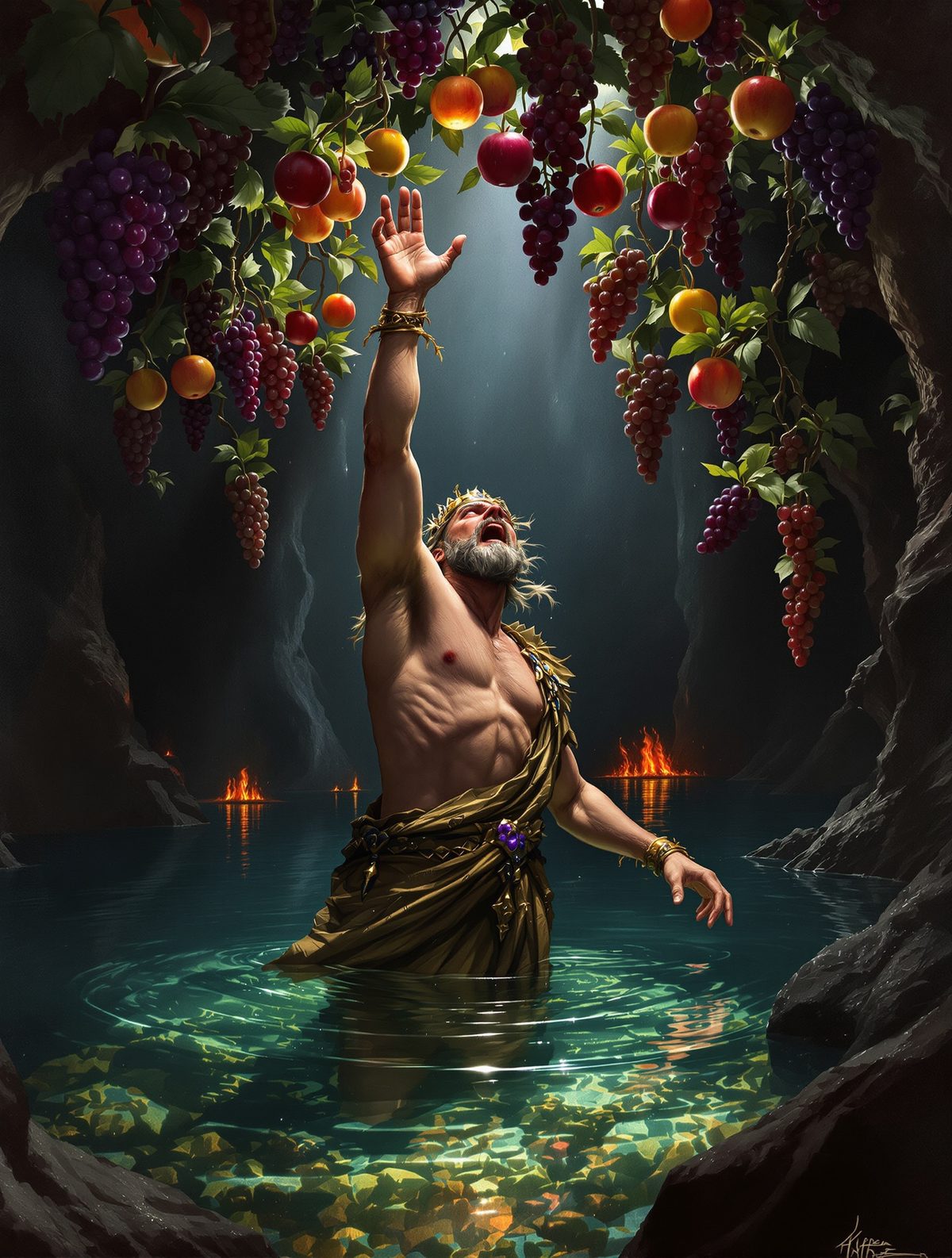
Overwhelmed by this revelation, Quetzalcoatl did something that would have shocked his human subjects: he began to drink. But this wasn't ordinary intoxication. Tezcatlipoca had prepared pulque—fermented agave wine—spiked with divine properties that stripped away not just inhibition, but the very foundations of cosmic order. The Aztec sources describe how the Feathered Serpent drank until he could no longer maintain the perfect discipline that had made Tollan a paradise.
In his intoxicated state, Quetzalcoatl committed acts that violated his own sacred nature. Some versions of the myth suggest he broke his vow of celibacy with his sister Quetzalpetlatl. Others focus on his abandonment of the ritual obligations that kept the world in balance. The specific transgression mattered less than its cosmic implications—the god of order and wisdom had fallen into chaos, and the very foundations of creation trembled.
When sobriety returned with the dawn, bringing the full weight of shame and cosmic responsibility, Quetzalcoatl made a decision that would literally reshape the night sky. If his ugliness and failure made him unfit to rule the earthly paradise of Tollan, then he would transform himself into something else entirely. The god who had given fire to humanity would now give himself to fire, completing a cycle of sacrifice that echoed throughout Mesoamerican religious practice.
The Pyre of Transformation
On the shores of the divine sea—perhaps the Gulf of Mexico, where several Toltec sites have been discovered—Quetzalcoatl built his funeral pyre. This wasn't a hasty act of despair, but a carefully planned ritual transformation. According to the most complete version of the myth preserved in the Anales de Cuauhtitlan, the Feathered Serpent arranged the wood in specific patterns that mirrored the cosmic directions and the movement of celestial bodies.
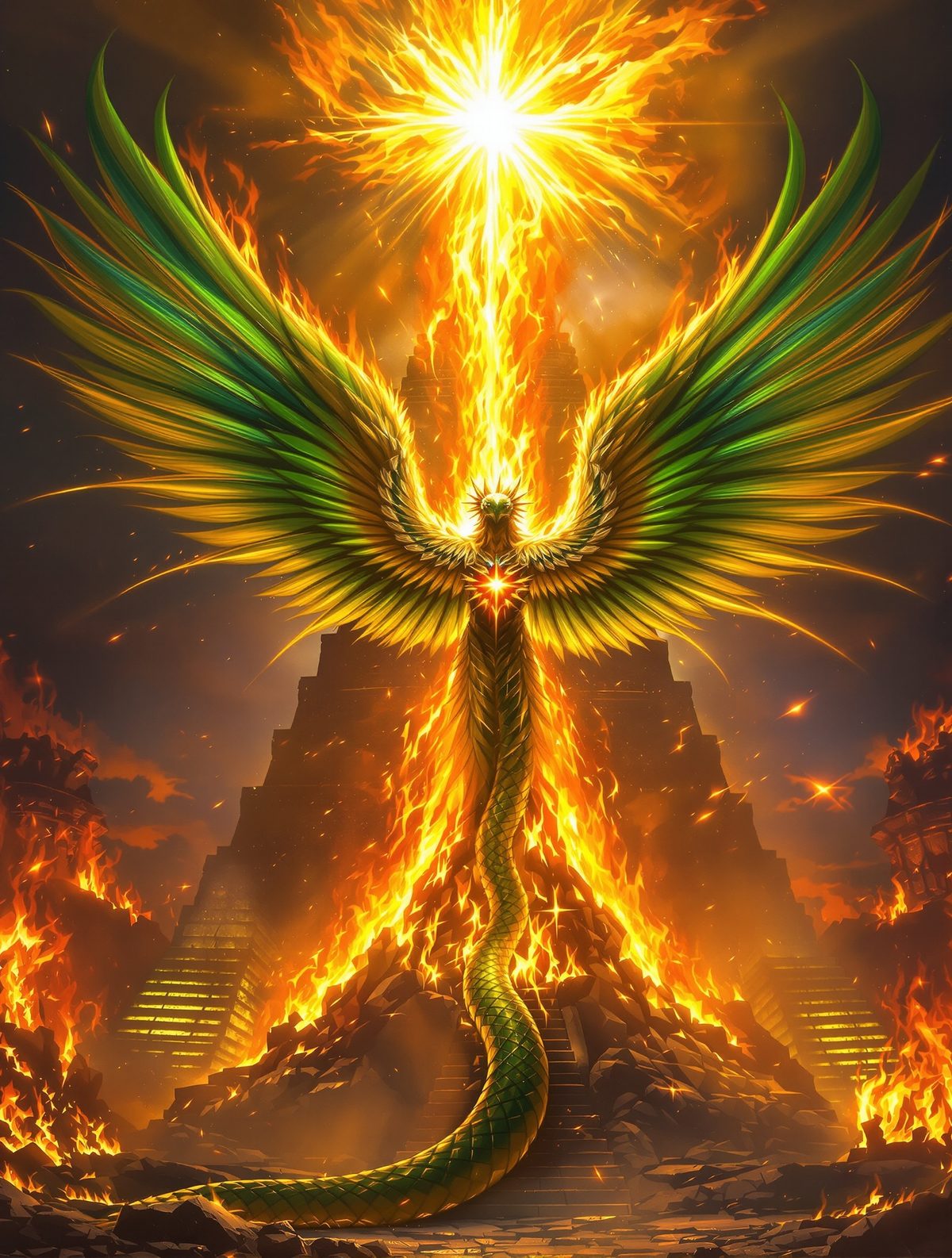
As flames consumed his divine flesh, something extraordinary occurred. The fire didn't simply destroy Quetzalcoatl—it purified and transformed him. His heart, the seat of divine consciousness in Mesoamerican thought, rose from the pyre as a brilliant star that would forever after herald the coming dawn. The Aztecs called this celestial body Tlahuizcalpantecuhtli, "Lord of the Dawn," but they knew it was Quetzalcoatl transformed, carrying within its light both the beauty of sacrifice and the terrible knowledge of divine fallibility.
What makes this transformation particularly remarkable is its astronomical accuracy. The ancient Mesoamericans were sophisticated observers of Venus's complex orbital pattern, tracking its 584-day cycle as it alternated between morning and evening star. They understood that Venus "died" as an evening star and was "reborn" as a morning star after spending eight days invisible in the underworld—a pattern that perfectly paralleled Quetzalcoatl's death and resurrection.
The Morning Star's Eternal Vigilance
Every dawn for the next six centuries, until Spanish conquistadors brought new gods and different stories, the Aztecs would witness Quetzalcoatl's transformed presence in the eastern sky. The morning star became more than just a celestial marker—it was a reminder that even gods must face their shadow selves, that perfection requires sacrifice, and that true transformation comes only through the willing embrace of destruction.
But perhaps the most profound aspect of this myth lies in what it reveals about the Aztec understanding of leadership and divinity. Unlike many world mythologies where gods are perfect and unchanging, Quetzalcoatl's story acknowledges that those who wield ultimate power must also carry ultimate responsibility for their failures. The Feathered Serpent's self-immolation wasn't just cosmic drama—it was a template for earthly rulers who were expected to sacrifice themselves, literally or figuratively, when they failed their people.
Today, as we grapple with questions of leadership, accountability, and the price of power, Quetzalcoatl's fiery transformation offers a startling perspective. In our age of social media mirrors that reflect our every flaw and failure back at us with merciless clarity, perhaps we need the wisdom of the Feathered Serpent more than ever—the understanding that seeing our true selves, however monstrous, is only the beginning of transformation. The real question isn't whether we can bear to look in the mirror, but whether we have the courage to build our own funeral pyres and rise as something entirely new, blazing with the hard-won light of authentic self-knowledge.