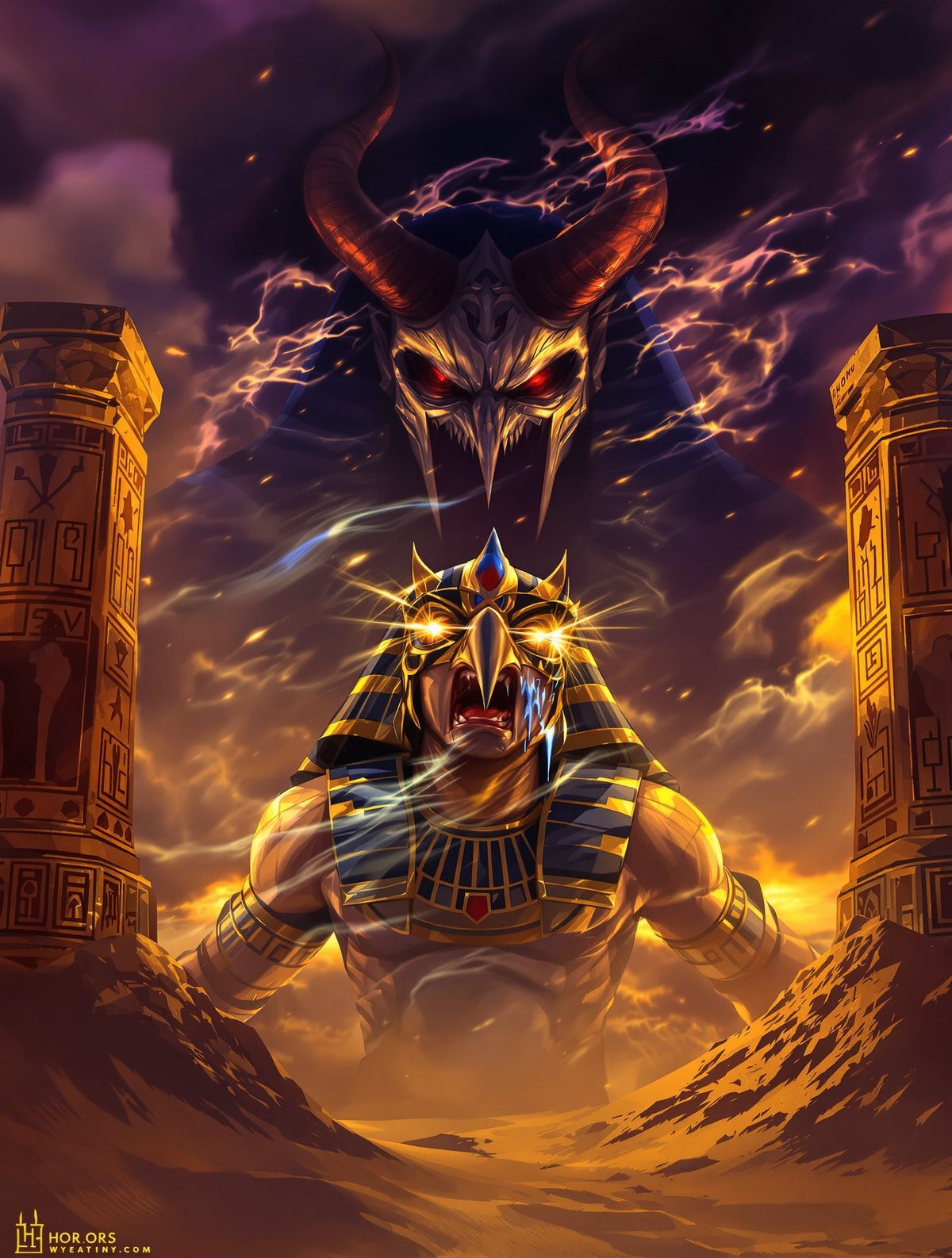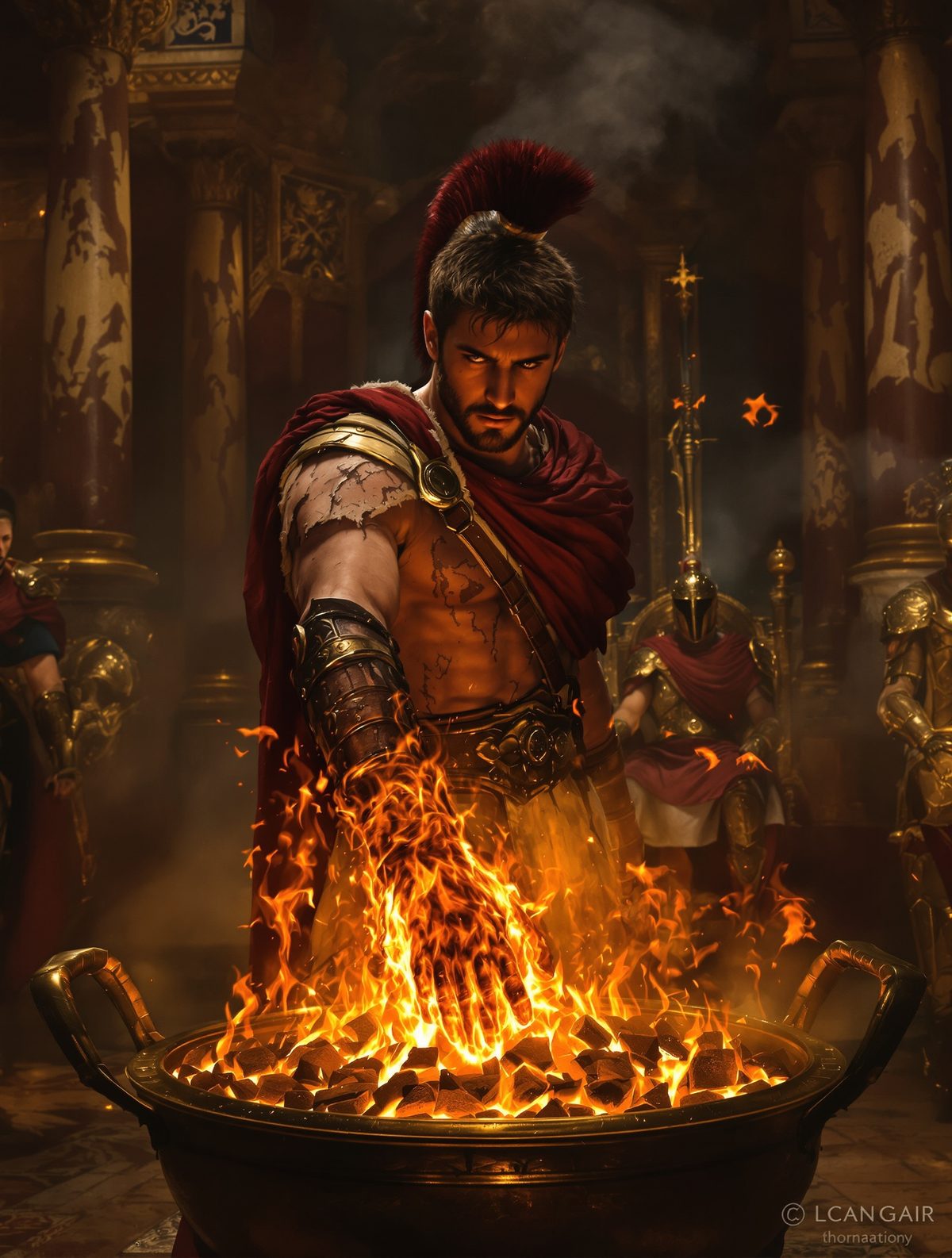

Buried beneath layers of time and myth, the story of Alcestis is one of ominous whispers and undying love. Her tale is not one for the timid: a queen who tasted the damp chill of the grave not once, but twice. Through the alchemy of devotion, betrayal, and divine intervention, Alcestis's journey paints the ancient understanding of life, death, and everything in between. And at its core stands Hermes, the god who ensures that bargains made with the dead are duly settled.
The Breath of a Coward and the Silence of a Queen
In the land of Thessaly, around 450 BC, King Admetus ruled with a throne beset by favor and folly. Honored by the gods themselves for his hospitality, he nevertheless bargained with the Fates for a boon unearned: the chance to cheat the end that comes for all mortals. His accord left him tethered to the world, spared from the sickle’s song, if only someone else might take his place.
Alcestis, his wife and queen, arose as the one embodying love's purest form — the willing sacrificial lamb. With a heart heavy as river stones, she accepted Charon's coin and stepped willingly into the underworld's shadowy passage. Not for glory nor gold did she embrace death's chill; she did it for love — and a momentary reprieve for a husband who trembled at mortality's door.
Heracles, the Grim Wrestler at the Tomb
Yet, where men cower, heroes rise. Enter Heracles, son of Zeus, whose appetites and valor were themselves the stuff of legend. His arrival at Admetus's palace, unwanted yet irresistible, sparked a new chapter in Alcestis's tale. Learning of the queen's selfless demise, Heracles cast aside wine and merriment to venture to the tomb where Hypnos and Thanatos, gods of sleep and death, held sway.
With a grip that gods envied and mortals feared, Heracles wrenched Alcestis from oblivion. Wrestling Death — an act audacious and a rarity among stories of the heroes — he pulled her back across the river of the dead, to the edge of the living. A feat extraordinary in its audacity, it hinted at divine politics and mortal tenacity weaving the strands together.
Hermes, the Returned Bargain
As dawn reached its fingers across the horizon, something stirred in realms unseen. Forever at the edge of things, Hermes awaited Alcestis and the man who loved her enough to defy the very boundaries of nature. Neither pleased nor perturbed, he was the perpetual usher for souls crossing between the veils of existence.
The gods do not simply wager, nor do they forget what is owed. And while Heracles could wrest Alcestis from death's skeletal clutch, Hermes knew the truth buried beneath sensation and momentary victories: some doors open but once, their hinges rusted with Fate's decree.
That Alcestis may walk once more among the thyme-laden hillsides of her homeland was certain — but so too was her final passage into the quietude that awaited. For Hermes, ambassador of gossamer transitions and solemn assurances, it was merely a matter of divine arithmetic.
The Underside of Legend
Much of the Alcestis tale is often lost amid the grander vistas of heroism and tragedy in the annals of Greek mythology, yet it represents an intricate mosaic of cultural beliefs. Subtle are the tones conjured to depict Hermes not as a god impelling judgment but as a cosmic balance-beam walker — ever the emissary of equilibrium, weaving through the frayed ends of human transgressions and divine dictates.
The myth presents the startling revelation that even the mightiest must reckon with enduring truths. Alcestis, having glimpsed the other side, understood life colored by mortality's inescapable palette. Heracles' brash defiance, forceful yet transient, reveals how human hearts and divine whims can momentarily align, only to be re-anchored by the likes of Hermes.
Why This Matters Today
In today’s world, the myth of Alcestis resonates with the intricate interplay between love, sacrifice, and the inevitabilities of life and death. Each human transaction, whether implied or explicit, sails the same tides that whisked Alcestis from and back into those ancient shadows. In unpacking her story, we glimpse timeless truths: the wages of fear, the weight of choice, and the gentle, stoic hand that leads us all — reflections on the impermanence that pulse in humanity's collective heart.
Hermes, the psychopomp who coaxed spirits across unseen borders, still exerts a whispering influence in our lives, urging us to consider our own passages. In this retelling, the legend left out of textbooks becomes an existential conversation — one where even a god can teach us about pathways and the tolls they extract.