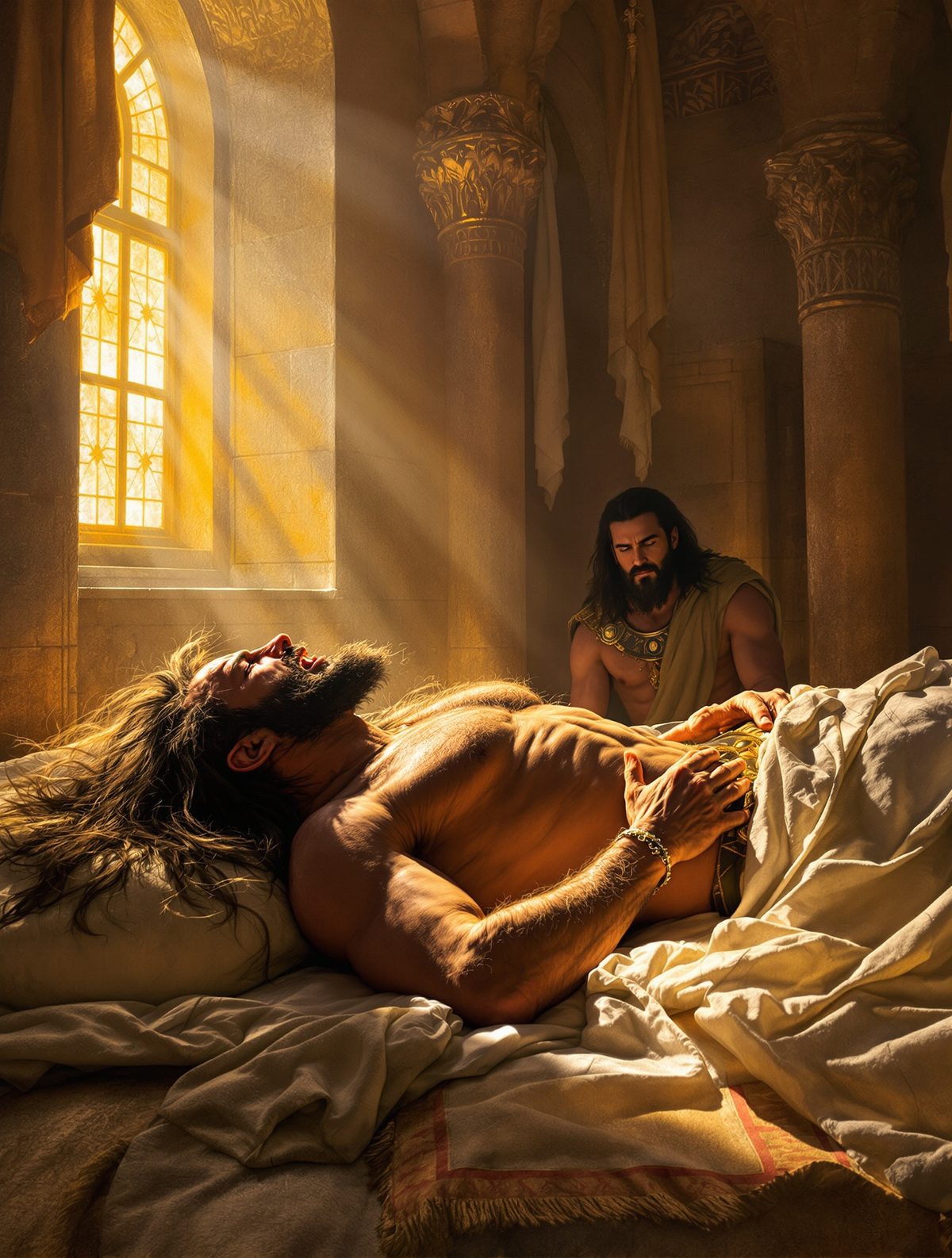

Picture this: the gods are furious. Humanity has just stolen fire—the ultimate divine privilege—and Zeus, king of the heavens, is seething with a rage that makes thunderstorms look like gentle summer rain. But the Olympians don't just punish; they craft their revenge with the precision of master artists and the cunning of chess grandmasters. Their weapon? A woman so beautiful that mortal men would forget to breathe, carrying a gift that would unleash horrors beyond imagination. Her name was Pandora, and she was about to change the course of human history forever.
The Divine Conspiracy: Crafting the Perfect Weapon
The story begins with Prometheus, the titan whose name literally means "forethought." This wasn't just any minor deity—he was Zeus's own cousin, and his betrayal cut deep. When Prometheus stole fire from the sacred hearth of the gods and delivered it to shivering, helpless humanity, he didn't just commit theft; he fundamentally altered the balance of power between mortals and immortals.
Zeus's response was as calculated as it was cruel. Rather than simply destroying humanity with a flood or plague, he devised something far more insidious. He would create a gift so irresistible that humans would welcome their own doom with open arms. This gift would be the first woman—crafted not through natural birth, but forged in the divine workshops of Olympus like a weapon of war.
Each god contributed to this masterpiece of deception. Hephaestus, the divine craftsman, sculpted her from clay and water, his calloused hands shaping curves that would make Helen of Troy weep with envy. Aphrodite breathed into her an otherworldly beauty and overwhelming sexuality that would make men abandon reason. Athena taught her the domestic arts—weaving, cooking, all the skills that would make her invaluable to any household. Hermes, the messenger god, gave her perhaps the most dangerous gift of all: insatiable curiosity and a talent for lies.
But here's what most people don't know: Pandora wasn't originally named Pandora. That name, meaning "all-gifted," was given to her only after the gods had finished their work. Before that, she was simply called "the beautiful evil"—a phrase that reveals just how clearly the gods understood what they were creating.
The First Wedding Gift from Hell
The delivery system for this divine punishment was as brilliant as it was heartless. Zeus didn't send Pandora to Prometheus—the titan was too clever and would have seen through the deception immediately. Instead, she was presented to Epimetheus, Prometheus's brother, whose name means "afterthought" and who was notorious for his poor judgment.
Despite Prometheus's explicit warnings never to accept gifts from Zeus, Epimetheus took one look at Pandora and threw caution to the wind. Ancient sources describe their first meeting in vivid detail: Pandora descended from Olympus clothed in silver garments that seemed to capture and reflect light like water, her golden hair crowned with flowers that never wilted, her eyes holding depths that promised both ecstasy and ruin.
The wedding was, by all accounts, spectacular. The gods themselves attended—not out of goodwill, but to witness the beginning of their grand experiment. As a wedding gift, Zeus presented the happy couple with a large jar (the famous "box" is actually a mistranslation from the 16th century). The jar was made of bronze, sealed with lead, and covered in warnings written in the ancient script of the gods.
Here's a detail that rarely makes it into the popular tellings: Zeus didn't just tell them not to open it. He explained, in great detail, that it contained "gifts for humanity" but that these gifts were not ready to be released. The timing had to be perfect, he claimed, or great harm would come to the world. It was psychological manipulation of the highest order—making the prohibition seem like protection rather than command.
The Weight of Infinite Curiosity
For weeks, maybe months, Pandora resisted. But the gods had crafted her curiosity to be more than human—it was a force of nature, as unstoppable as a river flowing toward the sea. Ancient descriptions talk about how she would circle the jar like a moth around flame, her fingers tracing its bronze surface, her ear pressed against it listening for sounds from within.
Epimetheus, besotted with his divine wife, initially tried to distract her. He moved the jar to different rooms, built cabinets to hide it, even buried it in their garden. But Pandora always found it. More importantly, she began to change. The woman who had arrived as a picture of domestic perfection became obsessed, distracted, almost frantic with need.
The ancient poet Hesiod, writing in the 8th century BCE, describes her final day of resistance with haunting detail. She sat before the jar from dawn to dusk, her hands shaking, sweat beading on her perfect brow despite the cool air. She spoke to it, pleaded with it, even wept over it. By sunset, she was no longer entirely human—the divine compulsion had consumed her rational mind entirely.
What's particularly chilling is that some sources suggest she knew exactly what would happen when she opened it. The gift of prophecy wasn't officially hers, but she had been touched by so many gods that fragments of foresight leaked through. She saw the plagues, the wars, the suffering—and opened it anyway, because the alternative was madness.
The Moment Everything Changed
When Pandora finally lifted the lid, the transformation of the world wasn't gradual—it was instantaneous and absolute. The ancient sources describe a sound like the roaring of a thousand storms as the contents of the jar exploded outward with supernatural force. What emerged wasn't just a list of abstract evils, but actual entities—spiritual forces that had been compressed and concentrated by divine power.
Disease came first, manifesting as a cloud of yellow vapor that spread across the known world within hours. Plague, consumption, fever, and ailments that had no names suddenly afflicted humans who had never known illness. War emerged as a red mist that settled into men's hearts, turning neighbors into enemies and brothers into killers. Famine appeared as a locust-like swarm that didn't devour crops directly but cursed the very soil, making it reluctant to yield its bounty.
But the most insidious releases were the psychological torments. Envy slithered out like a green serpent, whispering comparisons that poisoned contentment. Hatred burst forth as a black flame that fed on love and trust. Despair descended like a gray fog, settling into human souls and making hope feel like a fool's dream.
Here's what makes the story truly terrifying from an ancient Greek perspective: these weren't just unfortunate side effects of human nature. They were intelligent, purposeful entities actively working to maximize human suffering. Each evil was, in essence, a minor deity of destruction, now free to roam the world and build cults of misery.
The Last Prisoner: Hope's Cruel Promise
In her horror at what she had unleashed, Pandora slammed the lid shut—but she was too late to stop the exodus of evils. However, one entity remained trapped inside: Hope. This detail has puzzled scholars for millennia. Why was Hope trapped with the evils? Was it meant to be humanity's salvation, or was it perhaps the cruelest evil of all?
The ancient Greeks had a complex relationship with hope. Unlike our modern, generally positive view, they saw hope as potentially dangerous—a force that could keep people trapped in bad situations by promising better times that might never come. Some interpretations suggest that Zeus's masterstroke was keeping Hope imprisoned, ensuring that humans would suffer without even the comfort of believing things might improve.
But other sources tell a different story. They claim that Hope was never meant to be released with the evils because it wasn't an evil at all—it was Zeus's eventual mercy, a tool he kept in reserve for when humanity had learned its lesson about stealing from the gods. In these versions, Hope remains in the jar not as a prisoner, but as a gift waiting for the right moment.
Archaeological evidence from ancient Greek sites shows ritual jars buried near homes, often inscribed with prayers to keep Hope alive. These "Pandora jars" suggest that ordinary people believed they could somehow communicate with that last spirit, keeping it strong for the day it might finally be released.
The Eternal Echo: Why Pandora's Box Still Haunts Us
The genius of the Pandora myth lies not in its fantastic elements, but in its unflinching examination of human nature and divine justice. This isn't just an ancient story about why bad things happen—it's a sophisticated exploration of curiosity, responsibility, and the unintended consequences of our deepest desires.
Every time we click on that link we know we shouldn't, every time we ask the question we know will hurt to answer, every time we pursue knowledge that might be better left alone, we are channeling Pandora's divine compulsion. The ancient Greeks understood something we're still grappling with today: the very curiosity that drives human progress and discovery is also the force that leads us into our deepest troubles.
Modern psychologists have identified what they call the "Pandora Complex"—the tendency to pursue information or experiences that we intellectually know will harm us. From reading the comments on controversial articles to staying in relationships we know are toxic, we repeatedly choose the painful truth over comfortable ignorance. Pandora's story suggests this isn't a bug in human psychology—it's a feature, programmed by the gods themselves.
Perhaps most unnervingly, we're still opening boxes. Every technological advance, from atomic energy to artificial intelligence, carries the same promise and threat as Zeus's bronze jar. We know these discoveries could transform the world in terrible ways, but we pursue them anyway, driven by the same irresistible curiosity that doomed the first woman. The question isn't whether we'll keep opening these metaphorical boxes—it's whether we'll ever be wise enough to leave Hope inside when we do.