Amidst the sun-bleached deserts and the eternal flow of the Nile, tales emerge that bridge the realm of the gods with the fate of humanity. One such myth, steeped in tragedy and hope, tells of how a loving sister defied death itself to alter the destiny of many. This is the tale of Osiris, the god who rose again, and the indomitable spirit of Isis, his sister and wife, whose desperate act of love breathed life into myth and history alike.
The Divine Brotherhood: Osiris and Set
Ancient Egypt, around 2500 BCE, was a civilization bustling with life, vibrant under the guiding influence of its deities. At the heart of this pantheon was Osiris, a benevolent god revered as the ruler of the afterlife and the representative of fertility and renewal. His reign was peaceful, but it was not free from envy. Set, his brother, known for his chaotic forces and association with storms and deserts, coveted the throne. Their rivalry, as old as time itself, was about to turn tragically murderous.
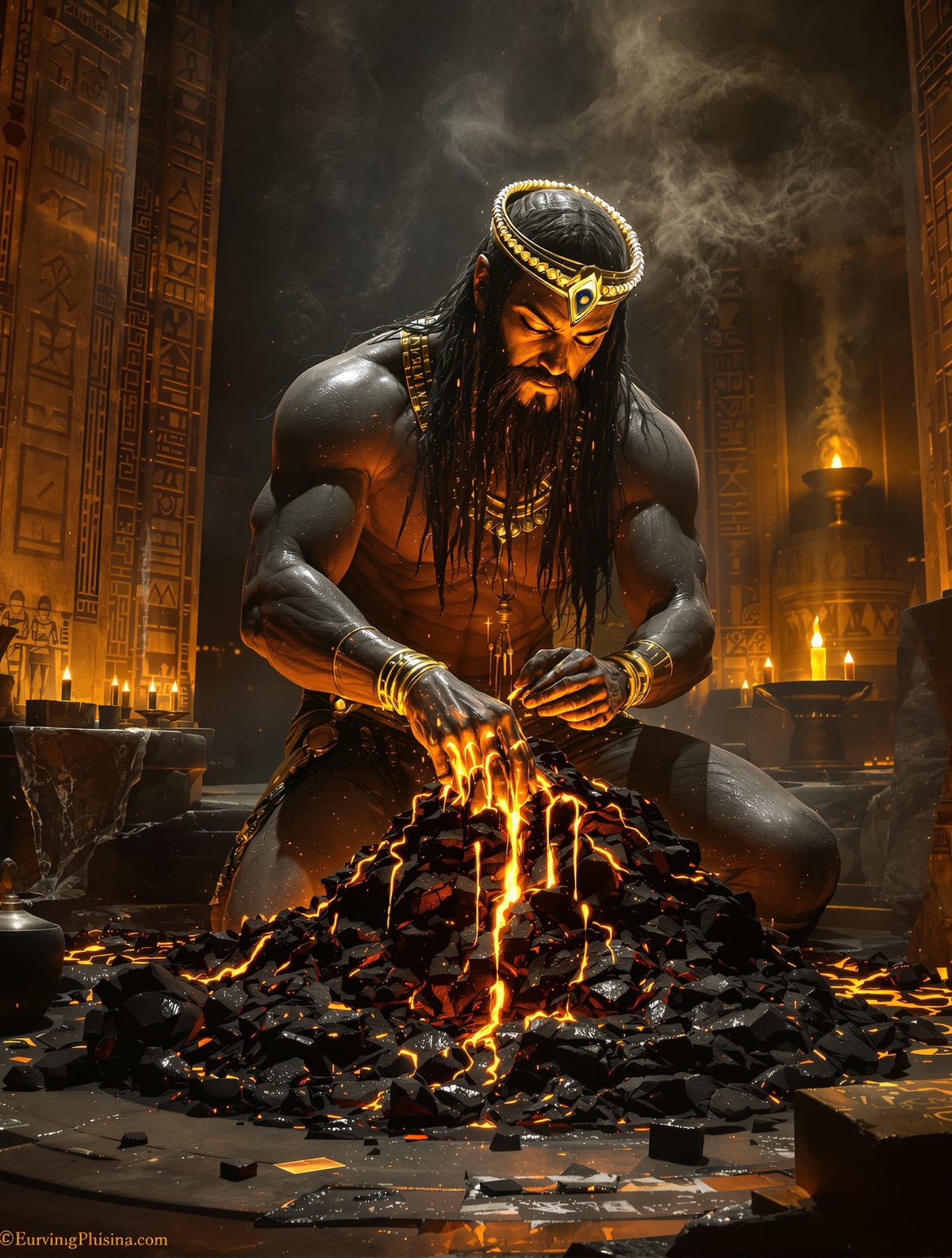
Set, driven by jealousy, orchestrated a sinister plan during a lavish feast. He crafted an exquisite coffin, personalized to Osiris's exact dimensions, and offered it as a gift, promising it to whosoever fit within. As Osiris lay down, Set and his co-conspirators slammed the lid shut and sealed it with molten lead, suffocating his brother within its jeweled tomb. But killing Osiris was not enough; to ensure he would never rise again, Set dismembered Osiris's body into fourteen pieces, scattering them across the vast lands of Egypt. Each piece, a testament to Set's malevolence, was a fracture in the divine order.
The Quest for Wholeness: Isis's Tireless Search
Enter Isis, the goddess of magic and wisdom, known for her determination and love. Upon discovering Set's treachery, her grief knew no bounds. Yet, she transformed that sorrow into resolve, embarking on a quest across Egypt to collect the remnants of her beloved. The ancient texts recount how her journey was fraught with trials, as she navigated through the marshes of the Delta and the sands of Aswan, accompanied by her sister Nephthys and the jackal-headed Anubis.
With relentless devotion, she found thirteen pieces; the fourteenth, Osiris's heart, was lost to the depths of the Nile, devoured, some said, by an oxyrhynchus fish. But Isis, undeterred, reconstructed her husband from all she had gathered. In her hands rested a sacred duty, not just for her love but for the cosmic balance, hanging now by a fragile thread.
The Breath of Life: Magic in Words
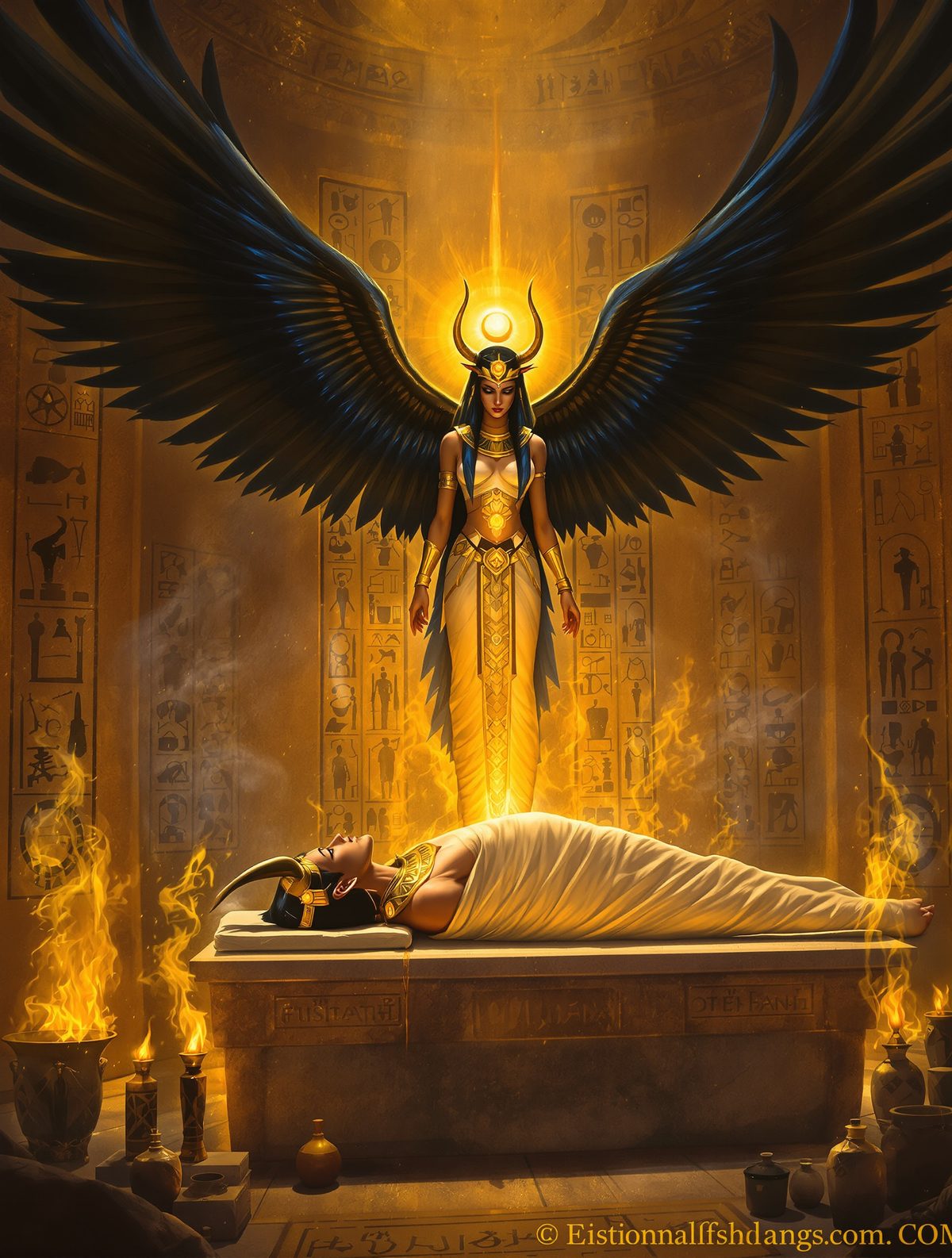
Through the potent power of her words and incantations, Isis performed magic ancient and profound. With breath that defied nature, her voice wove through the ether, whispering secrets into Osiris's still form. It was here, in the quiet heart of Egypt, that legend says the heavens trembled and time held its breath. Osiris, mirroring the green resurgence he symbolized on Earth, inhaled life — if only for a fleeting moment.
This miraculous resurrection was not just a victory over death but a herald of hope. During this brief return to the mortal realm, Osiris fathered a son, Horus. With ibis-headed Thoth alongside her, chronicling the event, Isis ensured that Horus would bear a birthright to challenge his uncle Set and ultimately restore order to Egypt.
The Rise of Horus: A Legacy of Conflict and Continuity
With Osiris as the lord of the afterlife, the legacy of his rebirth extended through Horus, who grew under the watchful eyes of his mother Isis, well-versed in combat and wisdom suited for kings. Horus, carrying the weight of a legacy intertwined with both divine promise and vengeance, would lead battles against Set. His epic struggle reinstated not only his place as the ruler but also set into motion the cycle of power restoration among the gods, which mirrored that sought by the pharaohs on Earth.
In a world where stories were passed down through spoken word and hieroglyphic symbolism, Horus standing triumphant echoed the eternal battle between chaos and order — a struggle depicted not just in heavenly realms but mirrored in human hearts and the governance of their nations.
The Timeless Lessons of Isis's Devotion
Why does this tale, so full of mythic grandeur, still resonate today? Perhaps it reminds us of the lengths we go for love and justice, or the power inherent in relentless dedication and hope. Isis's story, an embodiment of maternal strength and unwavering determination, continues to inspire throughout the ages. It's a reminder that in the most broken of moments, amidst seemingly insurmountable odds, a spark of hope and the magic of humanity can revive the darkest corners of our world.
From the broken pieces of this myth arises a narrative of rebirth and regeneration — concepts pivotal to the ethos of ancient Egypt and yet equally relevant in our world today. Through the courageous acts of Isis and the fleeting resurrection of Osiris, we glimpse the eternally healing power of love and the enduring struggle between opposing forces, a testament to stories left out of textbooks, but forever etched in the stone of time.