In the shadowy recesses of time, amid the cradle of civilization, a tale was born — one of creation, toil, and divine sacrifice. In Sumer, the land between the rivers Tigris and Euphrates, where ziggurats punctuated the horizon and cuneiform inscribed the stories of gods, a profound legend unfolded. It is a tale of Enki, the god of wisdom and water, who took a bold step to shape the destiny of the cosmos.
The Exhausted Pantheon of Gods
In the prehistoric era, dating as far back as 4000 BCE, the gods of Sumer were weary. Their labor had carved out the essence of the world — they had dredged the rivers, filled the earth with fertility, and sculpted each mountain peak. But this was exhausting work, even for divine beings. We often imagine gods as tireless, unburdened by the petty woes of toil, but the ancient Sumerians envisioned them differently. The Annuna gods, as they were called, began to feel the weight of their grand creation.
When Enlil, the chief among the gods, surveyed their labor, he realized they could not continue this eternal cycle. The solution to their plight lay not in celestial intervention but in the hands of Enki, the cunning god known not just for his wisdom but for his practical ingenuity.
Enki's Sacred Offer: The Birth of Humanity
Enki’s plan was unprecedented. In the city of Eridu, amidst the whispers of reeds swaying in the marshlands, he gathered the gods at the Temple of Abzu, his sacred precinct. Enki proposed the creation of a new race — one that would take upon them the burdens of the gods. The other deities listened with a mix of relief and curiosity. But how does one breathe life into clay?
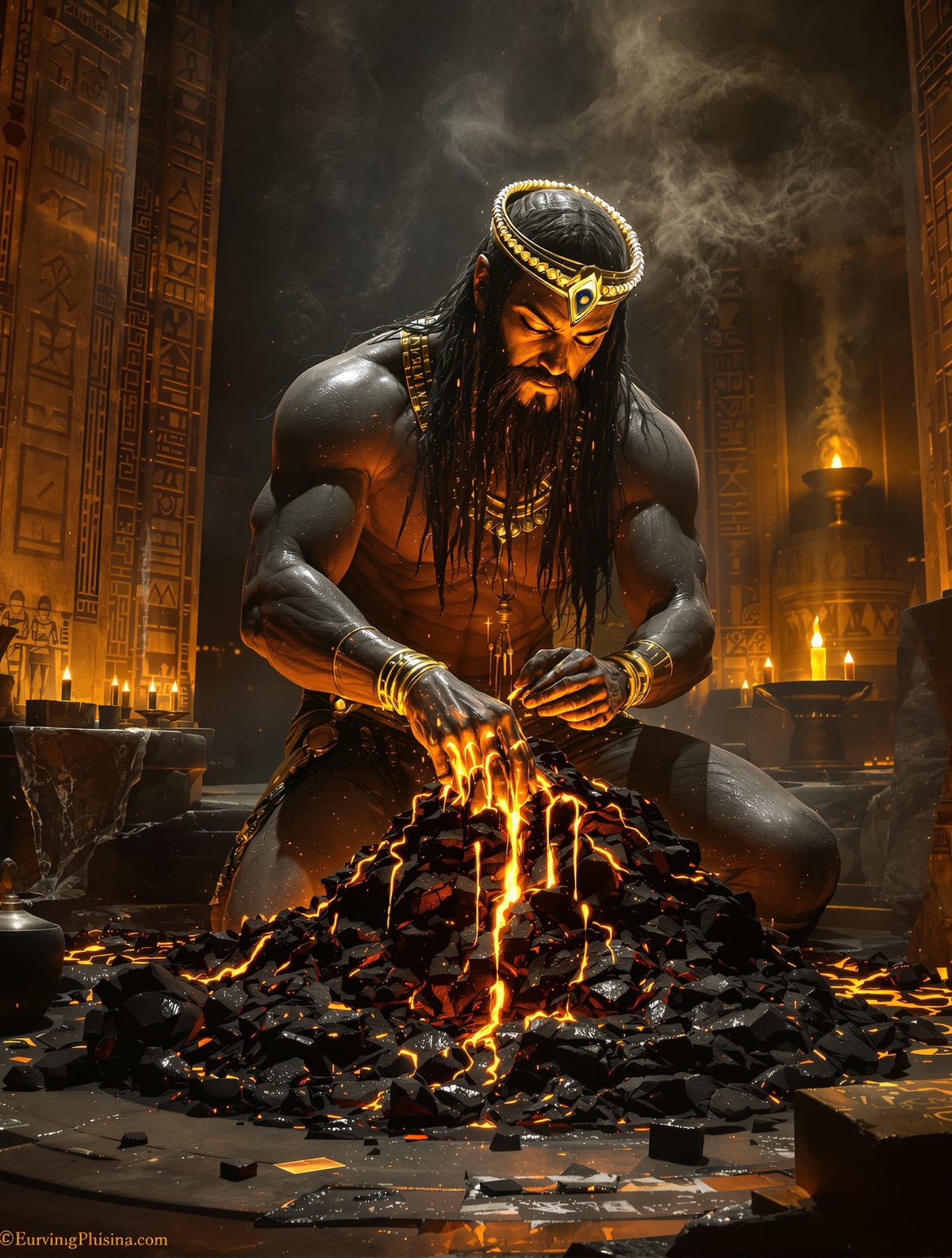
Enki stood before the assembly and revealed his sacrificial solution. He would entwine his divine essence with the earth itself. From his own body, he would release his lifeblood, pouring it into the clay of the earth. This act of divine self-wounding was both a physical and a cosmic gesture, binding the heavens and earth in a new form of life. So from Enki's life force, humanity was fashioned — beings neither entirely divine nor wholly mundane, but borne of both.
Clay and Blood: A Divine Alchemy
The process was more than mere symbolism. For the Sumerians, clay was not just mud but the primordial element from which all life had arisen. The fusion of Enki’s blood with this ancient clay was a profound act of creation, akin to a sacred alchemy. In the Sumerian worldview, which teemed with both myth and reality, they saw humanity as a tangible connection between the ephemeral and the eternal.
The first humans, so the legend goes, emerged sticky from the earth, molded by the gods’ hands. These new creatures bore the characteristics of their divine progenitors — intelligence to shape the world, resilience to endure its challenges, and the gift of speech to echo the gods’ voices. And in their veins coursed a diluted essence of Enki’s wisdom.
From Servants to Cultivators of the Earth
Once wrought from clay and spirit, humanity embarked on its first and greatest task — to relieve the gods from the endless cycle of labor. They took up tools and toiled under the sun-drenched skies of Mesopotamia, building cities, harvesting the fertile crescent’s abundant yield, and crafting the narrative of civilization.
Yet, in this servitude was also freedom. As humans mastered agriculture, laid bricks for great cities, and weaved stories, they transcended their initial purpose. They became innovators and custodians of culture. The birth of state governance, legal systems, and recorded history in Sumer thus became the natural extension of Enki’s creation. Humanity, with the stewardship of earth placed upon their shoulders, began to shape their world just as the gods had before them.
The Mystery and Wisdom of Enki
The tale of Enki’s self-sacrifice conveys insights far beyond its ancient narrative layers. We see it echo through time. Why did Enki choose to engender humanity? Was it merely for labor or something greater? Enki, often depicted as a trickster, understood the wisdom of balance and harmony. By mingling his blood with clay, he introduced a new order — one where humanity, though burdened, was also empowered to think, create, and innovate.
Lesser known is how Sumerians viewed this act within their cosmology. It was not uncommon for ancient myths to intertwine blood with life. The very rivers of Mesopotamia, viewed as lifelines of civilization, were seen as the veins of Enki, carrying his essence through the landscape. This mythological perception reinforced not just their creation but a deep-seated respect for the environment as a divine partnership.
The Legacy of Clay and Blood
What does this ancient Sumerian tale teach us today? On the surface, it reveals a foundational belief in cooperation between the divine and the earthly. More profoundly, it speaks to the potential within each human to bear the divine spark of innovation and resilience. The story of Enki and his blood reminds us that humanity, born from a god’s wound, is destined to strive and create, to balance toil with wisdom, and to seek harmony with the world around us.
In these challenging times, as we confront our own burdens, the myth of Enki offers a poignant reflection. Just as humanity was born from a divine act of sacrifice to alleviate the toil of gods, perhaps it is within our ability to rise above our struggles, to transform pain into progress, and to reach for the wisdom of the stars, no matter how deeply we are rooted in the humble clay of our origins.