Picture this: the great cosmic council of gods convenes for the most momentous decision in creation's history. Divine beings with power over thunder, iron, wisdom, and war gather in their celestial realm, their voices echoing across dimensions as they debate the very architecture of reality. But there's something wrong with this picture—half the seats are empty. The goddesses have been banished, dismissed as irrelevant by their male counterparts who believe they alone possess the wisdom to govern existence itself. What happens next would become one of the most profound cautionary tales in human mythology, buried for centuries beneath colonial interpretations that stripped away its revolutionary message about power, gender, and the delicate balance that keeps worlds alive.
The Divine Council That Changed Everything
Long before European ships touched the shores of what we now call Nigeria, the Yoruba people understood something that modern boardrooms are still learning: exclude the feminine voice at your own peril. In their rich cosmology, dating back over a thousand years, this wisdom was encoded in the story of Oshun and the arrogant council of male orishas—divine beings who serve as intermediaries between humans and the supreme creator, Olodumare.
The trouble began when Olodumare decided to reorganize creation itself. The supreme deity summoned seventeen orishas to form an elite council tasked with restructuring the cosmos. Among them was Oshun, the only female orisha selected—a goddess whose very essence embodied fertility, sensuality, rivers, and the mysterious force that makes life possible. The other sixteen were male orishas, including powerhouses like Obatala (the creator of human bodies), Ogun (master of iron and war), and Shango (lord of thunder and lightning).
But here's where the story takes a fascinating turn that most sanitized versions omit: the male orishas looked at their lone female colleague and made a decision that would nearly destroy existence. They voted her out. Not because she lacked wisdom—Oshun was renowned for her intelligence and diplomatic skills. Not because she lacked power—her dominion over fertility made her one of the most essential forces in creation. They excluded her for one reason: she was a woman, and they believed women had no place in the serious business of cosmic governance.
When Rivers Run Backward and Seeds Refuse to Sprout
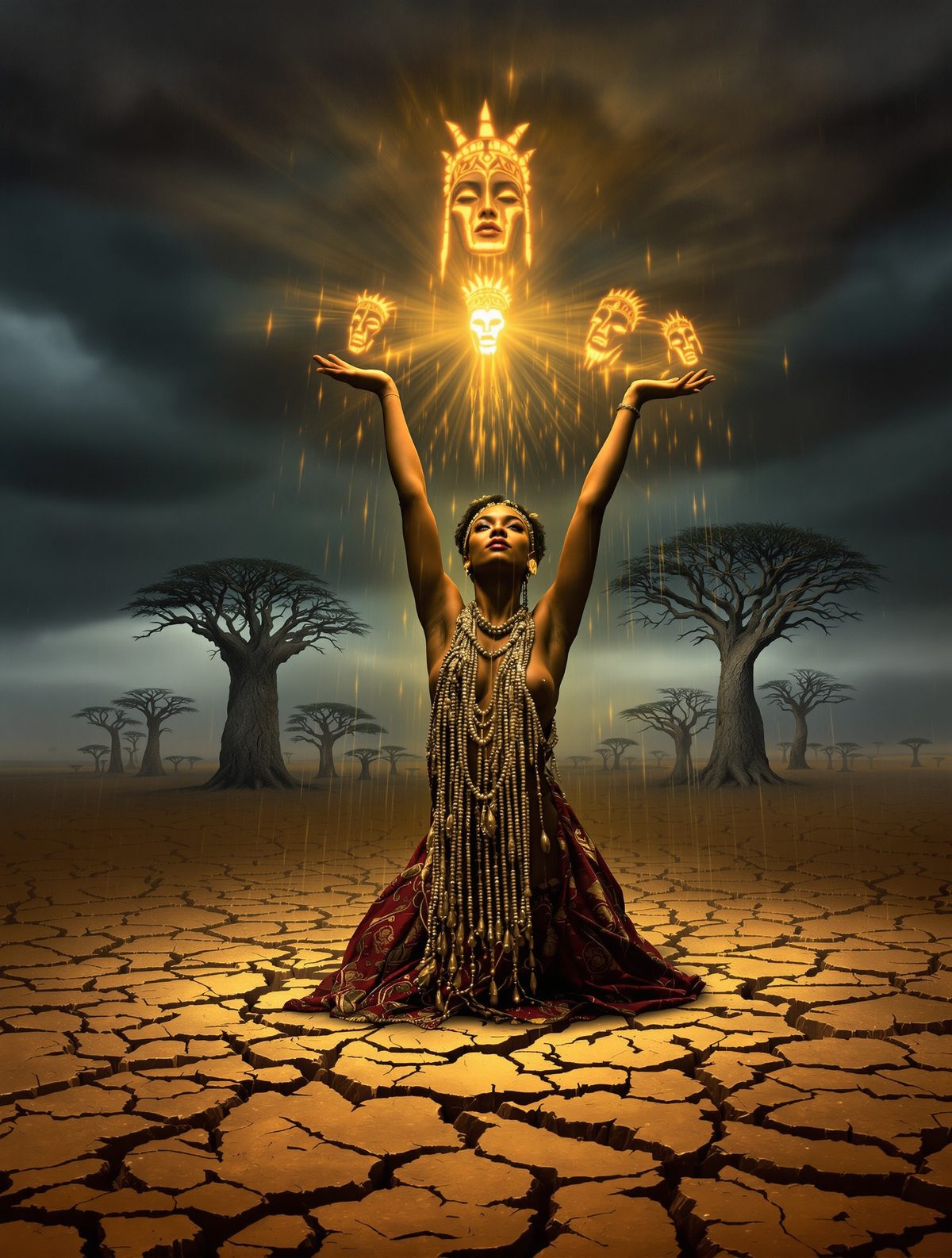
What happened next reads like an ecological nightmare written by the gods themselves. Within days of Oshun's exile, the carefully ordered systems of creation began to collapse in ways that would make modern climate scientists shudder. The rivers that had flowed for millennia suddenly reversed their courses or dried up entirely, their beds cracking like ancient pottery. Crops withered in the fields despite perfect weather, their roots unable to draw sustenance from soil that had become mysteriously barren.
Women across the earthly realm found themselves unable to conceive, as if the very spark of new life had been snuffed out at its source. The Yoruba understanding of àṣẹ—the divine force that makes things happen, that enables growth and change—seemed to have vanished from the world. Even the male orishas' own powers began to malfunction. Shango's thunderbolts fell like dead weight from the sky. Ogun's iron crumbled to rust at his touch. Obatala's attempts to create new humans resulted in lifeless clay forms that refused to draw breath.
Archaeological evidence from Yoruba settlements suggests this myth may have been inspired by actual drought periods that devastated the region, possibly during the medieval warm period between 950-1250 CE. But the Yoruba understanding went deeper than mere climate: they recognized that when feminine wisdom is systematically excluded from decision-making, entire civilizations can collapse from within.
The Silent Rebellion of the Life-Giver
Here's what makes this story truly revolutionary: Oshun didn't rage or declare war on her male colleagues. She didn't unleash floods or plagues in revenge. Instead, she did something far more devastating—she simply withdrew her essence from creation. This wasn't passive aggression; it was a masterclass in understanding systemic power.
The Yoruba concept of feminine power, embodied in Oshun, isn't about domination through force—it's about the recognition that life itself depends on feminine energy. Without her blessing, nothing could grow, reproduce, or flourish. The male orishas had all the traditional markers of power—control over war, technology, wisdom, and natural forces—but they discovered that these mean nothing without the foundational force that makes existence possible.
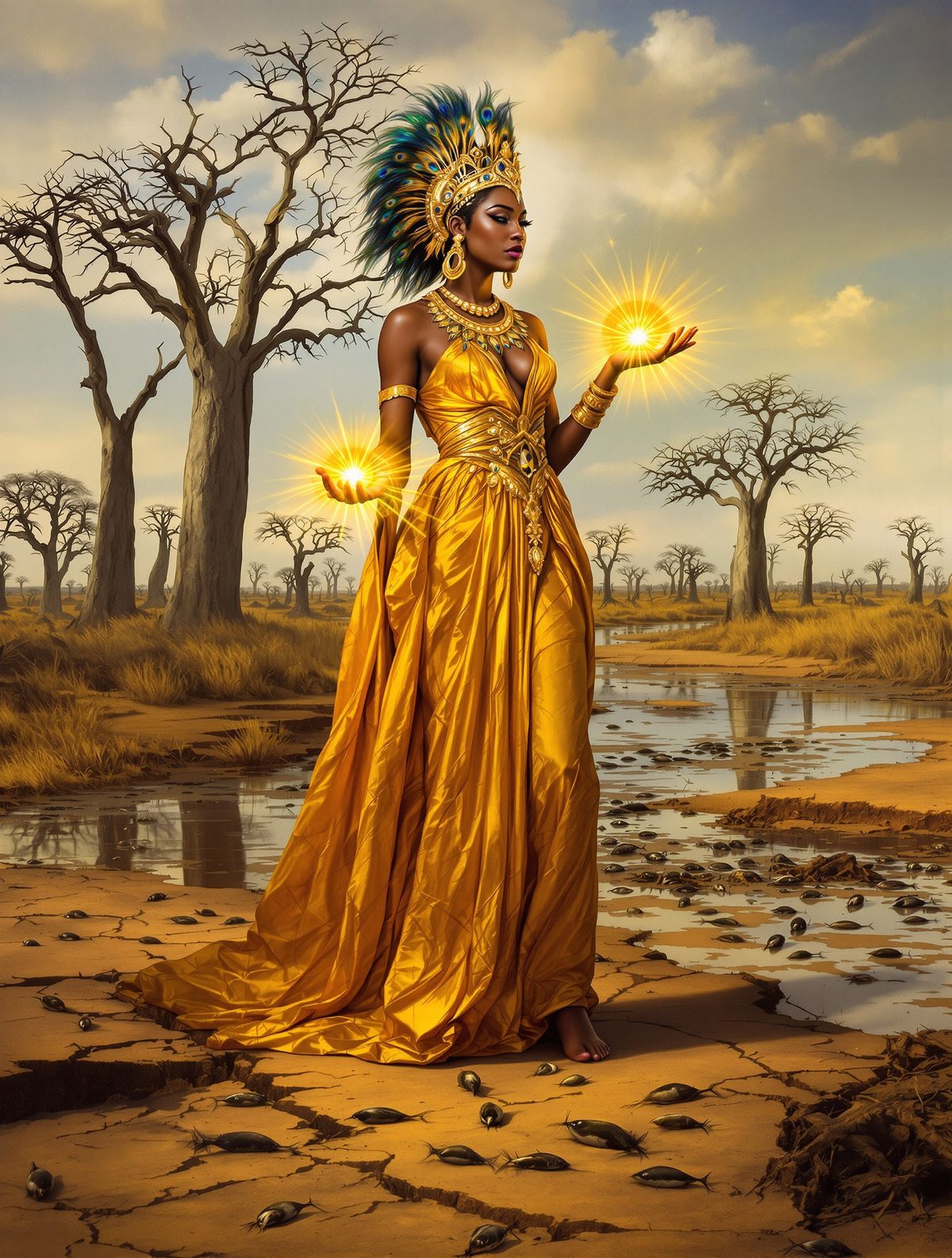
Oshun's withdrawal reveals a sophisticated understanding of what modern feminists call "essential labor"—the often invisible work that keeps societies functioning. In Yoruba cosmology, this labor isn't just about childcare or domestic duties; it's about the fundamental creative force that allows anything new to emerge in the world. When Oshun retreated to her palace by the river, she took with her the very possibility of tomorrow.
The Desperate Journey to the Source
As creation teetered on the brink of collapse, the male orishas finally realized their catastrophic mistake. But here's a detail that many versions of this story overlook: they didn't immediately understand what had gone wrong. Initially, they blamed everything except their own actions. They consulted oracles, performed elaborate rituals, and tried to solve the crisis through the same masculine-dominated approaches that had created it in the first place.
It was only when they finally approached Olodumare—the supreme creator who transcends gender—that the truth was revealed. The divine response was swift and uncompromising: "How did you expect creation to continue without the mother of fertility? How did you think new life could emerge when you banished the goddess of life-giving waters?"
The male orishas found themselves in the humiliating position of having to journey to Oshun's river palace, not as equals offering negotiation, but as supplicants begging for forgiveness. Traditional Yoruba praise songs describe this journey in vivid detail: the proud gods walking along dried riverbeds, their magnificent robes covered in dust, their powers useless in the face of a world that had forgotten how to grow.
The Honey That Rebuilt the World
When the male orishas finally reached Oshun's palace, they encountered something that shattered their assumptions about power and weakness. The goddess hadn't been waiting in bitter isolation. Instead, she had been tending to her own realm, where honey still flowed like rivers and flowers still bloomed in impossible profusion. She had been nurturing the seeds of renewal, waiting for the moment when balance could be restored.
But Oshun's forgiveness came with conditions that would reshape the cosmic order forever. She demanded not just reinstatement to the council, but recognition of the principle she represented: that sustainable power requires the integration of masculine and feminine wisdom. The male orishas had to acknowledge that their strength meant nothing without her nurturing, their plans were worthless without her insight into the rhythms of growth and renewal.
The moment Oshun agreed to return, the world exploded back to life with a force that exceeded anything that had come before. Rivers didn't just resume their courses—they carved new channels that were more beautiful than the old ones. Seeds didn't just sprout—they grew into plants that bore fruit sweeter than honey. The very fabric of creation seemed to have learned from the crisis, emerging stronger and more resilient.
Why Ancient Wisdom Feels Startlingly Modern
This thousand-year-old story reads like a prophecy for our current moment. From corporate boardrooms where women's voices are still systematically marginalized to international councils where feminine perspectives on conflict resolution are dismissed as "too soft," we're living through our own version of the male orishas' catastrophic mistake.
The environmental crises that define our era—climate change, biodiversity loss, soil depletion—might be understood through Oshun's lens as symptoms of systems that have excluded feminine wisdom about sustainability, interconnection, and long-term thinking. Like the male orishas, we've built civilizations that prioritize domination over nurturing, extraction over regeneration, competition over collaboration.
But perhaps most powerfully, Oshun's story offers a roadmap for renewal. It suggests that the feminine force in creation—whether embodied by women or by the feminine aspects of all genders—doesn't need to destroy the existing order to transform it. Sometimes the most revolutionary act is simply to withdraw support from systems that cannot sustain life, and to begin cultivating the seeds of what comes next.
The Yoruba understood something that we're only beginning to rediscover: that true power isn't about who can shout the loudest or wield the biggest weapon. It's about who can create the conditions for life to flourish. And that wisdom, flowing like honey-sweet water from an ancient river, might just be the key to healing our broken world.