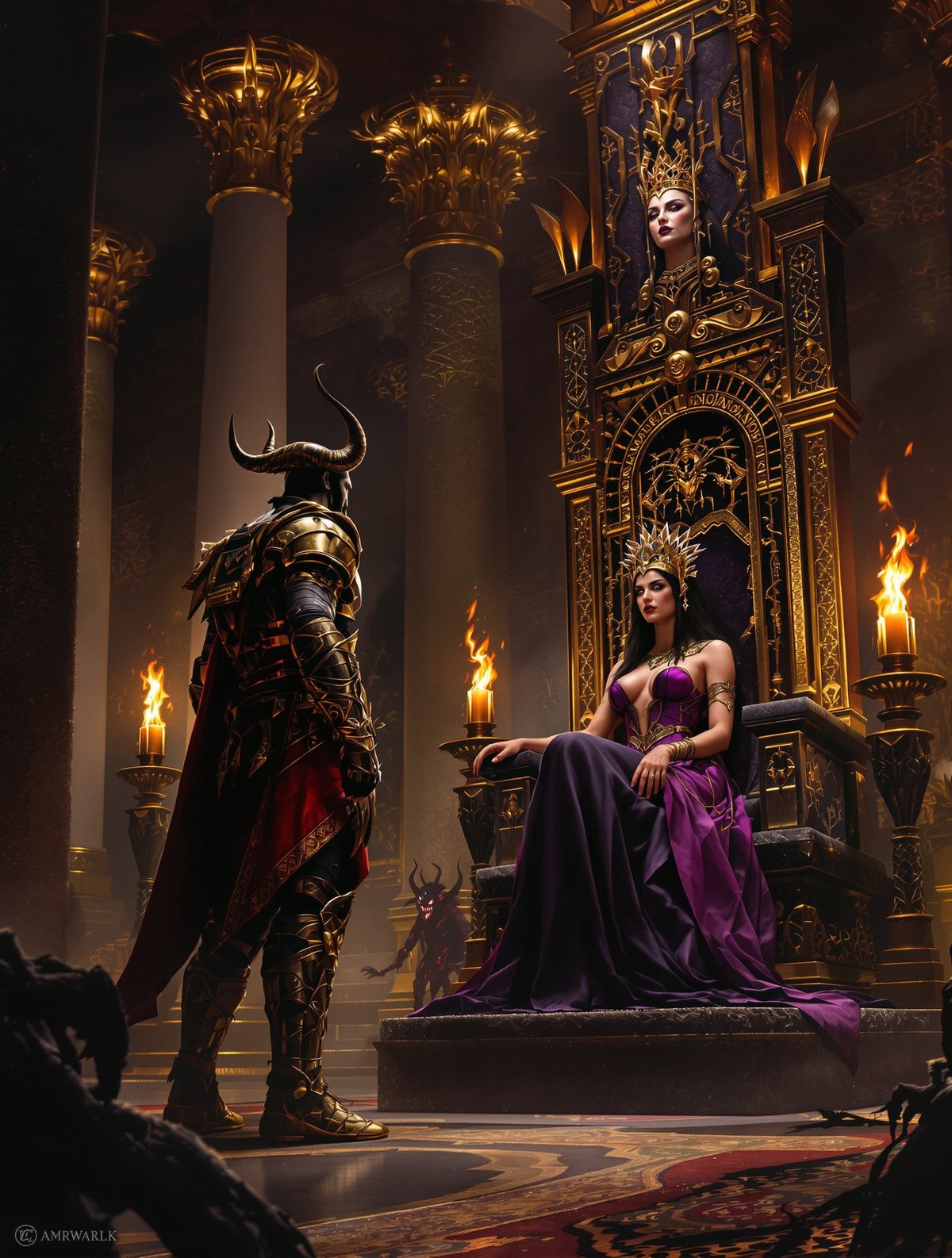
In the shadowed halls beneath the earth, where no sunlight ever dared to penetrate, Queen Ereshkigal sat upon her obsidian throne. Her pale fingers drummed against the armrests as she gazed into the darkness, listening to the distant rumble of approaching footsteps. Not the shuffling gait of the newly dead—these steps rang with purpose and fury. Someone was coming for her, and they weren't asking permission.
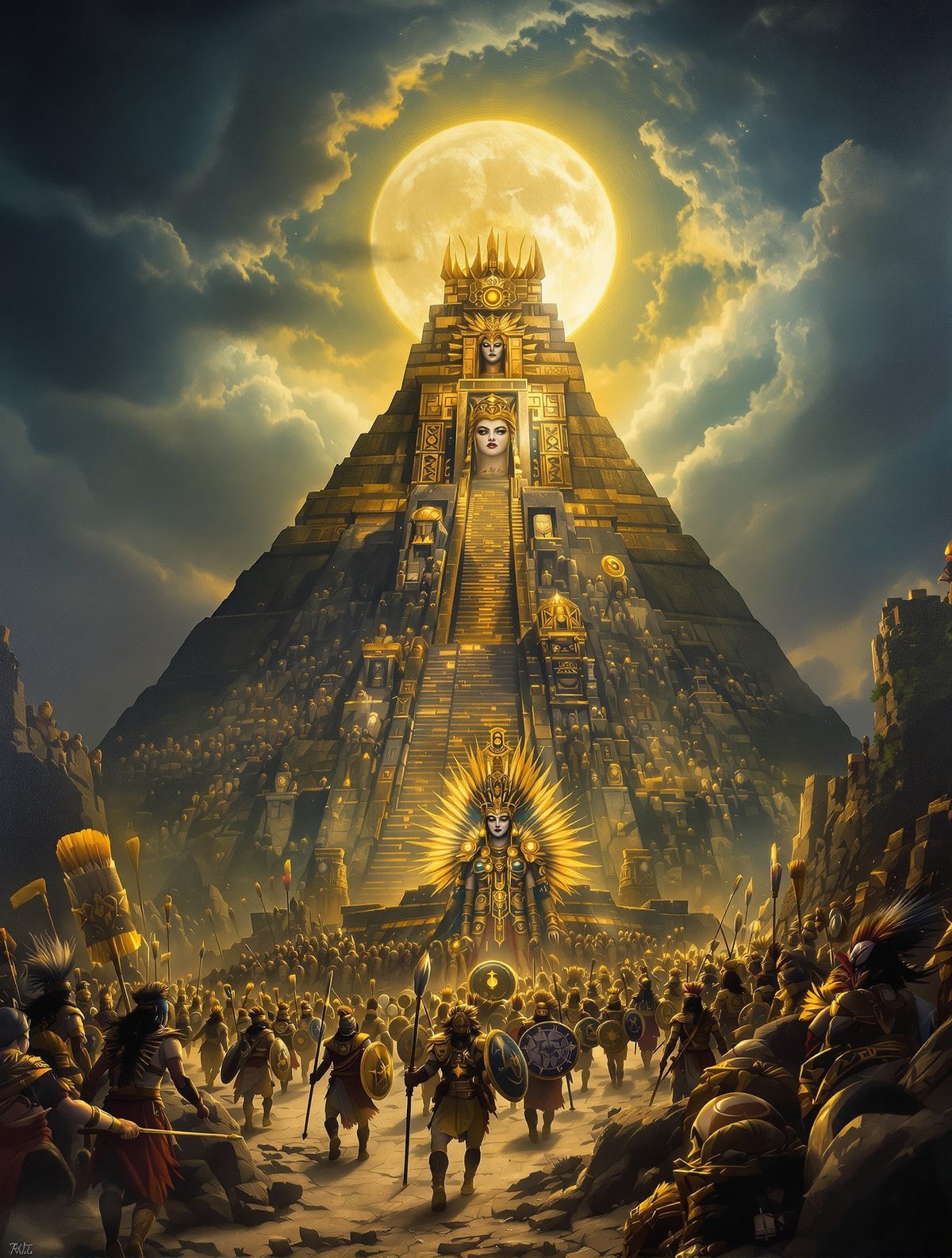
Above ground, storms raged across ancient Mesopotamia as Nergal, god of war, plague, and scorching desert winds, marshaled his demonic army. His eyes blazed with divine wrath as fourteen grotesque demons flanked him—creatures with iron claws, serpent tongues, and wings that blocked out the moon. Tonight, the natural order would be shattered. Tonight, a god would storm the gates of the underworld itself.
What happened next would become one of the most passionate and politically charged love stories in all of ancient literature—though most people have never heard of it.
The Insult That Shook the Cosmos
The trouble began, as many divine disasters do, at a dinner party. The great gods had gathered for a celestial feast around 1600 BCE, according to the Akkadian tablets that preserve this tale. Anu, the sky god, hosted the affair, and invitations were sent to both the heavenly realm and the underworld. But Ereshkigal, bound to her dark kingdom by cosmic law, could not ascend to join the festivities. Instead, she sent her vizier, Namtar, to represent her and collect her portion of the sacrificial meat.
When Namtar arrived in the great hall, protocol demanded that all the gods rise in respect—all except Nergal. Whether from arrogance, ignorance, or deliberate slight, the plague god remained seated as Ereshkigal's representative entered. The insult reverberated through both realms like a cosmic thunderclap.
Ereshkigal's rage was immediate and absolute. "How dare this upstart god show such disrespect to the Queen of the Dead?" she seethed. Her fury shook the foundations of the underworld, and the newly arrived spirits cowered in terror. She demanded that Nergal be brought before her—to bow properly or face eternal torment in her domain.
An Army Marches on Hell
But Nergal was not the kind of deity to go quietly. When Ea, the wise water god, informed him of Ereshkigal's summons, Nergal's response was characteristically explosive. He would go to the underworld, yes—but not as a supplicant. He would go as a conqueror.
The preparations were methodical and terrifying. Nergal crafted fourteen demons, each more horrifying than the last. Their names alone—preserved in the ancient tablets—were enough to strike fear: Mukil-res-lemutti ("Grasper of Evil"), Humut-tabal ("Swift Destroyer"), and Sah-mashkinu ("Tormentor of Souls"). These weren't mindless monsters but carefully designed weapons of divine warfare, each with specific powers to overcome the defenses of the underworld.
The assault began at sunset. Nergal and his demon army descended through the seven gates of the underworld, overwhelming each guardian in turn. The gatekeeper Nedu, who had never failed to stop an unauthorized entrance, fled in terror. The very architecture of hell buckled under the weight of divine fury as Nergal's forces carved a path straight to the throne room.
When Gods Collide
Picture the scene: the great throne room of the underworld, lit by flickering flames that cast dancing shadows on walls carved with the names of every human who had ever died. Ereshkigal, magnificent and terrible, sat motionless on her throne of polished bone and black stone. Her hair flowed like liquid night, and her eyes held the cold fire of distant stars. She had ruled this realm since time immemorial, unchallenged and absolute.
Then the doors exploded inward.
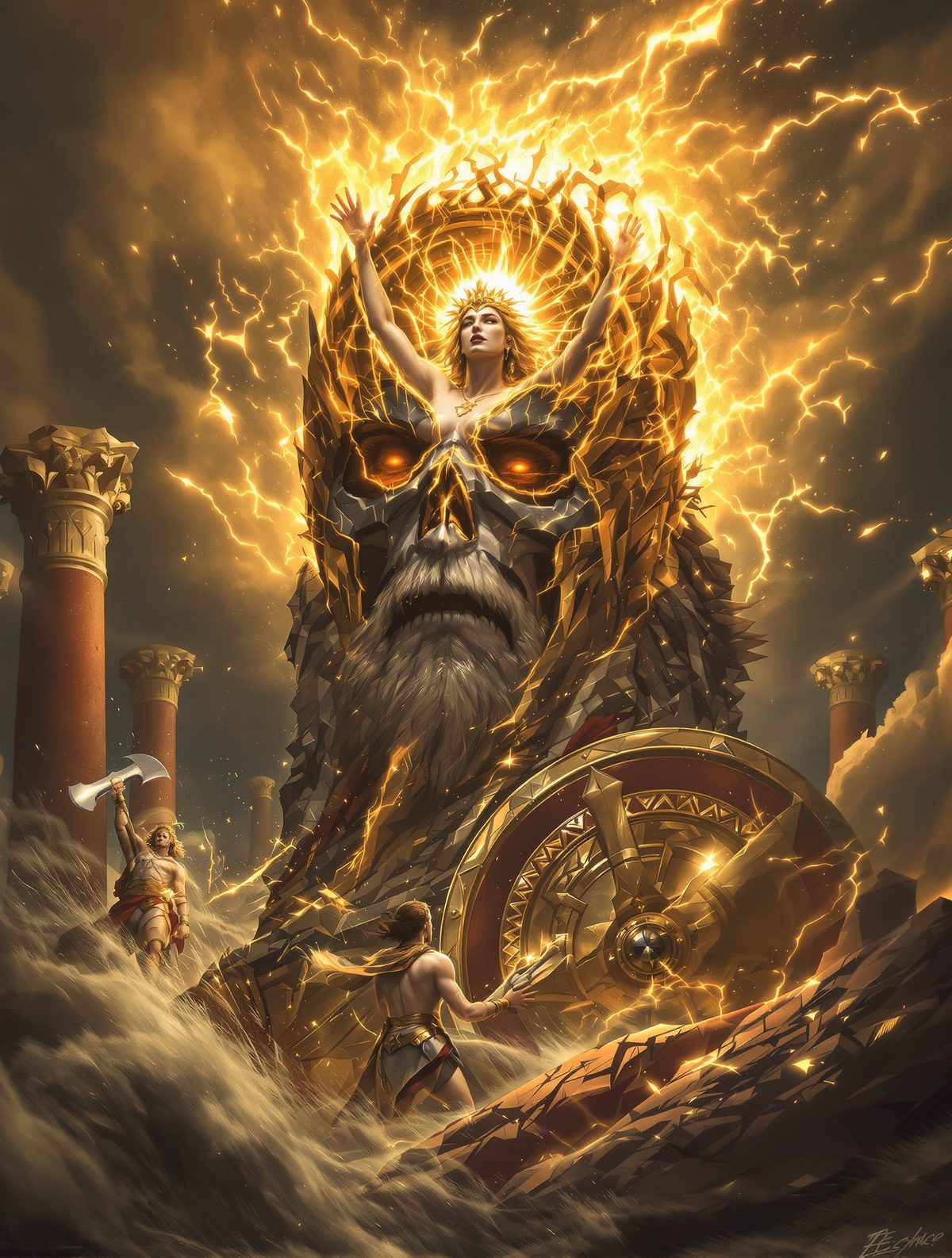
Nergal strode through the wreckage, his demon army flowing around him like a tide of nightmares. His divine radiance—normally invisible to mortal eyes—blazed forth, illuminating the chamber with an otherworldly light. He was war incarnate, death personified, plague made manifest. In his hand, he carried the sword that could cleave mountains.
The two deities faced each other across the throne room, and for a moment that lasted an eternity, neither moved. Here was power meeting power, divinity confronting divinity. The very air crackled with potential violence.
And then something unprecedented happened.
Love Conquers War
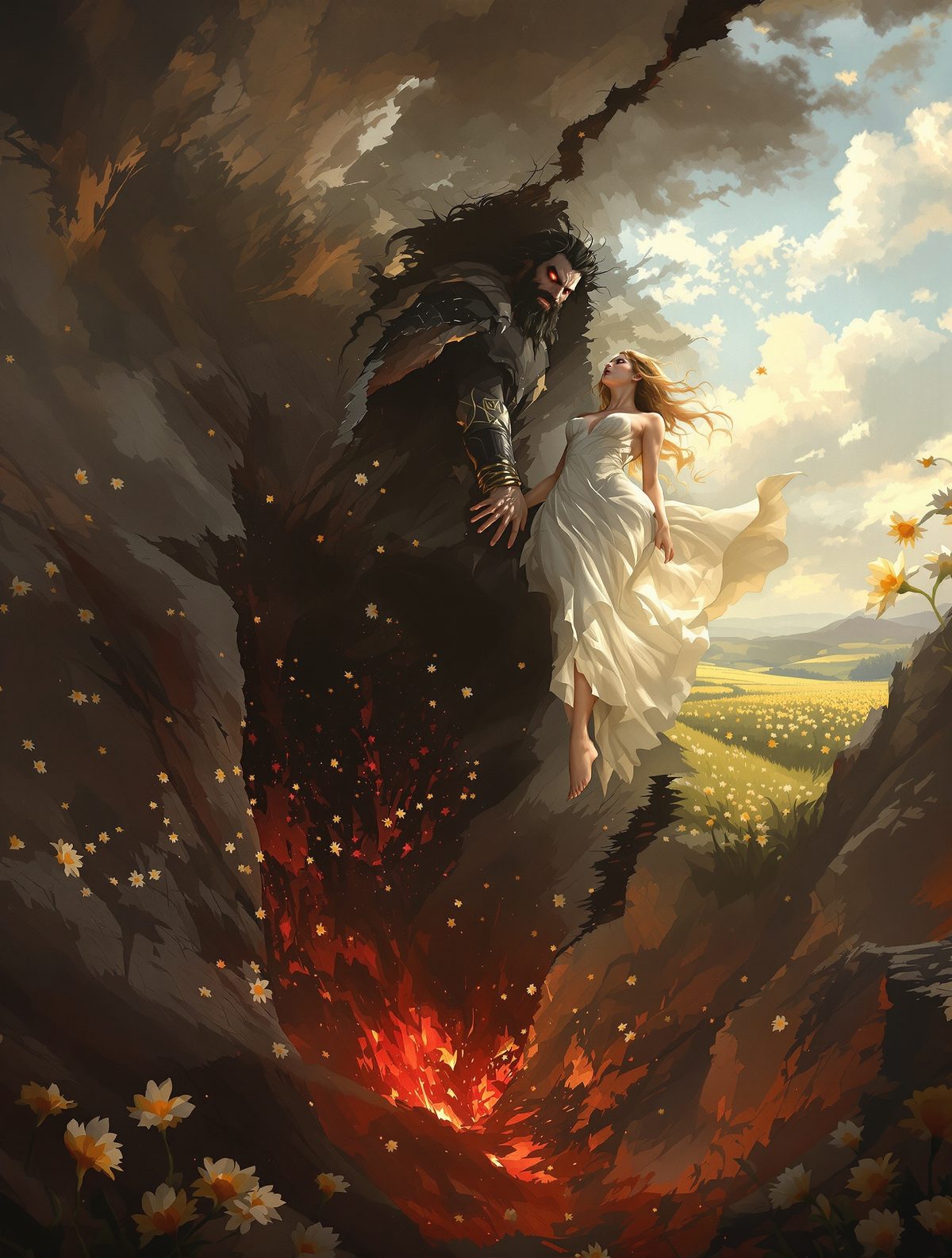
Instead of raising his sword, Nergal let it fall from his grasp. The weapon that had carved rivers and split the sky clattered uselessly to the stone floor. Instead of demanding submission, he found himself captivated by the dark majesty before him. Ereshkigal, prepared for battle, felt her own divine wrath cool into something altogether more dangerous—fascination.
What the ancient scribes recorded next was remarkable in its frankness. The two gods, moments before locked in cosmic confrontation, instead found themselves locked in passionate embrace. For six days and seven nights, they made love on the throne of the underworld while the cosmos held its breath above them. The demons Nergal had brought as instruments of war became witnesses to the most unlikely romance in all mythology.
But this wasn't just divine lust—it was a political revolution. Ereshkigal, who had ruled alone for eons, suddenly faced the possibility of sharing power. When their passion finally cooled, she made Nergal an offer that would reshape the underworld forever: "Stay with me, and rule as king beside my throne."
The tablets record different endings to this cosmic love story. In some versions, Nergal accepts immediately, transforming from conqueror to co-ruler in the space of a heartbeat. In others, he flees back to the upper world, only to discover that mortal pleasures have lost all meaning after tasting divine love. Inevitably, he returns to claim both Ereshkigal and his place as king of the dead.
The Queen Who Rewrote the Rules
What makes this myth extraordinary isn't just its passionate content—it's the revolutionary nature of its politics. Ereshkigal was one of the few female deities in the Mesopotamian pantheon who wielded absolute power. Her domain was vast, her authority unquestioned. Yet when love struck, she chose partnership over solitary rule.
This wasn't weakness—it was strategic genius. By making Nergal her consort rather than her conqueror, Ereshkigal retained her status while gaining a powerful ally. The god of war became the enforcer of her justice. The bringer of plague became the guardian of natural death. Their union represented a balance between chaos and order, violence and law, that would influence how ancient peoples understood both love and power for millennia.
Archaeological evidence from cities like Babylon and Nineveh shows that this divine romance had real-world impact. Temples dedicated to both deities often featured dual thrones, and marriage ceremonies invoked their names as protectors of passionate but stable unions. The idea that love could transform enemies into partners became a cornerstone of Mesopotamian storytelling.
Echoes Across Eternity
Today, when we speak of explosive attraction or say that "opposites attract," we're unconsciously echoing a story that's nearly four thousand years old. The tale of Nergal and Ereshkigal resonates because it captures something eternally true about human nature: the thin line between conflict and desire, the way passion can transform our deepest intentions, and the radical vulnerability required for true partnership.
In our modern world of dating apps and divorce statistics, there's something refreshingly honest about a love story that begins with invasion and ends with shared power. These ancient gods didn't pretend that love was easy or that strong people don't clash. Instead, they showed that the most powerful unions might come from learning to fight with someone rather than against them.
Perhaps that's why this story was left out of the textbooks—it's far too subversive, too passionate, too honest about the beautiful chaos that real love creates. But in the shadow-carved halls of the underworld, where a war god learned to love and a death queen chose to share her throne, we find one of humanity's most enduring truths: sometimes the greatest victories come not from conquest, but from surrender.