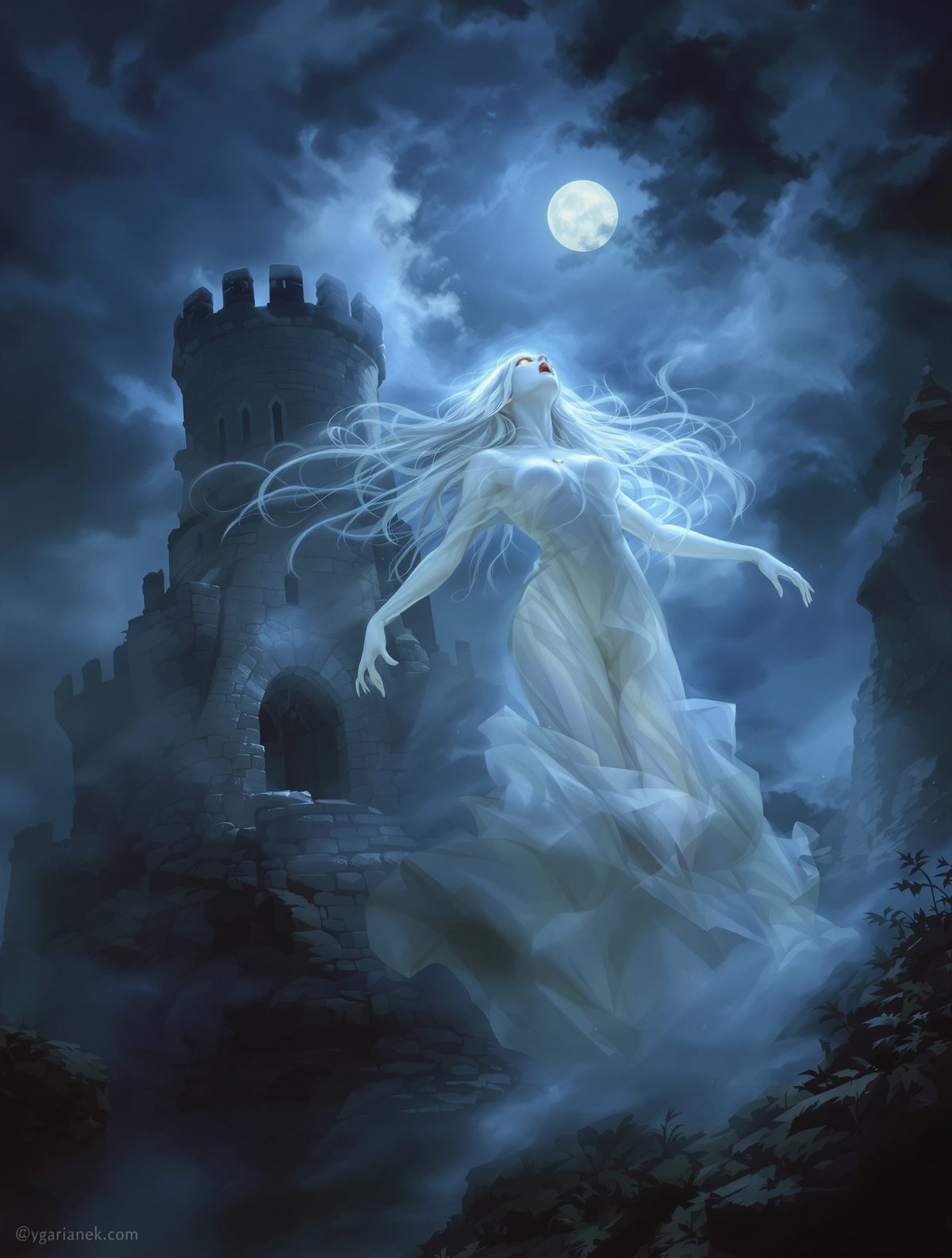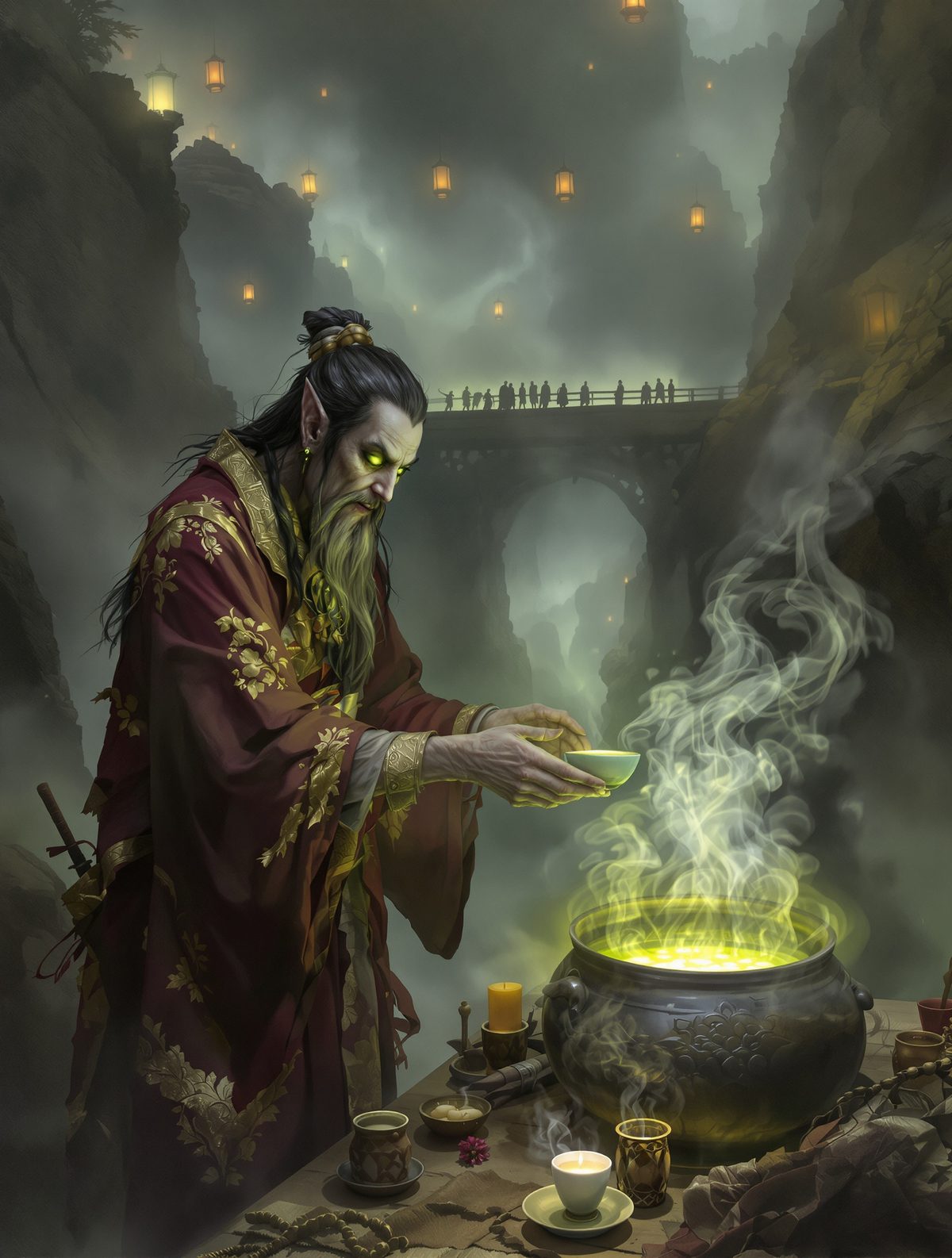
In the frozen halls of Jötunheim, where frost giants guard their most precious treasures, a deception was about to unfold that would change the very nature of human creativity forever. The year was beyond mortal reckoning, in the time when gods walked between worlds like men cross bridges. And in the depths of a mountain stronghold called Hnitbjörg, three vats of golden liquid sat under the watchful eye of a giant's daughter—liquid so potent that a single drop could transform a stammering fool into a poet whose words would outlive kingdoms.
The All-Father Odin, master of war and wisdom, had learned of this treasure through whispers carried on ravens' wings. But this was no prize that could be won through battle or bargained for with gold. This would require the most dangerous weapon in any god's arsenal: seduction.
The Birth of Divine Inspiration
To understand Odin's desperate gamble, we must first comprehend what he sought to steal. The Mead of Poetry—called Óðrerir in the Old Norse tongue—wasn't simply another magical beverage in a mythology rich with enchanted drinks. This was liquid inspiration itself, born from one of the most bizarre creation myths ever conceived by human imagination.
The story begins with a peace treaty between two warring tribes of gods: the Æsir and the Vanir. To seal their pact, both sides spat into a ceremonial cauldron—yes, you read that correctly. From this divine saliva, the gods shaped a being named Kvasir, who possessed the wisdom of both godly races combined. Kvasir became renowned throughout the nine realms for his ability to answer any question and solve any dispute with perfect insight.
But wisdom, as any student of mythology knows, often attracts the wrong kind of attention. Two dwarf brothers, Fjalar and Galar—whose names literally mean "deceiver" and "screamer"—invited the wise Kvasir to a private consultation. There, in the darkness of their mountain hall, they murdered him and drained his blood into three vessels: the cauldron Óðrerir and two bowls named Són and Boðn. Mixed with honey, Kvasir's blood became the most potent mead ever created, capable of granting divine poetic ability to anyone who drank it.
The murderous brothers didn't hold their prize for long. After killing a giant named Gilling and his wife in another treacherous scheme, they found themselves at the mercy of the couple's vengeful son, Suttungr. The massive giant gave them a choice: death, or the mead as compensation for his parents' murder. Unsurprisingly, they chose to live, and Suttungr became the new guardian of poetry itself.
The All-Father's Impossible Mission
Suttungr was no fool. He knew the value of what he possessed and took extraordinary precautions to protect it. The giant carved out a chamber deep within the mountain Hnitbjörg—a fortress of stone that could only be accessed through a needle-thin hole. There he placed the three vessels containing the mead, and there he stationed his daughter Gunnlöð as their eternal guardian.
Gunnlöð was no ordinary giant maiden. Her name, meaning "invitation to battle," hints at her formidable nature. Ancient sources describe her as both beautiful and dangerous, possessed of the keen intelligence needed to guard the most coveted treasure in the cosmos. She had sworn a sacred oath to her father that no being would taste the mead while it remained in her care.
For Odin, this presented a puzzle that couldn't be solved through his usual methods. He couldn't simply raid Hnitbjörg with his einherjar warriors—the mountain was impregnable. He couldn't send his ravens Huginn and Muninn to steal the mead—they lacked the capacity to carry such a burden. And he couldn't approach Suttungr directly, as the giant had good reason to distrust the gods, particularly one known for his cunning and oath-breaking.
Instead, Odin devised a plan so audacious it bordered on madness. He would infiltrate the giant's household not as a god, but as a mortal man seeking work.
Bölverkr the Worker: A God in Disguise
Odin's transformation was complete and masterful. Gone were his ravens, his eight-legged horse Sleipnir, and his golden spear Gungnir. In their place stood Bölverkr—meaning "evil-doer" or "worker of evil"—a travel-worn laborer seeking employment. It's worth noting that even in disguise, Odin couldn't resist a name that hinted at his true intentions.
The All-Father's first target wasn't Suttungr himself, but nine thralls working the giant's fields. In a display that would make any con artist weep with admiration, Odin offered to sharpen their scythes with a magical whetstone. The improvement in their tools was so dramatic that all nine men immediately begged to buy the stone from him.
What happened next reveals Odin's ruthless calculation. He tossed the whetstone high into the air, and in their desperation to catch it, all nine thralls managed to slit each other's throats with their newly sharpened scythes. In a single moment, Odin had eliminated Suttungr's entire workforce.
When the giant discovered his dead workers, the disguised Odin conveniently appeared at his door, offering to do the work of nine men in exchange for a single drink of his precious mead. Suttungr, faced with fields full of grain and no one to harvest them, reluctantly agreed—though he secretly planned to betray Bölverkr once the work was done.
For an entire season, Odin labored in Suttungr's fields with superhuman strength and endurance. The giant watched in amazement as his mysterious worker accomplished feats that should have been impossible for any mortal. But Odin's true goal lay not in the grain fields, but in the mountain fortress where Gunnlöð kept her lonely vigil.
Three Nights of Deception
The seduction of Gunnlöð represents one of mythology's most complex moral puzzles. Here was a being who had faithfully performed her duty for untold years, isolated in her mountain chamber with only the three vessels of mead for company. Ancient sources suggest she had not seen another living soul in decades when Odin finally found a way to reach her.
Using his shapeshifting abilities, the All-Father transformed himself into a snake and squeezed through the needle-thin opening into Hnitbjörg's heart. There he resumed human form and stood before the giant's daughter in the flickering torchlight of her underground prison.
What passed between them in those three nights has been debated by scholars for centuries. Some sources suggest Odin genuinely seduced Gunnlöð with his silver tongue and magnetic presence—after all, this was the same god who had wooed countless goddesses and mortal women. Others hint at a darker interpretation: that the lonely guardian, starved for companionship, was more victim than willing participant in the All-Father's scheme.
The Hávamál, one of our primary sources for this tale, gives us Odin's own words about the encounter: "Three nights I lay with the maiden bright, and she gave me to drink of the precious mead." But the same text also reveals his conflicted feelings about the deception, suggesting that even the morally flexible All-Father felt some guilt over his betrayal of Gunnlöð's trust.
Each night, Gunnlöð allowed her mysterious lover a single drink from the mead vessels. What she didn't anticipate was Odin's capacity for consumption. On the first night, he drained the entire cauldron Óðrerir in one tremendous gulp. The second night saw him empty the bowl Són. By the third night, only Boðn remained, and Odin consumed every drop.
The Great Escape and Its Consequences
With all three vessels emptied and their contents burning like liquid fire in his belly, Odin faced his greatest challenge yet: escape. The needle-thin opening through which he had entered was far too small for a man carrying such a burden, and he could hear Suttungr's thunderous footsteps approaching the mountain.
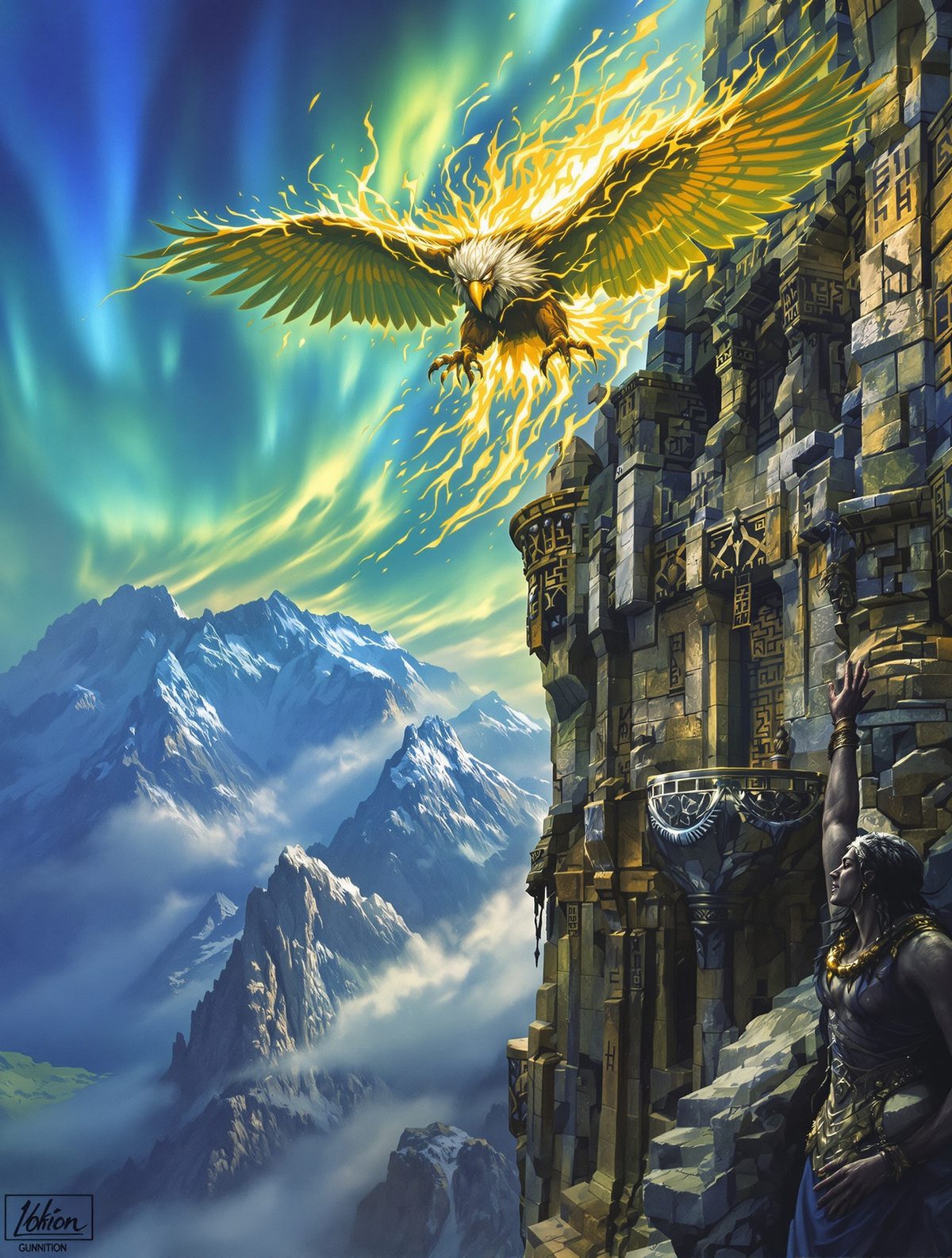
The All-Father's solution was as dramatic as it was desperate. Transforming into a massive eagle, he burst from the mountain chamber and took flight toward Asgard, his wings beating furiously as he carried the stolen mead in his gullet. Behind him, Suttungr had also assumed eagle form and was gaining ground with every wingbeat.
The chase that followed became the stuff of legend. Two giant eagles racing across the sky, one fleeing with the most precious treasure in existence, the other driven by rage and the desire for revenge. As they approached the walls of Asgard, the other gods saw their approaching lord and quickly prepared vessels to receive the precious mead.
But in his desperation to stay ahead of Suttungr, Odin had to release some of his burden. The mead that spilled from his beak as he flew—the portion he couldn't control—fell randomly across Midgard, the realm of humans. This, according to Norse tradition, is why some mortals possess natural poetic ability while others struggle to string two words together. The greatest poetry comes from the mead Odin successfully delivered to the gods, but the spillage created the world's population of amateur poets and versifiers.
Gunnlöð was left behind in her empty chamber, betrayed and alone, the treasure she had faithfully guarded for so long now lost forever. Some later sources suggest she bore Odin a son from their three nights together, but her ultimate fate remains one of mythology's unsolved mysteries.
The Price of Divine Creativity
The theft of the Mead of Poetry reveals uncomfortable truths about the nature of inspiration and artistic achievement that resonate powerfully in our modern world. Odin's willingness to murder, deceive, and betray an innocent guardian to obtain divine creativity suggests that the Norse viewed artistic genius as inherently amoral—a force that transcends conventional ethics.
This story also speaks to contemporary debates about cultural appropriation and the sources of creative inspiration. Odin didn't create the mead; he stole it from beings who had murdered its original source. The greatest poetry, the myth suggests, doesn't spring from pure inspiration but from a chain of violence, theft, and betrayal stretching back to the very beginning.
Perhaps most disturbingly, the tale of Gunnlöð anticipates modern discussions about consent and power dynamics in creative industries. The giant's daughter, isolated and vulnerable, becomes collateral damage in Odin's quest for artistic supremacy—a pattern that echoes through countless stories of male artists exploiting women for their creative ambitions.
Yet the myth also offers a more optimistic interpretation. The mead that spilled randomly across the human world suggests that true creativity cannot be completely controlled or hoarded by the powerful. Even the All-Father's perfect heist was imperfect, and from that imperfection came the democratic distribution of poetic ability to ordinary mortals.
In our age of artificial intelligence and debates about the nature of human creativity, Odin's desperate flight across the heavens carries new meaning. The question isn't whether we can steal fire from the gods—it's whether we can handle the consequences when we succeed.