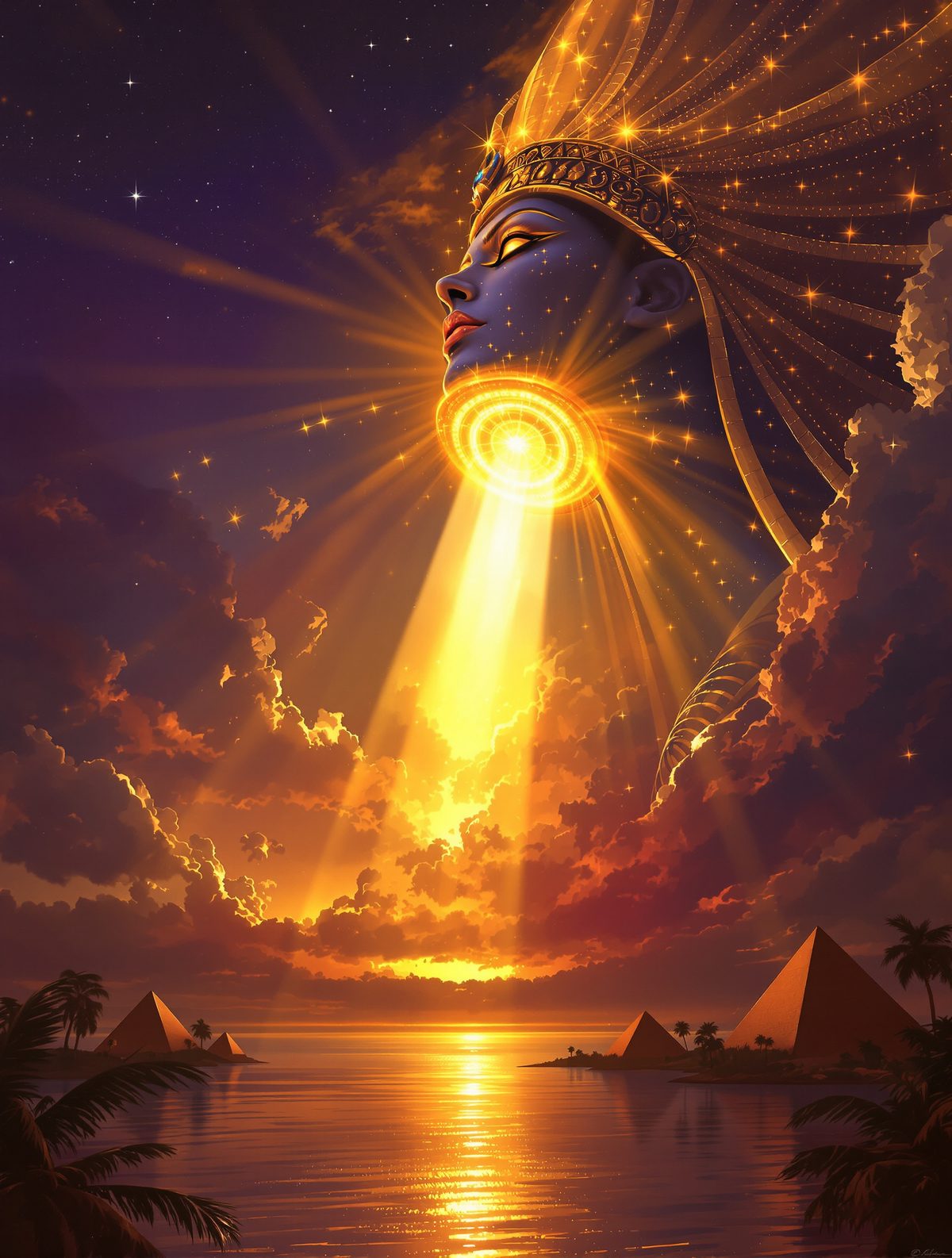
The fiery orb of the sun dips beneath the horizon, surrendering its light to twilight’s embrace. In ancient Egypt, this daily disappearance was not merely a natural phenomenon but a cosmic drama of divine proportions. As darkness crept over the Nile, the sky goddess Nut was believed to open her vast mouth, swallowing the sun god Ra whole. Each night, Ra’s radiant body journeyed through Nut’s celestial depths, waiting to be reborn at dawn. Welcome to the mythic voyage that defined Egyptian life, where the universe's balance hinged upon a mother's transformative power.
The Eternal Cycle of Swallowing the Sun
For the ancient Egyptians, the universe was a tapestry of vibrant narratives, each unraveling across the skies and rolling dunes. The tale of Nut and Ra is one such myth that vividly illustrates how the Egyptians perceived day and night, life and regeneration. According to the Pyramid Texts, circa 2400-2300 BCE, Nut, the celestial mother, was the ultimate bearer of life and the protector of the cosmos. Each night, as the blood-red sun slipped beneath the westward horizon, Nut’s action was not to extinguish it but to cradle it within her being.
This divine drama was viewed from the eyes of both myth and astronomy. While science today describes it as the Earth’s rotation, the ancient Egyptians envisaged Nut arching over the earth like a star-studded canopy, her body the eternal sky below which all of life unfurled.
The Journey Within: Ra's Celestial Passage
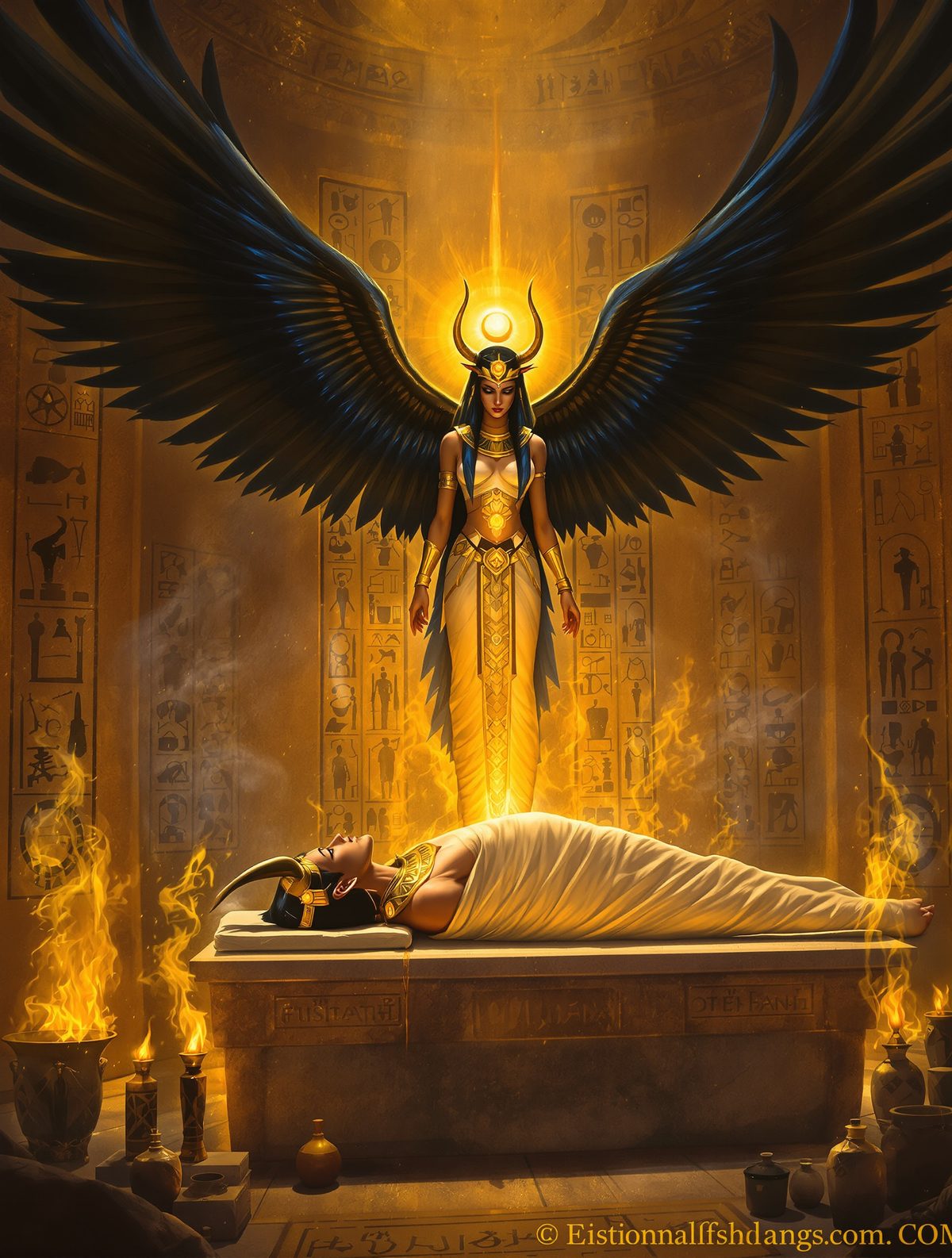
Once swallowed by Nut, Ra embarked on a perilous night journey through the Duat, the mysterious underworld that lay within Nut’s body. This voyage, rich with peril and excitement, is vividly detailed in the Book of the Dead, also known as the Book of Coming Forth by Day. Ra’s passage through the twelve hourly gates of the Duat symbolized the sun's passage through the darkest hours of the night, each hour bringing a new challenge to overcome.
The all-encompassing darkness he encountered was rife with demons and chaotic forces. Apep, the serpent of chaos, was one such foe—ever eager to devour the light. Yet Ra’s journey through these dangers was a testament to the cyclical renewal of order and the promise of a new dawn. With Nut as his vessel, his rebirth wasn’t solitary; it embodied the universe's regeneration, a powerful metaphor for the notion that death begets new life in the cycle of creation.
Myth Integral to Life and Leadership
The significance of Nut and Ra was not merely celestial but intricately woven into the fabric of daily Egyptian life. At the dawn of each day, Ra’s rebirth was mirrored in their agriculture and governance. Pharaohs, seen as earthly embodiments of Horus and successors of Ra, leveraged this myth to emphasize their role as renewing forces, bringing life and prosperity to the people, much like the sun nourishing the crops.
A visible reminder of this mythological power was the erection of obelisks, such as the ones at Karnak or Heliopolis. These stone monuments were tributes to Ra, set to catch the first and last rays of his journey. The alignment of temples and pyramids with solar and cosmic patterns speaks to the Egyptian obsession with this cosmic balance. The sun’s journey was more than a myth; it was a guiding ideology, sculpting the civilization’s spiritual and temporal aspirations.
The Forgotten Voices: Women in Myth
While the mythology of Ra often centers on his singular heroics, Nut's role was equally significant and revealing of the ancient world’s perspectives on femininity and creation. Nut’s nightly labor — swallowing Ra and nurturing him through the night — highlights the revered and indispensable role women played in both the mythic and social fabric of ancient Egypt. This myth not only elevates feminine power in cosmic creation but challenges modern interpretations of gender dynamics in historical narratives.
Interestingly, the reverence held for Nut is reflected in archaeological findings. Female figurines and amulets bearing the sky goddess’s name have been uncovered, indicating a widespread veneration that transcended into the domestic and personal spheres.
Sunrise of Significance: Relevance Today
In reflecting upon the story of Nut and Ra, one must ponder the resonance this tale holds in today’s world. Beyond its epic narrative, this myth embodies themes of renewal, resilience, and balance—universally human struggles. In an era marked by rapid change, climate crises, and societal upheaval, returning to these ancient wisdoms offers a reminder of the eternal cycle of renewal and the intrinsic power of cooperation and symbiosis.
The ancient Egyptians understood their world through a lens of divine myth that both grounded and elevated their day-to-day existence. In a storied exchange, Nut and Ra continue to teach the importance of embracing the transitional, knowing each night holds the promise of a new dawn. Through this myth, history whispers its echoes of life’s eternal dance, urging a balance between destruction and creation, darkness and light.