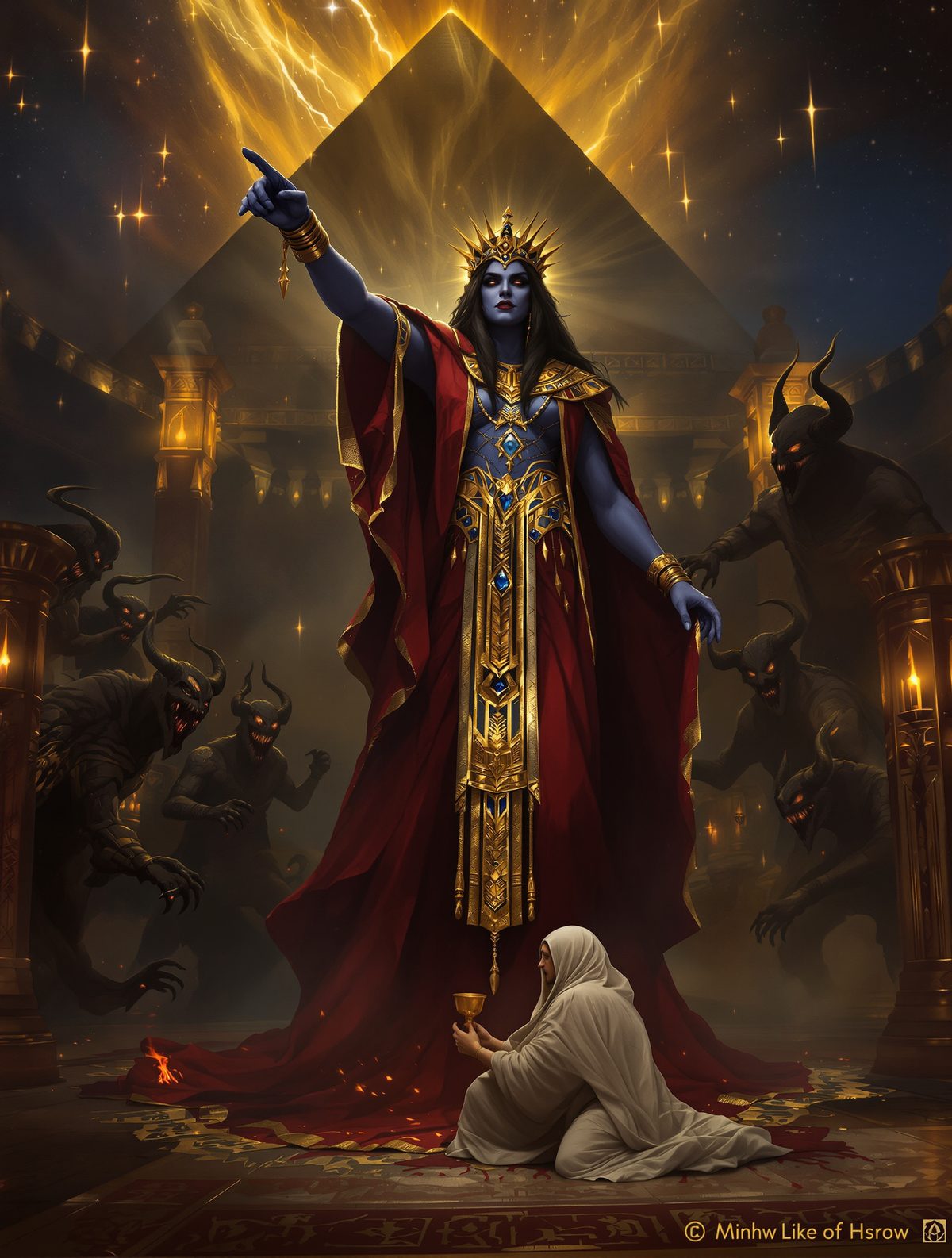
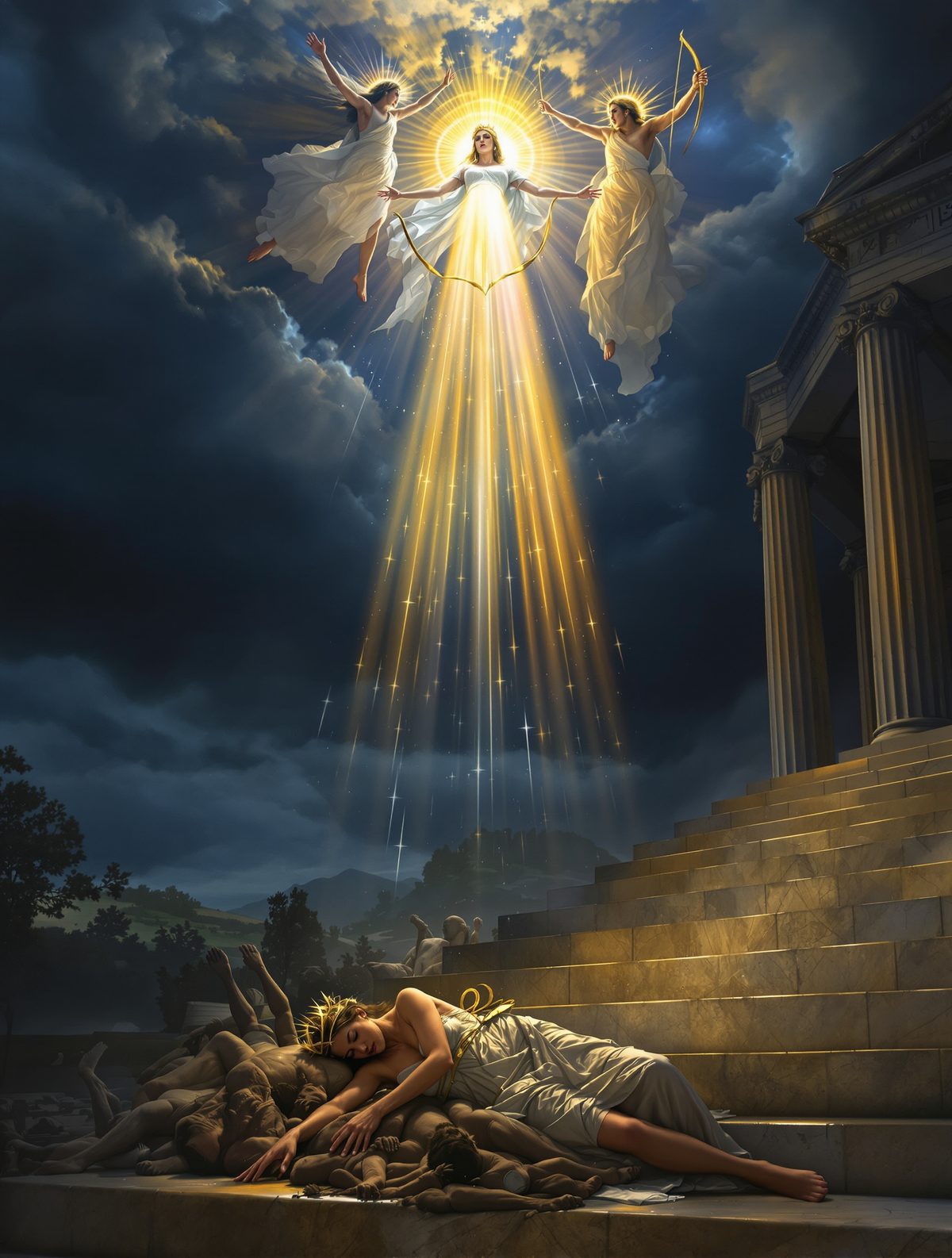
Bathed in a golden Helicon light, the land of Thebes was once bathed in the laughter of fourteen vibrant children. The tales say their smiles reflected the grandeur of their mother, Queen Niobe, whose pride cascaded beyond her palace walls into the halls of immortals. But as twilight descended upon this majestic realm, silence swept through, leaving only a chilling reminder of a mother’s hubris turning to sorrow — Niobe’s eternal tears.
The Gleam of Royalty: Niobe’s Abundance
Niobe stood as a beacon of prosperity in the mythical annals of Greece, a queen of sublime beauty and fortune. Daughter to Tantalus, king of Phrygia, and Dione, she inherited a legacy marked by divine mingling and extraordinary gifts. Thebes, her kingdom, prospered under her rule, and tales of her wealth spread over mountains and seas. Yet, it was not just her riches that captured the awe of her contemporaries.
Niobe bore fourteen children (sometimes said to be seven sons and seven daughters), known collectively as the Niobids. Their presence alone filled the Theban court with majesty and promise. In the mythic tapestry of gods and mortals, her yield was exceptional. The legends echoed about ancient banquet halls with her laughing children, a testament to her perceived divine favor. Yet beneath this grandeur lay a dangerous seed of pride.
A Bold Claim Among the Gods
In the balmy air where violet-hued hills embraced the timeless land, festival preparations were underway. In honor of Leto, mother to the formidable twins Apollo and Artemis, altars were adorned with wreaths, and hymns soared with celebratory fervor. But for Niobe, a thought lingered—a provocative belief that dared to challenge the divine order.
Spurred by her countless blessings, Niobe climbed the steps of arrogance, her words cast a shadow over ancient rituals. “Why venerate Leto?” she scolded the people. “Her reward was but two children—a mere drop in the ocean compared to mine!” She urged them to abandon the worship of Leto, for was she not more blessed, more favored by the Fates? In her audacity, Queen Niobe mocked not just a fellow mortal, but a divine advocate protected by Olympus itself.
Liquid Vengeance: The Wrath of Leto's Progeny
The lament of Leto upon hearing Niobe’s sacrilege echoed through the ethereal plains of Olympus. While Niobe’s folly was like a stone cast into water, the ripples reached Leto’s divine offspring, Apollo and Artemis. Known for his golden bow, Apollo—deity of archery, music, and truth—was matched by his sister Artemis, a huntress of unparalleled skill and the moon-like guardian of purity.
Sunrise found Thebes shrouded in ominous foreboding. Swift as shadows chased by dawn, arrows of retribution descended from the heavens. Apollo's aim was true; the sons of Niobe fell, their laughter swallowed by earth. Artemis, swift and just, seized her own bow, and soon the daughters succumbed to her celestial piety. Before the day’s end, every Niobid lay lifeless, the grandeur of Niobe now a haunting quietude.
The Mortal Memorial
Crushed by the weight of a mother’s unbearable grief, Niobe’s once-celebrated visage turned to harsh stone. In some tellings, Zeus, witnessing her ***suffering, transformed her essence into a weeping pillar, an eternal monument to presumption and the gods’ formidable power. Her watery tears, according to ancient lore, formed the River Achelous. Even as a stone, Niobe wept endlessly—humbled and helpless.
The mountain dedicated to her melancholic visage, Mount Sipylus in present-day Turkey, stands to this day. Travelers once claimed to see the outline of a woman’s face upon it, forever gazing into eternity—Niobe frozen in myth and landscape as a perpetual storyteller of caution.
Footprints in the Sands of Time
The tragic tale of Queen Niobe is drenched in lessons as poignant now as in antiquity. Her story transcends the ancient world, infiltrating the domains of art, literature, and psychology. In even humble settings, her name endures as a rallying cry against the perils of pride and reckless disdain of the sacred.
Her myth serves as a stark reminder of the delicate balance between human ambition and the hubris that can unravel lives. In today's world, a landscape populated by grandstanding and the insatiable thirst for recognition mirrors Niobe's overreach. Her story implores us to find reverence for wisdom—divine or earthly—and embrace humility.
Niobe’s legacy, carved in stone and carried by whispers through history, reminds us all that unchecked pride can lead to one’s unmaking. She stands not only as a relic of cautionary myth but as a timeless testament to the very human struggle with hubris. Like readers in her stone likeness, we too must learn to wield our ambitions with humility, lest we echo her eternal lament—weeping forever in the shadow of Mount Sipylus.