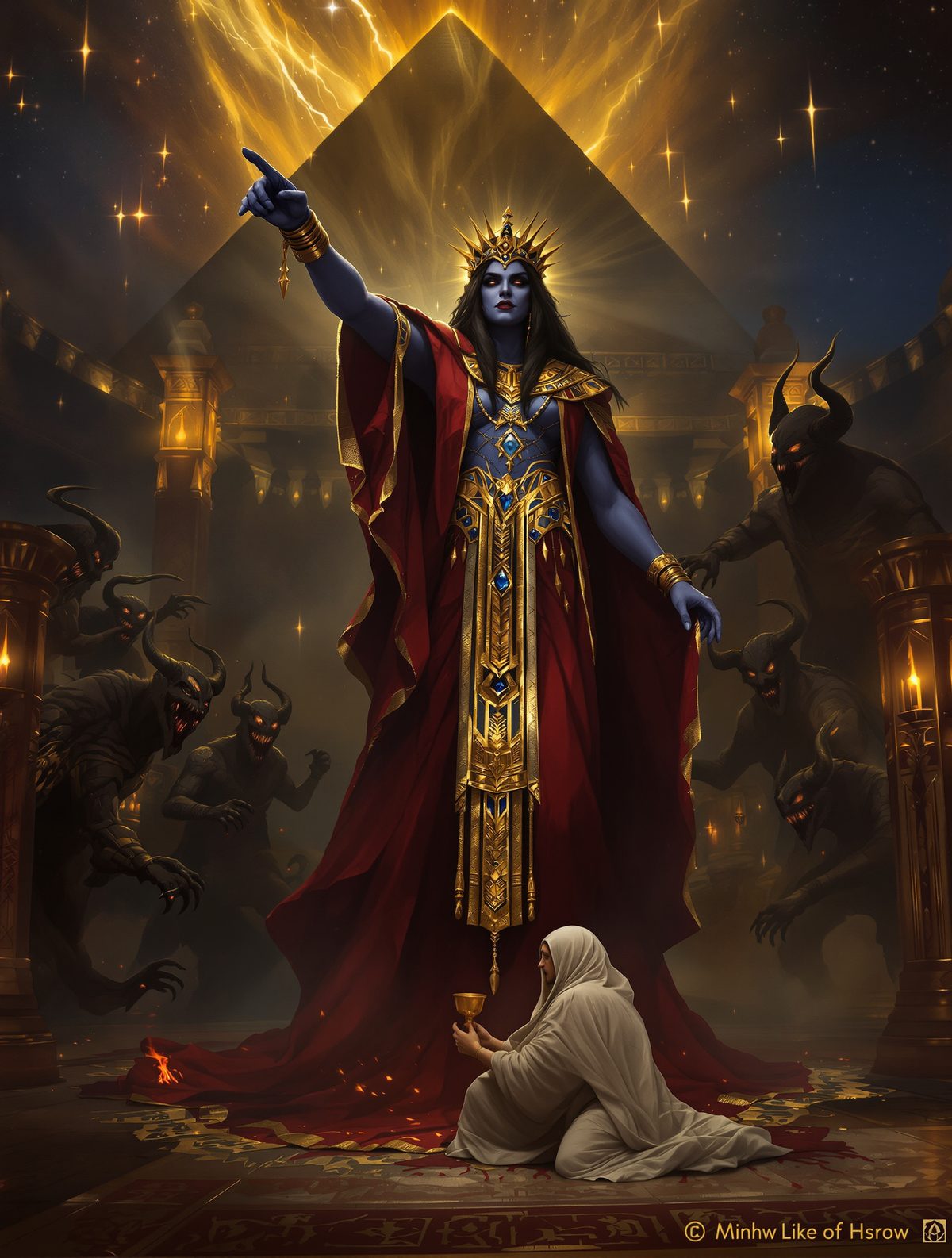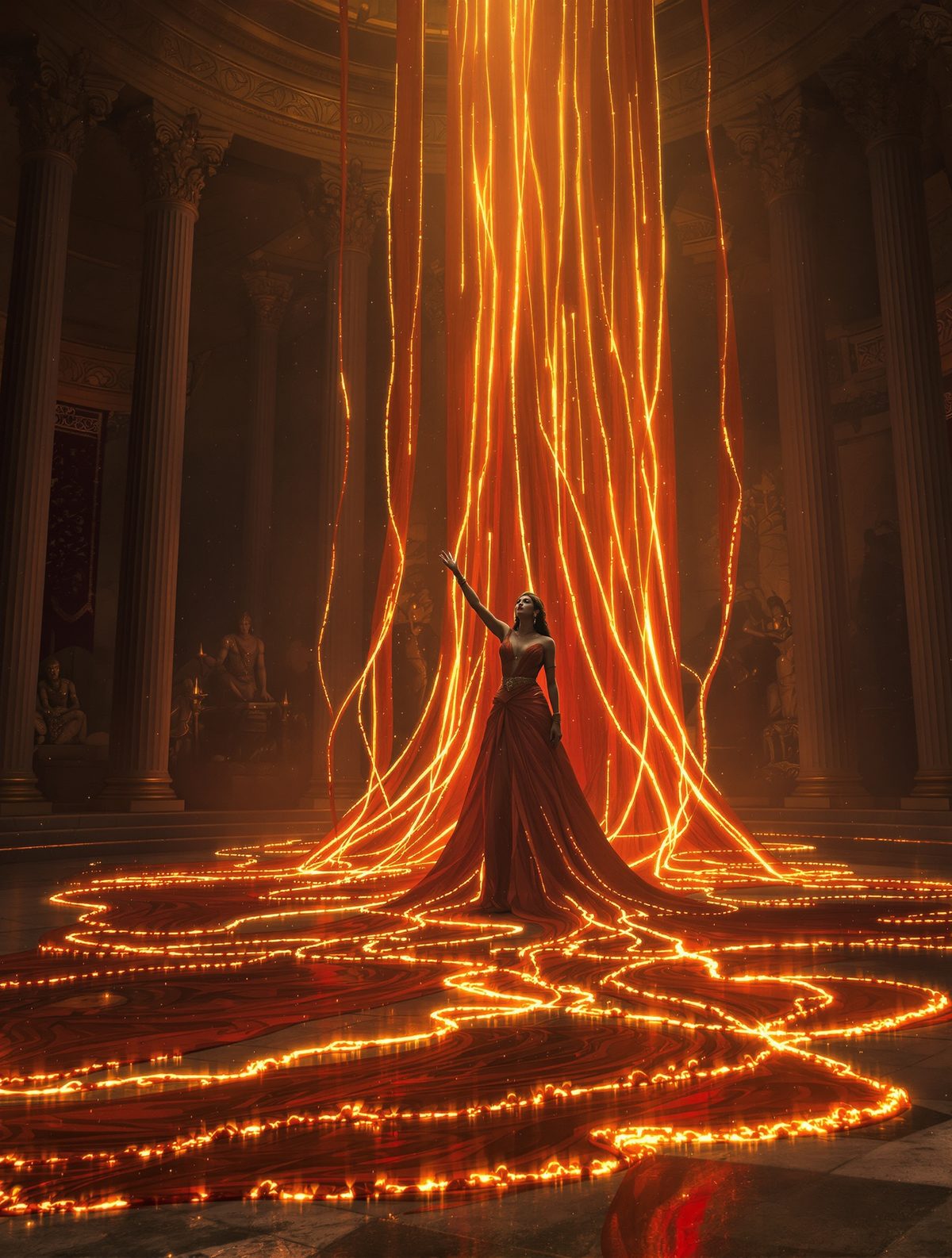

In the hushed halls of Hastinapura, tragedy unfolded with the absurdity of a farce—a queen, promised wealth and dignity, was reduced to a wager in a fateful game of dice. Her fate, knitted intricately with those of gods and mortals, reverberates still, seeping through the ages like an unsettling echo. This is the tale of Draupadi—disrobed under the pitiless eyes of royalty, yet clothed forever in layers of divinity and defiance.
The Dice Roll: A Game of Fate and Folly
Imagine a scene from the celebrated city of Hastinapura, its opulent palace teeming with noblemen engulfed in laughter and intoxicating bravado. The stakes of the invitation were uncommonly high—a game of dice proposed by Duryodhana, the ambitious Kaurava prince. Before long, the five Pandava brothers found themselves seduced by the thrill. Yudhishthira, the eldest, led the wager—a man renowned for his unwavering righteousness, yet hypnotized by the glitter of promised winnings.
Unbeknownst to the Pandavas, the dice rolled were not left to chance. Shakuni, Duryodhana's uncle skilled in the deceitful arts, had ensured that each roll favored his nephew. One by one, as Yudhishthira desperately staked his kingdom, his wealth, and his brothers—the ultimate, irrevocable bet was yet to be placed. It was then, in a moment draped in disbelief, that Draupadi, the queen of the Pandavas, was gambled away.
Dragged into Darkness: The Queen's Public Shame
Draupadi was not merely a wife; she was royalty born from fire—often described as the most beautiful woman in the world, her eyes bore the tempest of her indomitable spirit. But on that destined day, her virtues and origins mattered little. Commanded to appear before the court, she was dragged by her hair, a cascade of raven tresses unwound like a serpentine trail reflecting her unwarranted disgrace.
It was an assembly feared and respected across Aryavarta, the heart of an empire, yet it bore silent witness to an atrocity almost unparalleled in its audacity. Draupadi stood before them, an embodiment of dharma—or moral law—mocked and defiled. Dushasana, Duryodhana’s brother, scoffed at what he saw as his spoils of a game of cunning. He approached Draupadi with malevolent intent, grasping her sari with a vicious pull, seeking to strip her of her dignity before his own kind.
Clad by Divinity: The Miracle Unfolds
The scene turned surreal, resonating as myth and leaving a yawning chasm in the already frayed moral fiber of Hastinapura. As Dushasana pulled at Draupadi's sari, the garments seemed endless, layering around her like an eternal veil of protection. Call it divine intervention or Draupadi's unwavering faith—the fabric poured outward ceaselessly.
Krishna, her savior, was absent in body but not in spirit. The hyper-real vision of endless cloth was his testament to justice and devotion. To see was to believe that dharma must prevail against the darkest injustices. The court of Hastinapura sat stunned, their silence now a throbbing wound that bled shame upon the house of Kuru.
The Bloodied Ground: Convergence of Wrongs
History tells us that such acts cannot go unchallenged. This affront to dignity catalyzed the Kurukshetra war—a conflict of galactic proportions. The Mahabharata speaks of 18 days of ferocity, over 4 million warriors engaged in a dance of death. Yet amidst this violent clash lay the soul of Draupadi's humiliation—a wound that demanded reparation.
Yet, lesser-known are the whispers of Draupadi's own strength. Some accounts suggest she did not rest her hair—untouched by fragrant oils and sweet amla—until Dushasana's blood was brought forth to cleanse the stain of dishonor. In the grand weave of war and peace, her narrative stands unyielding and unable to be dismissed.
Why Draupadi's Story Matters Today
Thousands of years may have filtered through the tapestry of time since Draupadi's era, but the themes are timeless. Her story unfolds in cycles across margins—of history, of society, of gender roles—where the stakes might not be realms of yore but the simple quest for equity and dignity. Draupadi challenges us to reflect on our values, to confront our silences, and ultimately to nurture the courage to speak up against wrongdoing.
The lesson? Perhaps it is that one woman's humiliation in a distant realm echoes still, imploring us to ponder our rights and the champions we choose. Draupadi stood cloaked in divinity, a vivid reminder that injustice must be confronted not through the wrath of war but via the quiet insistence on what is right. In her tale, promises—like the infinite reams of her undying sari—continue to unravel, beckoning us to action in the tapestry of our own time.