Picture a world where the realms of the living and the dead are tangibly intertwined, where divine allegories sculpt the landscape of human experience in stone and clay. This is ancient Mesopotamia, a land teeming with gods and legends older than the rolling sands. Our story unfolds with a heart-thumping drama from this cradle of civilization—a story of love, betrayal, and cosmic justice.
The Queen's Descent
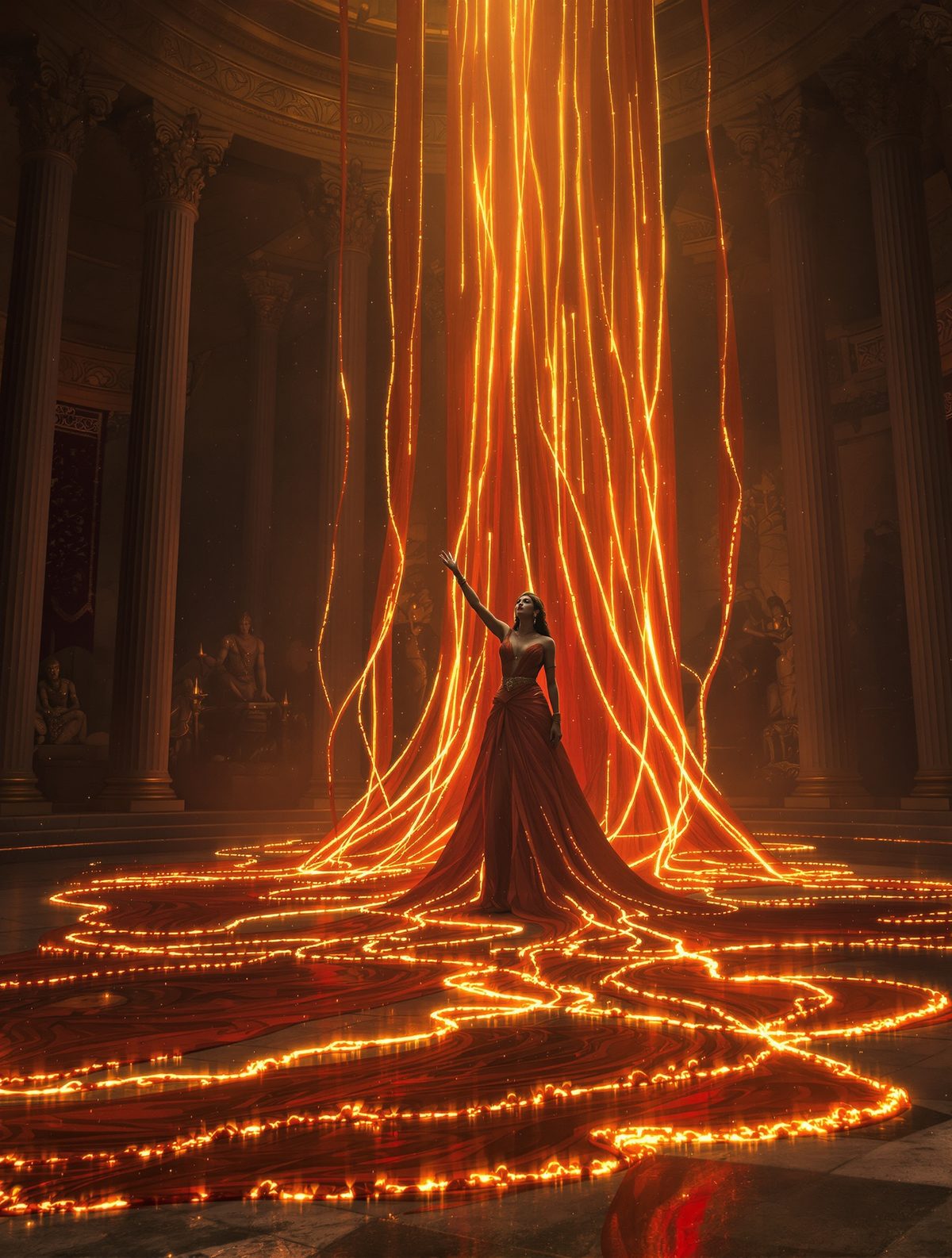
In the echoing chambers of legend and myth, the tale of Inanna’s descent into the underworld is one burned into the collective psyche of ancient Sumerians. It begins with the audacious goddess Inanna, also known to some as Ishtar in Akkadian lore, challenging the very boundaries of life and death. Inanna, the goddess of love, war, and fertility, descends into the gloomy underworld ruled by her sister, Ereshkigal. With her high head held defiantly, she shed each piece of her regal attire at the seven gates, a symbolic stripping of her earthly power and protection until she stood naked and vulnerable before death itself.
Inanna was not to return without consequence. Ereshkigal’s underworld was not merely a kingdom; it was a machine of balance, an unyielding scale that demanded a soul for a soul. For three days and nights, Inanna was left to wither in the shadows, deprived of her divine presence in the world above. In the heavens and on earth, chaos stirred—a testament to her potent influence.
A Celebration Interrupted
Resurrection did not come easily. With mounting urgency, Inanna’s loyal servant Ninshubur sought aid from other gods, desperate to reclaim her sovereign. Enki, god of wisdom and water, ultimately contrived a plan, breathing life back into Inanna with the vitality of plant and water life themselves. Alive and transformed, she was followed by the fierce galla demons, agents of Ereshkigal’s retribution, demanding another soul to take her place.
Her journey home was a procedure of inspection, peering into the hearts of those she left behind. What a poignant tableau it was as she returned to find her husband, the innocent-seeming shepherd god Dumuzi, reveling in luxury rather than languishing in sorrow for her disappearance. Wrapped in laughter and wine, he did not pause to mourn.
The Ultimate Betrayal
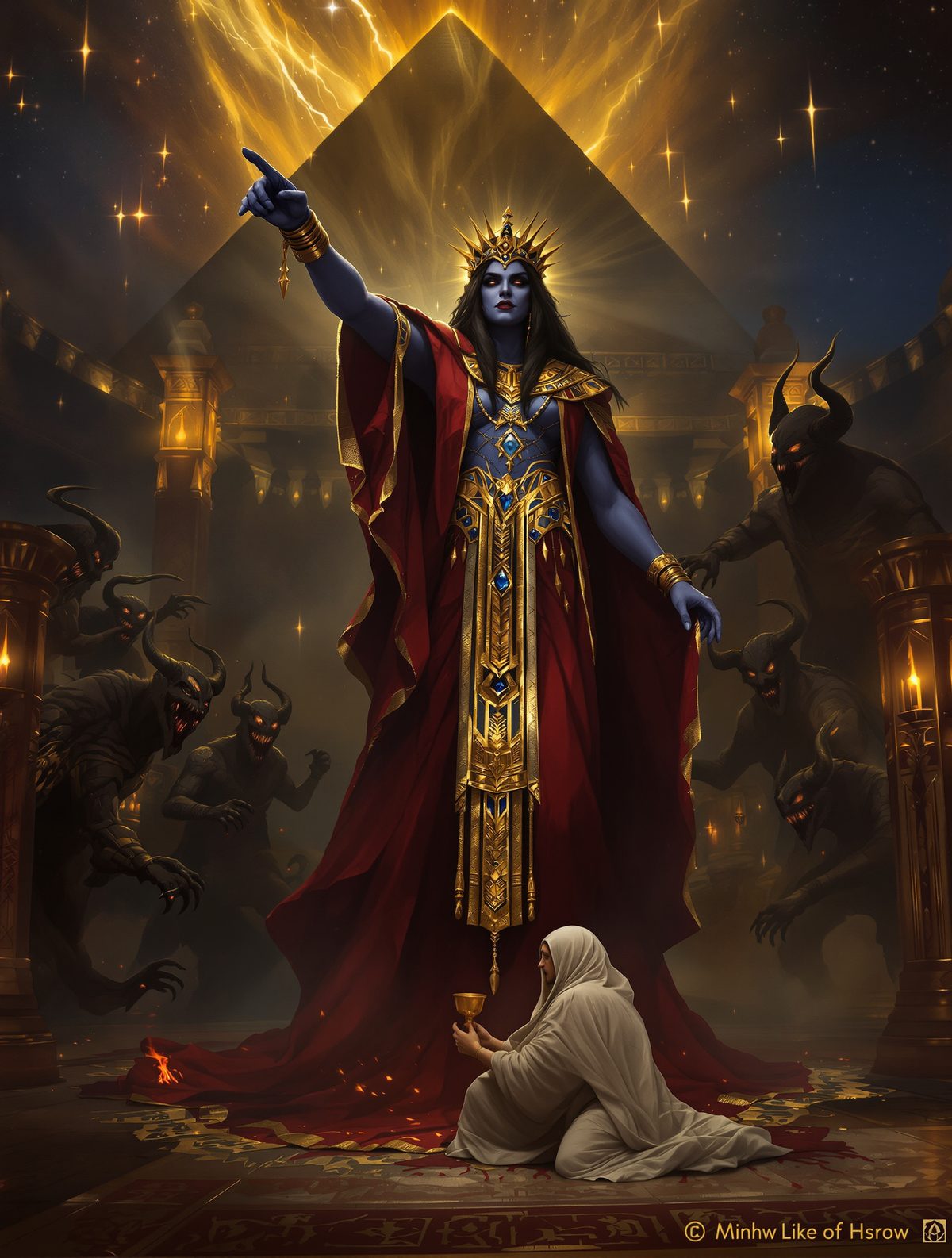
Inanna’s fury was a legend of its own, as enduring as the Tigris and Euphrates. One might expect hesitation, but her choice was as swift as it was final—seeing her husband celebrating while she had been lost beyond the mortal veil filled her with a ferocity that eclipsed the marital bond. She pointed, a simple gesture of divine judgment, and the galla seized Dumuzi.
Little known is the portrayal of Dumuzi, not simply as a complacent reveler but a complex figure entwined with seasonal cycles and agrarian rites. Known as Tammuz in later lore, his descent became emblematic of the stark shifts between life and death, feast and famine, adorned by his desperate attempts to escape his fate depicted in fragmentary tablets that tantalizingly hint at his flight and sorrow. Dumuzi’s story became a seminal myth, one that transcended borders, influencing later cultures, from the canon of biblical tales to the underpinnings of Greek tragedy.
The Echo of Myths
Why then, does this ancient narrative still hold us in thrall? Encoded in Dumuzi's story are universal themes to which humanity perennially returns. Here is a myth that explores the raw nerve of betrayal, the capriciousness of fate, and the inexorable march of justice, a moral stepping stone laid by the hands of deities and mortals alike. It is a story mirrored a millennium later in other fateful couples whose narratives warned alike of emotional brevity and vigilantly honoring the bonds of the heart.
In these ancient sagas, where shepherds could love goddesses and gods wandered among men, we find the restless whispers of civilization, echoing with truths as relevant today as they were in those sun-baked lands where the first stories began.
Legacy of Dumuzi and Inanna
Inanna’s decision wasn’t simply the wrath of an aggrieved goddess; it was a reflection on the sacred duties upheld even in absence. As with many Sumerian myths, their stories were etched into puzurs—clay cylinders preserving tales in cuneiform script, a testament to their cultural significance. These myths set societal paradigms, influencing how ancient Mesopotamians understood duty, loyalty, and the repercussions of neglect. The galla's pursuit of Dumuzi is a stark reminder of justice that transcends divine boundaries, weaving into the very fabric of human civilization.
Mesopotamia may now lie in ruins, but its secrets echo through time. The myths of Dumuzi and Inanna invite us to ponder where we stand in the mythical narrative of life. Do we, like Inanna, hold others accountable, or do we revel in the false safety of forgetfulness, like Dumuzi, unaware until it is too late? The legacy of these deities lives on, challenging us to seek our truth amidst the transient spaces between light and shadow.
In our contemporary world where relationships can be as fragile as they are foundational, tales like Dumuzi's offer us insights not just into the ancient soul, but into our own aspirations and failures. And perhaps, it is in these voices from Uruk, echoing graciously across millennia, that we find not just the legend they left out of the textbooks, but a resonant touchstone of timeless wisdom.