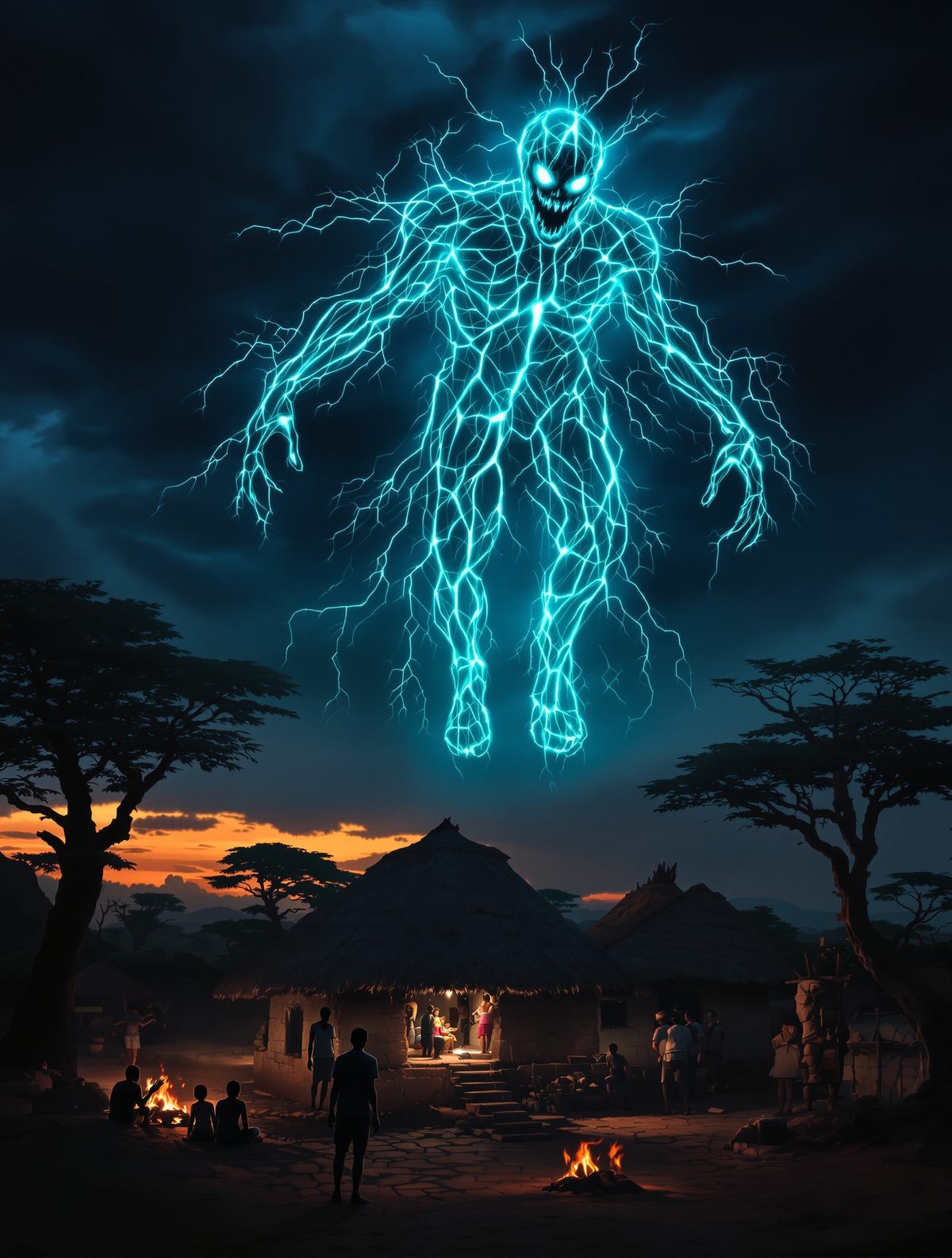
The screams started at midnight, echoing across the Zimbabwean highlands like a wound torn open in the darkness. Sekuru Mavambo jolted awake in his hut, sweat beading on his weathered brow as the sound pierced through the thick stone walls. But this wasn't the cry of a living person—it was something far more terrifying. It was the voice of the man he had murdered three moons ago, a voice that refused to be silenced by death.
In the rolling hills of what is now Zimbabwe, among the Shona people who have called this land home for over a thousand years, death is not always the end of the story. Sometimes, when blood is spilled unjustly, when a life is torn away through violence or betrayal, the departed refuse their eternal rest. They become ngozi—vengeful spirits whose rage burns so hot it transcends the boundary between the living and the dead.
This is not just folklore. This is justice with teeth, delivered by those who can no longer speak except through suffering itself.
The Birth of Endless Rage
To understand the terrifying power of a ngozi, you must first understand how one is born. Unlike the gentle ancestors who watch over their descendants with loving protection, a ngozi emerges from the darkest moments of human experience. Murder, betrayal, theft of land or cattle, the violation of sacred trust—these are the seeds from which vengeful spirits grow.
The transformation happens in the moment between life and death, when the dying person's final breath carries not acceptance, but a curse that will outlive empires. According to Shona tradition, documented by anthropologists like Michael Gelfand in his extensive 1960s research, the spirit becomes trapped in a state of perpetual fury, unable to join the peaceful realm of the ancestors until justice is served.
What makes ngozi particularly terrifying is their supernatural persistence. Unlike other spirits that might be appeased through ritual offerings or prayers, ngozi are immune to traditional spiritual remedies. They cannot be bargained with, cannot be fooled, and most crucially, cannot be stopped by any power except the one thing they demand: kuripa ngozi—blood payment.
Historical accounts from the 1890s, recorded by early anthropologist Alice Werner, describe ngozi as appearing in dreams first, then manifesting as unexplained illnesses, failed harvests, and a cascade of misfortunes that seem to follow the killer's family like a shadow. The spirit doesn't just want the murderer to suffer—it wants the entire bloodline to understand the weight of unpaid debt.
When Crops Turn to Dust and Children Fall Silent
The methodology of ngozi vengeance follows a chilling pattern that has remained consistent across centuries of Shona oral history. The spirit begins its campaign of retribution by attacking what the living hold most precious: their children and their livelihood.
In 1923, colonial administrator Harold Jowitt documented a case in the Mazowe district where a family's maize crop mysteriously withered for three consecutive seasons after the household head was accused of murdering his neighbor over a land dispute. No amount of rainfall or fertilizer could save the plants—they would grow normally until harvest time, then suddenly blacken and crumble to ash.
But crop failure was often just the beginning. Ngozi were known to target children with particular cruelty, striking them with mysterious illnesses that defied both traditional healing and European medicine. The spirits seemed to understand that nothing would torment the living more than watching their offspring waste away from unexplained sickness.
What's particularly haunting about these accounts is their specificity. Unlike vague curses or generalized bad luck, ngozi manifestations were precise and personal. They would appear in dreams speaking the exact words the victim had spoken before death, or cause the killer to experience the same pain the murdered person had endured. Colonial medical records from the 1930s describe cases where healthy adults would suddenly develop symptoms matching their victims' final moments—a man who had poisoned his rival beginning to foam at the mouth each night at the exact time of the murder.
The psychological toll was devastating. Families lived in constant terror, never knowing when the spirit would strike next or which loved one would be targeted. Sleep became elusive, as ngozi were known to be most active during the darkest hours, their presence announced by sudden drops in temperature, the sound of footsteps where no one walked, and voices calling from empty rooms.
The Price of Peace: Blood for Blood
When a family finally accepted that they were haunted by a ngozi, the path to resolution was both specific and expensive. The spirit demanded kuripa ngozi—literally "to pay the vengeful spirit"—and nothing less than blood payment would satisfy their rage.
This wasn't symbolic blood. The payment required giving a young woman from the killer's family to the deceased's family, usually as a wife to one of the victim's male relatives. This human offering served multiple purposes in Shona justice: it provided the dead person's family with someone to care for them, ensured that children would be born to continue the victim's lineage, and created a permanent bond between the two families that would prevent future violence.
The woman chosen for kuripa ngozi, often a daughter or niece of the murderer, became a living bridge between the world of the dead and the world of the living. Her children would carry the blood of both families, symbolically healing the wound that had torn the community apart. Anthropologist Kingsley Garbett's research in the 1960s found that these arrangements were taken so seriously that families would sometimes impoverish themselves to provide adequate bride price and ongoing support for the offered woman.
What's remarkable about this system is how it prioritized restorative rather than retributive justice. Instead of simply punishing the killer, kuripa ngozi aimed to rebuild what had been destroyed. The victim's family gained new members and economic support, while the killer's family was forced to acknowledge the full cost of their actions across generations.
Historical records show that communities took these payments extremely seriously. A 1944 case documented by district commissioner Thomas Scanlen described how a wealthy cattle owner gave up nearly his entire herd along with two daughters to satisfy a ngozi claim, leaving his own family in poverty but finally ending years of mysterious livestock deaths and family illnesses.
The Spirit That Judges Without Mercy
Perhaps the most chilling aspect of ngozi was their apparent ability to distinguish guilt from innocence with supernatural precision. Colonial court records from the 1920s and 1930s are filled with cases where multiple suspects were involved in a death, but the vengeful spirit seemed to target only the actual killer with its full fury.
In 1931, three men were accused of murdering a cattle herder near Bindura. Two of the men continued their normal lives, but the third—who local tradition claimed had delivered the fatal blow—experienced a cascade of disasters. His three children died within six months of mysterious fevers, his granary was repeatedly destroyed by storms that left neighboring buildings untouched, and he began suffering from fits during which he would speak in the dead man's voice, describing his own murder in horrific detail.
This supernatural detective work extended beyond simple murder cases. Ngozi were said to pursue anyone who had profited from injustice—those who had seized land illegally, stolen cattle, or broken sacred oaths. The spirits seemed to operate by a moral code that transcended human law, pursuing cosmic justice where earthly courts had failed.
What made these vengeful spirits particularly feared was their patience. Unlike human anger that might cool with time, ngozi rage only intensified with delay. Stories tell of spirits that waited decades for the perfect moment to strike, targeting a killer's grandchildren when they reached the same age as the original victim, or destroying a family's prosperity on the anniversary of the murder.
The spirits were also known for their elaborate symbolism. A man who had killed with poison might find his water sources contaminated. Someone who had murdered for cattle might watch helplessly as his livestock died in the exact order he had counted his victim's herd. This poetic justice suggested an intelligence that was both supernatural and deeply personal.
Echoes in Modern Zimbabwe
The power of ngozi belief didn't fade with colonization or modernization. Even today, in contemporary Zimbabwe, families still perform kuripa ngozi ceremonies, and the spirits continue to influence legal and social decisions in ways that would surprise outsiders.
During Zimbabwe's liberation war in the 1970s, both guerrilla fighters and government forces reported encounters with ngozi of those killed in the conflict. Some commanders on both sides consulted traditional healers about proper procedures for preventing vengeful spirits from haunting their units. The war had created thousands of ngozi, and communities struggled with how to address such massive spiritual debt.
In the post-independence era, Zimbabwe's traditional courts still recognize ngozi claims, and families continue to negotiate blood payments for murders that occurred generations ago. A 2010 study by the University of Zimbabwe found that nearly 40% of respondents believed ngozi could influence their daily lives, and 15% reported personal experience with vengeful spirits affecting their families.
Modern manifestations have adapted to contemporary life while maintaining their essential character. Instead of crop failures, urban ngozi might cause repeated car accidents or business failures. Rather than appearing only in dreams, they're said to interfere with cell phone signals or cause electrical problems in homes. The core message remains the same: injustice creates spiritual debt that must be paid, no matter how much time has passed.
The ngozi tradition offers a fascinating window into a worldview where death doesn't end accountability, where the murdered retain agency to demand justice, and where entire communities bear responsibility for individual crimes. In a world where many injustices go unpunished by human courts, there's something both terrifying and comforting about spirits who refuse to let evil sleep peacefully.
Perhaps that's why these ancient beliefs persist in modern times—they represent a cosmic guarantee that no injustice is ever truly forgotten, and that somewhere beyond the boundary of death, the scales of justice still demand to be balanced. In the haunting cry of the ngozi, we hear not just the voice of the murdered, but the eternal human hunger for justice that transcends even death itself.