In an age where myths walked hand in hand with reality and gods mingled freely with mortals, a challenge was issued that would leave its mark on the cultural tapestry of Ancient Greece. It was a contest between immortal flair and mortal folly, an age-old tale of hubris and divine wrath. It begins with the haunting notes of a flute.
The Divine Birth of a Flute
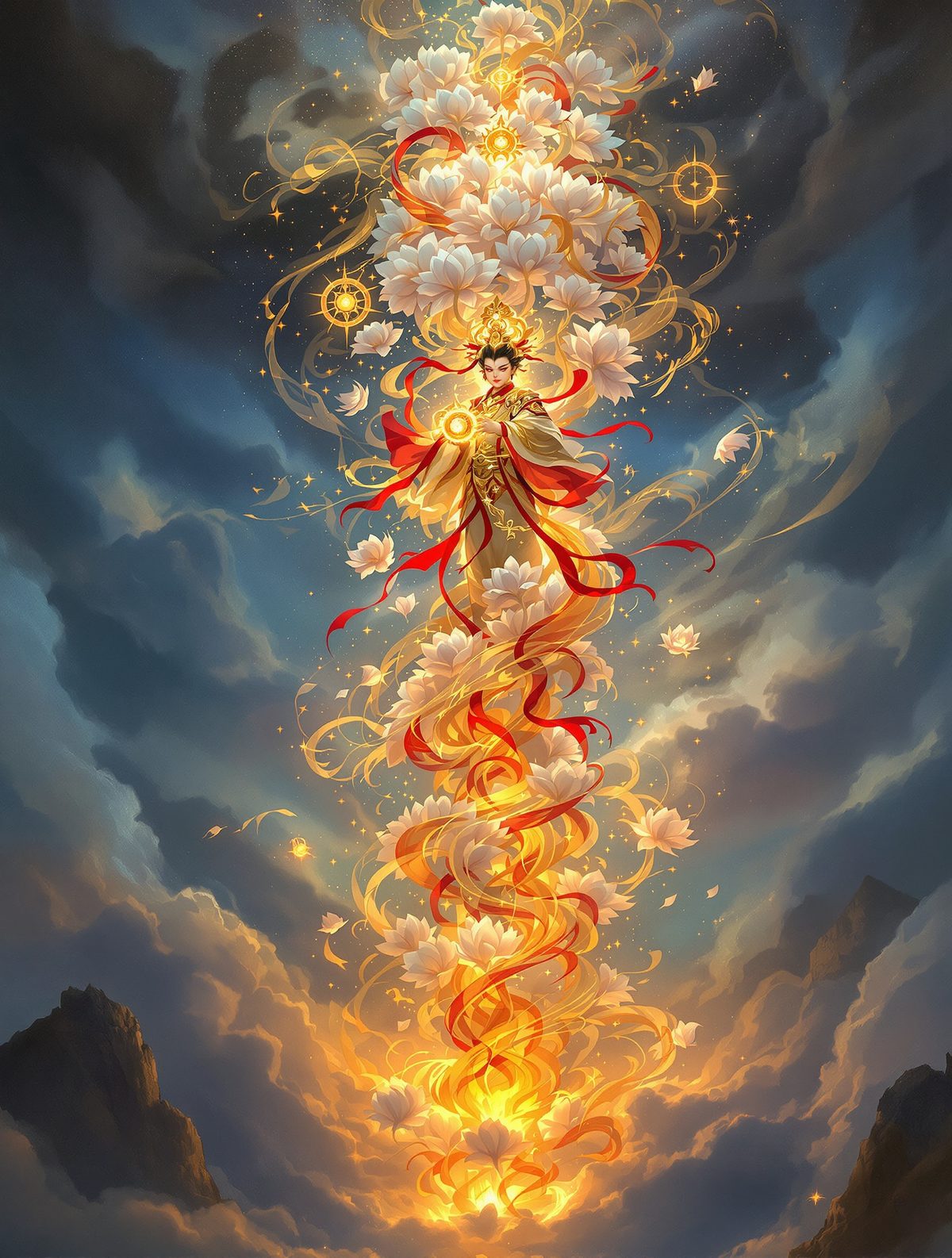
Our story springs to life in the cradle of classical antiquity, during a time when the realm of gods and humans often collided. Athena, the goddess of wisdom and war, craftily created a musical instrument—a double-reed flute known as an aulos. Her delicate fingers fashioned it with divine precision, and the notes she conjured were said to enchant the very winds. But the tale took a curious turn when Athena, upon seeing her reflection playing the flute and disliking the distortion it caused to her divine features, cast the instrument aside. She banished it to the earthly realms, perhaps knowing too well the seeds of discord that music could sow.
In a world buzzing with legends, the flute lay forgotten amidst the vibrant flora of Phrygian mountains, until fate directed it into the hands of Marsyas, a satyr known as much for his love of revelry as his burgeoning musical talent. A creature of the wild, Marsyas was drawn to the instrument, his fingers itching to recreate the mysterious melody that lay dormant within its clever design.
Marsyas: A Mortal Master
To the delight and amazement of all who heard him, Marsyas skilfully resurrected the voice of the flute. The notes he drew were not those of a novice; they were the cries of heartbreak and triumph, serenades of nature itself that made mortals weep openly. In the quaint market squares and lush groves of Phrygia, men, women, and children alike gathered to listen. It was said that even the trees leaned in to listen, swayed by the sorrowful allure of Marsyas's music under a sun that bore witness to every note.
The satyr's fame soon spread beyond the rustic retreats of Phrygia, his audience swelling with each mesmerizing performance. Yet Marsyas, glowing in the limelight of mortal adoration, found himself drunk with the idea of his own genius. Arrogance seeped into his bones, singing a song of its own—a song of challenge to a god whose exploits were chronicled in temples and immortalized in legends. It was to Apollo, the god of music himself, that Marsyas issued his audacious challenge.
The Celestial Contest
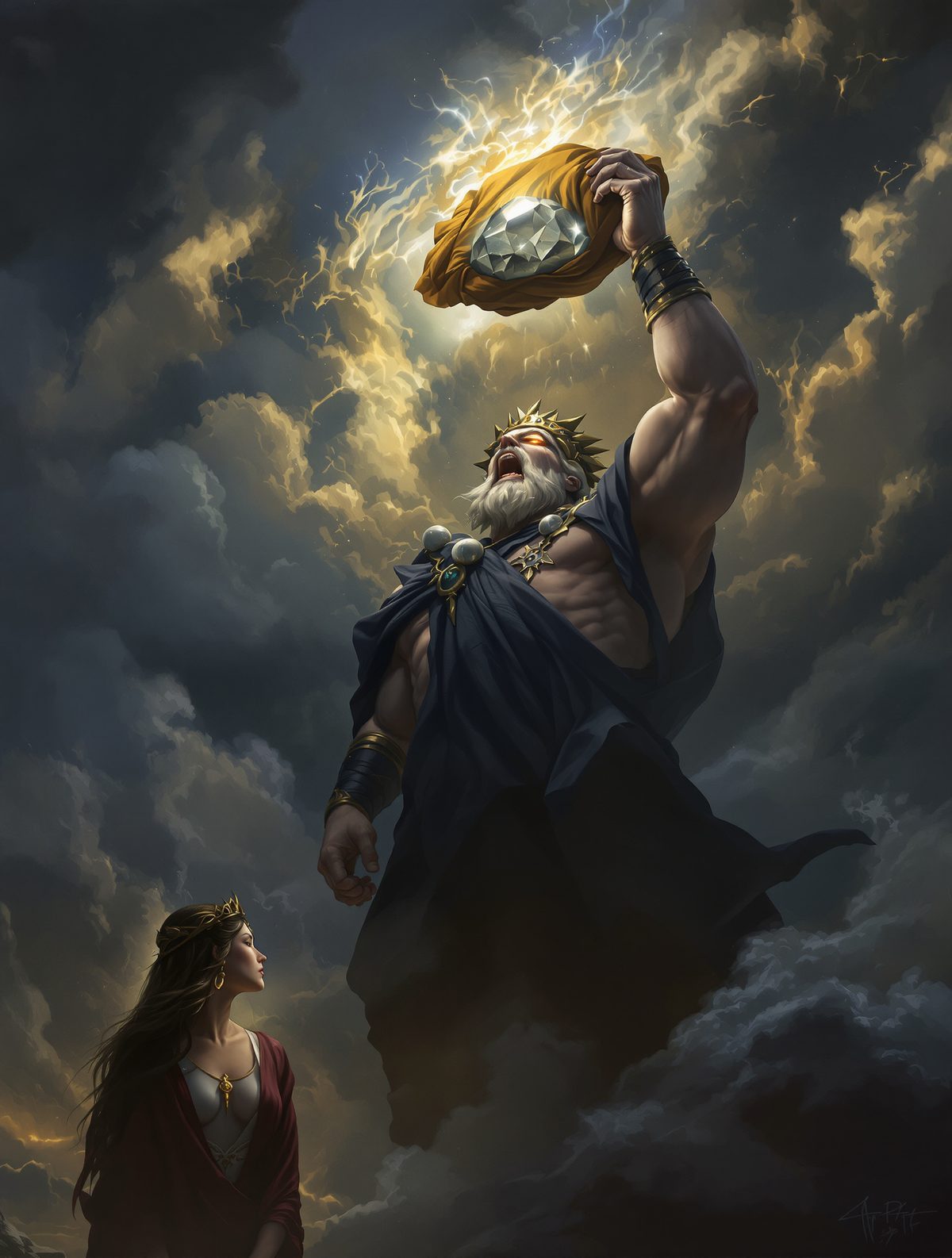
In the climate of Ancient Greece, where mythology and tradition often danced a tightrope, nothing could stir conversation, dread, or anticipation quite like a contest between a god and mortal. Apollo, whose golden lyre could command seasons and soothe tempestuous seas, accepted Marsyas's reckless dare with a serene smile. Their battleground was chosen—a secluded spot by the edge of the ever-flowing river Meander, its waters destined to bear witness to this fateful encounter.
The terms of the contest were deceptively simple and brutally stark: the victor could impose any condition on the vanquished. For Marsyas, whose confidence in his talent was unwavering, this was a chance to claim a place among the legends, a spot amongst stars where no satyr had ever ventured. Blinded by ego, he never paused to ponder what it might mean to challenge the divine.
Under the azure canopy of the skies that swept over Phrygia, they performed. Apollo's lyre sang with the lightness of dawn touching the earth, a tapestry of intricate melodies weaving tales of gods and creation. When Marsyas played, however, it was no mere echo. He rivaled Apollo fiercely, and throughout the performance, even the divine court was dazzled by the fierce competition.
The Price of Hubris
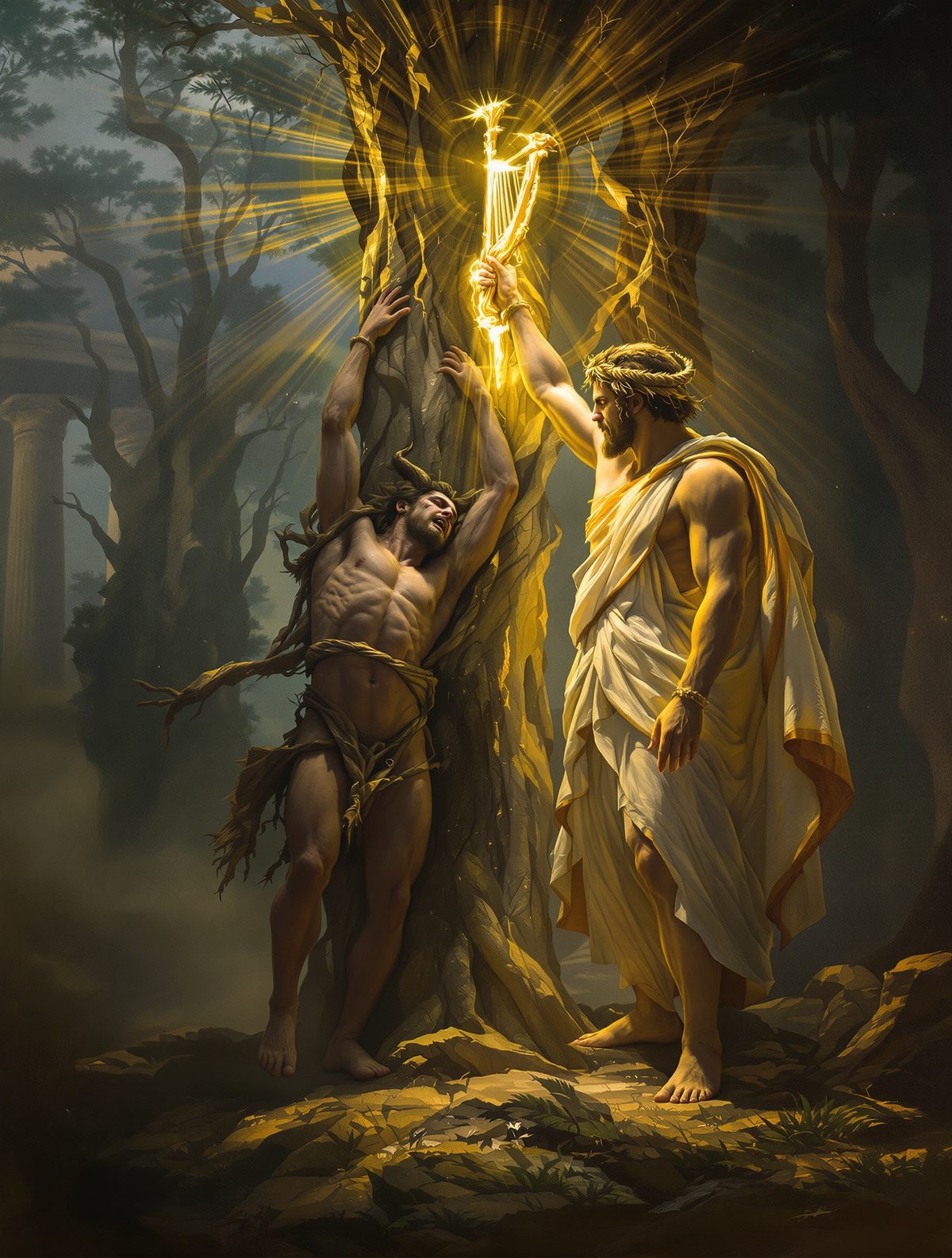
When the last note drifted to silence, it was not Marsyas who basked in the warm glow of victory. Apollo, victorious, now wielded the power of choice over the hapless satyr. In a foreboding shadow of fate—one that left a resounding impact upon all who had listened—Apollo decreed a terrifying sentence. He ordered Marsyas to be flayed alive, every fiber of his skin to be sheared away, leaving him barren against the universe he had dared to challenge.
Legend narrates that as Marsyas was bound to a tree, his cries merged with the river Meander, his blood seeping into the earth until it nourished the rich red soil. The punishment, in all its chilling clarity, stands today as a stark reminder of the folly of overestimating human endeavor against divine power and whims.
The Echoes of Marsyas's Melody
Though Marsyas met a tragic end, his story—a sort of musical Icarus—endures through antiquity as a cautionary tale. The contest and its brutal aftermath whisper incessantly across generations about the perils of hubris and the delicate balance between mortal courage and acknowledgment of divine supremacy. Marsyas's tale not only encapsulates a moral, but it also reverberates through the annals of art, inspiring works from sculptures to tragedies to frescoes scattered throughout the Greek and Roman worlds.
Today, Marsyas's tale provides food for thought as we grapple with the very human spirit that challenges, innovates, and sometimes falters in the face of overwhelming odds. His narrative is a touchstone for the audacious dreamers who dare to reach—for those who refuse established boundaries, knowing full well the risks.
As we reevaluate the limits of human talent and the daunting specter of overconfidence, Marsyas's flute serves as a distant echo, keeping alive the understanding that greatness often comes at a price, and wisdom lies in knowing when to tread the line delicately.
In remembering Marsyas, we not only keep alive the vibrancy of ancient mythology but reflect on the immutable dance between ambition and humility—a lesson as relevant today as it ever was beneath the shadows of ancient Greece.