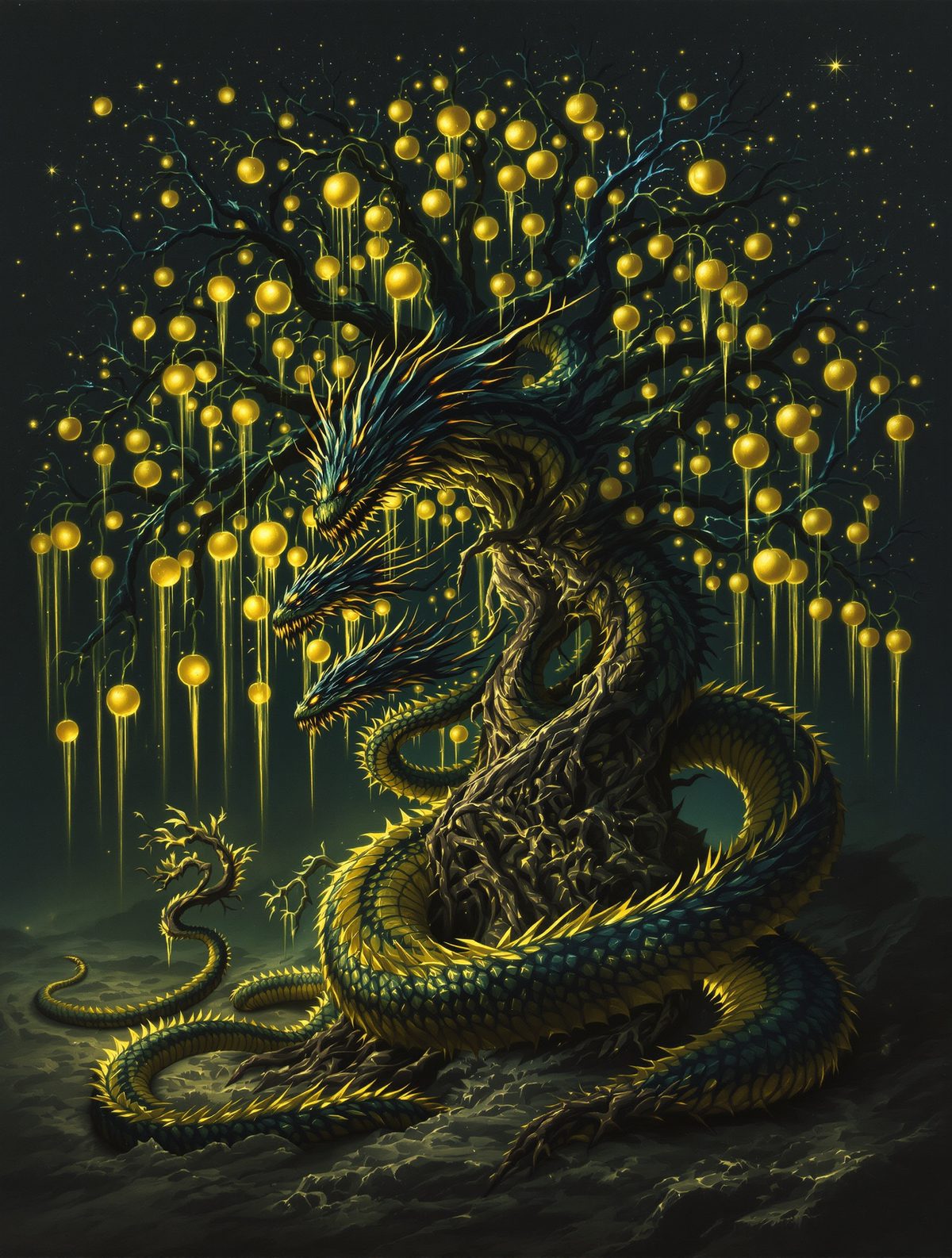
Imagine a ruler so fearful of losing his throne that he would devour his own children. This is not merely a tale spun from the imagination but an integral part of Greek mythology—where gods and titans, bound by prophecies and intertwined destinies, paint a world unlike any other. At the heart of this myth, is the unfathomably greedy titan, Cronus, who one fateful day swallowed a stone swaddled as his infant son.
The Tyrant of Time: Cronus
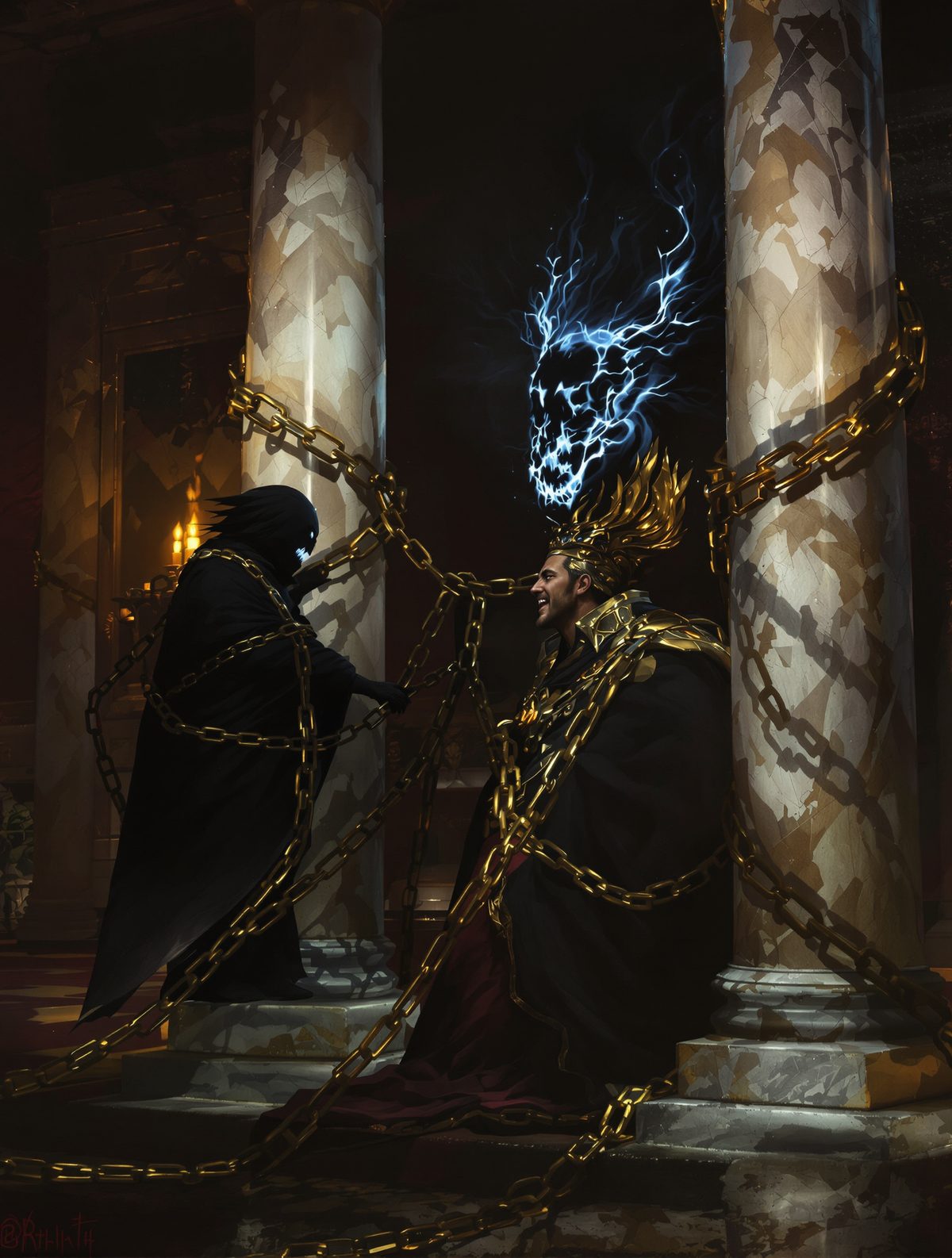
Cronus, known as the youngest of the Titans, symbolized time and its sometimes cruel inevitability. As the son of Uranus (Sky) and Gaia (Earth), his origins set the stage for a tyrannical rule. After dethroning his own father, Cronus took the throne, ruling over the cosmos with an iron grip. Despite his powerful consortium with his sister Rhea, his reign was marred by an ominous prophecy—one that foretold his downfall at the hands of one of his offspring. Driven by fear, Cronus resorted to the grotesque solution of swallowing his children at birth, a decision that would seal his eventual doom.
A Mother's Anguish: Rhea's Courage
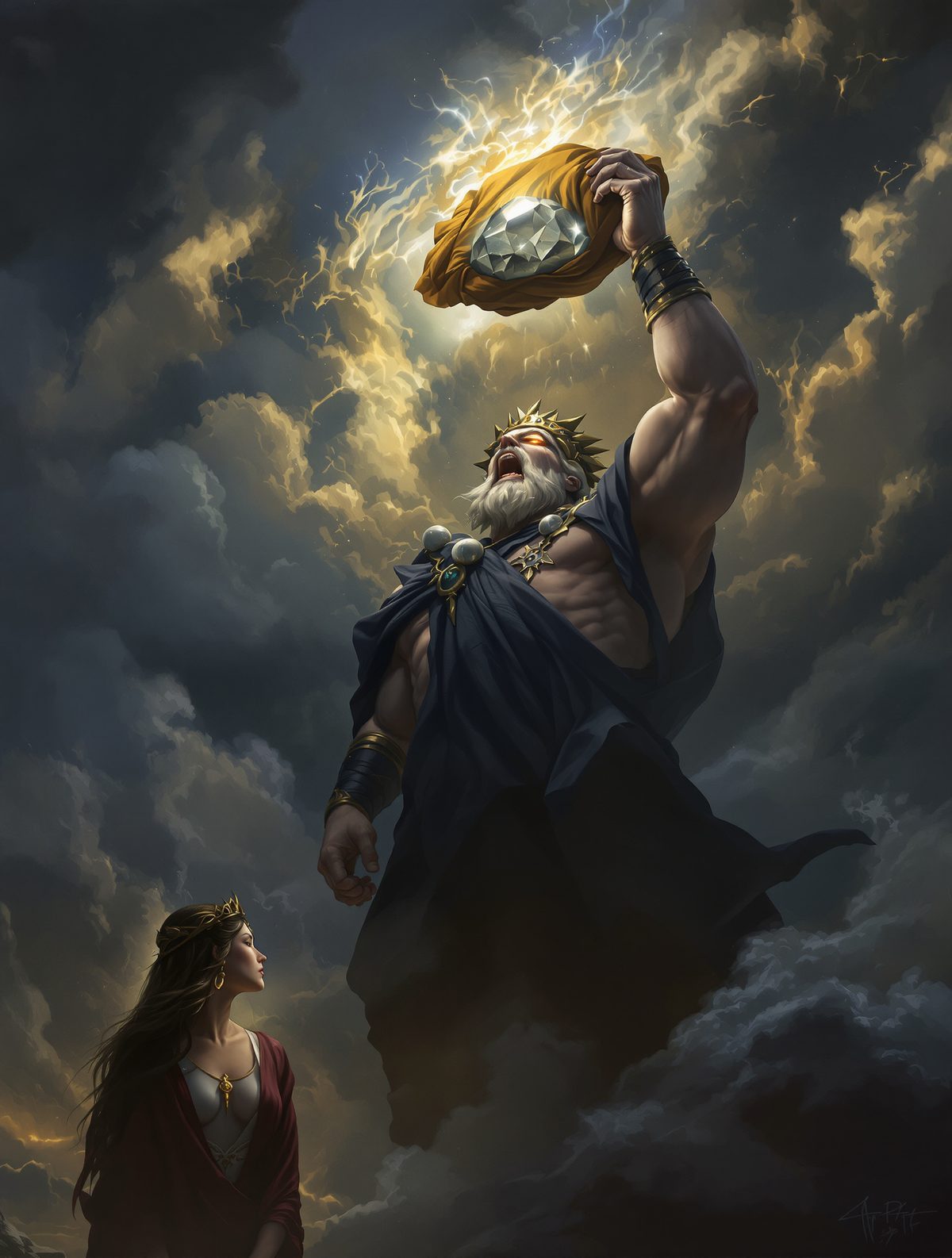
Each birth brought a fresh wave of heartache for Rhea. She watched as Hestia, Hera, Demeter, Hades, and Poseidon—each a newborn deity with the boundless potential for power and dominion—were consumed by their tyrant father. The cycle continued until Rhea, weary and grief-stricken yet resolute, decided it was time to deceive the devourer. When her sixth child, Zeus, was born under the shadow of Mount Ida in Crete around 700 BCE, Rhea sprang into action. She swathed a stone in cloth, a ruse so daring that it bordered on madness, and offered it to Cronus.
A Divine Deception: The Stone in Swaddling Clothes
Cronus, blinded by his greed and haunted by paranoia, did not question the strange heft of the swaddled bundle. He devoured it whole, oblivious to the deception. This stone, now known in myth as the Omphalos, would come to symbolize the navel of the world, resting in Delphi's sacred sanctuary. And, unbeknownst to Cronus, the true heir, young Zeus, was spirited away to a cave on Crete, where he was nurtured and safeguarded by the nymphs of the land and the goat Amalthea.
The Rise of Zeus: A Reckoning
As Zeus matured in the nurturing lap of Crete, his divine nature blossomed. His childhood surrounded by myths of liberation and revenge, he prepared for the inevitable confrontation with his dreaded father. Zeus' path was one of retribution but also redemption. With guidance from Metis, the goddess of wisdom, Zeus orchestrated a plan to force Cronus to disgorge his siblings. When the time was ripe, Zeus confronted Cronus, wielding a potion crafted by Metis. The concoction triggered Cronus to vomit up the now fully-formed, unharmed deities, each eager to reclaim their destiny.
The Shift of Power: End of an Era
Unleashed, the liberated gods—Hestia, Hera, Demeter, Hades, and Poseidon—joined Zeus in a cosmic scale conflict known as the Titanomachy. This war of titans and gods raged for a decade until the Olympians, familiar with the indomitable power of strategy and unity, emerged victorious. Cronus was dethroned, and with him, the reign of the Titans crumbled. The age of the Olympians had dawned, ushering a new order, as Zeus settled on Mount Olympus with his siblings, those whom Cronus could no longer deny or suppress.
Echoes of Myth in Modern Resonance
The tale of Cronus and the stone speaks volumes beyond its mythological origins. It encapsulates primal fears, the perils of power unwisely wielded, and the strength found in unity against tyranny. As an ancient story, it reminds us to look beyond the immediate and see the layers of deceit and wisdom that history often hides. Prophecies and legends serve not just as tales from times past but as ever-relevant lessons about humility, the unwavering fight against oppression, and the inevitable cycle of renewal. Cronus' fear-fueled reign holds a mirror to the modern world, urging reflection on our human condition where no prophecy, no matter how daunting, can be staved off by the consumption of stone over truth.