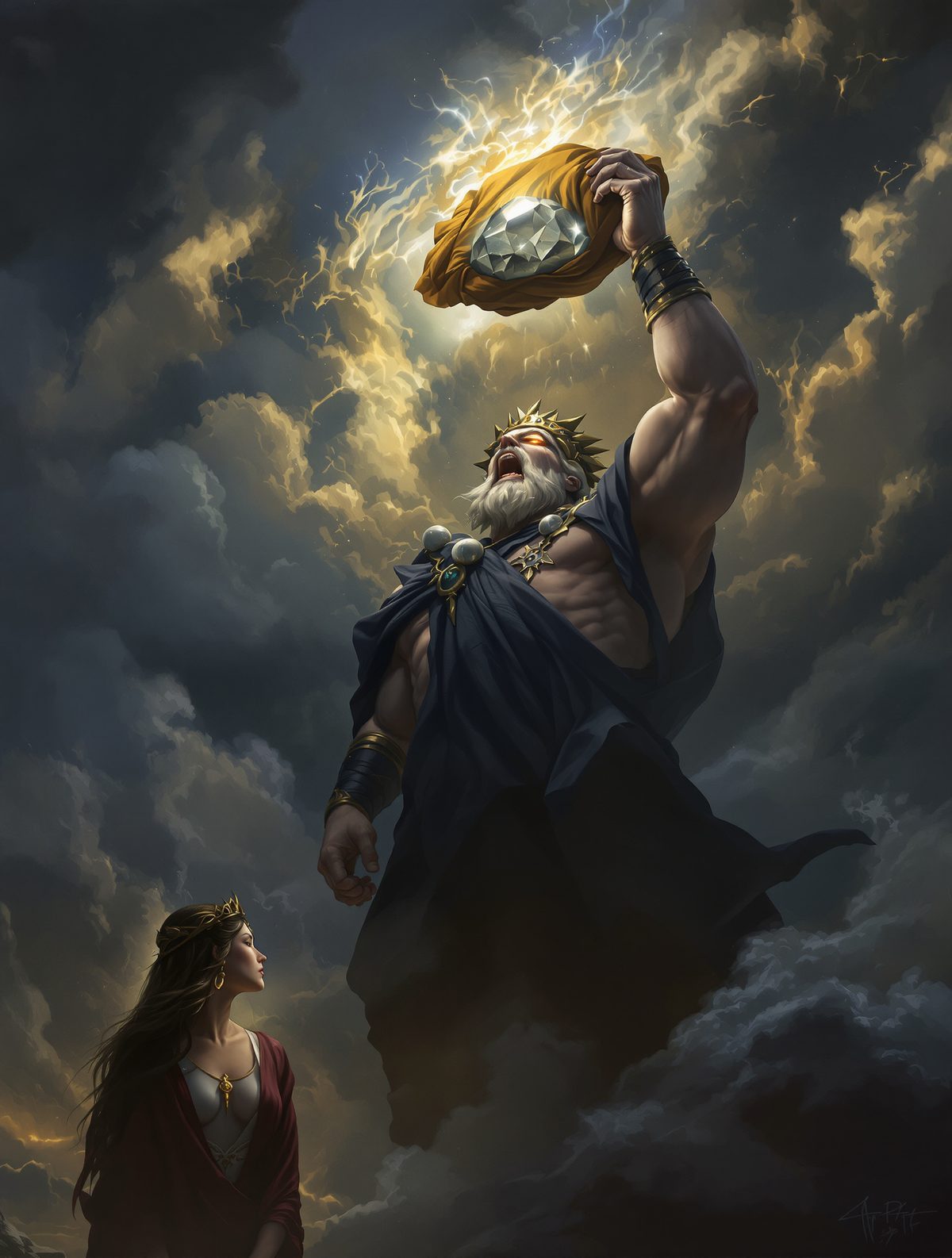
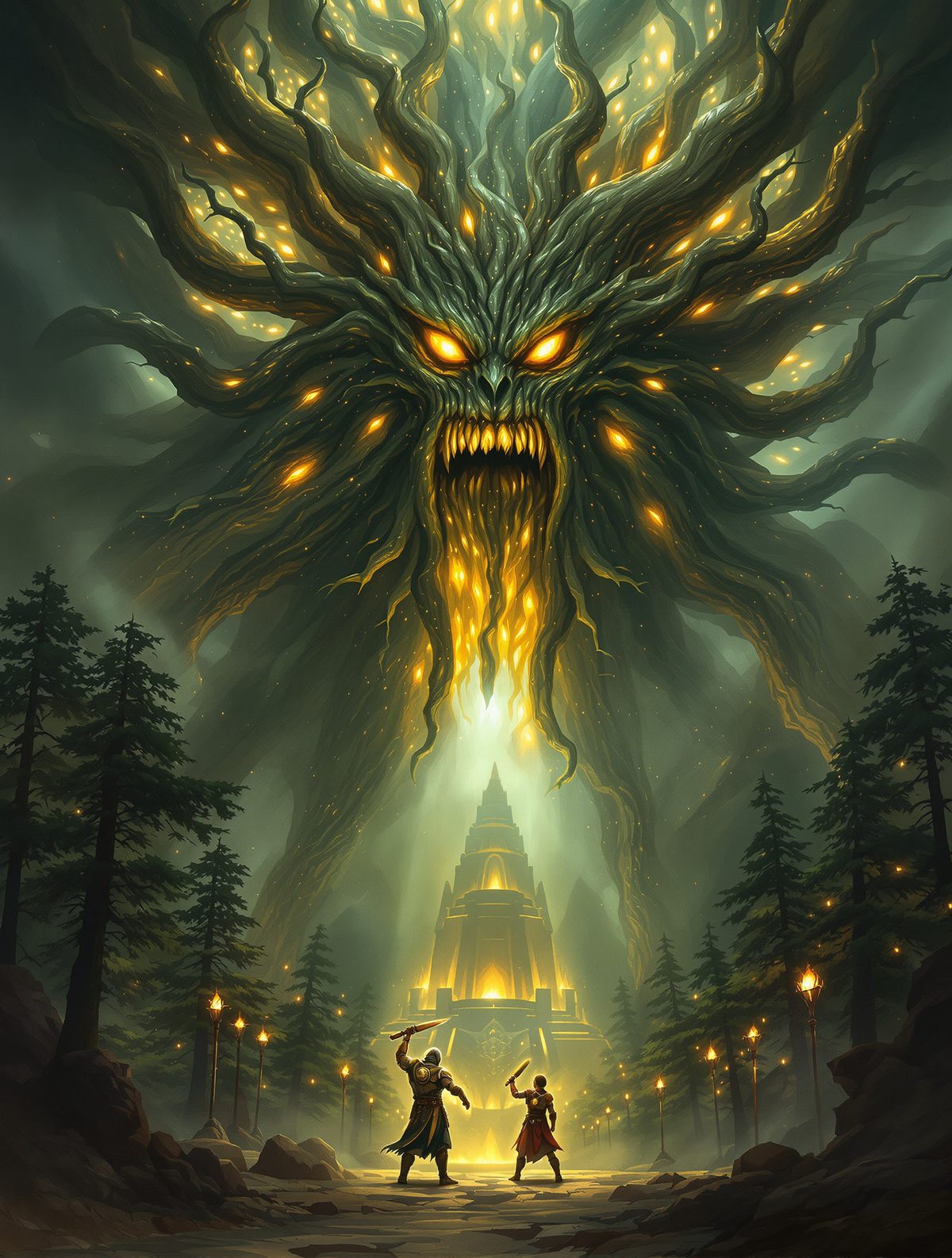
Amidst the tales and dust of time lies an epic story etched in Mesopotamian mythology, a legend not often detailed in textbooks but brimming with lessons for the modern soul. As we unroll the clay tablets of ancient narratives, we step into a world where gods walked among men, and where forests were more than mere timber — they were realms guarded by mighty forces. Journey with us into the Cedar Forest and witness the tragic clash of man and guardian — the fall of Humbaba.
The Roar Beneath the Canopy: Humbaba, the Ancient Sentinel
In the heart of an unspoiled sanctuary between the Tigris and the Euphrates, where the air was heavy with the fragrance of cedar, lay the Cedar Forest. This sacred grovescape was protected not by mere mortal means, but by the formidable being known as Humbaba, the appointed guardian of the gods. Clad in scales as sturdy as armor and with a voice that could send tremors through the earth, Humbaba was the embodiment of nature's wrath and blessings.
Set forth by the will of Enlil, the lord of the storm and king of the gods, Humbaba’s presence was a testament to divine authority over mortal ambition. Yet, in this world of miracles and myths, even the invincible had their keys of vulnerability. What many modern readers might not know is that Humbaba's fearsome roar and scorching breath were as much a protection for the forest as they were a deterrence to the ‘progress’ of humanity. Humbaba was more than a monster; he was the heart of the forest, pulsing with life’s ancient magic.
The Quest for Immortality: Gilgamesh’s Fateful Journey
Step into the life of Gilgamesh, the semi-divine king of Uruk around 2800 BCE, a man described as two-thirds god and one-third human. He's remembered not only for his formidable strength and wisdom but also for his existential dread — the fear of death which plagued even the mightiest. For Gilgamesh, glory and eternal name were the antidotes to mortality's inevitability.
Compelled by a dream and a desire for legacy beyond the grave, Gilgamesh embarked on a path fraught with danger, joined by his staunch companion Enkidu, a being of the wilderness himself. Together, they ventured into the Cedar Forest, where they intended to fell its guardian, Humbaba, and harvest the cedar wood — a precious treasure that symbolized the strength and permanence Gilgamesh craved.
A Tale of Betrayal: The Fall of the Guardian
The confrontation between the heroes and the guardian was as fierce as it was profound. Humbaba, though terrifying, was nonetheless a divine caretaker, pleading for mercy in the face of overwhelming force. As Gilgamesh drew his blade, tentatively considering mercy for the beast with tear-filled eyes pleading from within a monstrous visage, it was Enkidu’s counsel that sealed the guardian’s fate.
“Do not trust him,” Enkidu cautioned. “Do not let him live. He who knows all roads would betray us.” Such was the paradox of the human condition: fear of betrayal forged from the very empathy that makes us human. Lesser-known in today’s narratives is Humbaba’s own words of caution, offering riches to spare his life. But in this game of gods and men, neither bravery nor strategy could save him. His downfall became a poignant testimony to humanity’s complex dance with nature — a relationship steeped in both reverence and exploitation.
The Echo of Thunder: Consequences Unforeseen
In slaying Humbaba, Gilgamesh indeed clutched a portion of eternity, earning renown that endured through ages. Yet, with the mighty guardian's collapse, the Cedar Forest lost its divinely ordained protector, setting forth consequences tangible even today. The gods, displeased by the needless slaughter, strained the bond between man and the divine, penning the inevitability of retribution as Enkidu faced a premature death — a bitter taste of mortality for Gilgamesh.
The tale of Humbaba is not simply one of victory or of conquest; it is a mirror into the soul of humanity itself. It questions the price we are willing to pay for glory, challenging us to evaluate our own relationship with the earth and its natural protectors. In antiquity as in modernity, the Cedar Forests teach us about the balance in nature, one that when tampered with, leaves profound scars.
Legacy of the Cedar: Lessons in Today’s World
In an age where environmental treasures are endangered and the guardians of nature are often overlooked, the legend of Humbaba resonates loudly. This Mesopotamian myth bears relevance, a poignant reminder that our quest for greatness cannot be divorced from responsibility. To honor the sacred is to remember that we are custodians of our world, just as the ancient sentinels once were.
As we navigate modern issues of deforestation and ecological conservation, Humbaba’s tale implores us to ponder: Are we building legacies that future generations will revere, or are we leaving ruins they must repair? Today, as in the age of Gilgamesh, humanity stands at a crossroads, with the choice to destroy or to preserve, to conquer or to coexist.
Thus, as we remember Humbaba’s final breath, we are drawn to reflect not only on the mythic past but on our very real present — and to ensure that the history we write is one where nature's guardians, ancient or contemporary, are fought for, not against.