When we dive into the epic universe of the Mahabharata, we unravel stories drenched in valor, morality, and the ultimate sacrifices of legendary warriors. Among these, the tale of Karna stands out—a tale of unparalleled generosity and tragic heroism. Imagine a warrior, born with celestial armor, peeling it from his flesh to honor his word. To understand this dramatic moment, we must journey to the heart of ancient Bharatvarsha, where gods mingled with men, and destiny was written as gloriously as it was cruelly.
The Golden Birth
Born under the glow of extraordinary circumstances, Karna’s life was a tapestry of divine interventions and earthly trials. His mother, Kunti, received a boon from Sage Durvasa, allowing her to invoke any deity and bear a child with divine qualities. Young and curious, she tested this blessing by calling upon Surya, the sun god. To her surprise, she bore a son instantly, a radiant child with golden armor and earrings fused to his skin, heralding his godly heritage.
Yet, societal norms bound her actions, leading Kunti to abandon Karna on the banks of the Ganga, where he was found and adopted by a charioteer, Adhiratha. Growing up, Karna, unaware of his royal lineage, was denied the respect a true Kshatriya deserved. The golden armor, which granted him invincibility, became both a symbol of his divine roots and a barrier that shielded him from worldly harm.
The Unspoken Rivalry
The Kuru princes, led by Yudhishthira, Bhima, Arjuna, Nakula, and Sahadeva, were trained under Drona, the legendary teacher. Karna, too, longed to hone his warrior skills but faced rejection at every noble threshold due to his apparent low birth. His steadfast heart, however, found support in Duryodhana, the Kaurava prince, who saw in Karna a potent ally against his Partha (Arjuna). This newfound friendship came at a heavy price—a relentless enmity with Arjuna, which would shape the tides of their lives.
Karna’s skills as an archer rivaled even Arjuna’s, yet the world often dubbed him a pretender. His heart bore the duality of love and hatred, fueling his desire to prove his worth. He carried the curse of knowledge that someday, his closest friendships would demand his ultimate loyalty against his own brothers, the Pandavas, the truth of which he remained blissfully ignorant for years.
The Divine Deception
The Kurukshetra War loomed large, and the echoes of destiny made their way into celestial realms. Lord Indra, aware of Karna’s impenetrable armor, grew anxious over the fate of his son, Arjuna. To tip the scales, he devised a plan that would reflect human flaws even in gods. Disguised as a humble Brahmin, Indra approached the ever-generous Karna, who never turned anyone away empty-handed.
As Indra extended his hands, the beggar’s plea was simple yet astonishing: he sought Karna’s divine armor and earrings. Karna’s mind, sharp and discerning, recognized the beggar’s celestial nature. Here stood no mere mortal but a god, cloaked in humility. Karna knew what was being asked—a gift of mortality, a breach in his armor that foretold his death.
An Act of Supreme Sacrifice
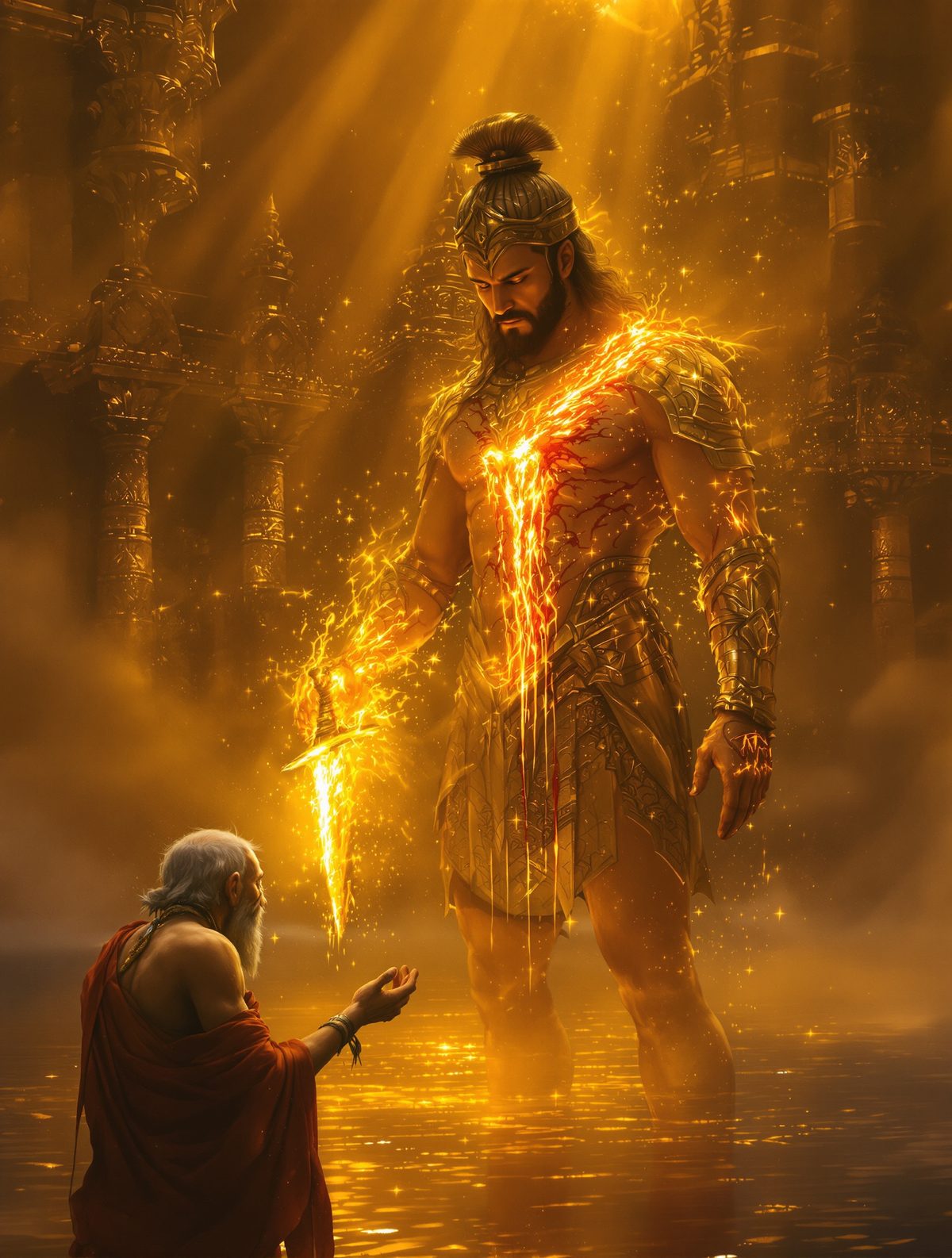
To the casual observer, Karna’s choice might seem insane, yet it was etched into the very essence of his being, where dharma trumped self-preservation. With a heart as expansive as the skies, Karna unsheathed a blade to sever his armor from his living flesh. Bloodied but unbowed, he handed it over with an unyielding smile, saying, “A man must honor his promises, even at the cost of his life.”
This act of sacrifice embeds itself in the epic as a moment of profound heroism—Karna choosing honor over death, immortality for integrity. It embodies the profound dilemma of upholding righteousness when the very heavens test your resolve.
Karna’s Legacy and Our Times
The selfless act of Karna reverberates through the ages, leaving a legacy far surpassing that of his fellow warriors. His life emanates an eternal truth: that greatness often lies in the choices we make against our self-interest. Karna’s journey reminds us that real strength goes beyond physical might; it’s found in unwavering principles and the courage of conviction.
As we reflect on Karna’s tale today, we find resonances in leaders and individuals who, despite their circumstances, choose the path of virtuous action over personal gain. In a world torn by conflict and moral ambiguity, Karna’s life is a beacon, showing that honor remains eternal—even when everything else fades into oblivion.
The legend of Karna, his mortal vulnerabilities worn as badges of honor, continues to inspire us. It compels a contemplation of what we value and challenges us to choose our own cherished legends over the transient desires of life. As we navigate our modern-day Kurukshetras, may we draw strength from Karna’s courage and hold steadfast to our quest for a purpose-driven life.