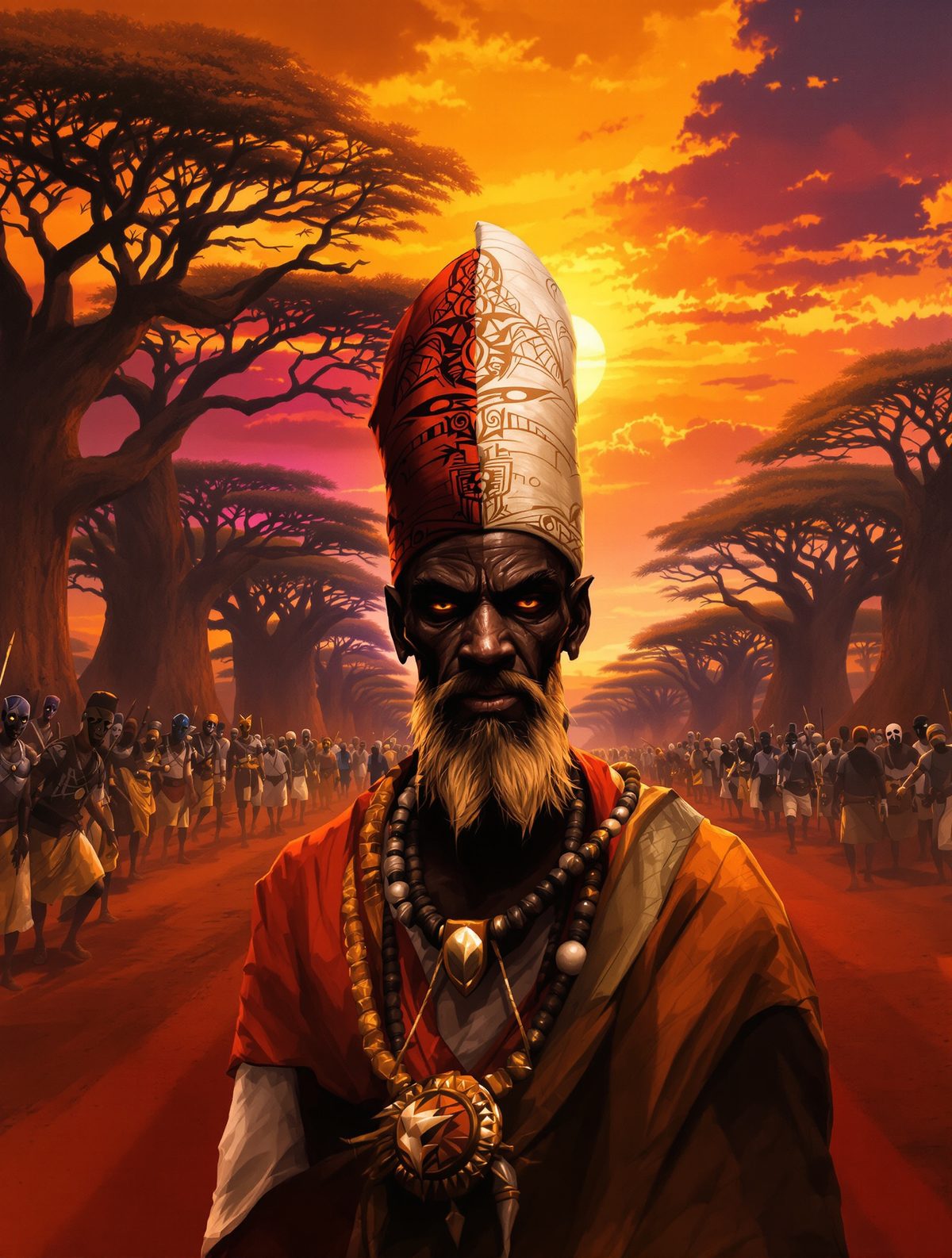

In the dawn of time, under the ageless Indian sun, a child was born, but he was no ordinary child. His skin shimmered with golden armor, a gift from a celestial father, the mighty Sun God. This is the tale of Karna—a hero blessed and cursed, shrouded in divine complexity and grim destiny. This is a story of cosmic intrigues, unlikely generosity, and a fateful encounter with destiny disguised as a beggar.
The Divine Origins of Karna
Long before the curtain rose on the epic battlefields of Kurukshetra, Karna entered the world under extraordinary circumstances. His mother, Kunti, had received a boon from sage Durvasa, enabling her to invoke any deity and bear a child with them. Driven by youthful curiosity, she called upon Surya, the Sun God, and thus Karna was conceived. He emerged from his mother's womb with a radiant armor and golden earrings—Kannavarm, a divine panoply, and Kavacha, the armor no earthly weapon could penetrate.
What distinguished Karna from the very moment of birth were not merely the physical manifestations of his divine parentage, but the spiritual strength and valor that these imbued him with. Raised by a humble charioteer named Adhiratha, Karna's real identity remained veiled, and he grew passionate about proving his greatness in a world that often denied him his rightful stature.
The Fears of a Celestial Assembly
In the celestial realms, the sight of the young Karna in his invulnerable armor struck fear among the gods. They foresaw his potential to upset the balance in the impending age-defining war of the Mahabharata. Perhaps it was the depth of his loyalty, even to those who scorned him, or the insatiable thirst for recognition, that made him so uniquely formidable and unpredictable.
Most apprehensive was Indra, the king of gods, who saw in Karna a threat to his son, Arjuna. Indra feared that with his celestial armor, Karna would indeed be unbeatable. A divine intervention was thus planned, a means to strip Karna of his divine-born invincibility.
Indra’s Devious Request
In disguise as a weary, destitute brahmin, Indra approached Karna at a moment destined to test the core of his character. It was early dawn, and the first light itched across the horizon, when Karna was accustomed to bestow alms as per his unswerving sense of duty and virtue.
Seeing the brahmin in apparent hardship, a vision that belied Indra's true form, Karna sprang to offer his empathy and assistance. The brahmin, in a humble yet potent voice, asked for the one thing Karna held most dear—his divine armor and earrings.
Here one must pause and recognize a fact little known outside the intricate verses of the Mahabharata. Despite suspecting treachery, despite grasping the implications of such a request, Karna did not falter. In a deed of profound self-sacrifice, he utilized a blade, cutting free his armor with his own hands, rendering himself vulnerable in a manner previously unimaginable.
The Meaning of Sacrifice and Honor
Karna's adherence to his understanding of honor and generosity was a divine spectacle in itself. Here was a man who valued his word and his role as a patron above even his personal survival. In return, Indra, acknowledging this unparalleled generosity, granted Karna the potent weapon, Shakti, yet the promise accompanying it was mordantly restrictive—it could only be used once.
Historians and mythologists have often marveled at this exchange. It is rare in world mythology that a hero, given a choice, relinquishes his most significant advantage for an abstract adherence to personal dharma—his own inner law. Here, perhaps, is the essence of Karna’s tragic nobility.
The Enduring Legacy of Karna
What remains so powerfully resonant about Karna's story is more than just the splendor of his birth or the devastating consequences of his later life. It is the moral complexity and emotional richness interwoven into his character—a testament to what one chooses when faced with impossible decisions.
Karna's choice reminds us of the timeless qualities of integrity, charity, and the ever-present tension between destiny and free will. In seeking an indelible mark of valor, he showed the world, and the heavens above, that even gods could be moved to reverence and reconsideration through the sheer force of human virtue.
In today's world, the legend of Karna serves as a mirror. It is a narrative that speaks to each of us about the parts of ourselves we hold true against overwhelming odds. It asks us to consider the sacrifices we are willing to make for our principles and whether the measure of a person is indeed best revealed in moments of self-chosen vulnerability.