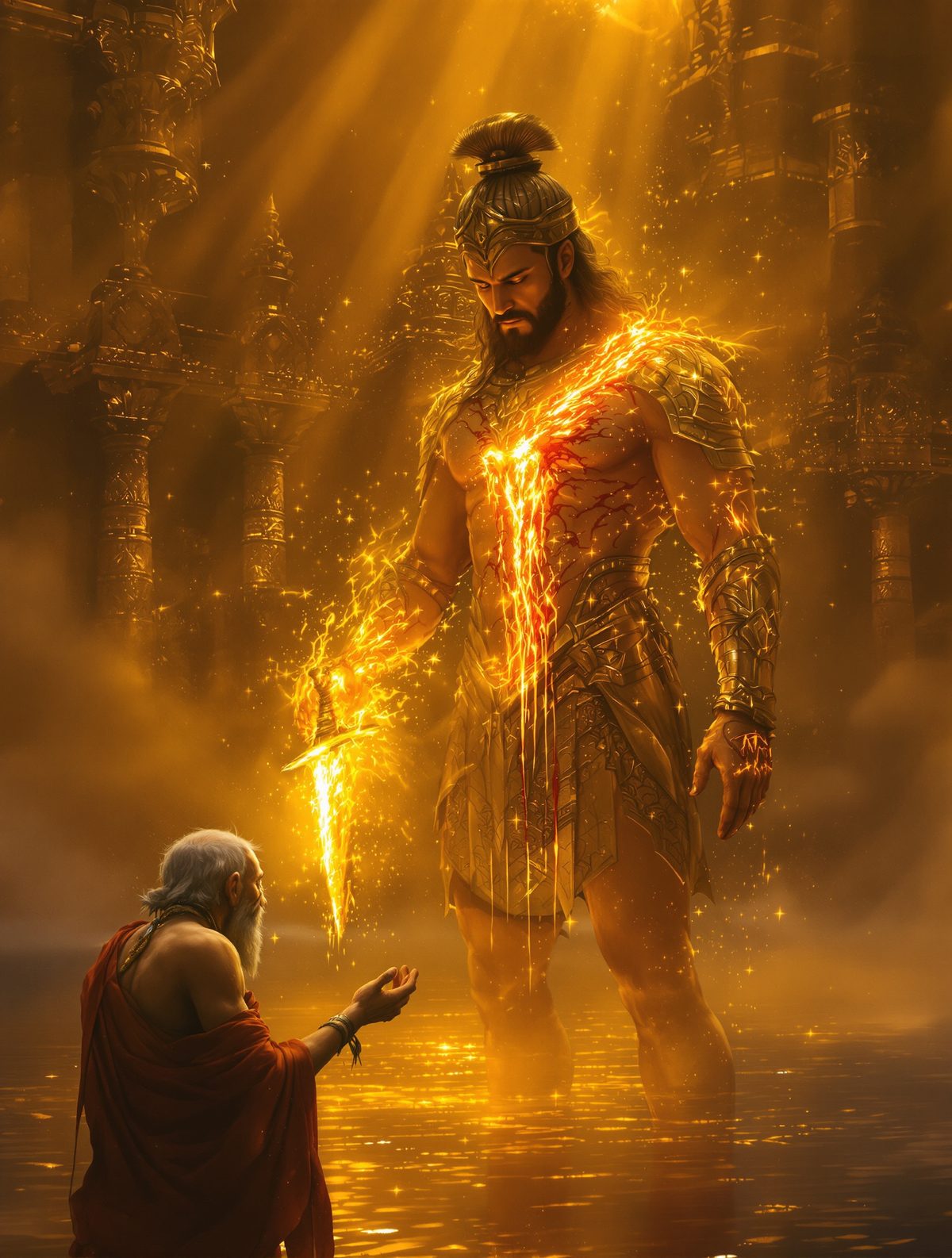
On a night when the world was quiet and unsuspecting, a scream rent the air, echoing through the vast caverns and starry skies. The earth trembled beneath the wails of the goddess Persephone, yet atop Olympus, the divine pantheon remained silent. But in a place where paths crossed and shadows danced, one goddess heard her cry. She did not plead to the heaven's ruler or the powerful deities of the skies. Instead, with her twin torches lighting the way, Hecate descended into the Underworld, walking through the mists and shadows. It was there, at the crossroads of the worlds, that Hecate would choose her side and change the seasons of the world forever.
The Crossroads of Choice
In ancient times, Greek myths tell of a goddess not of the celestial tribe but of liminal spaces — where decisions and destinies converge. Hecate, the goddess of magic, witchcraft, the night, and the moon, also ruled the crossroads. These were not mere intersections of physical paths but the junctions of life’s most crucial choices. When Persephone, the daughter of Demeter, was taken by Hades, the Lord of the Underworld, Hecate stood at one such mystical crossroads and heard the echoes of the young goddess's cries.
Zeus, the supreme deity and uncle to Persephone, looked away as if distracted by the mundane affairs of gods. His silence spoke volumes about the politics of power even among the gods. Yet, it was Hecate who made the audacious decision to act. Braving the mists that separated worlds, she stepped into the Underworld, guided by the flickering flames of her torches. It was an act of both defiance and alliance, a pivotal moment that would lead to a monumental bargain.
The Descent into the Underworld
To fully grasp Hecate’s daring journey, one must envision the path she chose. The Underworld was no simple cavern but a vast, shadowed dominion ruled by Hades. This was a land of ghosts and eternal twilight, where the shades of the dead roamed and where the river Styx formed an impassable barrier between the living and the deceased.
Yet, Hecate's resolve was unwavering. Her journey was not fueled by Olympian allegiance but rather by her sense of justice and compassion. The ancients described her as a goddess who could traverse the realms, bearing torches that pierced the darkest voids. As she neared the seat of Hades's throne, the Underworld revealed secrets known to few living souls — its landscapes were said to be both eerily beautiful and terrifyingly alien, a reflection of the unknown that all mortals face after death.
The Bargain with Death
The heart of Hecate’s tale lies in the negotiations she undertook with Hades himself. It is said that upon her arrival, Hecate did not demand nor beseech, but bargained with a calculated wisdom. She proposed a compromise that straddled both the cycles of the terrestrial world and the will of the Underworld.
Hades, intrigued by this unexpected diplomat, agreed to terms that would allow Persephone to spend half the year above the Earth with her mother, Demeter, goddess of the harvest, and the remainder in the Underworld as his queen. Thus, the seasons emerged — spring and summer heralded Persephone’s return, while fall and winter mirrored her descent back to Hades.
Interestingly, Hecate became a guide and an ally to Persephone, their friendship blossoming within the depths of Hades's realm. This alliance was rare among the Olympian tales, highlighting a unity struck not through force but through mutual respect and necessity.
Legacy of the Seasons
The consequences of Hecate’s descent were profound. She transformed a tale of abduction into one of balance, ultimately affecting the rhythm of the natural world. The cyclic pattern of growing and dying, blossoming and withering, reflects the larger themes of rebirth and renewal that the ancients found mirrored in the very essence of human life.
It is worth noting that Hecate’s actions subtly critiqued the indifference of the Olympian hierarchy. Her independent approach to solving the crisis showed a wisdom that transcended the traditional power dynamics of the divine. It echoes the idea that intervention and advocacy can shift even the most ingrained patterns, a lesson just as vital today as it was in myth.
The Enduring Power of Choice
In retelling Hecate's audacious descent, we are reminded of the fragile lines between our choices and their consequences. Hecate stands as a testament to the power inherent in decisions — both mundane and monumental — and their ability to reshape worlds.
Today, as we face crossroads of our own, whether on a personal scale or a global stage, we might remember Hecate's tale. It encourages us to listen for the cries at the crossroads, to act with compassion and knowledge, and to negotiate a path that balances justice with survival. After all, the myth of Hecate at the crossroads is not just an ancient legend but a timeless beacon for navigating the complex intersections of life.