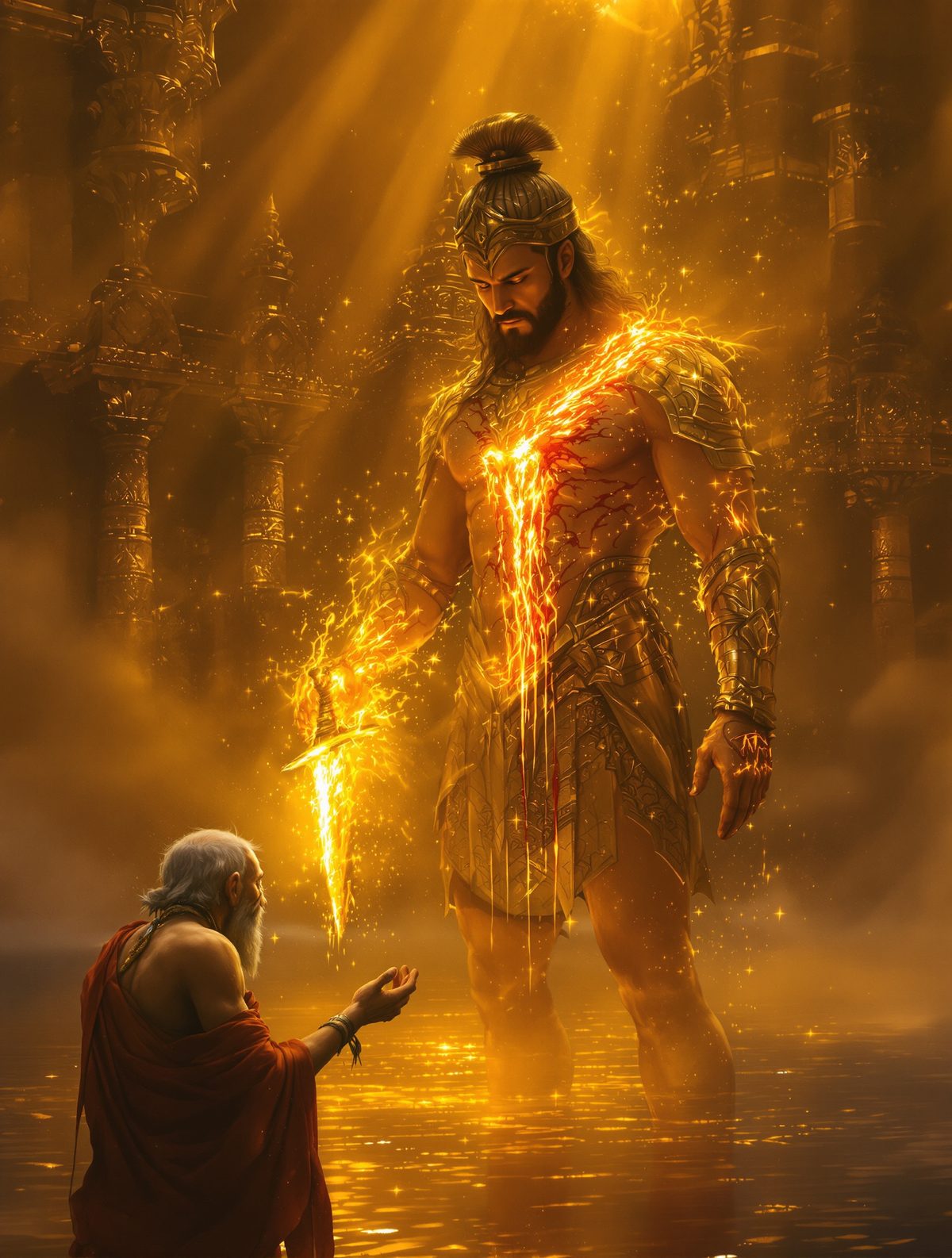
The river was silent, save for the occasional lap of water against the rocky shore. He stood on the bank, his eyes tracing the path he would soon take. In one hand, he held a stone—a weight to guide him home. In the depths of the Miluo River, Qu Yuan—a poet, a patriot, a man of unwavering integrity—was about to make a choice that echoed through the ages. This is his story.
The Rise of an Unyielding Patriot
Qu Yuan was born in 340 BCE in the ancient state of Chu, during a time of political turbulence known as the Warring States Period. This was an era when the land that would one day comprise modern China was fragmented into seven kingdoms, each vying for dominance. Yet, even amidst such chaos, Qu's talents shone like a beacon in the night.
A member of the aristocratic Qu family, he quickly rose to prominence due to his intellect and charismatic demeanor. Appointed as the chief minister to King Huai of Chu, Qu Yuan dedicated his life to the prosperity of his state. His reforms focused on improving the military and administrative systems, and his loyalty to King Huai was unparalleled.
But what truly set Qu Yuan apart was his gift for poetry. Known for his vivid and lyrical verses, he penned some of the most enduring works in Chinese literature. His magnum opus, the Li Sao, stands as a testament to his love for his nation and his deep connection with the divine.
A Betrayal in the Shadows
Qu Yuan's dedication earned him both admiration and envy. In 315 BCE, King Huai was swayed by jealous courtiers, who painted Qu in a false light. They whispered treacheries into the king's ear, poisoning his mind against one of his staunchest allies. Succumbing to these deceitful machinations, King Huai exiled Qu Yuan from the court.
The banishment was devastating. Stricken by despair and isolation, Qu Yuan wandered the valleys and hills of the countryside. It was during these travels that he composed some of his most poignant poetry, entwining his sorrow with profound imagery. Yet, even in exile, his heart remained tethered to Chu, yearning for its well-being as predatory kingdoms circled like wolves.
The Fall of Chu and the Poet's Resolve
Time drifted on, as did Qu Yuan's hopes for reinstatement. But Chu's fortune waned. By 278 BCE, the state of Qin—a formidable neighboring kingdom—advanced aggressively into Chu territory, threatening to extinguish the land Qu held dear.
Qu Yuan's heart was shattered by the thought of his homeland falling into ruin. Realizing his warnings and advice fell on deaf ears, he embraced a grim solution. He would act not with sword or pen, but by offering himself as a guiding spirit to his people. On the fifth day of the fifth month in 278 BCE, he walked calmly to the Miluo River, clutching that small stone in both hands.
The Immortal Legacy of a Dragon-hearted Poet
The riverside village awoke to the news of Qu Yuan's death, and the people were plunged into mourning. Desperate to retrieve his body from the river's grasp, fishermen raced to save him, beating the waters with paddles and tossing rice into the flow—a reflection of their love and respect.
Thus, the tradition of the Dragon Boat Festival was born. To this day, this ancient celebration continues, with races held in grand tribute to Qu Yuan’s enduring spirit. Additionally, the ritual of wrapping rice in bamboo leaves—zongzi—honors the legend that fishes would eat these offerings instead of the poet’s corporeal remains.
What many may not realize is that Qu Yuan's impact was recognized during his lifetime as well. His innovative poetry laid the foundations for chuci, a style characterized by rich allegory and allusion that influenced countless generations of Chinese poets and scholars.
Why Qu Yuan Matters Today
As we reflect on Qu Yuan's legacy, his story compels us to consider what it means to live with unwavering principle in the face of adversity. Though centuries have passed since his final journey into the Miluo River, Qu Yuan’s choice encapsulates the eternal struggle between integrity and circumstance.
In an age where societal landscapes shift more rapidly than ever before, Qu Yuan's life and death resonate as powerful reminders of the choices that define us. His courage in embracing a destiny intertwined with his nation's fate offers a lesson that transcends time: that true legacy is not measured by grand titles or monuments but by the unyielding values we hold dear.
Through storytellers, poets, and historians, Qu Yuan lives on—walking with us like a beatific shadow, guiding us through the rivers of our own making.