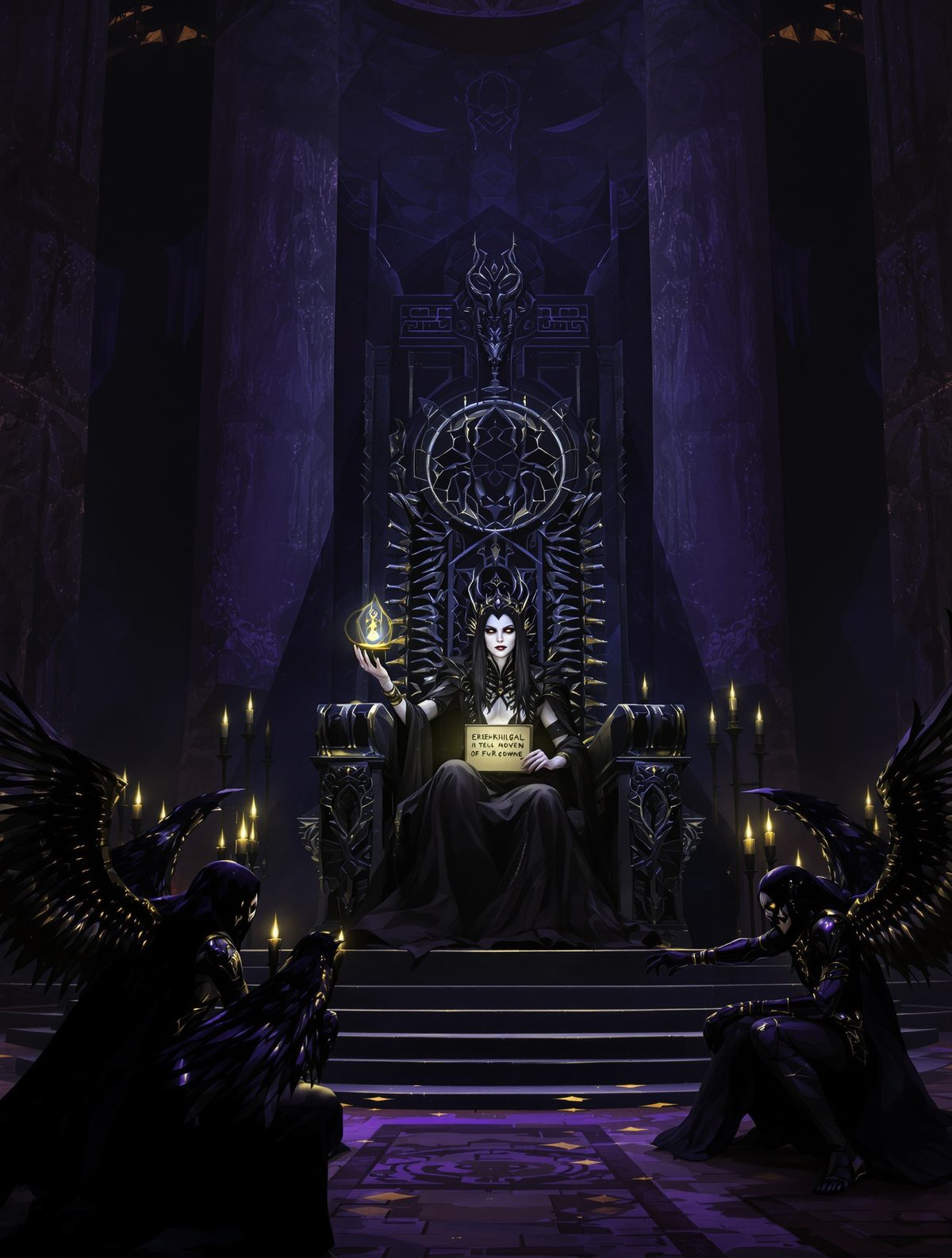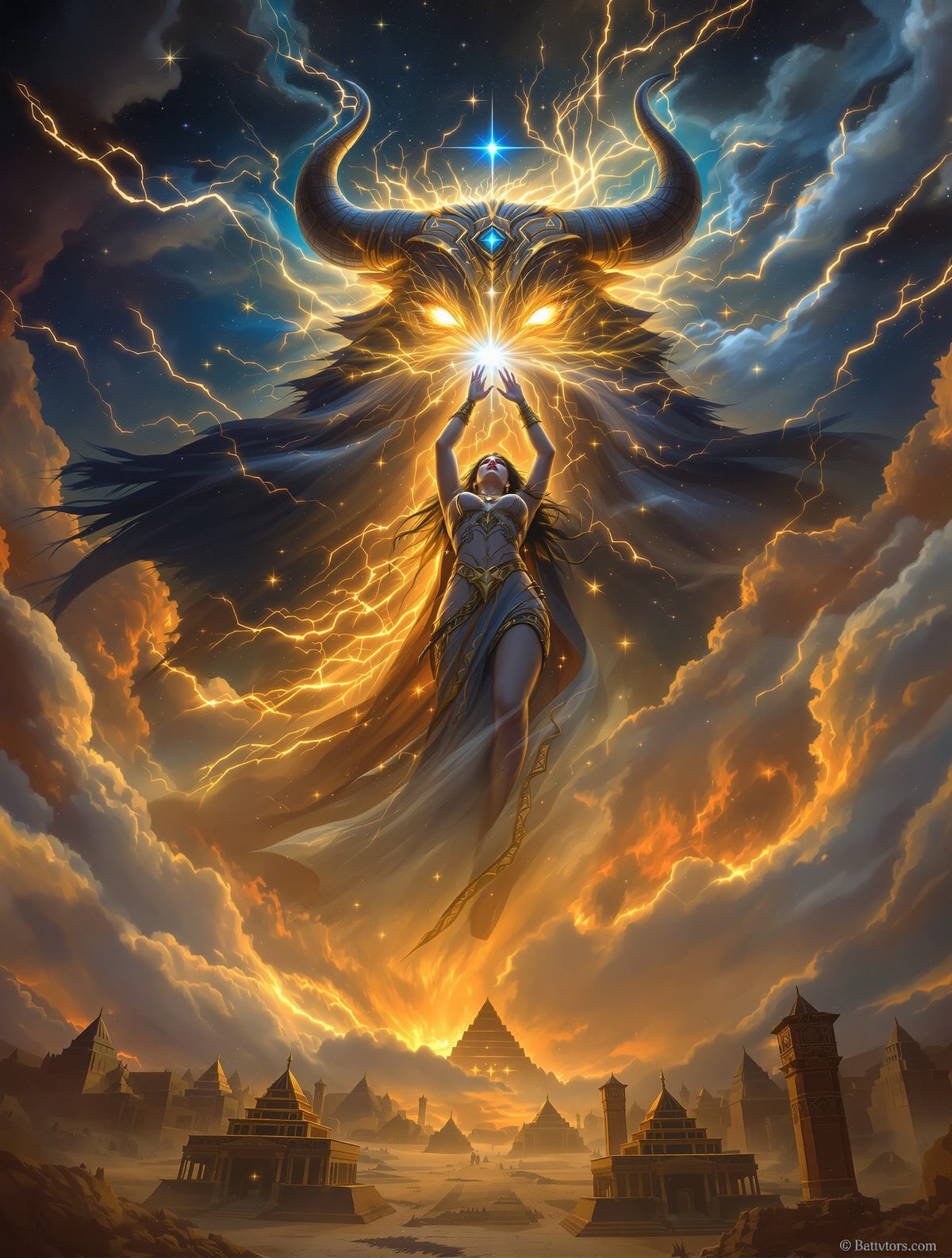
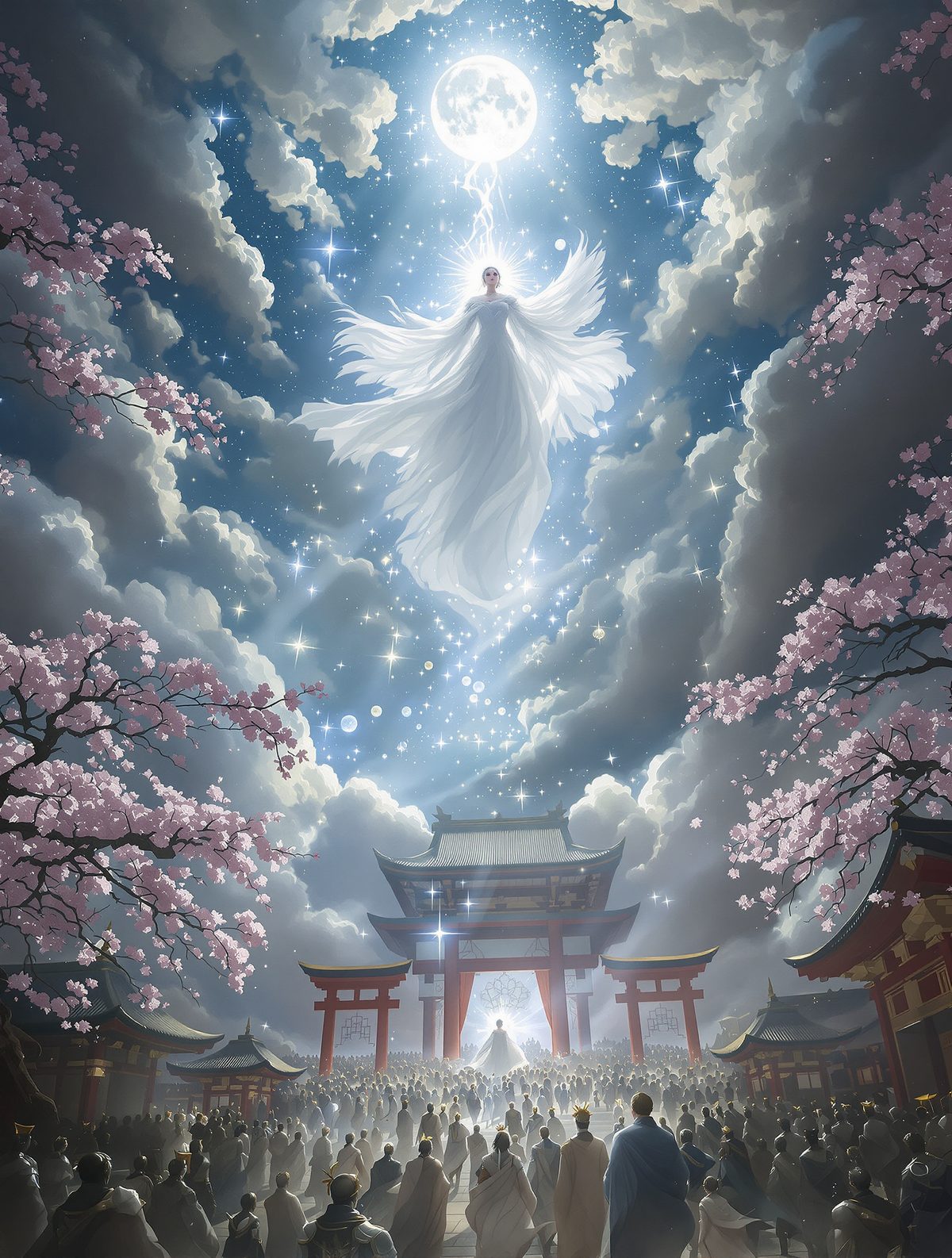
The imperial guards stood in formation, their bronze armor gleaming in the moonlight, arrows nocked and ready. Emperor Mikado himself had commanded them here, to this remote bamboo grove, armed with the finest weapons in all of Japan. Their mission? To prevent a single young woman from leaving Earth forever. Yet as the celestial beings descended from the heavens in robes that shimmered like starlight, every warrior present knew their swords and arrows were utterly useless against forces beyond the mortal realm.
This is the story of Princess Kaguya's final night on Earth—a tale that has captivated Japan for over a thousand years, yet remains one of the most hauntingly beautiful accounts of love, loss, and the price of divine destiny ever recorded.
The Bamboo Cutter's Impossible Discovery
It began on an autumn evening around the year 909 CE, during the Heian period's golden age, when an elderly bamboo cutter named Taketori no Okina noticed something extraordinary. One stalk of bamboo in his grove glowed with an inner light, pulsing like a heartbeat against the darkening sky. When he cut it open, he discovered a child no larger than his thumb—a perfect baby girl who radiated luminescence.
The old man and his wife raised the mysterious child as their own, naming her Nayotake no Kaguya-hime, "Princess of the Supple Bamboo." Within just three months, she had grown into a woman of such breathtaking beauty that her very presence seemed to make flowers bloom and birds sing more sweetly. But here's what most people don't know: every bamboo stalk the old man cut after finding Kaguya contained gold and precious gems, transforming the humble peasant family into one of the wealthiest households in the capital.
Word of Kaguya's otherworldly beauty spread throughout the imperial court like wildfire. Nobles traveled for days just to catch a glimpse of her face, often returning home speaking of her luminous skin that seemed to glow with moonlight and eyes that held depths beyond human understanding.
Five Impossible Tasks and the Hearts They Broke
Five of Japan's most powerful nobles became utterly obsessed with winning Kaguya's hand in marriage. These weren't ordinary suitors—they were the political titans of their era, men who commanded armies and controlled vast territories. Yet Princess Kaguya, with wisdom that seemed to transcend her earthly years, set each an impossible task.
To Prince Ishitsukuri, she requested the stone bowl of Buddha from India. The ambitious Abe no Miushi was tasked with finding a jeweled branch from the legendary Mount Penglai. Grand Counselor Otomo no Miyuki had to retrieve a robe made from the fire-rat of China, while Middle Counselor Isonokami no Marotari was sent to find a five-colored jewel from a dragon's neck. Finally, she asked Counselor Ishikami no Akahiko for a cowrie shell born from a swallow.
Each man attempted to deceive her with elaborate forgeries—commissioning skilled craftsmen to create fake treasures worth fortunes in themselves. But Kaguya possessed an uncanny ability to detect their deceptions instantly, as if she could see through to the very essence of things. One by one, the most powerful men in Japan were humiliated, their hearts broken not just by rejection, but by the revelation of their own moral failings.
What's fascinating is that historical records from the period actually mention several of these noble families suffering mysterious financial ruin around this time, suggesting the tale may have roots in real political scandals that rocked the Heian court.
An Emperor's Love and the Weight of Destiny
Even Emperor Mikado himself fell under Kaguya's spell. Unlike the others, he didn't attempt deception or force. Instead, he courted her with poetry so beautiful that some verses are still quoted in Japanese literature today. Kaguya found herself genuinely moved by his sincerity, and for a brief moment, it seemed she might choose to remain on Earth.
But as their relationship deepened, something strange began happening to the princess. She would often be found weeping while gazing at the full moon, overcome by a melancholy she couldn't explain. "The moon is so beautiful it breaks my heart," she would whisper, not understanding why its light filled her with such profound longing.
The truth, when it came, arrived like a thunderbolt. Kaguya confessed to the emperor that she was not of this world—she was a being from the Moon Kingdom who had been exiled to Earth as punishment for an unspecified transgression. Her sentence was nearly complete, and soon, celestial messengers would come to reclaim her.
The Night Heaven Came to Earth
On the fifteenth night of the eighth month—the night of the harvest moon in 912 CE—Emperor Mikado deployed two thousand of his finest soldiers around Taketori no Okina's estate. Archers positioned themselves on every rooftop, spearmen formed defensive circles, and cavalry units patrolled the perimeter. The emperor himself was present, determined to protect the woman he loved from whatever celestial force dared to claim her.
As midnight approached, the very air began to shimmer. A procession of beings descended from the moon's surface—not flying, but simply moving through space as if walking down invisible stairs. They wore robes that seemed to be woven from moonbeams themselves, and their faces held an alien beauty that was both magnificent and terrifying.
The leader of the celestial delegation carried a robe of pure white feathers and a small vial containing what appeared to be liquid starlight. This was the hagoromo—the feathered robe that would restore Kaguya's celestial nature but erase every memory of her earthly life and loves.
Here's the detail that sends chills down your spine: every soldier present later reported that their weapons became impossibly heavy in their hands. Arrows fell from bowstrings without being released. Swords slipped from paralyzed fingers. It was as if the very concept of violence became impossible in the presence of such divine beings.
The Price of Divinity
In her final moments on Earth, Princess Kaguya wrote farewell letters to each of her five noble suitors and to Emperor Mikado. To the emperor, she gave a mirror that would always reflect the moon's surface instead of his own face, and a small vial of the elixir of immortality—which he later ordered to be burned atop Mount Fuji, declaring that life without her would be meaningless.
But it was what happened next that transforms this from a simple love story into something far more profound. As Kaguya donned the celestial robe, her human memories began to fade in real-time. Her tears for her earthly father stopped mid-fall. Her anguish over leaving the emperor dissolved like mist. The compassion in her eyes was replaced by divine serenity—beautiful, perfect, and utterly inhuman.
The celestial beings had not come to rescue her; they had come to erase the person she had become. In those final seconds, as her consciousness transformed, Kaguya looked directly at Emperor Mikado with eyes that no longer recognized him. The woman he loved had already gone, even though her body remained.
Then, as silently as they had come, the celestial procession rose toward the moon, carrying with them a being who looked like Princess Kaguya but was no longer her in any meaningful sense.
The Moon That Remembers
Why does this thousand-year-old story still grip us today? Perhaps because it speaks to our deepest fear about love and identity: that the people we become through our relationships might be temporary, that our connections to others might be more fragile than we dare to admit.
In our age of social media and digital personas, when we can curate and delete versions of ourselves at will, Kaguya's transformation takes on new relevance. We watch her literally lose her humanity by putting on a new identity, forgetting not just individual relationships but the very capacity for earthly love itself.
The tale suggests that divinity and humanity cannot coexist—that to become perfect, we must sacrifice everything that makes us recognizably ourselves. It's a cautionary tale about the price of transcendence, wrapped in the language of impossible beauty and cosmic love.
Every time we see the full moon, Japanese tradition says, we're seeing Princess Kaguya's true home. But the tragedy isn't that she left Earth—it's that by the time she arrived home, she was no longer capable of remembering why leaving had once broken her heart. In a world obsessed with self-improvement and transformation, perhaps that's the most relevant lesson of all: sometimes, becoming someone else means losing everyone you used to be.